Updated March 5, 2026 04:44AM
Why French Phenom Paul Seixas is a New Kind of Threat to Tadej Pogačar
A generation apart: Strade Bianche is the first big clash of 2026 between King Pogi and France's prince in waiting.
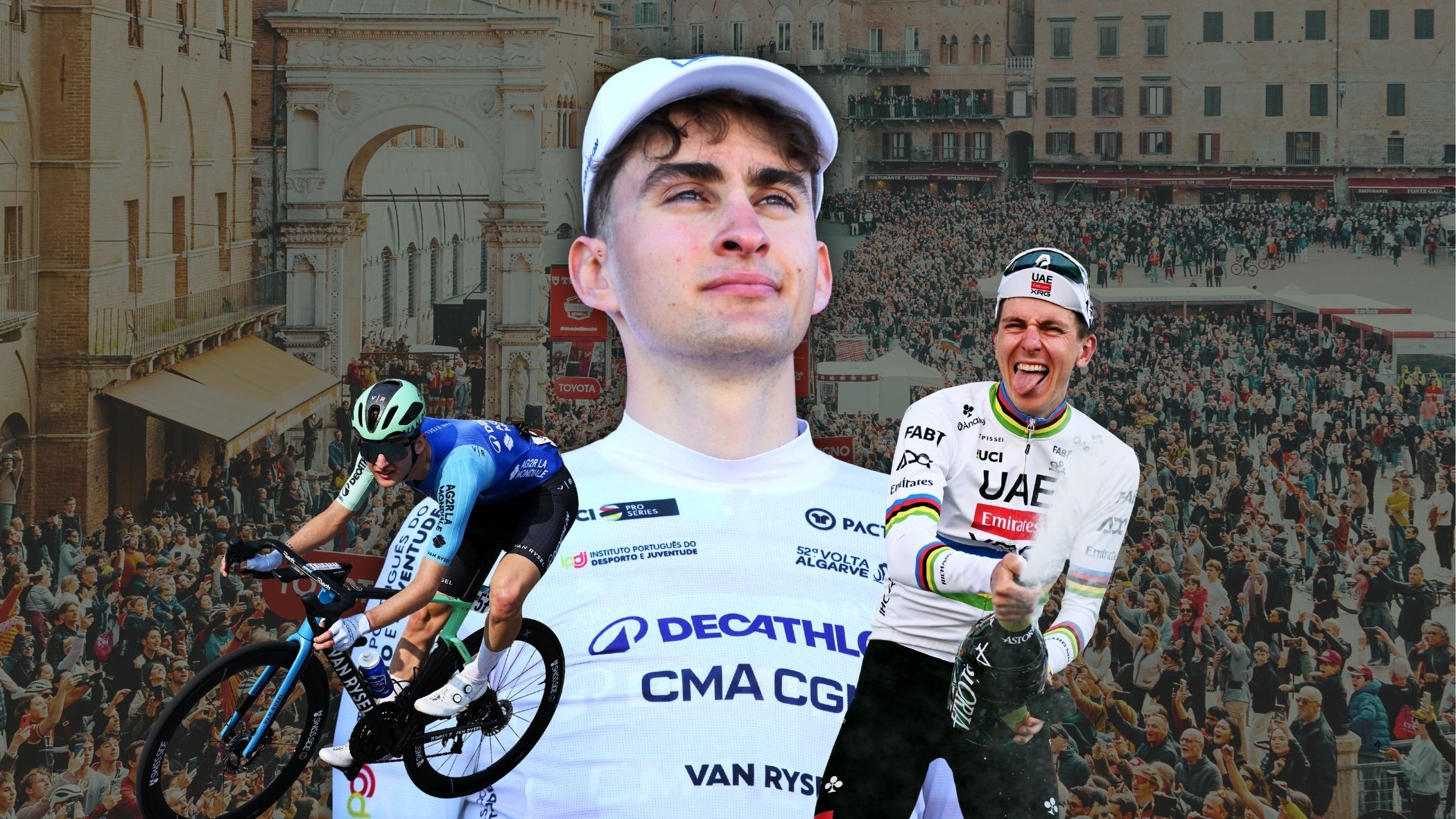
Seixas and Pogačar face off for the first time in 2026 at Strade Bianche. (Photo: Gruber Images/Getty Images)
Tadej Pogačar debuts the 2026 season pretty much the same way he has the last couple of years, except there’s a new gunslinger in town in the form of French phenom Paul Seixas.
For Pogačar, everything else is like a playback loop.
He’s coming off another history-making season, he ended 2025 ranked number one in the world, he’ll start the year in the rainbow jersey, and he’ll be flanked by his trusted UAE Emirates-XRG henchmen.
And just like most seasons, he arrives at Strade Bianche as the five-star favorite, chasing what could be a record fourth victory on the white roads and another page in cycling history.
But there’s a new and intriguing plot line this weekend that, for the first time in this decade, nudges the narrative in a different direction.
The presence of Seixas — the precocious, ambitious young Frenchman who is lighting up the hearts of France’s long-suffering fans — represents something genuinely new since Pogačar first staked his claim as one of cycling’s all-time greats.
Until now, Pogačar has mostly taken down established rivals such as Primož Roglič or the fading remnants of the once-mighty Ineos Grenadiers train. Or he has methodically crushed souls and dispatched a rotating cast of peers and would-be usurpers to his throne.
ADVERTISEMENT
With the noted exceptions of Mathieu van der Poel and Jonas Vingegaard, the only two riders who are truly his peers (on select days).
That’s not to say that younger riders have not raised their hand to try to take on Pogi, from Juan Ayuso to Remco Evenepoel, but Seixas does represent a new existential threat the peloton hasn’t yet seen in the Pogačar era.
Several strands around Seixas create a compelling wrinkle in the broader Pogi GOAT narrative.
Whether it develops into a full-blown Game of Thrones melodrama remains to be seen, but for now, the storylines are building.
And the first clues will come into focus this weekend at Strade Bianche. Let’s dive in:
ADVERTISEMENT
A generation apart
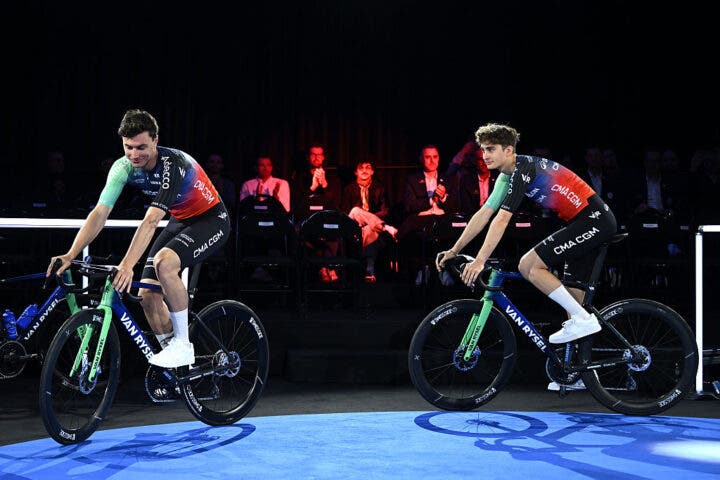
Whether Seixas and his “chosen one” status ever truly materialize into yellow jerseys and world titles is still years down the road.
But what makes Seixas so intriguing is that he sits a full generation apart from Pogačar.
The Slovenian turns 28 in September. Seixas celebrates his 20th birthday the same month.
ADVERTISEMENT
That gap makes Seixas the first potential rival who is significantly younger than Pogi. And that matters when it comes to career trajectory.
Pogačar is widely seen as riding at the height of his powers. There might still be incremental gains to come, and barring a serious crash or injury, he should hold this level for several more years.
Seixas, by contrast, has enormous room to grow during what could be Pogačar’s consolidation at the top of the sport.
The stated goal this season for Seixas and Decathlon CMA CGM is to measure themselves against Peak Pog.
You could add Isaac del Toro to that conversation. The Mexican prodigy is already better than most, but he fits safely inside the UAE system and won’t break ranks to take the fight directly to Pogačar.
Del Toro will wait his turn and only occasionally line up against his team leader at the worlds or the Olympics.
Seixas is different.
ADVERTISEMENT
He’s the first rider on a rival team who is markedly younger, just as ambitious, and potentially the first of cycling’s “Class of 2025” to truly disrupt the peloton’s established order.
Parallel tracks
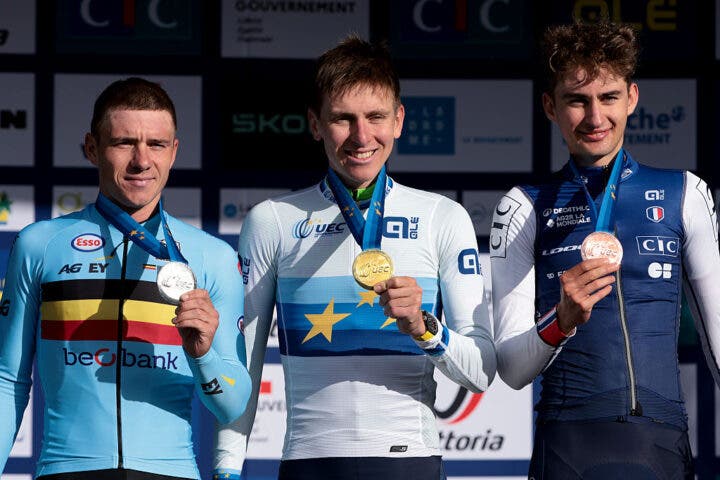
The second twist is that Seixas has already shown preternatural skills, which have not been lost on the French media.
There are already several parallels in how the two riders burst onto the scene.
Seixas scored his first pro victory atop Foia at the Volta ao Algarve last month, the same climb where Pogačar claimed his first pro win, albeit in a second pro season as opposed to Pogi’s first.
Both riders won the Tour de l’Avenir. Both were making big impressions while still teenagers.
Seixas also made headlines with his victory at the Faun-Ardèche Classic last month, riding Matteo Jorgenson clean off his wheel while casually taking a drink, and then matching Pogačar’s time on the same climb used at last year’s European championships.
The French prodigy is pushing an eye-watering seven watts per kilogram. He lives up to the hype.
ADVERTISEMENT
Seixas, of course, has yet to race a grand tour. That will likely come later this season, though it’s still unclear whether he will debut at the Tour de France or the Vuelta a España.
Pogačar hit a grand tour podium in his Vuelta debut in 2019 in his rookie season and won the Tour in his first try in 2020, so he’s already ahead in head-to-head stat crunch, but the common thread is straight up progression.
Several direct clashes with Pogačar this spring, starting Saturday at Strade Bianche, and continuing with Liège-Bastogne-Liège next month, will tell us a lot more.
Winning attitude
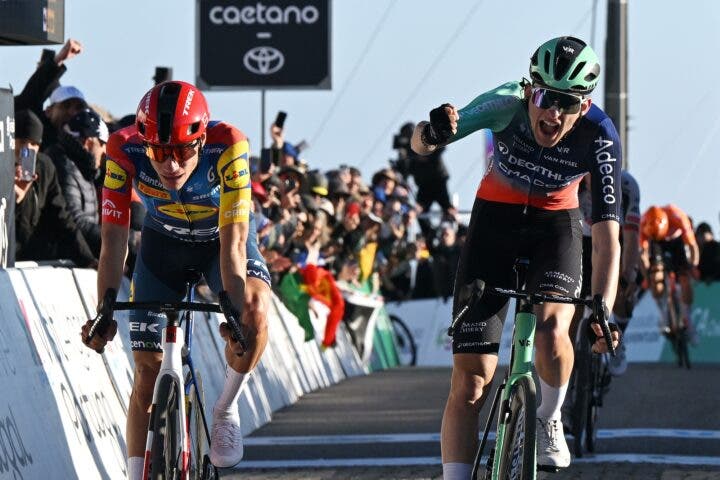
Another key difference emerges in some of the things Seixas has said, comments that reveal both his character and a maturity beyond his years.
To be clear, he is not pounding his chest and promising to beat Pogačar this weekend, or even anytime soon. But an interview last week before Faun-Ardèche was telling.
ADVERTISEMENT
“There is impatience to give 100 percent. You have to win when everyone is there, it is the most important and rewarding for a racer who has a competitive spirit,” he told Cyclismactu. “The goal is not to take over when he (Pogačar) is no longer there. The goal is to be able to beat him one day.”
Those ambitions could be written off as youthful exuberance, but he is one of the first riders who’s said that they don’t want to just wait their turn. He wants to beat Pogačar face-to-face.
Seixas has the benefit of time that riders like Evenepoel will never have, simply because their best years coincide with peak Pog power.
Other riders who’ve dared to utter such ambitions have been routinely swatted back into place by an unbeatable Pogačar.
In a time when most team tactics seem to be built around waiting for Pogačar to have a bad day, at least Seixas is putting it out there.
ADVERTISEMENT
Hype or real deal?
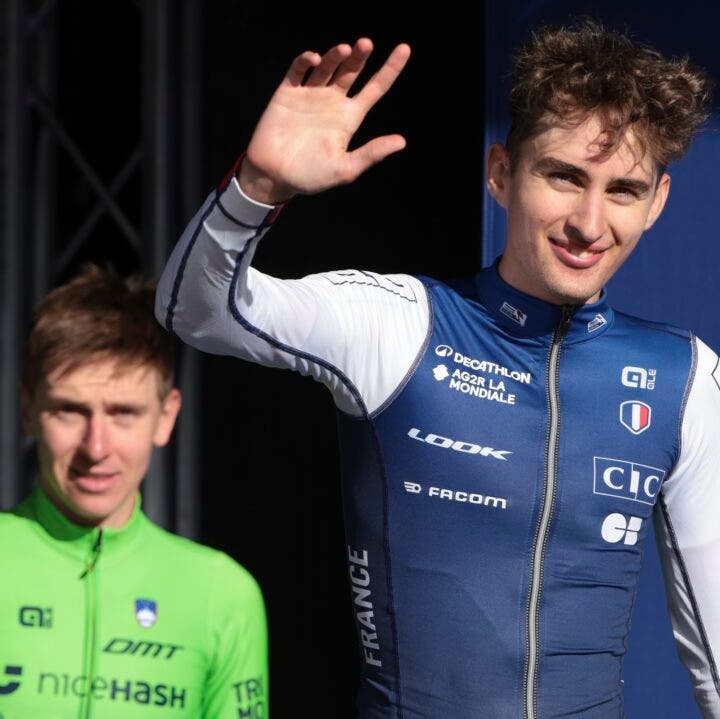
So for the first time since Pogačar’s unstoppable rise, he will face a much younger, equally ambitious, and seemingly blessed with similar talent.
What unfolds this weekend could offer early clues about the next several seasons. Pogačar isn’t going anywhere, and he will be damn sure he doesn’t lower his guard.
ADVERTISEMENT
Neither Seixas nor Pogačar will publicly admit that anything is brewing between them, and if the same vibe carries on, they’ll be chummy buddies at the start and finish of any race.
But between the drop of the flag and the finish tape, Pogi will want to crush everyone on Saturday. And if Seixas happens to be there, all the better.
Pogačar has often said he never races fueled by anger. But now he has a legacy to defend.
The quandary for Pogačar now is that if he doesn’t crush every race he starts, tongues will start wagging.
It’s far too early to say whether Seixas is truly a Pog-slayer in waiting.
What we do know is that Seixas looks like a rare young talent who refuses to bend the knee. And that’s good for cycling.
His rise also arrives at a useful moment for the men’s peloton, because watching Pogačar dismantle the same rivals year after year risks becoming predictable.
ADVERTISEMENT
That’s why Strade Bianche represents a fascinating new crossroads in the ongoing Pogačar saga, and perhaps the opening chapter in one just beginning with Seixas.