Updated July 13, 2026 02:49AM
The Tourmalet Broke the Race, But the Descent May Have Won Tadej Pogačar the Tour de France
The Alps are still ahead, but UAE's sport manager reveals how Tadej Pogačar turned the Tourmalet stage into the Tour's biggest GC blow.
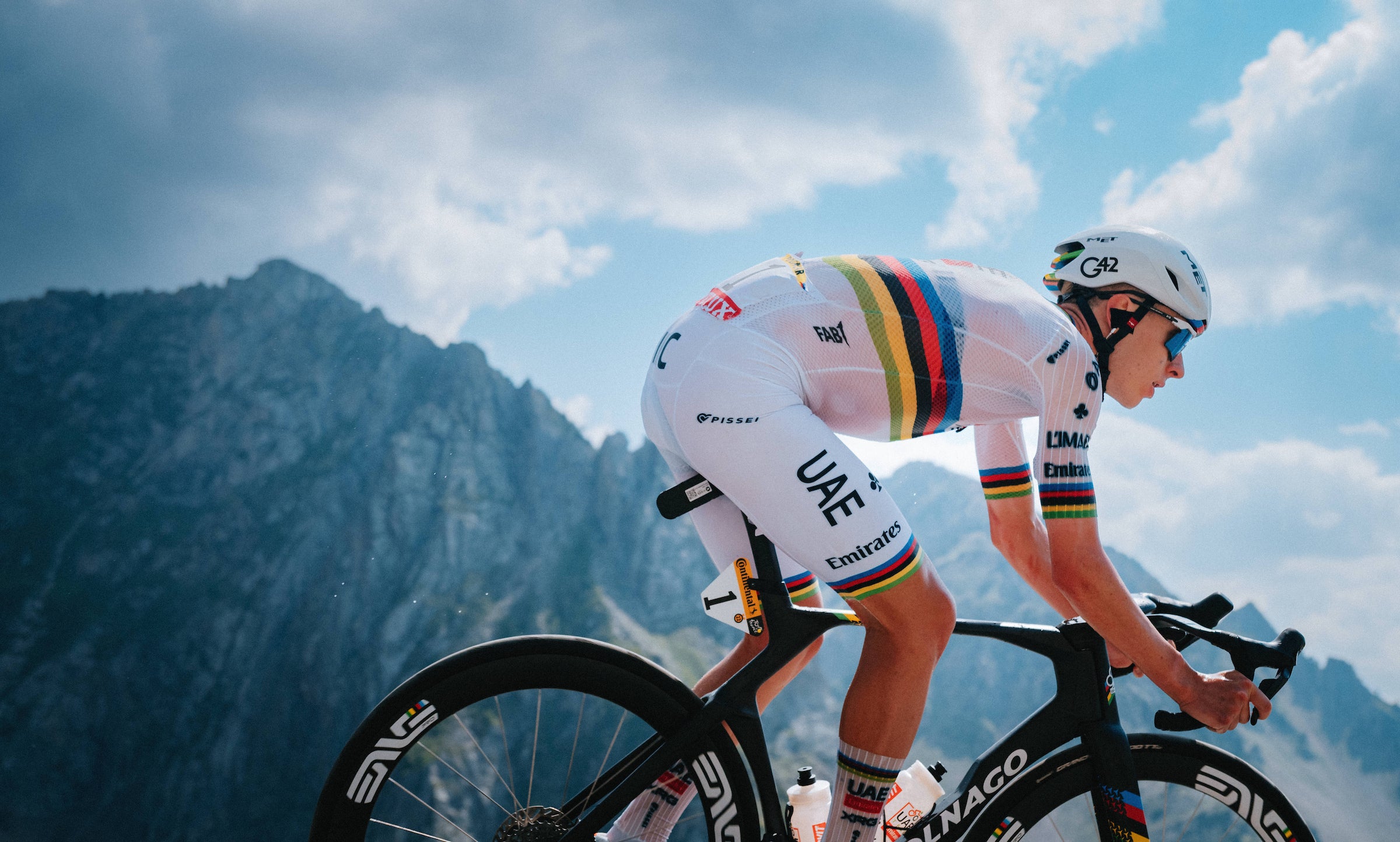
UAE plotted the perfect raid over the Tourmalet to put a lock on yellow. (Photo: Gruber Images)
The 2026 Tour de France isn’t even halfway over, but Tadej Pogačar carries a 2:42 lead into the first rest day and the yellow jersey already feels out of reach.
Four days after Pogačar detonated the Tour over the Col du Tourmalet, everyone else is already chasing their tails.
UAE sport manager Joxean Fernández Matxín told Velo the team had circled stage 6 as the place to land a knockout punch.
UAE wanted to crack Jonas Vingegaard on the Tourmalet because Matxín knew Pogačar could bury the race on the road to Gavarnie.
“We know that Tadej on that terrain is much stronger,” Matxín told Velo. “That’s why we expected that once he reached the bottom of the Tourmalet, the gap would continue to grow, which is exactly what happened.”
The Pogi raid played out almost exactly the way UAE had hoped.
Vingegaard only had to lose the wheel once, because the real damage came on the descent and the long 3 to 4 percent drag to Gavarnie.
ADVERTISEMENT
“We wanted to make the difference on the Tourmalet because if Vingegaard had held the wheel, it would have been much harder to drop him afterward,” Matxín told Velo.
“If you analyze the times, Tadej got more time on the descent than he did on the climb, and he took a lot more time on the 3 to 4 percent road to Gavarnie than he did on the Tourmalet.”
Despite all the monster climbs looming in the French Alps, this Tour may have been decided on the descent and shallow valley road after the Tourmalet.
Where UAE expected the race to break apart
If there was ever a stage tailor-made for a Pogačar raid, Matxín knew it when he saw the jagged profile of stage 6 when the Tour de France route was unveiled last fall.
The route offered the Pogi-perfect course, with the iconic Col du Tourmalet with 40 kilometers still to race, a fast descent, and then nearly 17 kilometers of shallow climbing into Gavarnie averaging just under four percent.
ADVERTISEMENT
“On those shallower gradients, absolute power becomes much more important, and Tadej weighs about six kilos more than Jonas,” Matxin told Velo. “That’s where the gap really opened up.”
The stage also reignited debate about whether organizers handed Pogačar a ready-made opportunity to blow up the race even before the first rest day.
Ex-pro Michael Rasmussen warned weeks before the Grand Départ that the Tourmalet stage could cost Vingegaard minutes, and his prediction proved remarkably accurate.
UAE’s first objective was to keep the stage under control.
“It’s not like we are playing PlayStation here, but that’s the general tactic that we were hoping for,” Matxin said. “We wanted to control the stage until the base of the Tourmalet and have the group arrive together.”
The team shut down the breakaways and made sure Visma couldn’t slot a domestique up the road to help Vingegaard later on the Tourmalet or beyond.
Del Toro played a key role
UAE dictated the pace from the Col d’Aspin to the base of the Tourmalet before Isaac del Toro and Pogačar finally lit things up on the 2026 Tour’s first HC climb.
After Pogačar disappeared up the road, Del Toro latched onto the chase group and made it nearly impossible for Remco Evenepoel, Paul Seixas and the others to organize a committed pursuit.
ADVERTISEMENT
“It’s also true that the other leaders behind in that chase group were never going to work together to close that gap in an efficient manner,” Matxin said. “Isaac was an important weapon in that situation to stay glued in the chasing group.”
There are still nearly two weeks left to race, and Matxín cautioned that UAE is taking nothing for granted, but UAE and Pogačar may already have landed the decisive blow.
And it didn’t come on one of the Tour’s steepest climbs, but after it.