Updated July 19, 2026 07:12PM
Tour de France Riders Blast 2 A.M. Anti-Doping Controls, Even If Rules Allow It
Tour de France riders condemn overnight anti-doping controls that woke Jonas Vingegaard and Tadej Pogačar, though regulations allow surprise testing at any time.
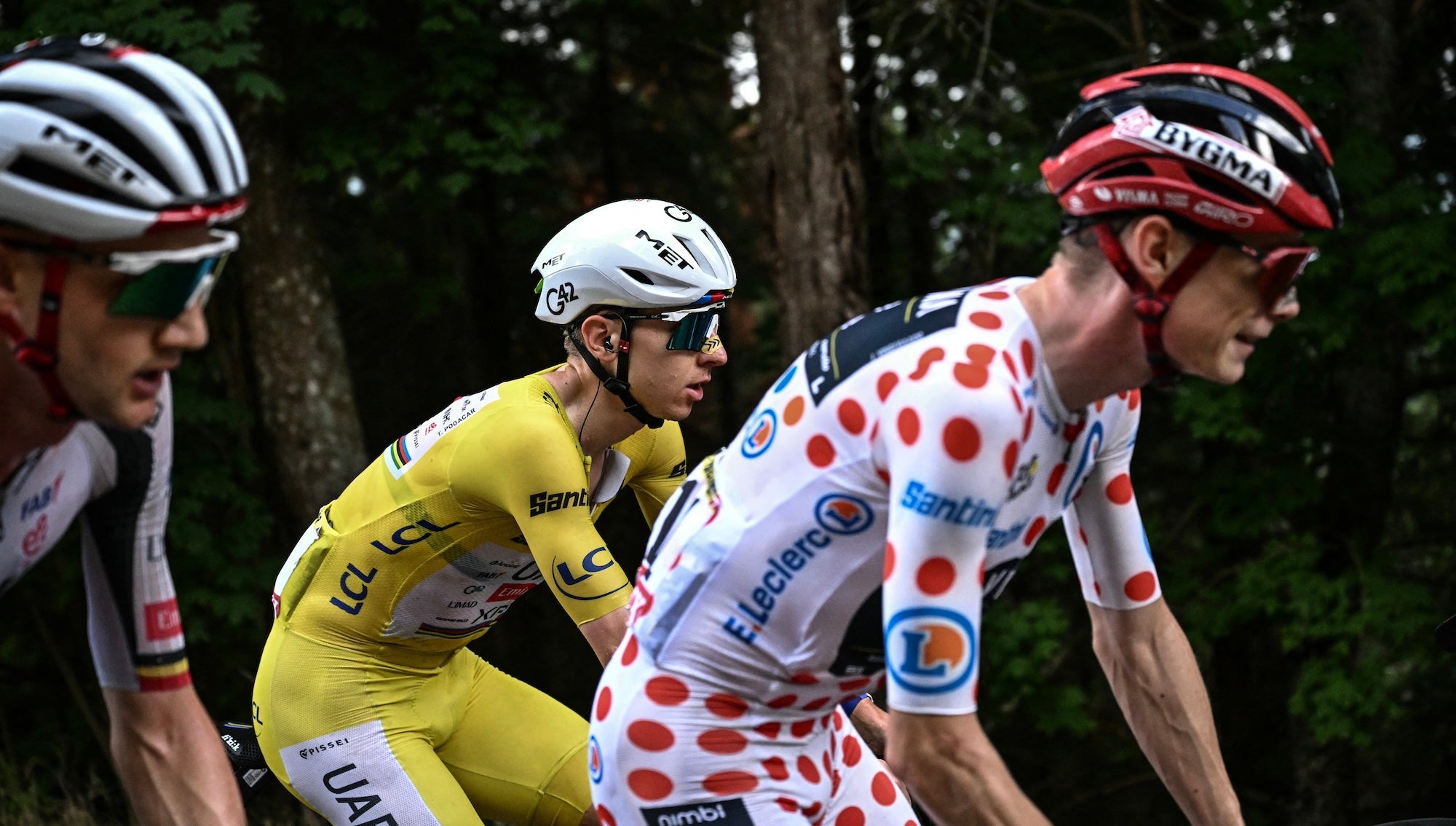
Riders expressed outrage after Pogačar and Vingegaard, shown here Saturday, were woken up overnight for surprise anti-doping controls at the Tour de France. (Photo: Loic VENANCE / AFP)
Tour de France riders criticized the timing of surprise anti-doping controls after Tadej Pogačar and Jonas Vingegaard revealed they were woken at 5 a.m. and 2 a.m. ahead of Sunday’s decisive Alpine stage.
Although anti-doping rules allow riders to be tested at any point during the Tour, the late-night visits from the ITA came between two of the Tour’s hardest mountain stages, and disrupted sleep and recovery.
Surprise tests at team hotels are more commonly carried out closer to 6 a.m., so the super-early wakeup calls triggered a strong backlash from many within the peloton.
Visma-Lease a Bike rider Matteo Jorgenson said the timing crossed a line.
“I was asked to keep my opinion on this to myself, but this is a complete lack of respect for the riders,” Jorgenson told Het Laatste Nieuws. “We are working hard on recovery. That is hugely important, especially between two of the toughest mountain rides in this Tour. And then you get woken up at 2 a.m. That makes me really angry.”
Stage winners and leaders of the Tour’s classification jerseys are routinely tested after each stage, but the International Testing Agency also conducts targeted, unannounced controls throughout the race.
ADVERTISEMENT
Before the Tour started in Barcelona, ITA officials told Velo that surprise tests would be a key part of this year’s testing program.
‘Inhumane and insane’
UAE Emirates-XRG rider Florian Vermeersch said Tour race leader Pogačar handled it well, but questioned why the controls came in the middle of the night.
“Tadej dealt well with it, but I find it almost inhumane and insane,” Vermeersch told Het Laatste Nieuws. “To my knowledge, it is also the first time he has been woken up so early for this. People will say we complain and so on, but it’s ridiculous.
“I think Tadej only slept for five hours. Maybe it gives you energy.”
The surprise controls came after Saturday’s brutal stage across the Vosges and just hours before one of the Tour’s most decisive mountain stages, finishing atop the HC Plateau de Solaison on Sunday.
Remco Evenepoel was not selected, but the Belgian star said he was stunned to learn that both Pogačar and Vingegaard were woken up so early.
ADVERTISEMENT
“They just told me that it happened at two o’clock in the morning,” Evenepoel told Het Nieuwsblad. “That’s annoying, but luckily that wasn’t my problem tonight. If it really were, it would be outrageous.
“I would say to Jonas and Tadej: wake those men up at two o’clock in the morning, too. Then they also feel what they are doing to us. It is not at all respectful.”
‘That this happens is a good sign’
Visma-Lease a Bike CEO Richard Plugge gave strong backing to the anti-doping program despite the uncommon early hour that disrupts his star rider.
“Apparently more teams have been visited,” Plugge told Wielerflits. “In any case, it is good that our sport is and remains on top of the anti-doping fight.”
Plugge said the biggest concern was the impact on recovery two weeks into the Tour de France, especially after several teams have complained about the quality of team hotels as well as extreme heat that plagued the opening week.
ADVERTISEMENT
“In terms of performance, it is not good to say the least,” he said. “They wake you up and you are soon busy for half an hour to forty minutes afterwards. You don’t want that during your night’s sleep. That’s never good.”
He also stressed that teams and riders know the tests could be coming at any time.
“We know this is possible. These are the rules. From one minute before the start of the Tour until the end in Paris, a check can take place 24 hours a day,” he said.
“That it happens is also a good sign. I keep saying it because in this sport we do everything we can, much more than in many other sports, to ensure that cycling remains fair.”
ITA responds
Official from the ITA confirmed to Velo that several riders were selected for surprised anti-doping controls before Sunday’s stage.
“The ITA can confirm that anti-doping controls were conducted overnight involving riders participating in the Tour de France,” the agency said.
Here is the complete message shared with Velo:
“The ITA is conscious that night-time testing may be disruptive to riders’ rest and recovery. Due consideration has therefore been given to minimise as much as possible the impact testing activities have on riders. However, the ITA, on behalf of the UCI, has the responsibility to ensure the effectiveness of the cycling anti-doping program and the integrity of cycling races.
ADVERTISEMENT
“As such, effective testing must, in limited and justified circumstances, be capable to occur outside standard daytime hours. All testing activities conducted at the Tour de France and at any other international events, including decisions as to the specific timing of such tests, are carried out in accordance with the ITA’s testing strategy and subject to the safeguards established under the World Anti-Doping Code, the UCI Anti-Doping Rules and French law, with due consideration for riders’ welfare, equity and fundamental rights.”