Updated August 11, 2026 03:14AM
The Numbers Behind the Most Competitive Tour de France Femmes Yet
A historic repeat winner, five yellow jerseys, and a record-setting climb shaped the most competitive Tour de France Femmes yet.

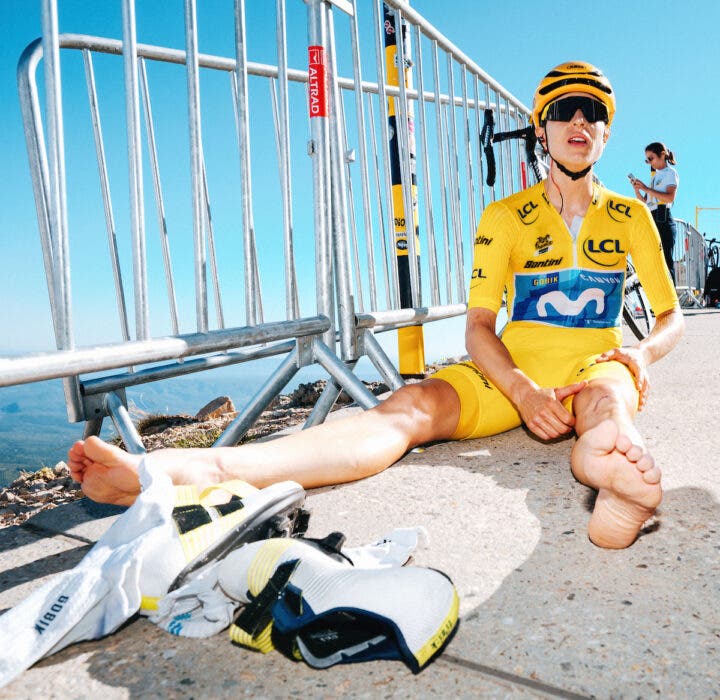
Demi Vollering dominated the 2026 Tour de France Femmes. (Photo: Gruber Images)
Five years after the Tour de France Femmes avec Zwift returned to the calendar, the 2026 edition delivered its wildest race yet.
The yellow jersey changed hands a record five times before Demi Vollering finally slammed the door in Nice to become the first rider to win the modern Tour de France Femmes twice.
From Kasia Niewiadoma-Phinney’s daring attack on Mont Ventoux to Paula Blasi’s breakout ride despite the #FreeBlasi drama, the 2026 Femmes was non-stop action from Switzerland to Nice.
Records fell and new milestones were set at Femmes consolidated its position as the marquee race on the women’s calendar.
New names, like Germany’s Antonia Niedermaier, and long-simmering rivalries lit up the race.
Tour organizers deserve credit for delivering an aggressive, well-designed route that kept the overall battle alive until the final stage.
There are still some kinks to work out in terms of prize money and live TV broadcasts — ASO says both are under discussion — but the 2026 race was tighter, deeper, and more international than any edition so far.
With the dust settling on the race, here are a few stats — compiled by Velo and some help from race organizers — that show why 2026 was the best Femmes yet:
ADVERTISEMENT
Five riders in yellow jersey
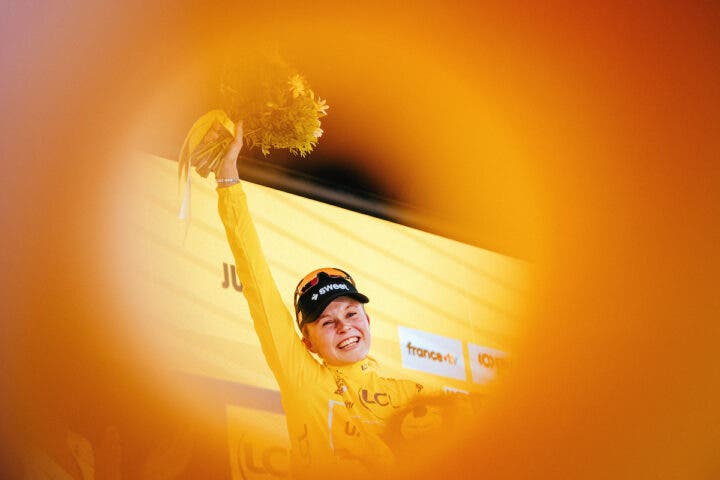
The yellow is the ultimate yard stick for excellence in any Tour, and this year everyone wanted it.
The race opened with its deepest GC field ever, but not everyone made it to Nice.
Right from the drop of the first flag, it was full-gas racing, with all eyes on the maillot jaune.
The race opened with Lorena Wiebes in yellow after the first two stages, before Sigrid Haugset, Marlen Reusser, Kasia Niewiadoma-Phinney, and finally Vollering all took turns atop the GC.
Five different yellow jerseys is a new record for the Tour de France Femmes.
The previous high was four.
Vollering’s place in history
Vollering can make a strong case of being the best women’s racer of this decade, and her performance last week proved it.
Vollering’s victory made her the first two-time winner of the modern Femmes, adding a second title to the crown she won in 2023.
ADVERTISEMENT
The Dutch rider has now finished first or second in all five editions of the race, with victories in 2023 and 2026 and runner-up finishes in 2022, 2024, and 2025.
By winning in Belleville-en-Beaujolais and twice in Nice, Vollering also became the first rider to win three stages in a single edition of the Tour de France Femmes.
She now has six career stage victories, just one behind Wiebes’ all-time record of seven.
And at 29, she’s hitting her physical peak.
After a break, she’ll target the major missing trophy on her palmarès at the world title in Montréal. Her career-best was second in 2023 behind Lotte Kopecky in Glasgow.
Kasia’s long road to victory
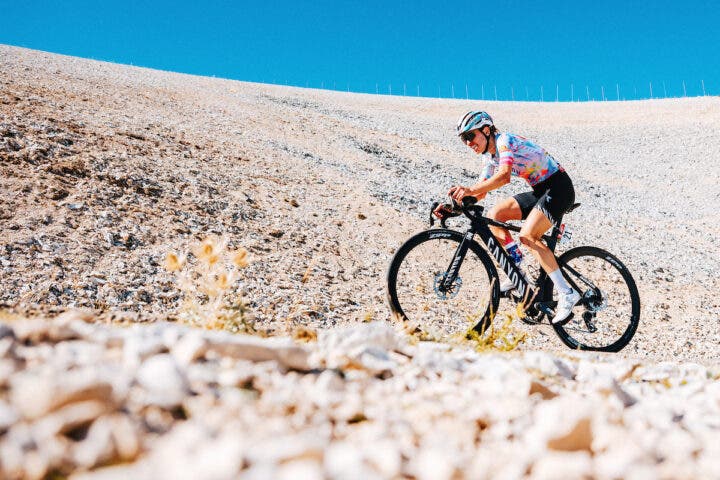
Niewiadoma might be disappointed to lose yellow over the weekend, but she got something just as important with her first Femmes stage win.
With her long-range attack on Mont Ventoux, Niewiadoma finally claimed her first stage victory at the Tour.
Before her breakthrough, she already finished in the top-3 on stages six times without ever reaching the top step. She later added two more top-3’s before the Tour closed out Sunday.
ADVERTISEMENT
Despite consistently banging on the door, she hadn’t won a stage in any stage race since 2019.
The Polish rider left Nice after reaching the podium in all five editions of the Tour de France Femmes. She won in 2024, was second in 2026, and took third three times.
Her determination was finally rewarded. Talks of changing teams for 2027 could give her new motivation and additional support for next year’s Femmes.
Mont Ventoux: A new women’s climbing record?
Niewiadoma also took yellow with her stage win on Mont Ventoux in what is one of the most remarkable climbing performances ever seen in the women’s peloton.
Niewiadoma reached the summit in 55:20, with Velo’s power guru Zach Nehr estimating her average output at around 5.3 watts per kilogram, rising to 5.4 w/kg on the steep section to Chalet Reynard.
Her ascent produced a vertical climbing speed of 1,464 meters per hour, peaking at 1,540 Vm/h on the hardest slopes, numbers that could represent one of the highest power outputs ever recorded in women’s road racing.
ADVERTISEMENT
The level keeps rising.
A more global peloton
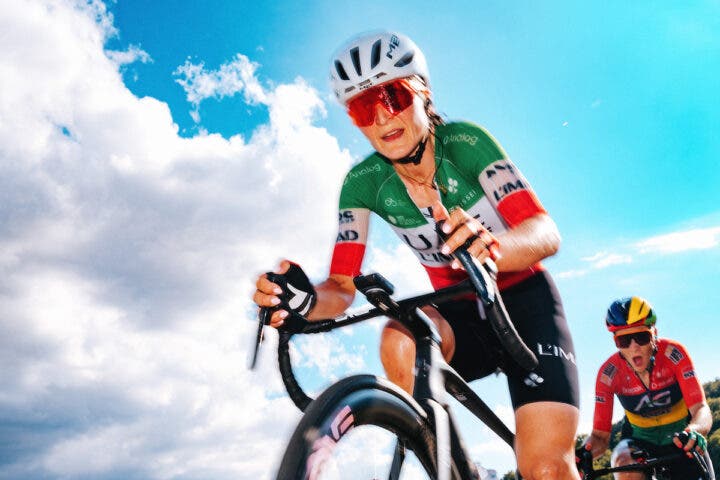
The Tour de France Femmes is no longer defined by a handful of traditional cycling nations.
Third-place finisher Elisa Longo Borghini secured Italy’s first podium in the race’s history, while the top 10 also featured the best-ever results for Germany, Spain, Canada, and Mauritius.
Paula Blasi delivered Spain’s best result in sixth, Antonia Niedermaier finished fourth for Germany, Isabella Holmgren took eighth for Canada, and Kim Le Court-Pienaar finished ninth for Mauritius.
Meanwhile, Niewiadoma’s stage victory made Poland the 11th country to win a stage at the Tour de France Femmes.
How the North Americans fared
North Americans across the Tour de France Femmes performed well, but fell short of a stage win.
The best U.S. individual stage result during the 2026 Femmes was sixth in the stage 4 individual time trial by double Olympic champion Kristen Faulkner (EF Education-Oatly).
The U.S. Femmes stage-win quest will now go into 2027 as no U.S. rider has won a Femmes stage since its 2022 revival.
ADVERTISEMENT
Isabella Holmgren impressed Sunday when she attacked on Col d’Èze and punched into the top-10 with eighth for Lidl-Trek. A winner last year at the Tour de l’Avenir Femmes, the Canadian was the top North American on GC.
Romina Hinojosa made history by becoming the first Mexican to finish the Tour de France Femmes on Sunday.
Nine stages, the perfect formula?
The 2026 race remained at nine stages, matching its bump in 2025, and organizers are already discussing a further expansion, perhaps as soon as next year.
One proposal would see the race start on a Thursday, feature three or four opening stages, a rest day, and then a decisive final block of mountain racing to round out the next full week to get to 10 stages.
A few would like to see the Femmes to grow to 21 stages to equal the men’s grand tour length, but most insiders think the sweet spot is around a dozen stages with a rest day.
ADVERTISEMENT
Pauline Ferrand-Prévot, meanwhile, became the first defending champion ever to abandon the following edition of the race, something that had never happened in either the modern Femmes or the original Tour de France Féminin.
2027 already on the radar
That’s a wrap on the 2026 Femmes, the wildest, most hotly contested, and deepest edition so far.
Officials already confirmed that the sixth edition will open July 30 with a historic three-day Grand Départ in Great Britain, the first time the women’s race has started outside mainland Europe. Two road stages and a TT in London already on the books.
Next season will also see a first when Great Britain will host both the men’s and women’s Grand Départs in the same summer, with the men’s Tour set to start in Edinburgh on July 2.
The full 2027 route details will be finalized during the official route presentation in October in Paris.