Published April 2, 2026 09:26AM
The Two Races That Will Make You Love Cycling
From the Tour of Flanders to Paris-Roubaix, the prestigious classics deliver chaos and glory that reveal cycling at its absolute limit.
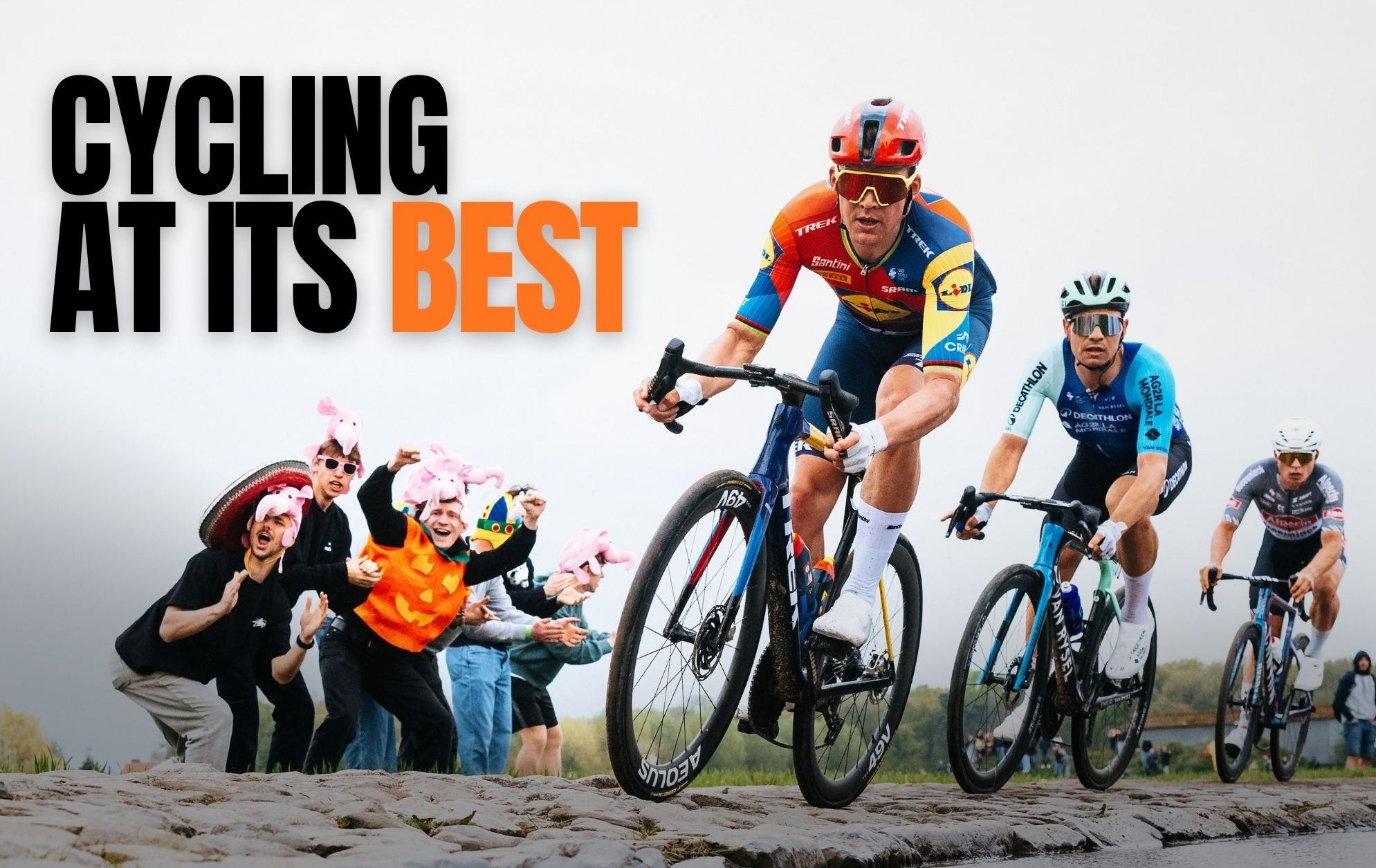
Tour of Flanders and Paris-Roubaix are cycling's iconic one-day races. (Photo: Gruber Images)
If there are two weekends to skip the cycling group ride and turn on the TV, they’re here with the Tour of Flanders and Paris-Roubaix.
The one-day classics are bike racing served up the old-school way.
Add the deep history, the six-hour-plus monument distances, savage weather, and millions of delirious fans, and Flanders and Roubaix — cycling’s Holy Week — become two-wheeled nirvana.
Yes, nutrition, aerodynamics, and cutting-edge tech matter — no one wins without them in modern cycling — but in these one-day throw-downs, there’s no tomorrow.
Unlike stage racing and grand tours like the Tour de France, where pacing, patience, and pointed attacks decide the winner, these 250km-plus brawls over steep bergs and jagged cobbles crown a different kind of winner.
One ill-timed puncture or one missed move, and it’s game over until next year. Get it right, and you’re a cycling immortal.
For anyone new to bike racing, buckle up for the season’s best racing.
For the hard-core fans, you already know. This is as good as it gets.
ADVERTISEMENT
Cycling’s March Madness
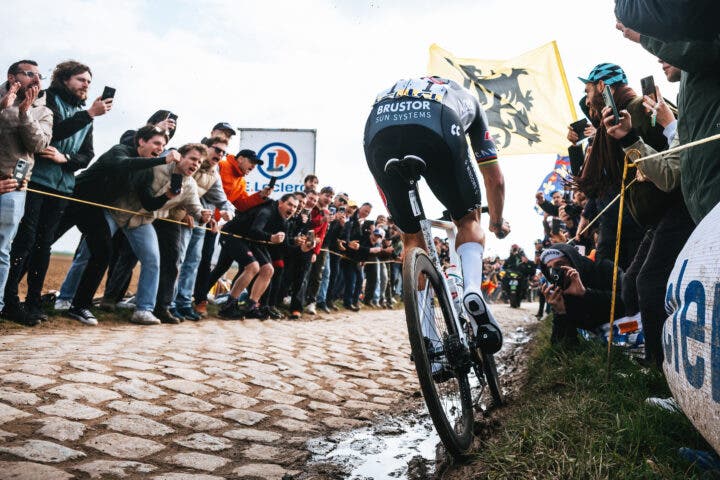
If the Tour de France is cycling’s Super Bowl, the spring classics are the two-wheeled version of March Madness.
You never know what you’re going to see, except the guarantee of chaos and mayhem. For every favorite, there’s a Cinderella story waiting to come true.
ADVERTISEMENT
The one-days unfold across cycling’s most unforgiving roads, if you can even call them that.
Narrow farm tracks and bone-rattling cobbled sectors are throwbacks to a bygone rural Europe.
That the monuments even still exist seems almost criminal in the modern era. By today’s ever-sharpening safety standards, Paris-Roubaix wouldn’t pass inspection.
Yet riders crave it and almost seem addicted to this blood-and-guts racing vibe.
There’s an almost perverse pleasure taken in six hours of pain. Riders race the cobbles without gloves and finish with their palms bloodied and shredded.
Yet they come back for more.
John Degenkolb, a winner in 2015, keeps returning even if his best days are behind him.
Why? Because a race like Roubaix can tilt in favor of the brave and away from the soulless power meter, if even for one magical afternoon.
ADVERTISEMENT
Holding nothing back
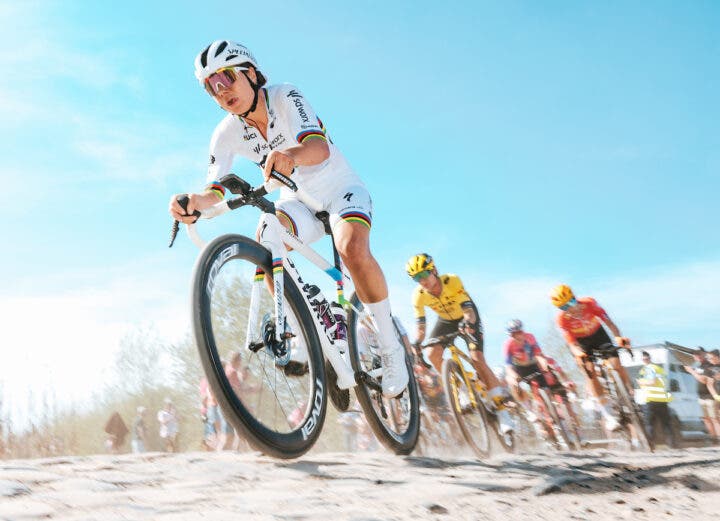
Careers can be defined in a single afternoon. Legends are forged in the mud and cobbles in cycling’s most brutal races.
Winners never have to buy a beer again, and even the losers get lucky sometimes (to borrow a line).
ADVERTISEMENT
Unlike stage racing, where the strongest and most consistent almost always prevail across 21 stages, here miracles can happen.
The monuments can produce shock winners, like journeyman Mathew Hayman, who defied a broken arm just weeks earlier to win Roubaix, or Alison Jackson, who turned her Roubaix triumph into a never-ending dance.
This is about emptying the tank in the most extreme way.
And leaving it all on the road can take on a quite literal meaning when brutal sectors like the Koppenberg or the Carrefour de l’Arbre can extract their cruel toll of skin and bone.
Teams and riders spend months preparing for these few decisive days, knowing full well this is cycling’s ultimate roulette wheel.
When the flag drops, riders drive the pedals until they crack, crash, or until they’re caught.
And still, they return, drawn back by an almost irrational pull to test themselves against the legendary stones one more time.
ADVERTISEMENT
Roubaix lives within that contradiction. It is at once the most feared race on the calendar and the most coveted.
Rock and a hard place
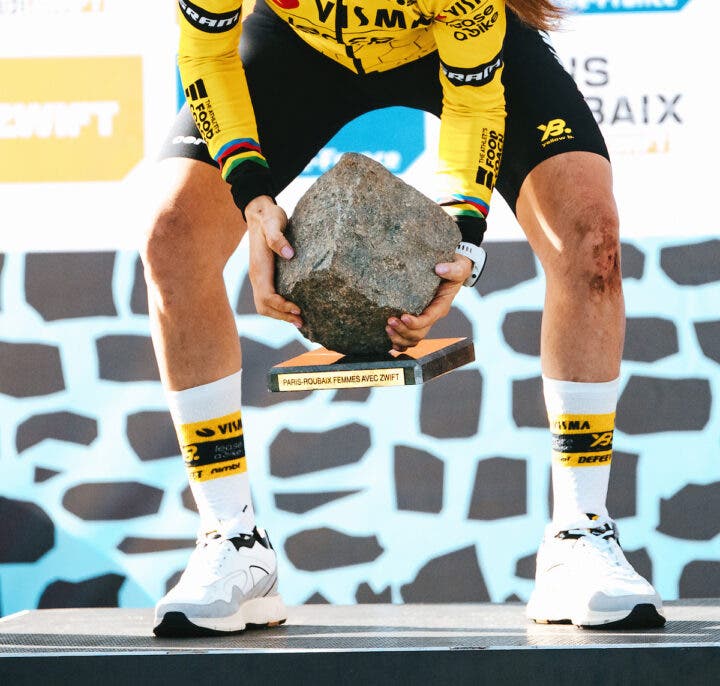
These are cycling’s oldest and most prestigious races.
Tour of Flanders, first run in 1913, mirrors the grit and pride of the region of Belgium. Today, it’s effectively a national block party, with an estimated one million fans lining the roads each spring.
The terrain is deceptively simple but brutally hard when raced at top speed and the wind and cold kick up.
Flanders is contested across mostly flat roads, punctuated by short, savage walls — the “mur” — that have become synonymous with cycling legend.
The Paterberg and the Oude Kwaremont are stacked up like a saw blade, with leg-breaking, spirit-breaking climbs that detonate Flanders in seconds.
Further south, some ghoulish race organizer conjured up Paris-Roubaix in 1896. It was soon called the “Hell of the North.”
ADVERTISEMENT
Its cobbled sectors — including the infamous Carrefour de l’Arbre and Trouée d’Arenberg — remain among the most brutal stretches in modern sport.
Cobbles and walls
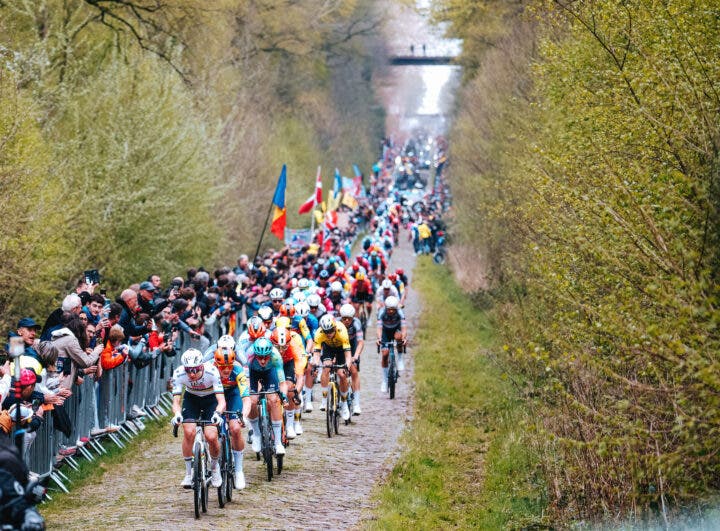
All spring, races have come down to the wire, and there’s no reason to expect anything different at Flanders and Roubaix.
This year’s Dwars door Vlaanderen and In Flanders Fields have shattered speed records. Faster races only equate to more mayhem.
Sunday promises something special with the late addition of Remco Evenepoel to the Tour of Flanders.
It marks the first time Wout van Aert, Tadej Pogačar, Mathieu van der Poel, and Evenepoel will clash in their trade team colors, a showdown so far only seen in international competition.
Van Aert remains the nearly man of the northern classics, cycling’s version of the Chicago Cubs.
New challengers are rising, and Evenepoel could surprise at Flanders, but make no mistake, these next two weeks are all about Pogačar versus Van der Poel.
ADVERTISEMENT
The pair arrives at the peak of their powers, with Van der Poel chasing history at Flanders and Roubaix, and Pogačar hunting the rare monument sweep, a feat set by three icons of cycling’s black-and-white era.
It’s Ali vs. Frazier on cobbles.
A different kind of rider
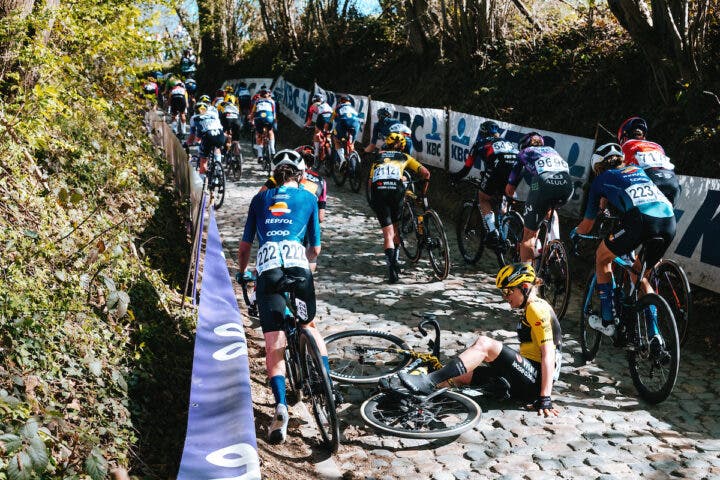
These races favor a different profile of rider. With big engines and brawny builds, these cobble-eaters are throwbacks to cycling’s prisoners of the road ethos.
Pogačar is breaking the mold of seeing a yellow jersey rattle across the cobblestones. Stage racers like Jonas Vingegaard and Demi Vollering are miles away from this hell on wheels.
Lotte Kopecky, Marianne Vos, and Elisa Longo Borghini have been counting down the days.
Filippo Ganna, Florian Vermeesch, and Matteo Trentin — riders who might get shelled on the first switchback of Alpe d’Huez — can float over the cobblestones.
These linebackers on bikes deliver brute force, torque, and grit reserved for cycling’s Sunday gridiron.
Mechanicals can shatter dreams in an instant. Tires puncture, chains snap, and wheels collapse under the violence of the stones.
Then comes the weather, wildly unpredictable in April across northern Europe.
ADVERTISEMENT
Rain and mud turn cobbles into ice. Crosswinds rip the peloton into echelons. If not, it’s impenetrable waves of grimy dust and suffocating heat.
The heartbeat of racing
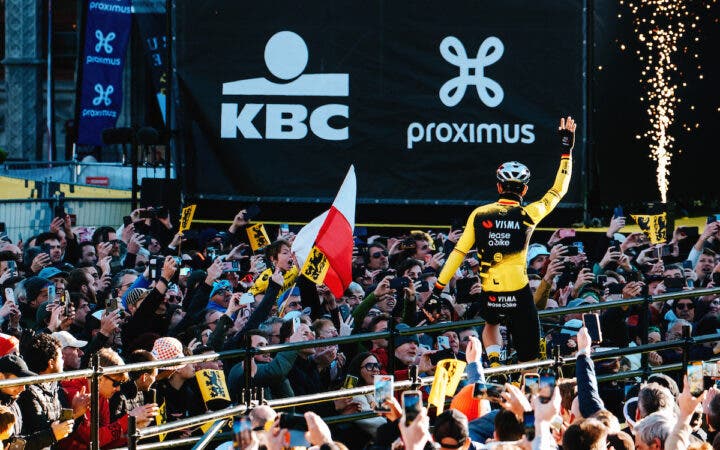
For fans, it is as close as you can get to the heartbeat of the sport.
Roads fill hours before the riders arrive.
Rowdy, beer-fueled crowds pack the sectors shoulder to shoulder, forming tunnels of noise and color. And peel back at the last second as riders blast through (at least in theory).
A trip to the Tour of Flanders or Paris-Roubaix should be on every fan’s bucket list. After a hard day of riding, plenty of bars and cafes await.
Cycling remains one of the few sports where you can ride the same roads as the pros. Just imagine teeing off at Amen Corner a day before Tiger Woods shows up for The Masters.
The spring classics remain gloriously unpredictable.
Even with the sport’s modern super hero Pogačar at the start line, you never quite know what you’re going to get, except long-range attacks and violent accelerations.
ADVERTISEMENT
The classics wait for no one, and no one saves anything for tomorrow.
These races capture everything good, cruel, and wondrous about bike racing.
Punishing, unfair, yet glorious and exhilarating all at once. This is cycling at its finest. Don’t miss it.