Updated April 26, 2026 05:27AM
Paul Seixas vs Tadej Pogačar at Liège-Bastogne-Liège: 9 Reasons the Hype Is Real
From freakish power numbers to unlikely beginnings, the hype around French phenom Paul Seixas peaks ahead of his Liège-Bastogne-Liège clash with Tadej Pogačar.
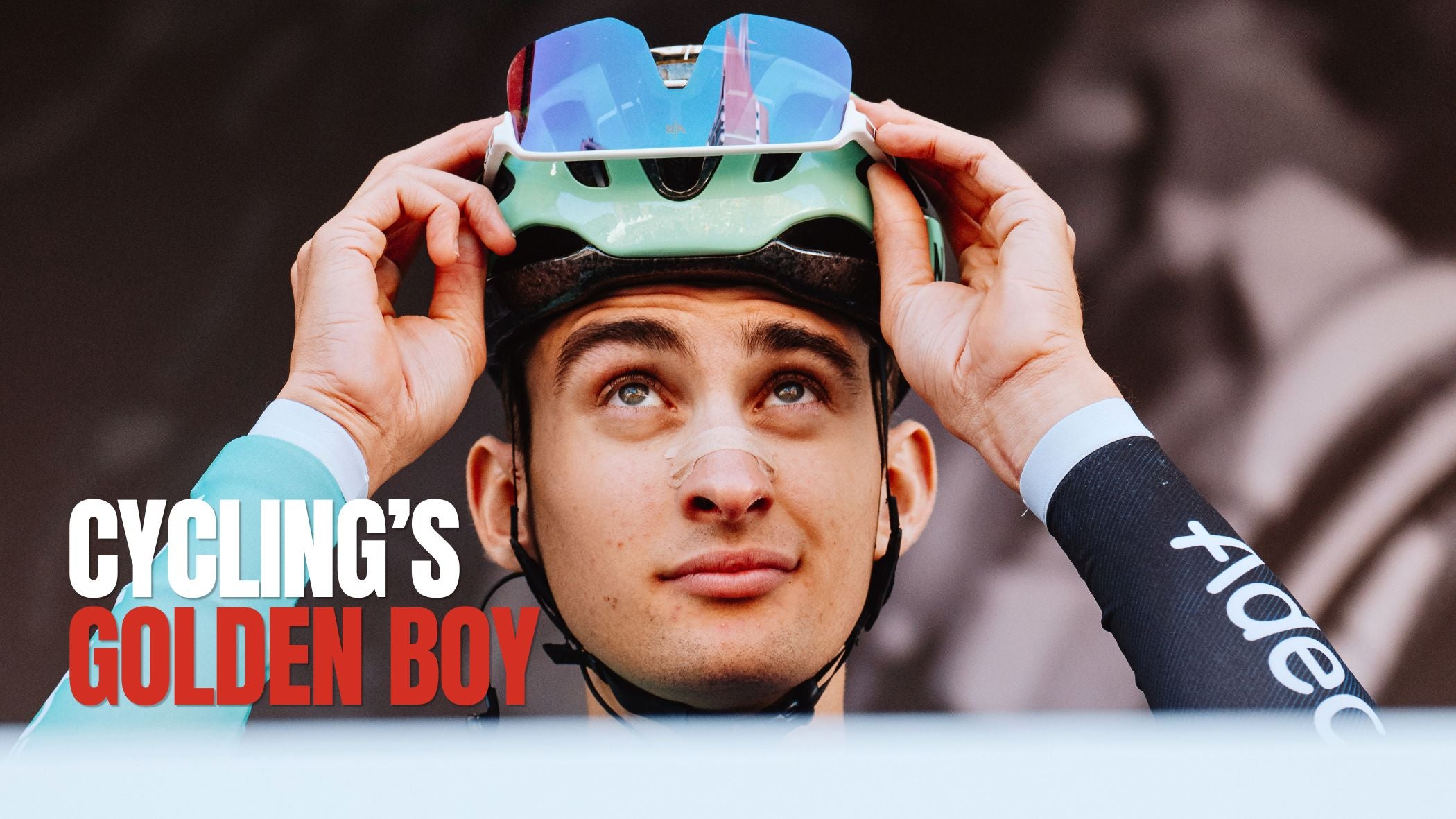
Seixas has set the European peloton on fire. (Photo: Gruber Images)
Paul Seixas has gone from promising talent to a full-blown phenom in a matter of months, and the hype around him is only getting louder around his meteoric rise.
The 19-year-old French rider is blowing up races, drawing comparisons to Tadej Pogačar, and reigniting dreams of a homegrown Tour de France contender.
No French rider has won the yellow jersey since Bernard Hinault in 1985. And while it remains to be seen whether Seixas will even start the Tour this summer, his rise is triggering a bidding war for his contract.
Everything comes to a head Sunday in an epic clash between Pogačar and Seixas at Liège-Bastogne-Liège.
There hasn’t been a sensation like this taking over cycling since, well, Pogačar. His stunning arrival has electrified French cycling and turned the WorldTour peloton on its head.
Here are nine reasons why everyone is talking about cycling’s newest golden boy:
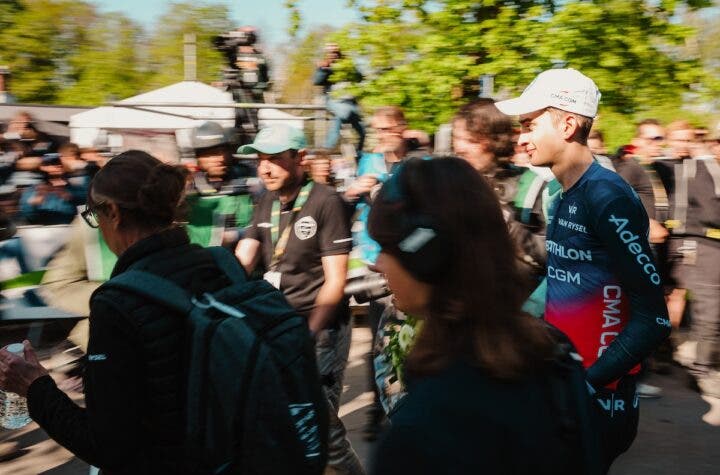
ADVERTISEMENT
1. He didn’t come from cycling royalty
Seixas is no cycling version of a nepo baby. There’s no Tour de France-winning relative in his lineage.
Born in Lyon in 2006, his parents were athletic, but into martial arts, not endurance sport. His father, Emmanuel, was a nationally ranked karate competitor.
ADVERTISEMENT
While he is French through and through in his upbringing, one of his paternal great-grandfathers was Portuguese. Seixas — which rhymes with Texas — grew up watching cycling and remembers tuning into the Tour de France with his grandfather.
“I pestered my parents to let me race bikes,” Seixas told L’Equipe, adding that he told his his grandmother that someday she will be able to watch him because he dreamed of racing the Tour.
Like Pogačar, whose parents had no notable athletic background either, Seixas appears blessed by the cycling gods.
2. He was winning almost immediately
Seixas started racing at eight with local club Lyon Sprint Évolution, and French media report that he won across nearly every age category as he climbed the ranks.
In 2021, he stepped up to Vélo Club Villefranche Beaujolais, a more structured junior program, and won the U17 national road title. By 2023, he moved up to Decathlon’s junior development squad.
In his final full season as a junior in 2024, he won Liège-Bastogne-Liège Juniors and claimed the junior world time trial title in Zurich, becoming the first French rider to win the category.
ADVERTISEMENT
By then, everyone inside French racing was starting to take notice — a young, aggressive winner who can climb and time trial, hmmm.
3. His breakout came fast and hard
In 2025, Decathlon CMA CGM began easing him into select pro races, and he wasted no time making an impact. Last spring, he was second at Paris-Camembert, a punchy Ardennes-style classic, and second again on the final stage at the Tour of the Alps, both times part of long, aggressive breakaways.
What was bubbling among cycling’s intelligentsia went mainstream last summer after he finished eighth overall at the Critérium du Dauphiné against a field stacked with Tour de France contenders.
Then came his stunning win at the Tour de l’Avenir at just 18. He overturned a 29-second deficit on a climbing time trial to seize yellow on the final day.
That’s when the first full-blown Pogačar comparisons began to take root.
After he closed out the season with third at the European Championships road race and seventh at Il Lombardia, and “Seixas Fever” was taking over French cycling.
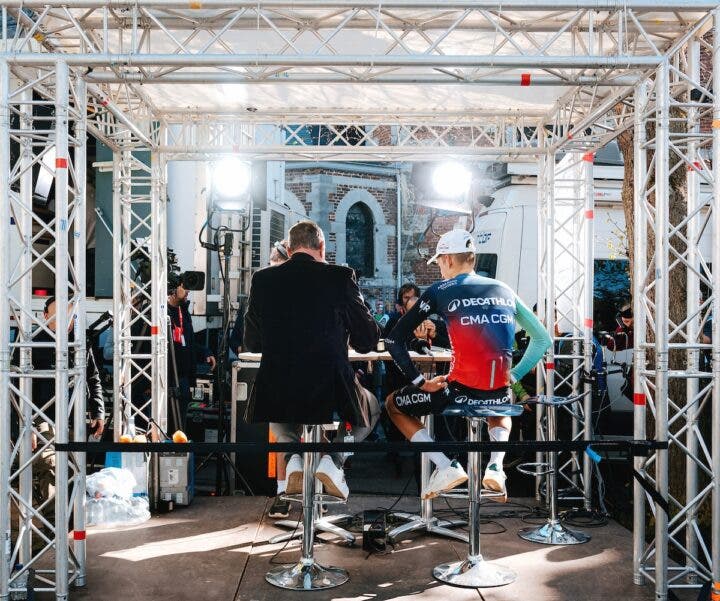
ADVERTISEMENT
4. His physiology is insane
At 1.83m and 65kg, Seixas matches an old-school climber’s build with off-the-charts aerobic capacity.
His power numbers are already world class. Though there are no official numbers, some estimates put his VO₂max at the low 90s, an exceptionally high figure by any historical standard.
ADVERTISEMENT
According to Watts2Win estimates, Seixas is already pushing more than 7.0 W/kg for 20 minutes, with an FTP (Functional Threshold Power) more than 400 watts.
Velo’s Zach Nehr estimated that Seixas’ average power at Strade Bianche was “50w lower than Pogačar’s in the finale, Seixas likely had a NP (Normalized Power) close to 400w for two hours.”
Those insane numbers put him at the very top of the international peloton.
5. He races on instinct, not fear
Seixas is also proving he is not afraid to attack and knows when and where to move. Even Bernard Hinault — who’s been criticizing French riders for decades — is impressed.
All across 2024 and 2025, Seixas was jumping into moves. This spring, he launched a solo attack with 40km to go to win at the Faun-Ardèche Classic.
To be able to do it this season against the elite WorldTour pros and deliver victory confirms that his class matches his racing instincts.
ADVERTISEMENT
“Paul is a breath of fresh air. He races on instinct, not fear. Where others calculate their efforts or wait for the safety of the final kilometer, he is already on the move. He has this rare ability to ignore the reputations of the riders around him and simply race his bike,” said Decathlon sport director Cyril Dessel.
Seixas is not waiting around for a sprint. Sound like someone?
6. He’s already crushing WorldTour races
Seixas has already proven he can beat elite fields in his first full WorldTour season.
His first pro win came at Algarve in February and he followed that up by dominating Europe’s hardest one-week stage race at Itzulia Basque Country, with three stage wins and the overall. That was France’s first WorldTour-level stage race GC win in nearly 20 years.
Winning La Flèche Wallonne in his first crack up the Mur de Huy in near-record time only poured more fuel on the Seixas bonfire.
“We were not just riding for a result. It was serious business. Nothing like a top 5 or a podium, but win the race,” teammate Stan Dewulf told Wielerflits. “You still think, how is this possible? It was the first time racing here. He did the Mur de Huy three times during the race and once the day before during the course reconnaissance. Not many do that.”
At 19, Seixas became the youngest winner of a WorldTour stage race at Itzulia, a full year younger than Pogačar was when he won the 2019 Amgen Tour of California at age 20 (then a record as well).
ADVERTISEMENT
Seixas is now the youngest winner in the history of La Flèche Wallonne. With that, he’s even bettering some of Pogačar’s early milestones.
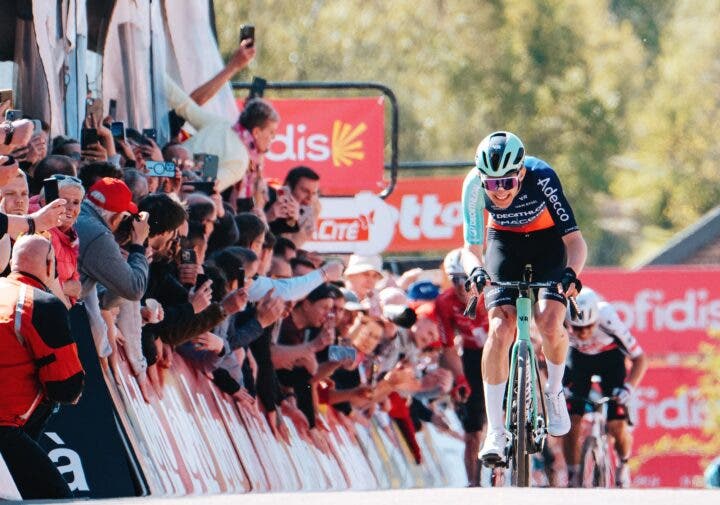
7. Mature beyond his years
All this could be too much for a 19-year-old, but Seixas is not letting the rapid success go to his head. Eerily like Pogačar, he’s calm and level-headed despite everyone losing their minds around him.
Seixas is already making front-page news in L’Equipe, and the hype will only build toward a possible Tour de France debut this summer.
Rivals are also seeing how Seixas crushes races just like Pogačar does.
“Paul rode like a boss and showed today that he’s the strongest, hats off to him,” said UAE’s Benoit Cosnefroy at La Flèche Wallonne. “I thought it might not have been an effort he really enjoyed, but in reality, it’s like Tadej, when you’re physically strong, you can shine on all terrains.”
ADVERTISEMENT
8. Every big team wants to sign him
If the growing circus wasn’t enough, speculation is going into overdrive about his future.
Officially on contract through 2027, Seixas is at the center of massive speculation about a possible exit to a rival team.
ADVERTISEMENT
Seixas now has cycling wealthiest super teams chasing his signature. With a rumored €8 million price tag, there are even whispers of political pressure from President Emmanuel Macron to keep him on a French team.
Sources indicate that UAE Emirates-XRG, Lidl-Trek, Red Bull–Bora-Hansgrohe, and Ineos Grenadiers are putting out feelers.
“He keeps getting those questions, but I do not think he even knows yet what he wants,” Dewulf told Wielerflits. “Don’t forget that he pulls off a new impressive feat every week, and those performances change things quickly. I think he has become half a million more expensive almost every week.”
UAE scooped up Pogačar early. Now the big question is can Decathlon keep Seixas?
ADVERTISEMENT
9. The Pogačar comparison is real
Seixas is already tracking along on a similar arc as Pogačar and the pair will inevitably clash even more.
So far, many of their milestones have come at the same age, even if they’re almost exactly eight years apart in age.
Seixas’ power numbers are closing in on Pogačar and the rise of the Frenchman comes just as the Slovenian looks at the peak of his powers.
ADVERTISEMENT
No one’s expecting Seixas to drop Pogačar on Sunday, but some are wondering if Pogačar might not be able to drop Seixas.
“He is a great champion, like Tadej Pogačar and Remco Evenepoel, riders who can win both stage races and one day races,” said Decathlon sport director Julien Jurdie. “The future is bright for him, but Paul does everything so naturally. I have been a directeur sportif for 25 years, and this is the best rider I have ever worked with.”
Can Seixas follow the Pogi pathway all the way to Paris? Pogačar won the Tour de France in 2020 in his debut, just two years after winning Avenir.
By that logic, Seixas could be in line for the yellow jersey in his Tour debut in 2027.
That is, if he doesn’t race the Tour this summer.