Updated April 17, 2026 07:20AM
Even Last Place Was Faster Than 2018 Paris-Roubaix Winner Peter Sagan
The final rider into the velodrome Sunday was faster than Paris-Roubaix winners from a decade ago, underscoring how bike tech, aero gains, and fueling are driving record speeds.
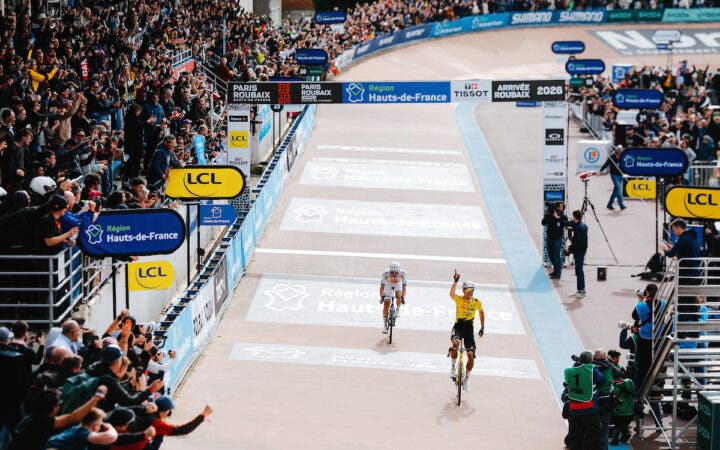
Paris-Roubaix (Photo: Gruber Images)
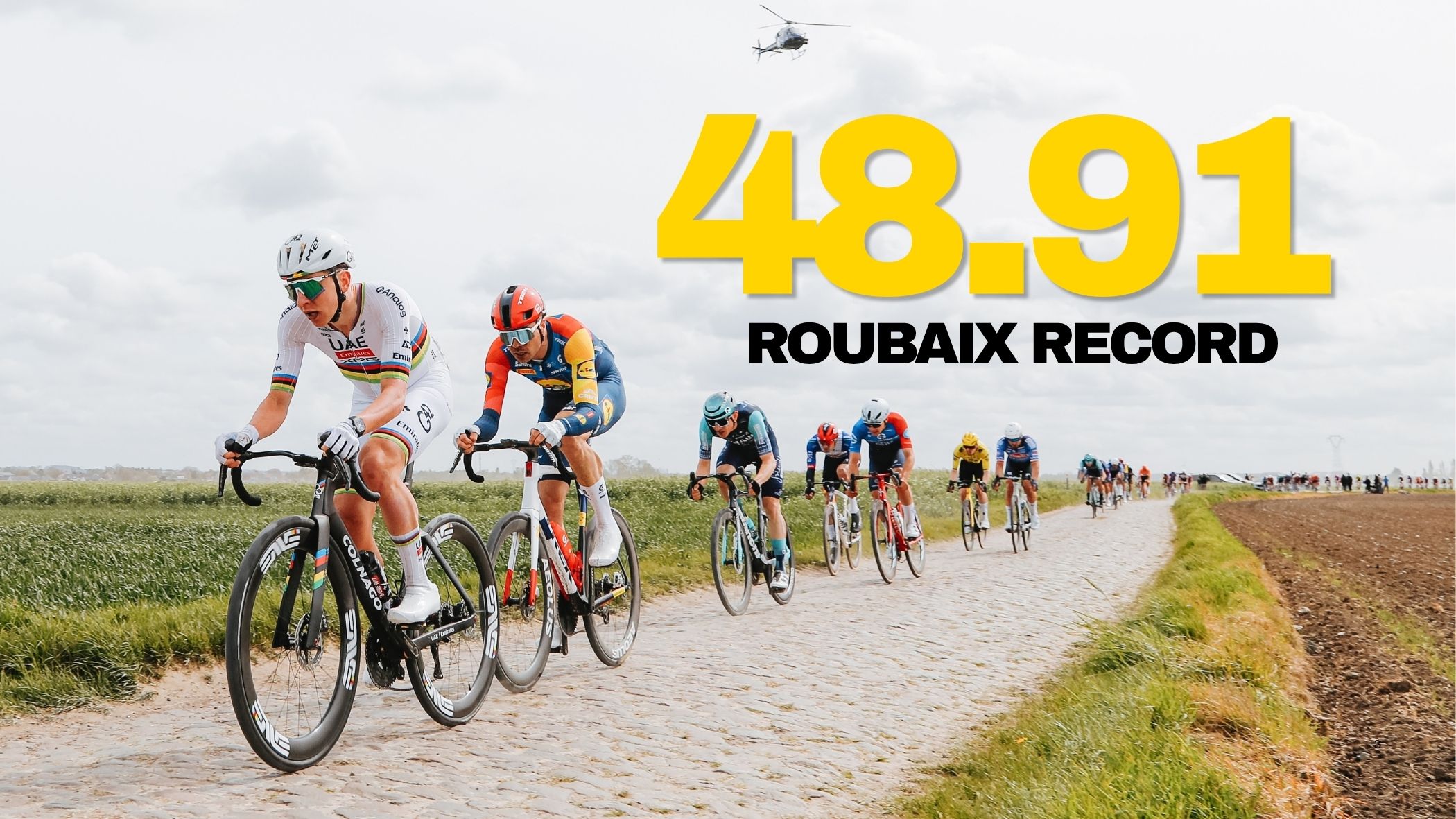
How fast was Sunday’s record 48.91kph at Paris-Roubaix?
Even the time of the officially classified last-place rider — Benjamin Thomas (Cofidis) in 141st at 24:31 back — was faster than Peter Sagan and just about every Roubaix winner from a decade ago, except for Greg Van Avermaet’s then-record ride in 2017.
In today’s super-aero peloton, that stragglers and late call-ups are finishing faster than former winners reveals just how fast cycling is evolving.
Wout van Aert set a new average speed of 48.91kph in 5:16:52 on Sunday, turning the Queen of the Classics into the fastest edition ever recorded across its brutal 130-year history.
That speed blew past the previous men’s record of 47.80kph set by Mathieu van der Poel in 2024 by more than a full kilometer per hour.
Rider after rider came to the velodrome in disbelief at how fast Sunday’s sufferfest was.
ADVERTISEMENT
“The race was on from the start, and with the tailwind it was super fast all day, it was incredible,” said former winner John Degenkolb.
And Thomas? The Cofidis rider had never raced Roubaix and wasn’t even supposed to start.
“I wasn’t originally in the line-up. On Friday, I was still at the Pays de la Loire-Tour de Marne. But we’ve had a lot of injuries, so the team asked me to come along,” Thomas told AFP. “I didn’t know any of the cobbled sections. I didn’t even do a recce.”
That a rider making his Roubaix debut finished faster than winning times from a decade ago confirms the sport has hit a new warp speed.
ADVERTISEMENT
Speed had been clicking up over the past decade
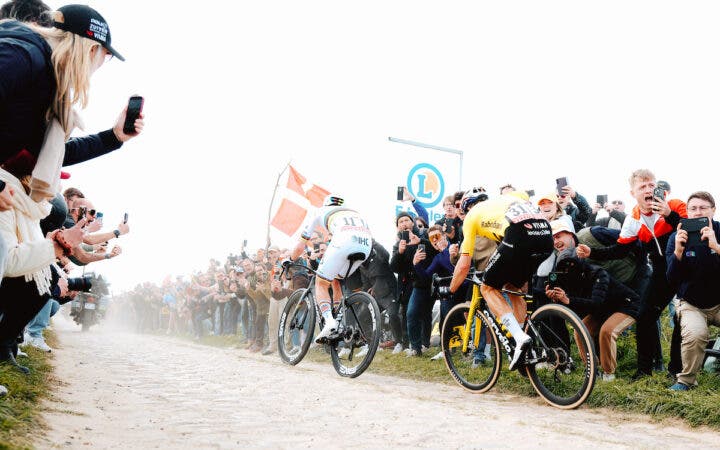
Comparing times of Sunday’s stragglers to the likes of Sagan or Van Avermaet is like comparing a donkey to a thoroughbred, but it reveals how speed has been ticking up at Paris-Roubaix over the past decade.
In fact, four of the past five editions of the men’s Roubaix have set new speed records.
ADVERTISEMENT
The Frenchman finished Sunday in 139th in the last official time — one other finisher was time-cut — at 5:41:23.
That means that Thomas was just under 13 minutes faster than Sagan’s winning time in 2018.
Though the cobble sectors and total distance vary slightly from year to year, Roubaix’s basic template has remained largely unchanged for decades, making average speed and finishing times a handy yardstick to compare eras. Weather is the obvious wild card.
What’s changed since the days of Sagan and Van Avermaet is the machinery. Bikes, wheels, and tires have evolved dramatically compared to their peak years a decade ago.
In 2017, Van Avermaet broke a nearly 50-year speed record with 45.20kph. He rode a BMC Granfondo RBX, not an aero frame, and raced on 30mm tubulars and a traditional 2x Shimano Dura-Ace groupset.
On Sunday, Van Aert lined up on a Cervélo S5 aero road bike, running 32mm tubeless tires and a massive 1x aero chainring.
ADVERTISEMENT
The 2026 edition clocked in at nearly 3.7kph faster than Van Avermaet’s previous benchmark from a decade ago.
Is 50kph next?
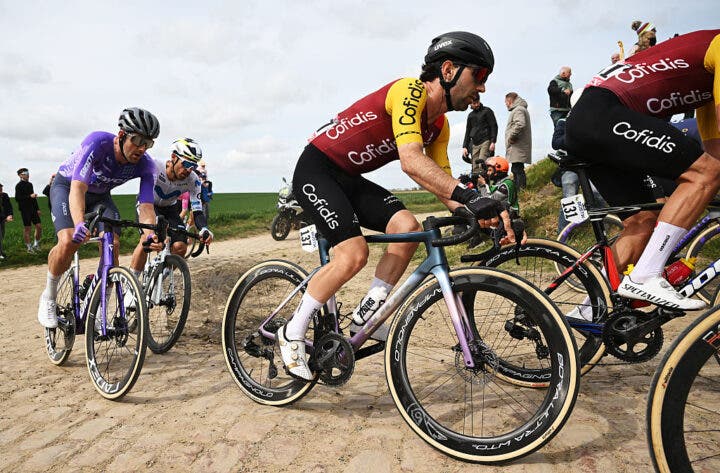
Today’s aerodynamic gains and wider tires are helping drive today’s high-speed version of Roubaix.
Since 2022 — a year after the last mud-soaked edition in 2021 — each Sunday in Hell has either set a new speed record or come close.
Alongside equipment, riders are preparing radically differently than they did a decade ago.
Fueling has shifted dramatically, with riders shoveling 100g of carbohydrates or more per hour into their faces. Altitude training blocks are now much more a part of the prep toward the monuments for the big favorites.
The arrival of Tadej Pogačar last year as cycling’s strongest rider also ramped up the stakes and the speeds.
Just when it seems the race cannot get faster, it does.
“We cannot go faster and faster”, Mathieu van der Poel said in a Paris-Roubaix press conference. “I think this is a bit the limit, to be honest.”
ADVERTISEMENT
Remarkably, the previous benchmark set by Peter Post in 1964 stood for 53 years until Van Avermaet finally broke it.
Some are wondering if next year will break 50kph.
Wind, ambition ramp things up
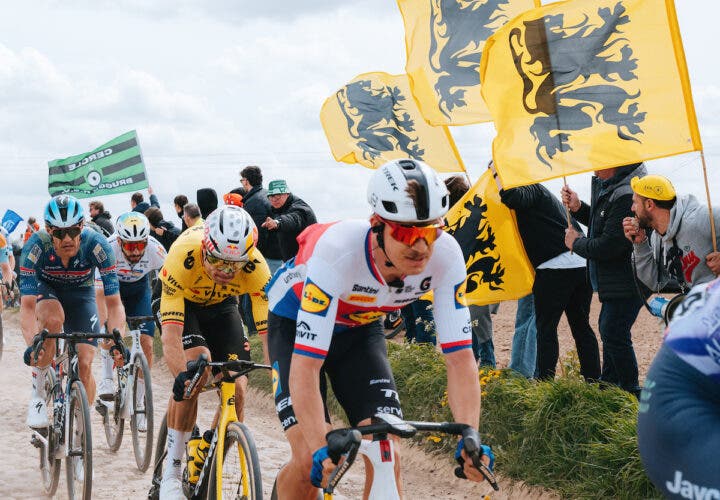
So what drove the blistering pace on Sunday?
The weather always plays a decisive role in L’Enfer du Nord. Headwinds, rain, and mud kill speed at Roubaix.
On Sunday, it was partly sunny with springlike conditions, and the cobbles were dry and running fast. Cross-tailwinds helped push the pace across the day.
As the splintered bunch pushed deeper into key sectors at Mons-en-Pévèle and Carrefour de l’Arbre, winds of 15–20kph nudged the speed even higher as the leaders chased toward Roubaix.
Race dynamics also helped dictate the speed. Unlike a traditional Roubaix, no early breakaway was allowed to pull clear.
UAE Emirates-XRG kept the pressure high from the gun and drove an unrelenting pace toward the first cobbled sectors to pile stress on their rivals as Pogi chased history.
The average speed was already above 50kph before the race even hit the pavé.
Despite a rash of punctures, a mix of tech, tailwinds, and ambition pushed the men’s peloton to warp speed in a route stacked with 30 sectors and 54.8km of bone-rattling cobblestones.
Last-place man Thomas had a unique view from the back end of the carnage.
ADVERTISEMENT
“My instructions were to join the breakaway. I tried once or twice. But the pace was so fast that breaking away from the peloton was virtually impossible,” Thomas said. “At Mons-en-Pévèle, I lost the group’s wheels and rode the last 40 kilometres on my own. Well, almost, because I caught up with Noah Vandenbranden and we finished together.
“When I’m at the Carrefour de l’Arbre, everyone is shouting, ‘Van Aert’s won, Van Aert’s won!’” he said. “I did the maths: I know I’ve got 16km and 25 minutes left to finish within the time limit. We finished just ahead of the broom wagon.”
Incredibly, his last-place time would have been good enough to win almost any edition of Roubaix going back a decade.
But put Van Avermaet or Sagan on today’s bikes, and they’d be racing for the podium. And Thomas would be near the bottom 10 years ago.
Another way to see it is in the time cut. Thomas barely made the hors délai limit, set at eight percent of the winner’s time.
Roubaix hasn’t gotten any easier; it’s just gotten faster.
ADVERTISEMENT
Fastest editions of Paris-Roubaix
| Year | Winner | Average Speed |
| 2026 | Wout van Aert | 48.91 km/h |
| 2024 | Mathieu van der Poel | 47.80 km/h |
| 2025 | Mathieu van der Poel | 46.92 km/h |
| 2023 | Mathieu van der Poel | 46.84 km/h |
| 2022 | Dylan van Baarle | 45.79 km/h |
| 2017 | Greg Van Avermaet | 45.20 km/h |
| 1964 | Peter Post | 45.13 km/h |