Updated January 5, 2026 08:47AM
2026 Could Be the Biggest Record-Breaking Season in Pro Cycling History
From the Tour de France to the monuments, why 2026 is shaping up as a perfect storm for a wave of new records in modern professional cycling.
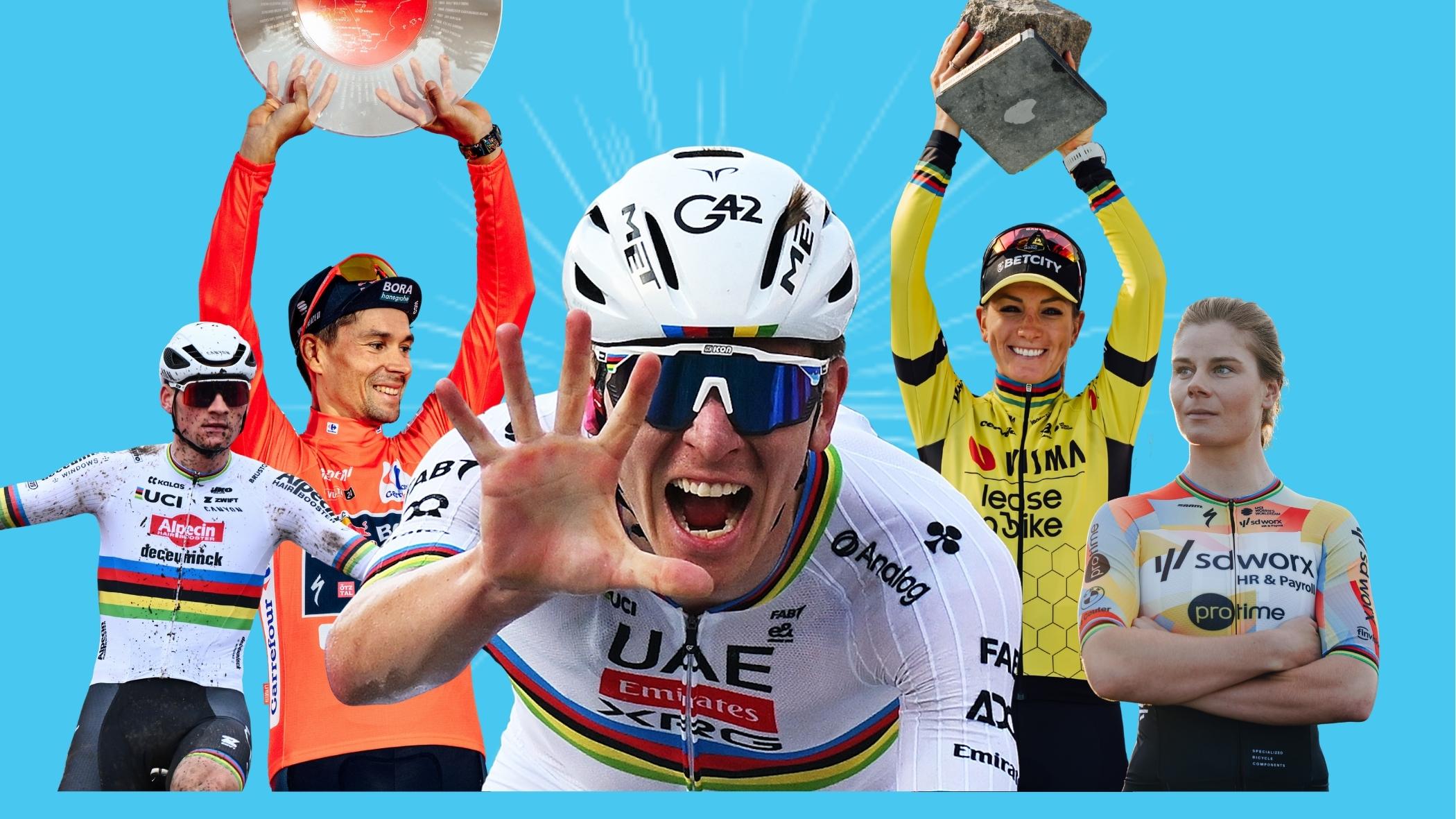
Some of cycling's most durable records could fall in 2026. (Photo: Chris Auld/Gruber Images/Velo)
The 2026 season will be another year of falling records and rewritten benchmarks.
In the age of super teams and mega-stars, cycling is accelerating into uncharted territory.
With “Generation Pogi” approaching peak power, some of the sport’s most durable and sacred milestones are now squarely in the crosshairs.
From the Tour de France to the classics, from world titles to raw win totals, a long list of historical markers could tumble in 2026 across both the men’s and women’s peloton.
That reveals just how good racing is these days.
It’s not just one team or one rider — even counting the super-sized presence of Tadej Pogačar — but a breadth of talent and competition unseen in decades at the very top of the sport.
So 2026 should be another roller coaster, so buckle up:
ADVERTISEMENT
The records Van der Poel could topple next
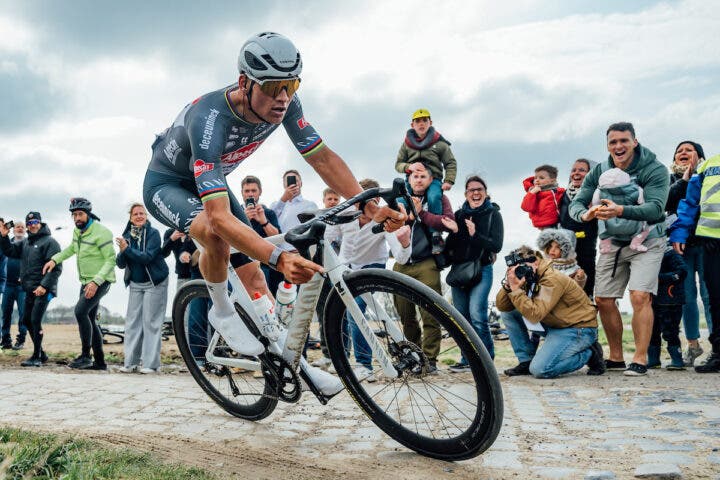
Right at the top is Mathieu van der Poel.
Arguably one of the best multi-disciplinary riders in history, MVDP has several historical markers on his radar in 2026.
ADVERTISEMENT
The first to fall should come within a month at Hulst at the 2026 cyclocross world championships on February 1.
Van der Poel is already tied with Eric De Vlaeminck with seven world titles, and if his nine-for-nine start to his CX campaign is any indication, Van der Poel is on track to rewrite history. With top rival Wout van Aert out with injury, who is going to stop him?
The Lamborghini-driving superstar is also knocking on the door for history in the monuments.
The Alpecin-Premier Tech anchor is already tied with Johan Museeuw, Tom Boonen, Fabian Cancellara, Achiel Buysse, Fiorenzo Magni, and Eric Leman with three Tour of Flanders wins. One more makes him the absolute record holder.
Another Roubaix victory would put him equal with Boonen and Roger De Vlaeminck with four wins for the record at Roubaix.
ADVERTISEMENT
Right now, he’s also tied with Museeuw and Cancellara with six wins in the so-called cobbled monuments across Flanders and Roubaix, and Boonen holds the record with seven. A Flanders-Roubaix double would push into new territory.
Pogačar poised to keep smashing ceilings
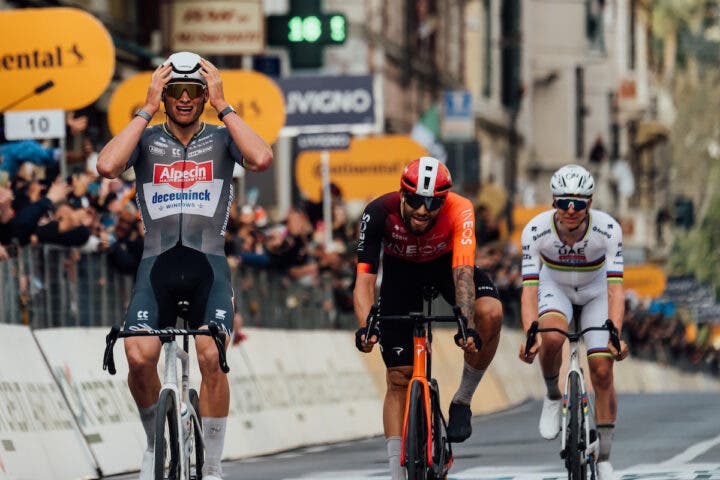
Pogacar’s name will come up a lot in this story.
Cycling’s monuments — kind of like golf’s majors — are considered the hardest, longest, oldest, and most prestigious one-day races, and Pogačar is hoovering them up like dustballs.
Despite winning the Tour de France four times (more on that later), one could make the argument that Pogačar is an even better one-day racer.
Pogačar made history in 2025 by becoming the first rider to podium at all five monuments in a single season, with third at Milan-San Remo, victories at the Tour of Flanders, Liège-Bastogne-Liège, and Il Lombardia, and runner-up at Paris-Roubaix.
The Slovenian superstar already ranks third on the all-time monuments list with 10 wins, just one behind Roger De Vlaeminck, who holds 11. Merckx is the record holder with 19.
ADVERTISEMENT
Even that seemingly unattainable mark — kind of like Jack Nicklaus and golf’s majors — could fall within a few years if Pogi doesn’t pull a Tiger Woods.
Chasing the ‘monument sweep’
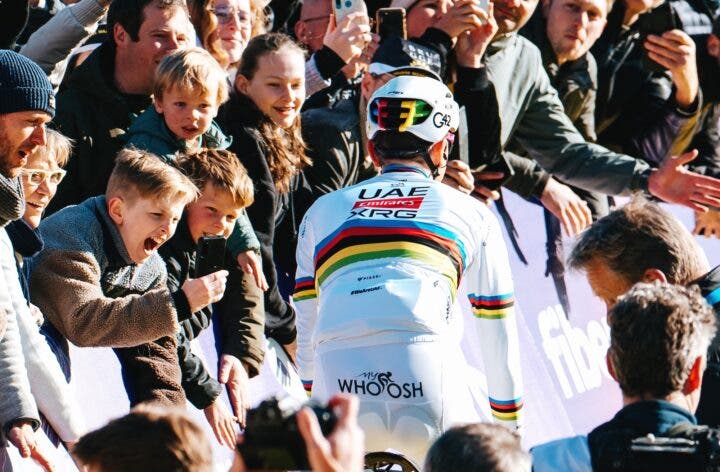
Another big challenge for the UAE leader in 2026 is completing the monument sweep to become just the fourth elite male to have won all five. The others are Merckx, De Vlaeminck, and Rik Van Looy.
Pogačar and Van der Poel look to be on a collision course again this season.
In 2025, the pair delivered an unprecedented sweep of the monuments, marking the first time in history that two male riders split all five, with Pogačar winning the Tour of Flanders, Liège, and Il Lombardia, and Van der Poel taking San Remo and Roubaix.
There’s more: If Pogačar wins a record sixth Il Lombardia — surpassing Fausto Coppi in the calendar’s only fall monument — he could pull within one win of another one of Merckx’s marks, who holds the absolute record of more victories in any singular monument, with seven at Milan-San Remo.
ADVERTISEMENT
Could a rider like Neilson Powless or Matteo Jorgenson join the rare club of American male monument winners?
Here’s the ultimate trivia question: Who is the only U.S. male rider to win one of cycling’s five monuments? It’s not Greg LeMond.
Many records could tumble in the women’s monuments
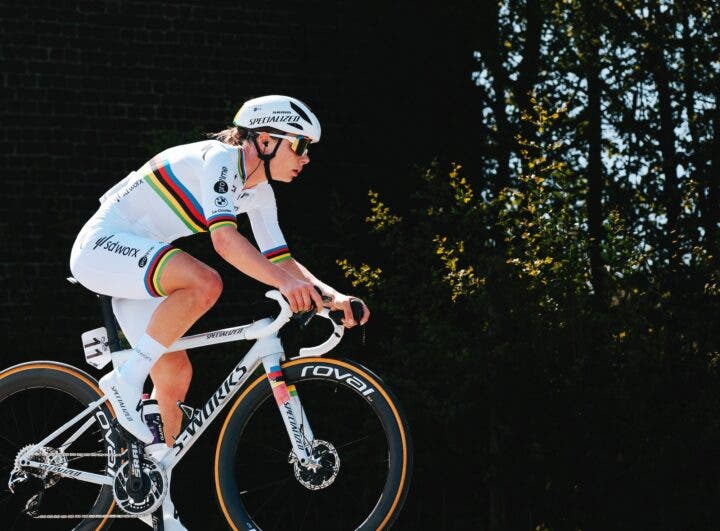
Women’s monument racing has a shorter history, but it’s quickly building its own history and hierarchy.
As of 2025, four of the five monuments feature women’s races on the UCI Women’s WorldTour calendar. Only Il Lombardia remains without a women’s equivalent.
No rider has yet completed a clean sweep of the four. Retired British star Lizzie Deignan came closest, winning the Tour of Flanders, Paris-Roubaix Femmes, and Liège-Bastogne-Liège.
Poised at the top of the all-time win list are Lotte Kopecky and Annemiek van Vleuten, each with four monument trophies. Van Vleuten won two wins apiece at Flanders and Liège, while Kopecky has built a modern dynasty with three victories at Flanders and one at Roubaix.
Kopecky is already the most successful Flanders rider, and could become the first woman to win Paris–Roubaix twice. Pauline Ferrand-Prévot could also become the first to defend the title at the feared “Hell of the North.”
At Liège, Anna van der Breggen and Demi Vollering share the record with two victories each, matching Van Vleuten’s haul. A win by either rider in 2026 would establish a new all-time benchmark at La Doyenne.
ADVERTISEMENT
Expect more Tour de France records to fall
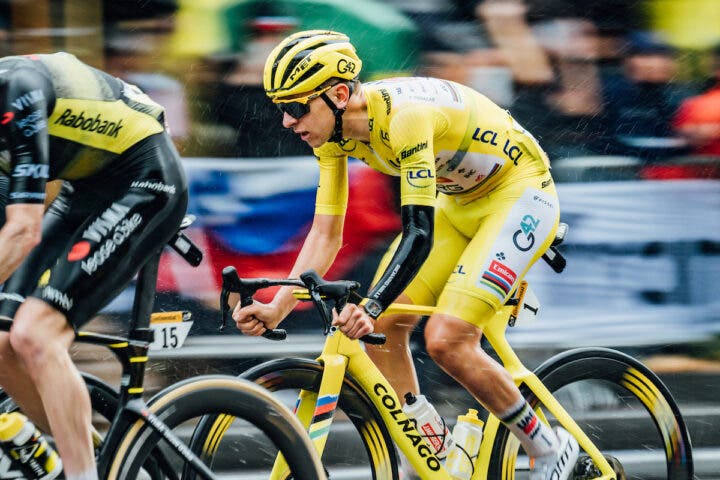
All eyes this summer will be on Pogačar, who could become just the fifth rider in history to win the Tour de France five times, joining Jacques Anquetil, Eddy Merckx, Bernard Hinault, and Miguel Indurain. Chris Froome remains the lone four-time Tour winner who never went on to win a fifth yellow tunic.
Right now, the Pogačar train is looking unstoppable, and there’s already some speculation that he might eventually target the tarnished benchmark of seven yellow jerseys claimed by Lance Armstrong, a number officially erased from the palmarès, but one that is still “there.”
ADVERTISEMENT
Reports that Jonas Vingegaard is weighing a Giro d’Italia start would put him on a path toward the rare “grand tour sweep.”
Only seven men have won all three: Anquetil, Merckx, Hinault, Felice Gimondi, Vincenzo Nibali, Alberto Contador, and Froome, with Indurain never winning the Vuelta a España.
Contador and Hinault are the only elite men to have won every grand tour at least twice, so there’s some unfinished business for Pogačar if he ever gets bored.
Only Merckx, Hinault, and Froome have managed to win all three grand tours in succession, though no rider has ever won the Giro, Tour, and Vuelta in the same season.
ADVERTISEMENT
Roglič looking for his own place in history
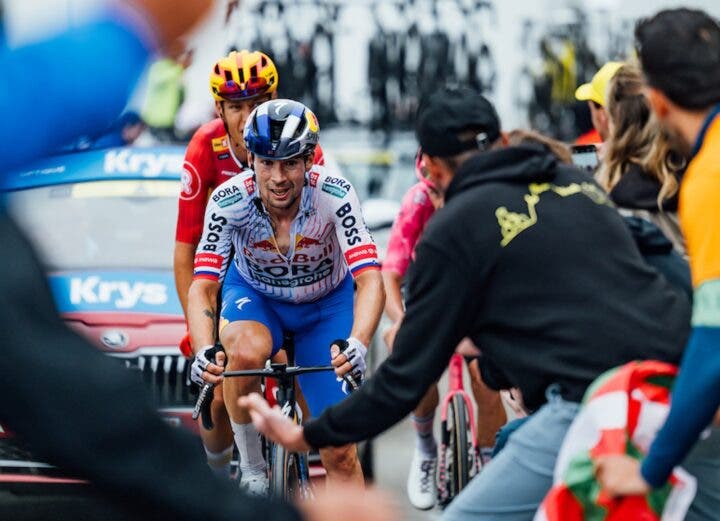
Primož Roglič could carve out a page of history of his own in 2026. A fifth Vuelta victory would lift him clear of Roberto Heras, with whom he is currently tied at four, and establish the absolute record at La Vuelta.
When will Pogačar race the Vuelta? Froome is the only rider to win the Tour-Vuelta double since the Spanish grand tour shifted to the autumn.
ADVERTISEMENT
In 2024, he became the first rider since the 1990s to pull off the Giro-Tour double, but stopped short of taking on the Vuelta in the past few seasons.
It will be interesting to see if any riders start and finish all three grand tours in one season, still something of a rarity.
Sepp Kuss was the last to do it in 2023, a year when he matched a feat last achieved by Gastone Nencini in 1957 by finishing all three grand tours and winning one of them in the same season.
Fresh benchmarks loom in women’s grand tours
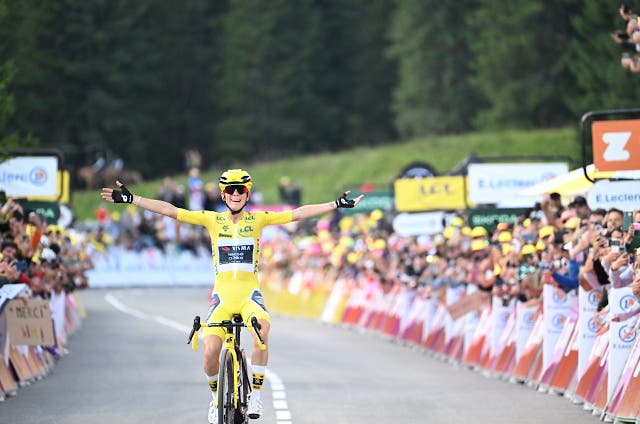
Records will also crumble this year in the women’s equivalent of the grand tours.
The Giro d’Italia Women, which shifts to June this season for its 37th edition, could see new chapters at the top of the record book. Anna van der Breggen, tied with Annemiek van Vleuten on four victories, could draw level with Fabiana Luperini atop the all-time standings with a fifth pink jersey.
ADVERTISEMENT
In France, Pauline Ferrand-Prévot could break new ground at the Tour de France Femmes, either becoming the first rider to successfully defend the yellow jersey or simply adding a second overall title to her palmarès.
At the Vuelta Femenina, Demi Vollering is poised to win what would become a record third victory.
World championships are ripe for record-breaking
Pogačar is closing in on yet another one of the sport’s most exclusive clubs on a favorable course in Canada.
A third elite men’s road world title would place him alongside just five riders in history who’ve won three: Alfredo Binda, Rik Van Steenbergen, Eddy Merckx, Óscar Freire, and Peter Sagan.
Sagan remains the benchmark with three consecutive rainbow jerseys, a streak Pogačar now has firmly in sight.
On the women’s side, Canada’s Magdeleine Vallieres will defend her title on home roads, chasing a feat achieved only sparingly in modern history. Kopecky most recently defended her crown in 2023-24, following earlier back-to-back runs by Marianne Vos (2012-13) and Giorgia Bronzini (2010-11).
ADVERTISEMENT
Overall, just nine women have won the elite road title twice, while Jeannie Longo stands alone as the outright record holder with five victories. Vos owns three titles and Yvonne Reynders won four times.
Against the clock, Remco Evenepoel is already a three-time world time trial champion and could move into rarified air. Only Fabian Cancellara and Tony Martin have won the men’s TT world title four times, another milestone that looks to be equalled this year.
For the United States, the wait for its next rainbow continues.
Audrey McElmury in 1969 and Beth Heiden in 1980 remain the only U.S. women to win the elite road world title. Chloé Dygert came closest in recent years with silver in 2024, the best American result since Megan Guarnier finished third in 2015. No U.S. male has medaled since 1993.
