Updated September 8, 2026 05:34AM
‘The Sooner, the Better’: Pro Riders Are Surprisingly Bullish on Airbags
Three airbag prototypes are already in the works, and pro riders say they would embrace the safety measure under one important condition.
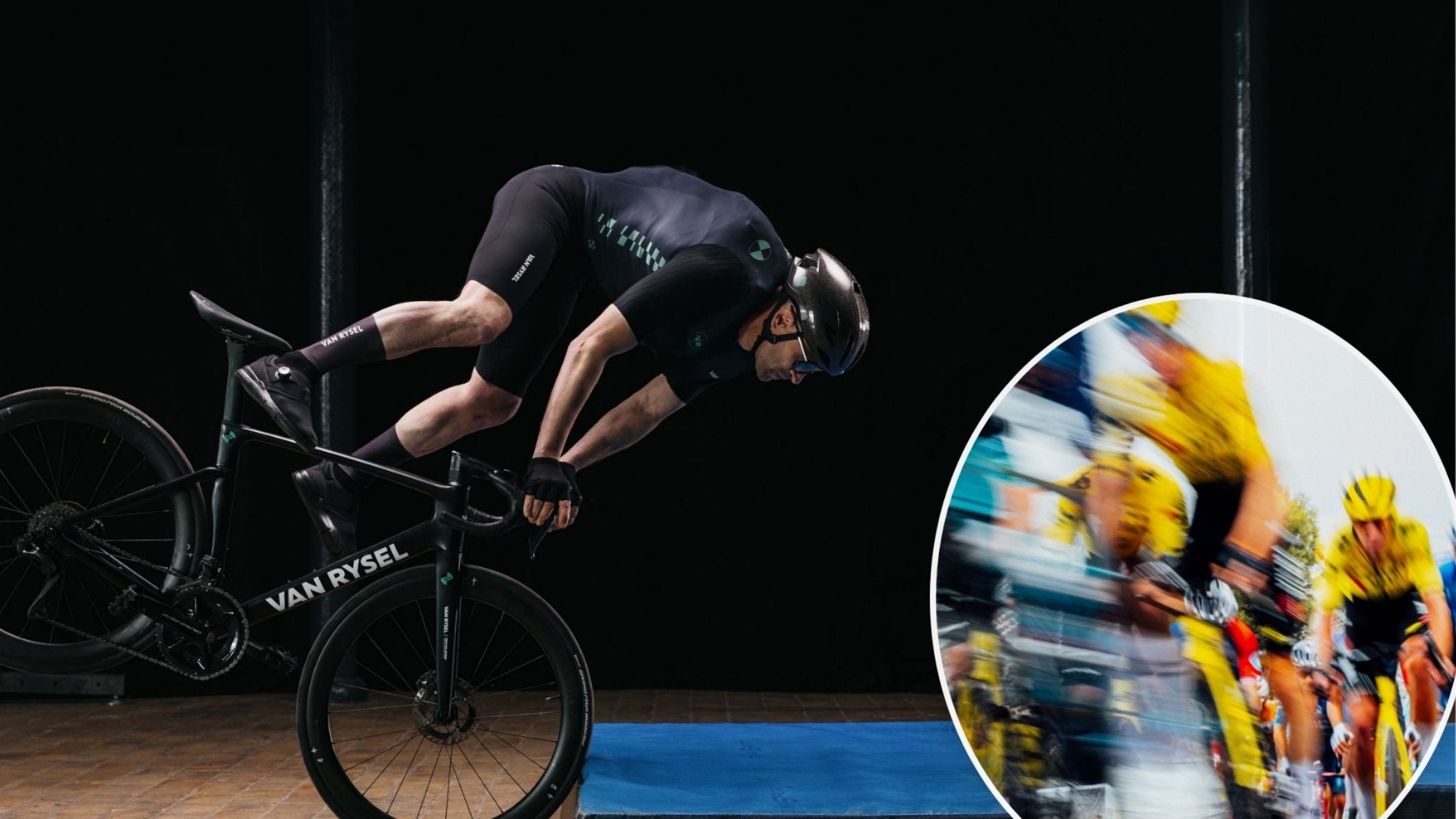
Riders say they would embrace airbags if they're proven to work. (Photo: Van Rysel/Gruber Images)
Airbags could be coming soon to the professional peloton, and riders say they are ready to wear them if the technology can reduce the risk of life-changing injuries.
Riders told Velo they strongly support the concept if they live up to their billing as manufacturers push ahead with race-ready prototypes.
“I think it’ll be amazing for the sport,” George Bennett (NSN Pro Cycling) told Velo. “I love racing, I love it all, with the big caveat of the life-changing risks that we take, and airbags would change a lot of that.”
The idea has gained urgency during another grim run of crashes and safety failures this summer.
Finlay Tarling, 19, died after being struck by a non-race vehicle at the Volta a Portugal. Tadej Pogačar crashed out of the Vuelta a España at high speed, while Ezra Caudell was hospitalized with multi-system trauma following a crash at the Philadelphia Cycling Classic.
Airbags won’t keep cars off race courses or prevent riders from crashing.
ADVERTISEMENT
But many believe that airbags could soften the impact and help decrease the severity of injuries when riders do hit the ground, strike traffic furniture, or go down in a high-speed pileup.
“I think it obviously doesn’t make it risk-free, but for some of the major injuries, I think it could go a long way to helping,” Bennett said.
Weight, heat, and performance remain the big tests
The idea is pretty simple: Sensors detect a crash and inflate cushions in fractions of a second around vulnerable areas like the neck, back, and shoulders before the racer hits the ground.
The technology already exists and similar kinds of airbag systems are already standard equipment in MotoGP and in alpine skiing’s downhill and super-G events.
At least three cycling-specific prototypes are already being developed with WorldTour teams (see below).
Bennett said the prototypes he has seen are better than he expected.
“The technology from the sort of minimalistic design of what I’ve seen has actually surprised me,” Bennett said. “I’d love to see more about how efficient they are, but the sooner they can come, the better for me.”
ADVERTISEMENT
Riders say they’re interested in anything that will help reduce cycling’s sometimes-brutal injury toll, but no one wants to race in something bulky that catches the wind or weighs too much.
“I heard things that they were weighing less than a few hundred grams, so that’s a couple of gels,” Bennett said. “So I don’t think the weight’s going to be a big issue.”
Questions remain over accidental deployment and whether a rider could continue racing with a deflated airbag flapping in the wind.
Larry Warbasse (Tudor Pro Cycling) agreed that riders would embrace the concept if testing proves that airbags can reduce injuries.
“Most of us are open to developments for us to be more safe,” Warbasse told Velo. “I just saw Van Rysel with an airbag built in and it didn’t look too cumbersome. Maybe we will see it in the next 5-10 years, and that’s a good thing.”
ADVERTISEMENT
Three airbag systems already in testing
Other concepts are already kicking around for commuter cyclists, from airbag collars that inflate around a rider’s head to commuter vests and backpacks that expand in a crash.
The challenge for pro racing is to make something lightweight and breathable that works at high speeds without compromising performance.
Work has been ongoing for years, and three projects are already being tested by WorldTour teams.
Van Rysel’s Project AIRBAG, developed with MotoGP safety specialist In&motion, packs sensors into a 700-gram skinsuit. Decathlon-CMA CGM riders have begun testing it in training.
Belgian start-up Aerobag uses inflatable tubes sewn into modified bib shorts, connected to a CO₂ cartridge and airbag on the rider’s back. Picnic PostNL has tested it in training, while Visma-Lease a Bike has also received prototypes to evaluate.
Castelli and Italian start-up Ragaz are also working with Soudal Quick-Step and AG Insurance-Soudal on a stripped-down 70-gram system. It sits underneath the jersey pockets and protects the spine.
ADVERTISEMENT
Riders say it must be everyone or no one
Could airbags become as ubiquitous as race helmets are today?
The UCI is also backing the technology.
In January, cycling’s governing body set the goal to establish safety standards and rules for their use in training and racing. No time line is set.
The CPA — the professional riders’ union — also supports the idea but insists there are a lot more practical and urgent measures, including safer barriers and better course signaling, that should come first.
Bennett and Warbasse agreed on one thing. They said most pros would agree to use them if and when airbags make their way into racing, but they must be mandatory.
“It would be like a helmet, required for everyone,” Bennett said.
Warbasse agreed.
“So long as everyone is doing it, it’s great,” he said. “It’s either everyone or no one.”