Published July 30, 2026 02:54AM
Back-Testing Snags Chinese Track Cyclist Lin in Decade-Old Doping Case
The case shows how cycling's anti-doping strategy has evolved from finish-line controls to surprise testing and the retesting of stored samples.
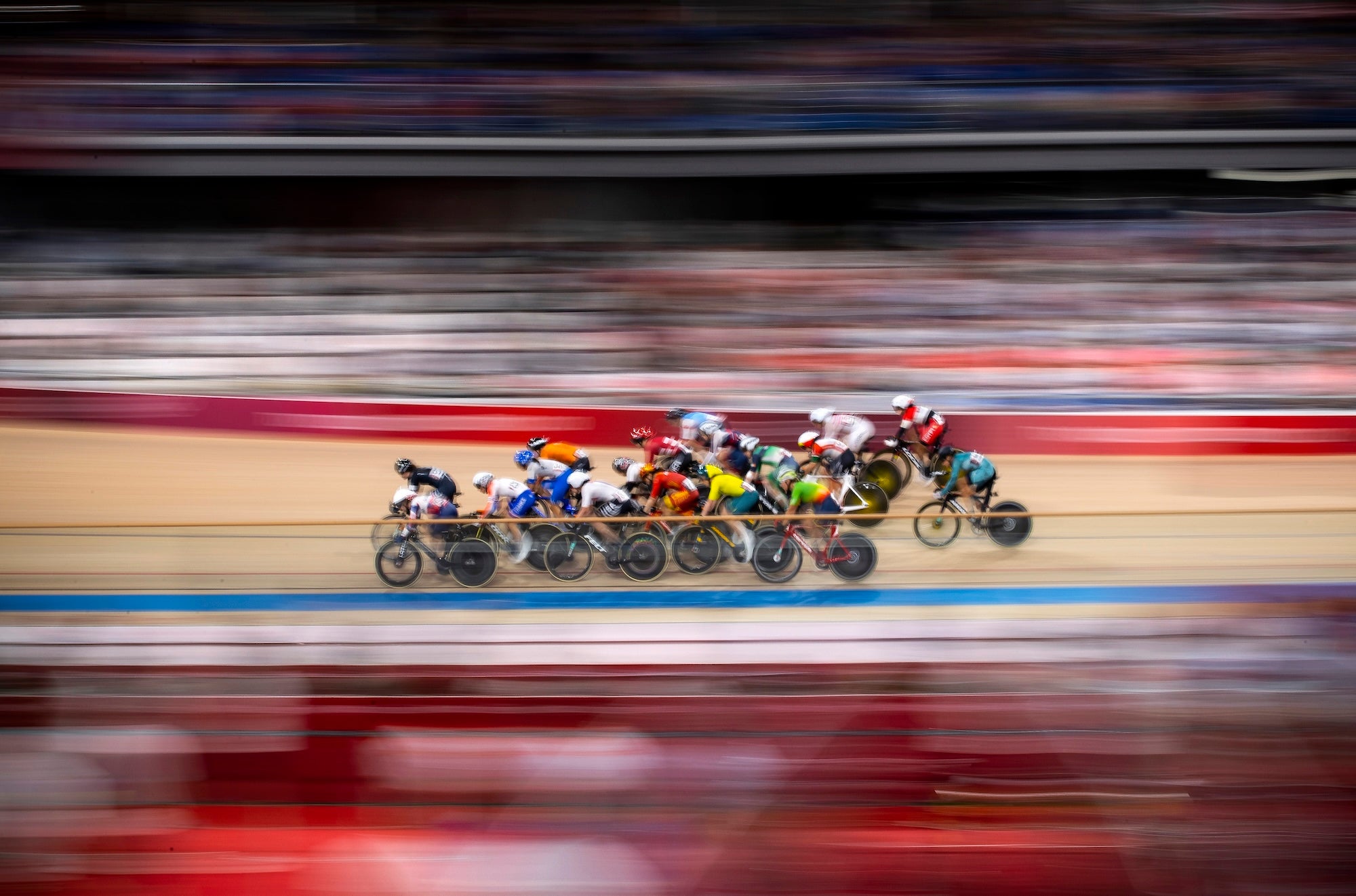
A track cyclist accepted a ban after back-testing of nearly decade-old samples confirmed the presence of banned substances. (Photo: Justin Setterfield/Getty Images)
Chinese track cyclist Junhong Lin, a four-time world championships medalist, has accepted a four-year ban after anti-doping authorities retested samples collected nearly a decade ago, the International Testing Agency said Wednesday.
The doping case dates back to urine samples collected during the UCI Track World Cup in Hong Kong and the Asian Track Championships in Izu, Japan, in 2016.
The samples were stored and later reanalyzed as part of the UCI’s long-term testing program, which allows old samples to undergo fresh testing using the latest detection methods.
She tested positive in two samples for the exogenous origin of adiols, an anabolic steroids banned at all times under the World Anti-Doping Agency code because of its muscle-building and performance-enhancing effects, the ITA said.
Lin, who won four medals in sprint events at the track world championships, did not contest the charges and accepted the sanctions.
Her suspension runs from October 7, 2025, through October 6, 2029.
ADVERTISEMENT
The ruling also wipes out all of Lin’s results from January 16, 2016, the date of the first positive sample, until the start of her provisional suspension in October 2025.
Latest bust in back-testing program
The case is the latest high-profile sanction to emerge from cycling’s long-term sample storage program.
Under WADA rules, blood and urine samples can be kept for up to 10 years and retested as detection methods improve.
Some of cycling’s biggest doping cases have emerged from retests. In 2008, Stefan Schumacher, Bernhard Kohl, and Leonardo Piepoli were banned after back-testing of Tour de France samples confirmed CERA positives. And retesting cost Davide Rebellin his silver medal from the 2008 Beijing Olympic Games.
This latest case comes after the Tour de France was marked by an unprecedented wave of overnight controls by ITA, which runs anti-doping for the UCI.
Riders including Jonas Vingegaard, Tadej Pogačar, and Remco Evenepoel were subjected late-hour tests as the ITA intensified its “anytime, anywhere” strategy. Every rider was tested during a peloton-wide rest-day control as well.
ITA officials said many of those Tour controls will be incorporated into the biological passport program.
The controls, combined with the long-term storage and retesting of samples, reveal how anti-doping authorities continue to expand enforcement beyond traditional finish-line controls.
The decision can be appealed to the Court of Arbitration for Sport.