Updated October 15, 2026 10:12AM
Doing Nothing Might Be Your Best Recovery Tool – and Now There's Proof
Rethink your recovery: Compression, cryotherapy, ice baths, and other costly tools fail to test better than doing nothing in new study.
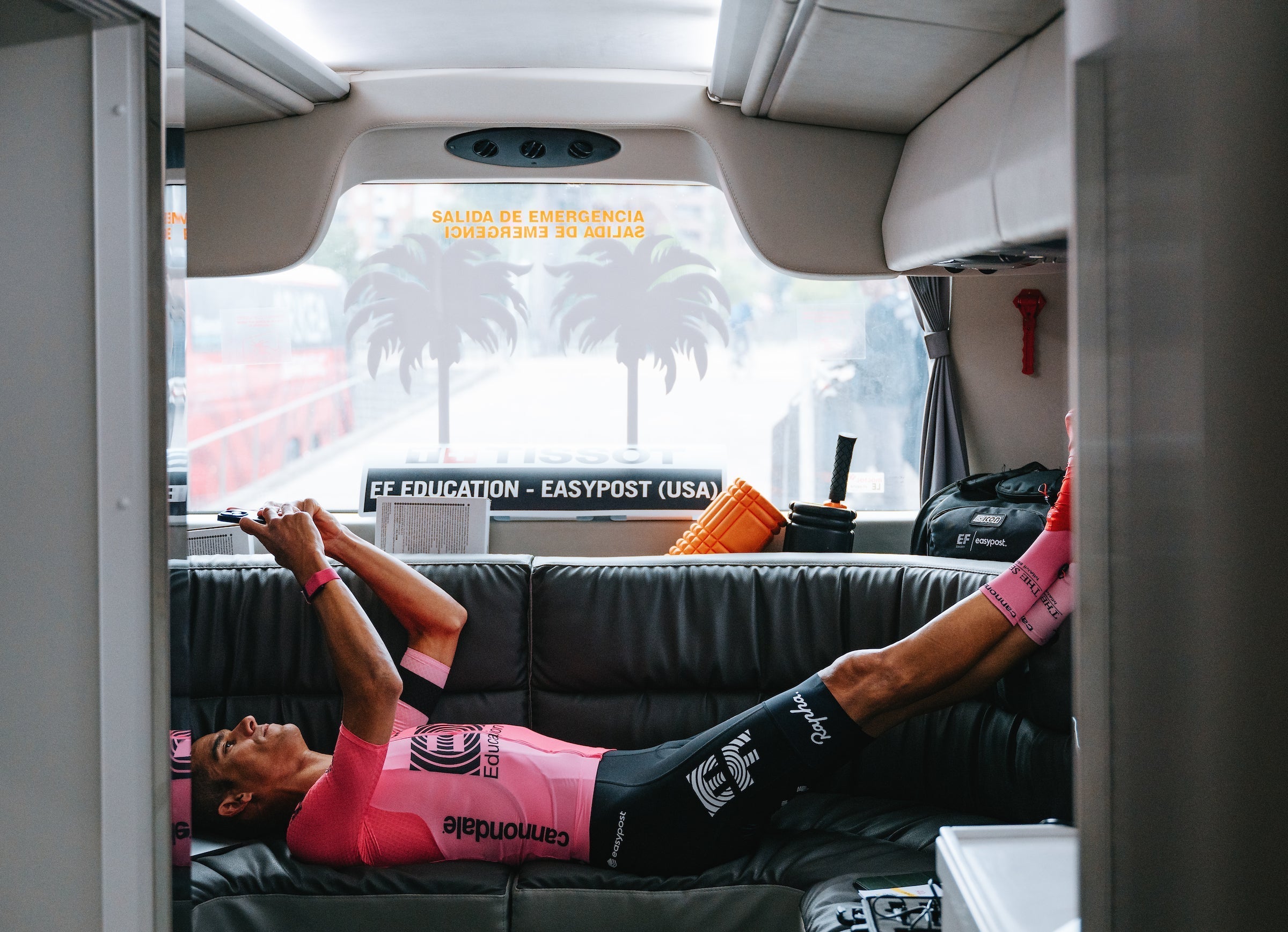
(Photo: Gruber Images)
Toss the compression socks, empty the ice bath, and cancel the recovery ride.
A new study has reinforced the theory that the best way to recover from a hard workout might be …. doing nothing.
That’s right.
Nada.
No freezing cold-plunge. No $100 cryotherapy session. And definitely no compression socks.
A new study on endurance athletes suggests that sitting on the couch, eating well, and sleeping plenty might be just as effective as any costly, time-consuming recovery modality.
The researchers’ findings should have you rethink how you plan to recover from your next heinous interval session or gravel fondo.
Because while the study doesn’t definitively disprove certain recovery tools, it significantly questions the confidence of the claims used to sell them.
Investing time and money in compression socks, ice baths, cryotherapy sessions, and electrostim devices?
You might be buying little more than belief.
ADVERTISEMENT
‘Big Recovery’ and the race for marginal gains
Recovery has become its own industry.
The premise that “you don’t overtrain, you under-recover” has driven an obsession with recovery hacks among cash-rich, time-poor amateurs who’re chasing easy gains.
Someone’s always selling a new “best way” to dodge DOMS, feel eternally fresh, and hit personal bests, every day.
But recovery is a mysterious thing.
What’s in the body, what’s in the mind? Was it the 10 hours of sleep or the four-minute cryotherapy session that saw you right after your most recent 100-mile ride?
Beyond that, the science behind many popular recovery tools rests on weak conclusions or is muddled by conflicts of interest.
A new independent paper published in August tries to cut through the noise.
By focusing on well-trained athletes who typically recover better than desk jockeys, it narrows the therapeutic window and reduces the chance for confounders. And unlike any previous review, it reports the certainty of its findings.
ADVERTISEMENT
The paper’s title?
Take a breath before you read it: “Physical recovery modalities in competitive and elite endurance athletes: a systematic review and network meta-analysis finding limited evidence of benefit over passive recovery.”
Comparing recovery tools to doing sweet nothing
So what did the study do?
The study pooled trials of 273 “competitive, elite, or professional” cyclists, runners, swimmers, triathletes, and cross-country skiers. The mixed-sex cohort spanned a range of ages.
And don’t think the findings might not apply to you, dear reader.
The minimum VO2 Max score required for inclusion was more than achievable for most athletes who “train” rather than tootle. These weren’t all Tour de France pros and Ironman champions.
Subjects were rated for DOMS (delayed onset muscle soreness), creatine kinase (a marker of muscle damage), performance restoration, and a number of other recovery markers after they used one or many popular recovery tools.
ADVERTISEMENT
All the hip recovery modalities and some old-school favorites were put to the test.
The study focused on cold-water immersion, cryotherapy, neuromuscular electrical stimulation, massage, compression garments, and active recovery (i.e., an easy ride).
The comparators? Passive recovery (i.e., doing nothing) and, as a sham intervention, immersion in a room-temperature bath.
‘No physical recovery modality outperforms passive recovery’
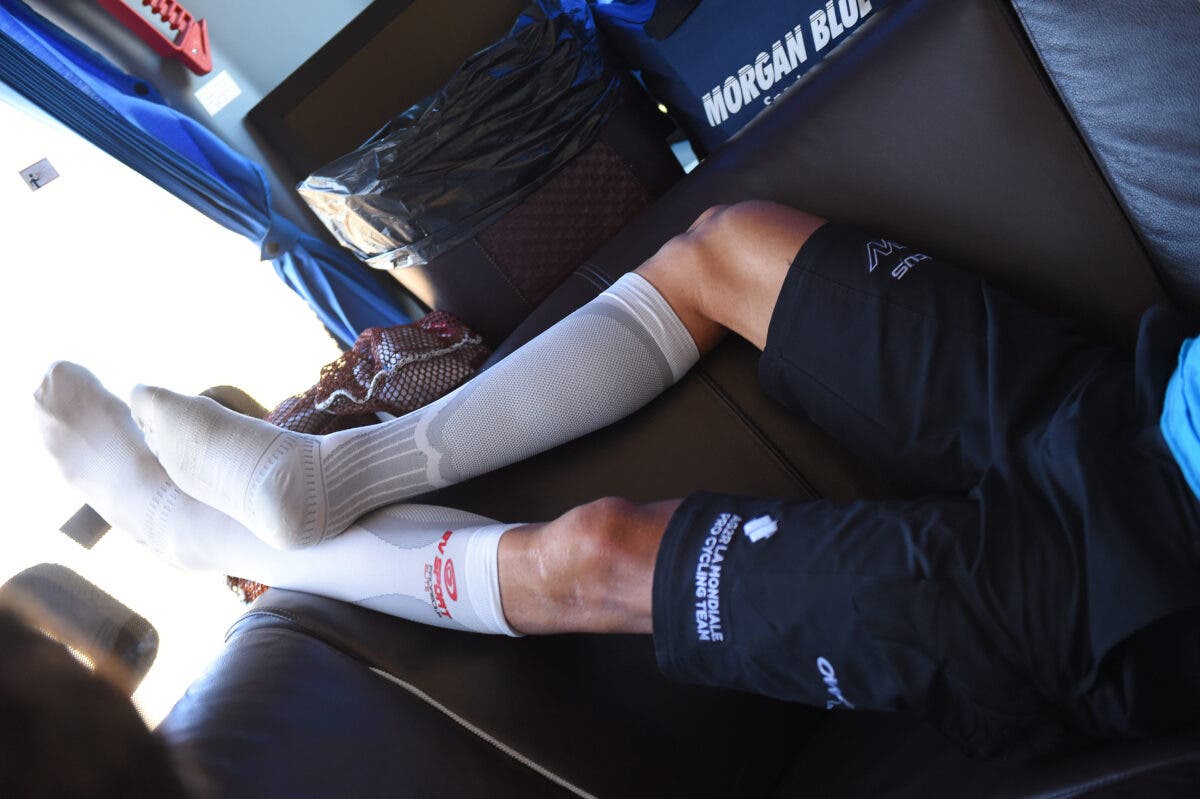
The experiment’s conclusion is bad news for your trusty compression socks. It doesn’t do much for the burgeoning recovery technology industry, either.
The headline?
No recovery tool can claim to be better than doing nothing.
“In competitive and elite endurance athletes, no physical recovery modality has been shown to outperform passive recovery on any outcome we examined,” reads the summary.
“For sport-specific performance, the evidence goes further: compression garments, active recovery, and neuromuscular electrical stimulation can be said, with low to moderate certainty, not to produce a clinically important benefit.”
ADVERTISEMENT
The study also failed to find any comparative benefit of one recovery method over another. A $100 cryotherapy session might be no better than a 30-minute recovery ride.
But that said, this isn’t armageddon for ice baths, compression socks, or Ridley Scott-inspired cryotherapy chambers.
The study’s findings are far from conclusive, despite using 47 comparison trials across nearly 300 athletes.
The authors point out several weaknesses in the methodology and complicating factors in the interpretation of the results. Indeed, result certainty was rated “very low” in 31 of the 47 trials comparing a recovery tool vs. doing nothing.
The one “moderate-certainty” finding might raise eyebrows, however. It might also reduce the average sock height in the finishing area of your next gran fondo or post-race flight.
The evidence concluded with reasonable certainty that compression garments – the cheapest, easiest, most accessible recovery modality out there – do not improve performance.
ADVERTISEMENT
But remember the power of the placebo
Recovery, however, is not all in the legs.
The placebo effect of any recovery modality is strong.
That’s why, even in the science-backed Tour de France, you still see riders shivering in ice baths after a stage and staggering around hotels squeezed into compression socks.
As Tudor Pro Cycling trainer James Spragg once told Velo:
“Some of the things riders use in recovery could also be considered placebos, or aren’t so well-proven. But to be honest, we don’t care if some things in the recovery protocol ‘work’ or not, just as long as riders feel it’s a benefit,” Spragg said.
“If a rider feels more confident for the next day as a result of something in their recovery process, it’s all a benefit,” he added.
As Spragg said, belief is a powerful component of recovery, as it is of performance.
ADVERTISEMENT
Many studies have found that recovery methods with the most noticeable sensory effect typically have the strongest influence on reported outcomes.
For example, the pressure of a compression sock or the shock of an ice bath might convince athletes they’re primed for PRs in their next workout.
The new paper reinforces the placebo theory by using a room temperature bath as a “sham” intervention.
Immersion in a thermoneutral bath (27 degrees C) ranked at or above every active modality for impact on DOMS, muscle damage, and ongoing performance.
If you feel something at work and you believe in it, it’s gonna work.
ADVERTISEMENT
So what does this all mean?

The main story here? The best way to ensure you recover well is to do the proven, unsexy basics.
Balance work with rest, workouts with recovery.
Minimize stress.
And certainly don’t sweat the small stuff. The time you spend locating your nearest cryo chamber or researching the best TENS unit to buy might be better spent snoozing on the couch.
But there is a reason even the least proven recovery products continue to thrive.
For pros whose job is to win bike races, even the slightest scent of a gain is worth exploring. If it’s legal and safe, why not?
And for amateurs, the power of belief is strong.
But ask yourself: can you believe in a recovery modality enough to invest hundreds of dollars or precious hours in it?
ADVERTISEMENT
If not, just eat your dinner, go to bed early, and forget about it. You might not be missing out.