Updated September 24, 2026 06:28AM
Peptides: Huge Promises, Unproven Hype
What cyclists need to know about peptides like BPC-157 as officials move toward legitimizing drugs that claim to supercharge recovery and wellness.
(Photo: Getty Images)
What if you could recover from your bike workouts as fast as Wolverine, the self-healing super-mutant who plays antihero of the Marvel Universe?
That’s the carrot dangling in front of everyday athletes as a hurricane of hype for peptides sweeps through popular media.
Peptides — short chains of amino acids — are everywhere right now. They’re a wellness craze that’s far surpassed fibermaxxing, matcha, or apple cider vinegar.
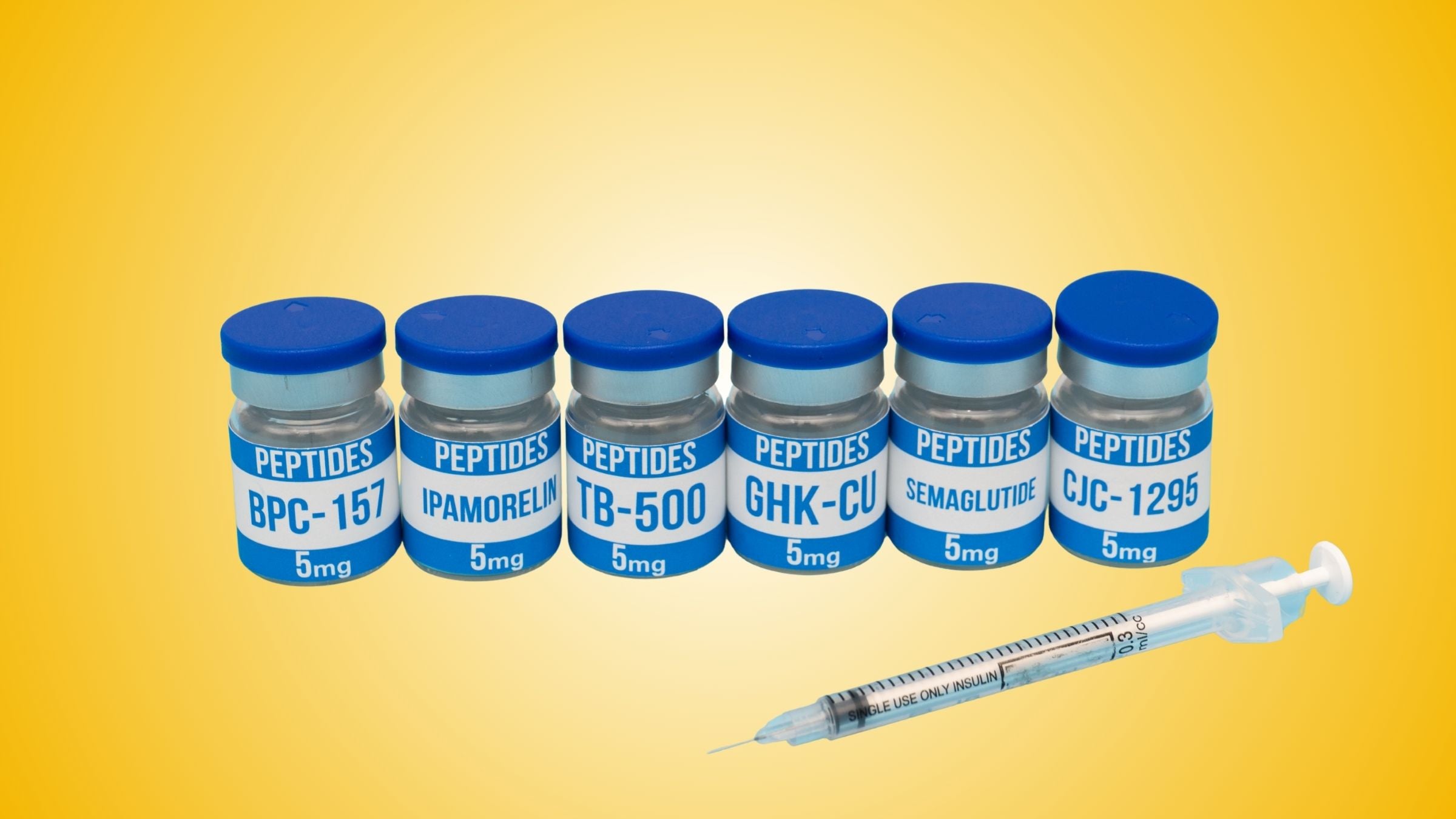
Bodybuilders and biohackers are singing the praises of the notorious “Wolverine Stack,” a peptide double-whammy of BPC-157 and TB-500 that’s said to fast-track recovery and bulletproof against injury.
Both superstar podcasters and rando influencers are shilling injectables that promise to plump your skin, pump your muscles, and boost your mojo.
Even U.S. Health Secretary Robert F. Kennedy Jr. says he’s “a big fan” of peptides, which are now inching toward a regulatory reclassification that will move them out of a shady grey market and into medical prescription slips.
In July, the USA’s Food and Drug Administration (FDA) advisory panel controversially voted against expert advice and recommended loosening restrictions on six popular peptides.
It was a bombshell decision that could make these supposed wonder drugs even easier to access for those in the States. A prescription would be all it takes.
ADVERTISEMENT
And for everyone else, untested, unregulated peptides are only ever a few clicks away.
A basic Google search and your trusted bank details are all you need to get a shipment of injectable BPC-157 and TB-500 – the two pillars of the infamous “Wolverine Stack” – winging your way. [RIP your algorithm if you try that search out of curiosity, take it from me.]
Rapid recovery and injury prevention are just a course of injections away

Peptides are – in theory at least – off limits for pros. The World Anti-Doping Agency (WADA) banned them in 2022.
But for amateurs who have no need to care about the WADA code?
Peptides’ promise to supercharge recovery is very tempting.
Just imagine the gains.
You’ll recover from VO2 Max workouts faster than Wolverine heals the rips from his claws. You’ll never be injured again, no matter how hard you train. Heck, you’ll be able to work so hard you’ll be pushing the same power as Tadej Pogačar.
As a runner and rider who’s suffered countless serious bone stress and tendon injuries, I get the appeal.
ADVERTISEMENT
Yet these on-trend supplements might not be the medical miracle they seem.
They’re almost entirely unproven in human clinical trials, and their long-term impacts are unknown. Scientists have theories of cancer risk. And self-injection? Let’s not even look down that rabbit hole.
And a possible FDA approval isn’t a guarantee of product quality, either.
Pharmacology insiders are already warning of green-lit drugs that have been incorrectly synthesized, and fear a renewed interest in peptides from dubious unsanctioned suppliers.
Peptides are the health and fitness trend of the moment. An FDA approval would add several million more hits to the #peptide craze.
Here’s what cyclists should know before the hype gets out of hand.
ADVERTISEMENT
What are peptides?
Peptides are short chains of amino acids. Protein is also made up of amino acids, albeit in longer chains.
Peptides naturally occur in the body and serve multiple roles, in some cases crucial. For example, Insulin and Oxytocin are naturally occurring peptides. They’re crucial to the regulation of blood sugar and childbirth, respectively.
Peptides are also produced synthetically for medical use.
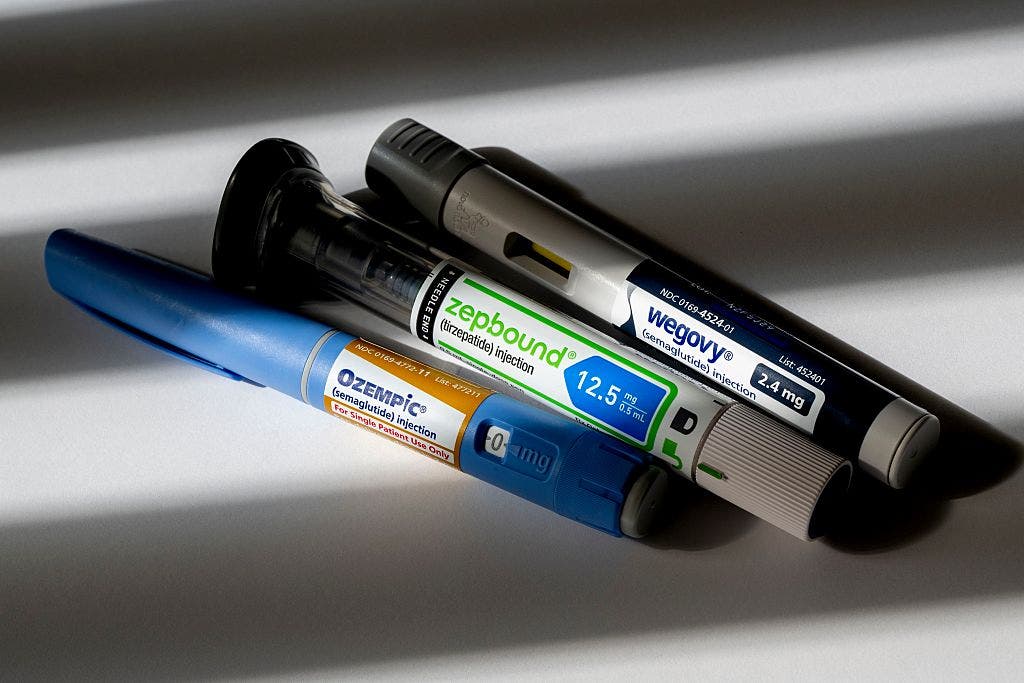
Popular diabetes and weight loss drugs like Ozempic, Mounjaro, and Wegovy (also bracketed as “GLP-1”) are the best-known exogenous peptides.
Synthetic peptides like insulin and these GLP-1s treatments have been proven safe and effective, are approved by the FDA. They’re prescribed by doctors all over the world.
But these legitimized drugs make up only a fraction of the peptides available to curious consumers.
ADVERTISEMENT
BPC-157, TB-500, and the ‘Wolverine Stack’ of health superheroes

There’s a growing “grey market” of unregulated, experimental peptides that are sold as miracles in bottles. Eternal youth and physical mastery are only a course of injections away.
These suppliers are unlicensed, but that’s no problem — all it takes is the label “for research purposes only” to work around the legal red tape.
BPC-157 and TB-500 — two of the most hyped peptides of the current moment — fall within this shady “experimental” category. Other on-trend experimentals include MK-677, MKV, and Ipamorelin.
When taken together, BPC-157 and TB-500 form the “Wolverine Stack” that’s raved about by the world’s most contentious podcaster, Joe Rogan. This peptide pair is the wellness and recovery cure of every biohacker, looksmaxxer, and gym bro on the interweb.
And it’s easy to see the hype.
ADVERTISEMENT
BPC-157 supposedly encourages healing by promoting the formation of new blood vessels. TB-500 is sold as a key signaling molecule for cellular repair.
That’s a combination that nearly guarantees superhero status. They put recovery into fast-forward and press stop on the aging process.
“I had tendinitis in my elbow, I started using BPC-157, and it was gone in two weeks,” Rogan once said on his podcast.
“It is a phenomenal stack and just really helps injuries,” Rogan more recently said of the Wolverine pairing.
ADVERTISEMENT
Where did this peptide boom come from?
Rogan was one of the first noted high-profile advocates for peptides, back when they were mostly the preserve of bodybuilders and strength athletes.
They’re now all over social media.
When GLP-1s began to boom in 2022, these proven diabetes and weight loss drugs dragged all sorts of stragglers with them.
Peptides now score daily headlines in celebrity gossip columns and “manosphere” websites alike. In fact, analysts recently found the number of new confirmed users of PBC-157 increased 33-fold between 2020 and 2026.
ADVERTISEMENT
Doping bans and running controversies
It should be no surprise that the peptide craze has pierced world sport, too. They’re a quick ticket to fast gains.
Dozens of pro athletes have been popped for using peptides. Triathletes, cross-fitters, and volleyball players are among the many pros currently serving sanctions.
The running scene in particular has been rocked by peptide scandals.
This spring, Cameron Hanes — a celebrated podcaster, bowhunter, and ultrarunner — provoked a heated ethics debate when he admitted using BPC-157 as he built toward an age-group win at the Eugene marathon.
Likewise, former Cocodona 250 ultramarathon winner Mike McKnight is being canceled right this very moment. He admitted using BPC-157 in the winter to avoid back surgery, and went on to win the Arizona Monster 300-miler just months later. He’s been getting called out ever since.
There are few noted cases of peptide usage in the pro peloton — they are specifically banned by WADA, after all.
ADVERTISEMENT
S’annara Grove was provisionally suspended this summer after she returned an adverse analytical finding for the en-vogue Ipamorelin, but she’s one of very few who’s been caught out.
Velo heard no murmurs of peptides in the peloton after we surveyed our trusted sources.
It’s surely a different matter in the amateur ranks.
For some recreational riders, peptides are as innocent as a quick fix for an injury that’s been impacting their work and family life for months.
For the more zealous weekend warriors, the temptation to cheat in the lucrative yet largely unregulated and untested gran fondo scene must be strong.
ADVERTISEMENT
A controversial FDA vote could change everything

Sporting preferences aside, Kennedy and the FDA put peptides into everybody’s eyeline this month.
The FDA advisory panel — one reportedly influenced by RFK and criticized for its financial ties to the peptide industry — recommended making BPC-157, TB-500, and four other popular peptides (KPV, MOTS-c, Epitalon, and Semax) available.
The controversy?
Many of the FDA’s long-time staff scientists stood against the move on the grounds that there’s little proof of their safety and effectiveness.
The evidence for BPC-157, the most popular “performance peptide,” is currently limited to animal studies that found benefits for soft tissue and bone repair, organ injuries, and more.
There have only been three minor pilot studies on human subjects.
And there’s no guarantee that what works on a lab rat works on a gym bunny.
ADVERTISEMENT
The U.S. Anti-Doping Agency (USADA) states that “because BPC-157 has not been extensively studied in humans, it is unknown if there is a safe dose, or if there is any way to use this substance safely to treat any specific medical conditions.”
Quality and safety questions
The FDA does not have to act on the advisory panel’s vote of approval for peptides. But if it does, licensed pharmacies get the green light to compound peptides for legal sale.
Compounding pharmacies are typically small-scale, local operations that produce variants not pumped out by multinational manufacturers. They can be as minimal as your neighborhood drugstore, and they aren’t regulated by the U.S. government.
Understandably, that makes experts nervous.
According to a deep dive by The Guardian‘s U.S. team, compounding pharmacies have historically made “dangerous and even sometimes deadly errors.” The FDA does not verify compounded drugs before they are marketed.
Beyond that, there are fears that the FDA legitimizing peptides may encourage sales from the shady “grey market” suppliers that are already so popular.
ADVERTISEMENT
In short, peptides may become widely available in the near future, despite a lack of evidence for their effectiveness and concerns about their future quality.
Peptide risk and doping implications

FDA approval or not, it’s very easy to have a big packet of the most popular injectable peptides delivered to your door.
Those who do so are taking a risky gamble.
Human research on drugs like BPC-157 and TB-500 is limited in volume and scope.
Anecdotally, some users have reported short-term side effects including G.I. distress, nausea, abnormal immune responses, and more.
Further to that,the potential long-term hangover of peptides remains unknown. Scientists are pondering the theory that if peptides accelerate cellular repair and blood vessel growth, they might speed tumor development, too.
WADA moved fast when interest in peptides peaked.
In 2022, it moved BPC-157, TB-500, and many other trending peptides onto its prohibited list. Those found positive for substances on the list face lengthy bans from their sporting federations, including the UCI.
WADA classifies BPC-157 as SO, “a non-approved substance.”
ADVERTISEMENT
BP-500 joins other leading wellness peptides like MK-677 in the S2 category. S2 is the domain of villainous performance enhancers EPO and hGH.
Peptides at a tipping point in the US?
For now, popular peptides are not formally approved by the FDA for pharmacy compounding.
For now.
The recent momentum — and maybe some political pressure — suggests it’s likely only a matter of time before the agency acts on the committee vote to make them more widely available.
In the UK, peptides don’t have marketing authorization from the government’s medical regulatory agency (the MHRA). In Canada, injectable peptides are highly regulated. Their production is subject to government authorization.
All that said, it’s ridiculously easy to pick up a bottle of PBC-157 and TB-500, ignore the “for research use only” warnings, and wait for the Wolverine gainz.
ADVERTISEMENT
The amateur grey area: Treatment or enhancement?

Velo contacted WADA to ask if FDA approval would mean anything for its ban on peptides and is waiting to hear back. Right now, they’re strictly off-limits for pros and are likely to remain so.
It’s not so straightforward for amateur athletes.
For casual riders suffering a nagging bout of tendinitis, they’re a very tempting, seemingly innocent proposition.
A regular load of “Wolverine” peptides might enable them to make the start of the bucket-list 200-miler they’ve dreamed of for years, or maybe just join friends on the weekend group ride.
However, peptides sit in a more ethically awkward spot for hard-training age-groupers chasing podium finishes at lucrative gravel races and road fondos. Big payouts and sponsorship opportunities can be on the line for these athletes who train 20 hours a week while holding down a 9-5.
ADVERTISEMENT
For these “elite amateurs,” peptides blur the line between “medical treatment” and “illegal enhancement.” The Cameron Hanes controversy proved how heated the debate over “the spirit of sport” can get.
Our take?
Peptides are unproven, risky, and depending on the supplier, extremely costly.
A proper training plan, a good diet, plenty of sleep, and maybe some proven supplements are a cheaper, safer, more morally correct route to cycling success.