Updated November 18, 2026 12:27PM
Testing the Tech and Heat Training Required to Survive a 95-Degree Tour de France
From Q36.5 cooling apparel to physiological heat blocks, we stepped into a climate chamber to find out what it really takes to combat extreme temperatures.
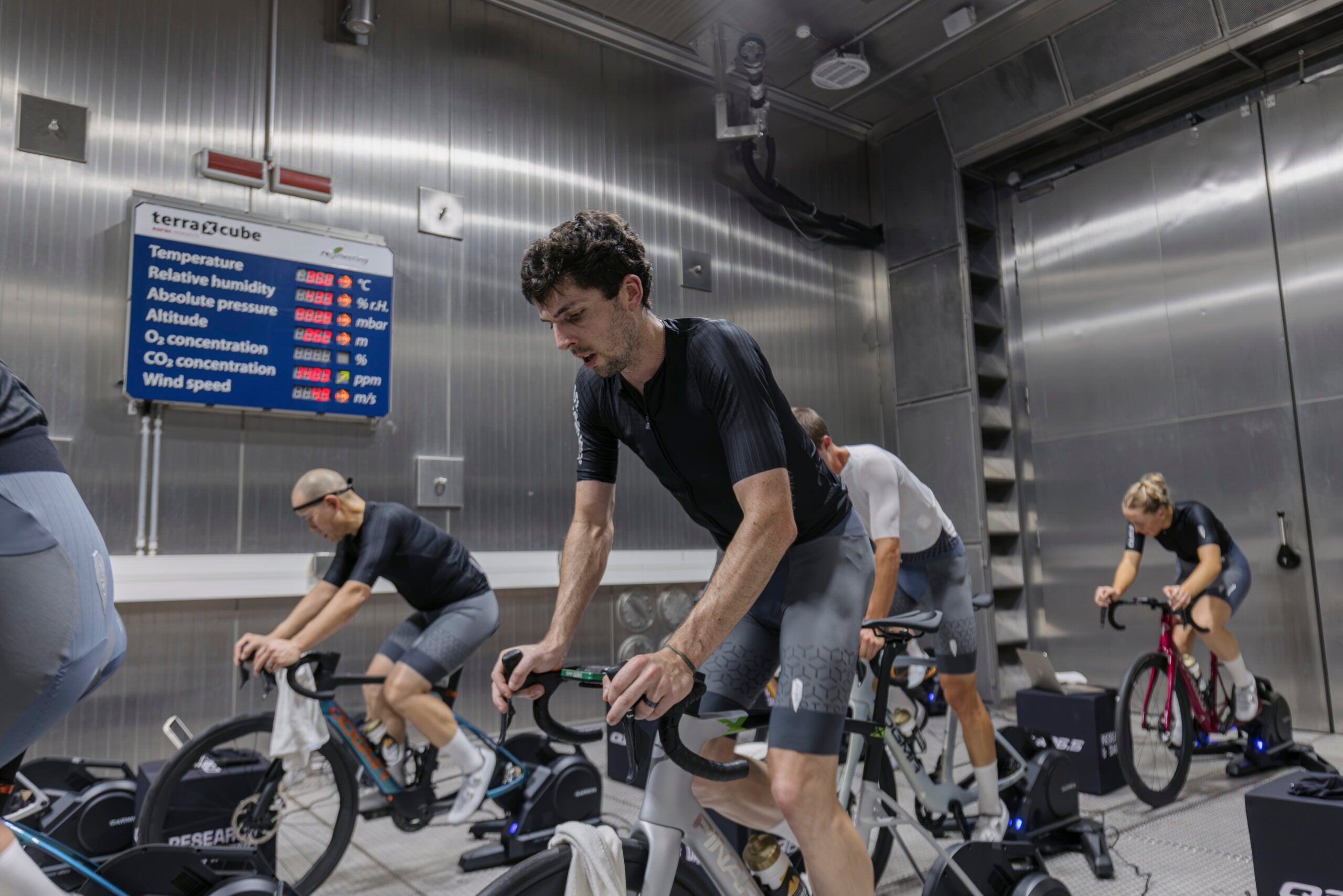
There is a giant vault in Bolzano, Italy that can simulate elevation higher than Mount Everest, a freeze as cold as Siberia, and temperatures so hot that they are used to help train firefighters. On October 21, I stepped into that vault wearing nothing but a cycling kit and shoes.
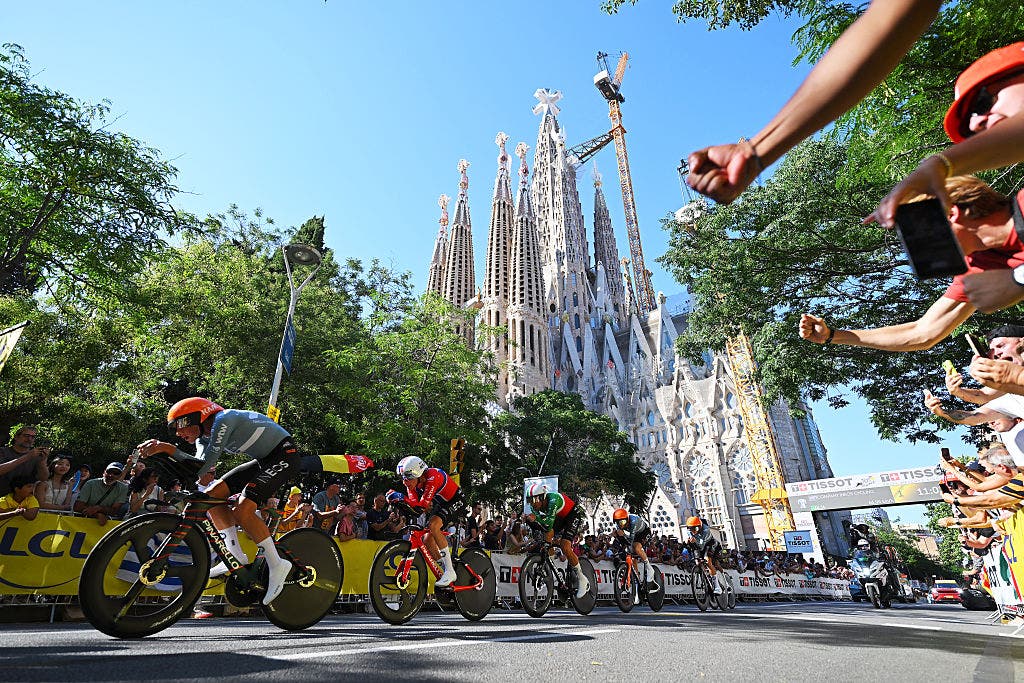
As I swung my leg over a stationary bike, the fans revved up in front of me as the chamber adjusted its climate to match Stage 2 of this year’s Tour de France. It was a hot day in Barcelona when Isaac del Toro won ahead of Tadej Pogacar and Remco Evenepoel. By the end of the Tour, it was the hottest race on record with an average temperature of 32.4°C (90.3°F) across the 21 stages.
Excessive heat usually means a decline in performance. But with the advent of heat training, cooling strategies, and ever-improving clothing technology, professional cyclists are faster than ever, even during the hottest Tour de France in history.
ADVERTISEMENT
The moment I stepped into the vault — the TerraX Cube — I knew what was at stake. I was here alongside the CORE team and more than 20 other journalists to test the new Q36.5 Gregarius Pro Evo Jersey, Base Layer Subzero, and Dottore Pro Bib Shorts. The vault was set to 35°C (95°F) degrees with a humidity of 50%, far from the ideal temperature to achieve peak performance. I had just done a heat training session in CORE’s Sweatlab, so I had a baseline of data for what I could expect as my core temperature rose.
Not only were we going to ride in excessive heat, we were going to simulate the finale of Stage 2 of the Tour using a custom workout on Zwift. Here was the workout, along with my power targets based on my FTP:
- 10min Warmup (240w)
- 10min at Threshold (360w)
- 5min Recovery
- 4min VO2 Max (410w)
- Recovery
- 6min Tempo (300w)
- 2min All-Out (493w)
Total: 40min at 95°F
I was already dripping sweat during the warmup thanks to the ambient temperature, and my sweat rate intensified as my power increased to 360w. After a quick recovery, we began the hardest part of the test (in my opinion): four minutes at VO2 Max in 95-degree heat. This is the type of effort short enough that you can maintain an output above threshold, but long enough that your heart rate and RPE will be jacked up by the end of the effort.
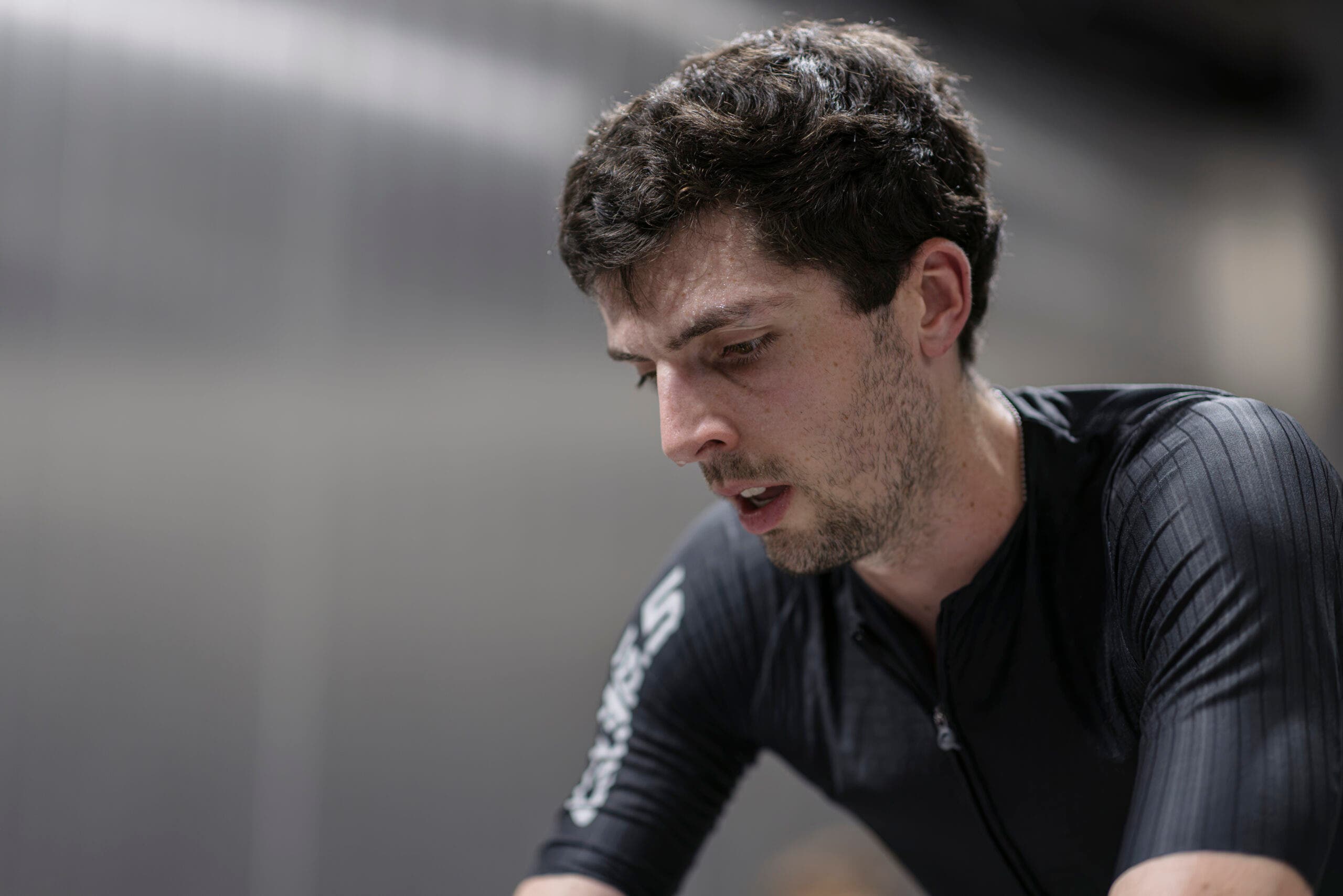
The final few intervals went by fast as I could see the metaphorical finish line in front of me. And just like that, it was all over. CORE gathered data from our body temperature sensors, and we shuffled our way into the cool hallway. The testing was over; now it was time to look at the results.
ADVERTISEMENT
To my surprise, our performances in the heat chamber didn’t drop off significantly. In fact, many riders (myself included) performed at their best despite the hot conditions. This was a sharp contrast to my data from CORE’s Sweatlab where I pushed myself to the limit without ever breaking 300w.
The lab test at CORE – done two days before the test in Bolzano – was a data-gathering mission. I wasn’t there to chase power PBs or set an impressive time. I was there to sweat; and that I did.
- 10min Warmup
- 15min at 70% FTP (280w) with normal cooling
- 3min Recovery (while putting the CORE heat suit on)
- 35min at 70% FTP (280w) heat training
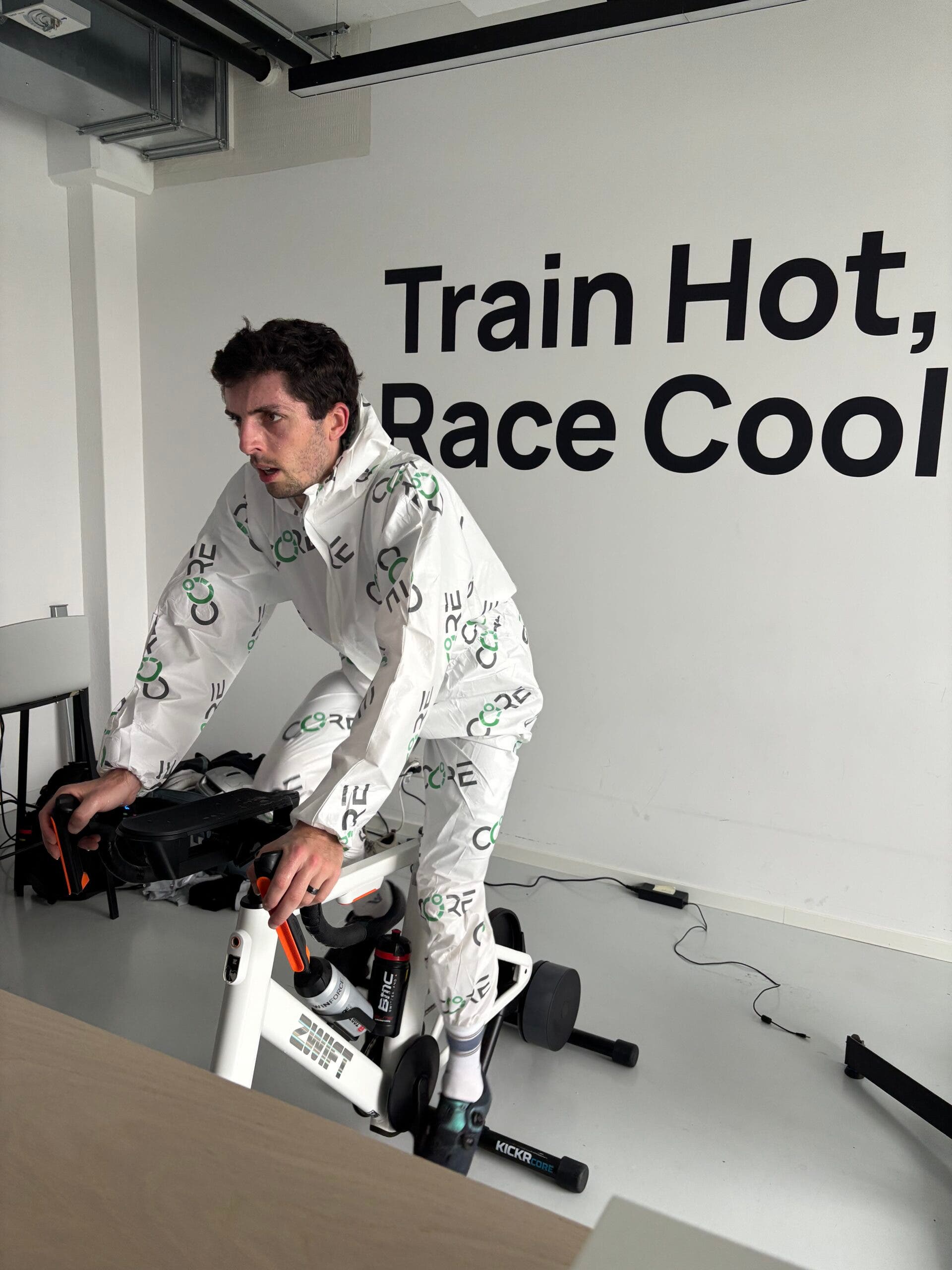
During the normal cooling conditions, I wore a cycling kit and had two fans pointed towards me. I was riding on a Zwift Ride with ERG mode turned on, so my power output was steady to the Watt. The initial 15-minute interval established the baseline where my heart rate was steady at 138 bpm, and my core temperature stabilized at 38°C (100.4°F).
ADVERTISEMENT
The hard part was up next: 35 minutes of heat training. That meant pulling on the CORE heat training suit, turning the fans off, and turning the heater on. Within minutes, my sweat started pooling on the floor. Over the course of 35 minutes, my heart rate rose from 138 bpm to 175 bpm without any change in power. I rode at 280w the entire time, but it felt like I was doing a threshold interval for the last 15 minutes.
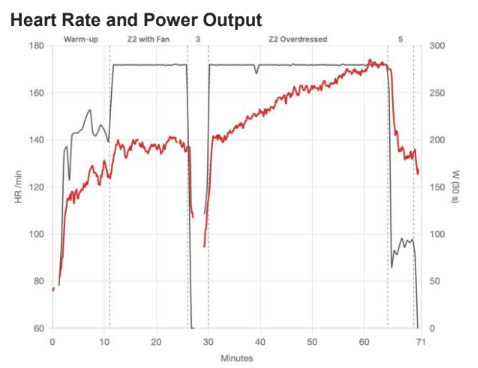
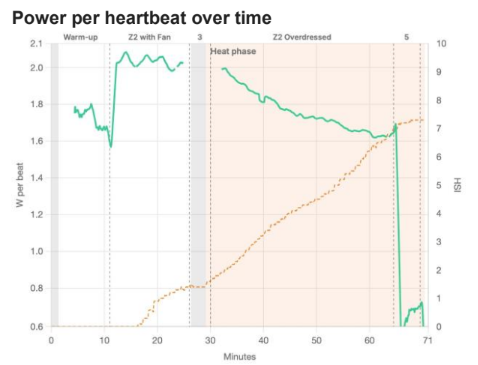
That is the damage that heat can do to your performance. Without sufficient cooling, Zone 2 power can feel like Zone 4 power once your heat strain reaches a certain level. That was the kind of performance degradation that CORE was looking for in the Italian climate cube. But the closer they looked at the results, the more they realized that the clothing had worked.
We were all wearing Q36.5 kit in the climate chamber, specifically designed for use in 30°C+ (86°F) heat. Tom Pidcock loves heat training, and it was no surprise to hear that he plays a major role in the R&D of Q36.5 kit. (Fun fact: he’s also the only rider on Pinarello Q36.5 Pro Cycling Team who wears an XXS skinsuit.)
ADVERTISEMENT
As I pored through my own performance data, I remembered how good my legs felt during the final two-minute interval in the heat chamber. Despite feeling hot, my body had performed extremely well in the conditions. Personally, that is the biggest difference that I’ve noticed after doing a heat training block.
Without heat acclimatization, my body has typically reacted to the heat like it did in CORE’s Sweatlab. My heart rate would rise uncontrollably as my legs are drained of their strength. But after a big heat training block, I noticed that I could still hit my best power numbers in excessively hot conditions. Not only would my heart rate be 10 bpm lower than expected, but it would stabilize during long efforts in the heat – quite the opposite of what I experienced in the CORE Sweatlab.
One of my biggest takeaways was that the clothing had worked. This wasn’t the only heat adaptation method that I asked Q36.5 and CORE about during this trip. I also asked about cold drinks, pouring water over your head, rubbing ice cubes on your wrists, and of course, heat training. Let’s start with what does work.
Cold drinks and gels are probably the most effective ways to cool your body from the inside out. When you’re talking about performance degradation in the heat, you are most often talking about an increase in core temperature as well as an increase in skin temperature. This is known as heat strain, something that CORE quantifies with their sensor and app, and the key metric that many riders use for heat training.
ADVERTISEMENT
When you step outside for a summer ride, you will immediately feel hot because of the air temperature. However, your performance won’t tank immediately because your core temperature is still normal. But as your core temperature rises, such as during a hot-weather race or long threshold effort, performance can begin to suffer.
I spoke with Gino Vierhouten, CEO of Amacx Sports Nutrition, outside the climate chamber, and he said that thousands of ice gels are being used in the WorldTour every season. The ice gels are kept in a freezer until the riders need them, and they are perfect for hot-weather races like this year’s Tour.
CORE also told me that rubbing ice cubes on your wrists is one of the quickest ways to alleviate heat stress on the bike. It may not lower your core temperature significantly, but the psychological relief is immediate.
ADVERTISEMENT
The most obvious way to improve your performance in the heat is to go through a bout of heat training. It takes work – a lot of work – but the pay off is massive. Not only does heat training improve your performance in hot conditions, but it also improves your performance across the board. Anecdotally, there are a significant number of big-name WorldTour riders who have stopped going to altitude camps to do heat training instead. The physiological benefits are similar, but the ease and accessibility of heat training is so much better than traveling 1,000 miles to spend three weeks at altitude.
Now for the cooling strategies that don’t work, in one way or another.
NetCompany INEOS famously lined up before Stage 1 of the Tour de France with their forearms in ice baths. It was a pre-race cooling strategy, but it’s difficult to say if it was ultimately effective. The team finished second on the stage, an expected performance but certainly nothing special. We’ll have to see a few more trials before we start calling this an effective heat mitigation strategy.
Similarly, I asked CORE if they thought about submerging a rider in an ice bath immediately before a performance test. It would be the extreme version of NetCompany INEOS’ strategy, and it’s highly unlikely it would work.
ADVERTISEMENT
Cooling is an effective strategy once your body is heating up, but colder is not always better. If you’ve ever ridden in the rain with the temperature just above freezing, you know exactly what I am talking about. A cooler core temperature is better to a point, but your muscles also need enough warmth to function at their best.
Ice vests are still in the grey area. I’ve seen many riders use them for a time trial warmup, but then I’ll see the same rider not using one for their next TT warmup. It seems like an experimental piece of equipment, not a universally proven performance-boosting device. What’s notable is that neither CORE or Q36.5 mentioned ice vests during multiple days of testing, presenting, and Q&A.
If there is one thing that I would take away from this experiment, it’s that cyclists should never have to suffer in the heat again. I say “should” because not every cyclist will follow the advice I’m about to say. If you put in the effort to mitigate heat stress, you will be able to perform at your best in high heat up to at least 40°C (104°F).
ADVERTISEMENT
Pouring cold water down your neck is one thing. Now try doing three weeks of heat training, downing an ice gel, wearing a heat-mitigating base layer, and rubbing ice on your wrists during a hot-weather race. I guarantee you will be able to hit your best power numbers while pouring sweat in the sun.
Keep Exploring