Published October 1, 2026 11:49PM
How Brandon McNulty's Unconventional Training Plan Made Him a World Champion
High heat over altitude, and intensity over volume. Here are the details behind the training blocks that powered McNulty ahead of the world's best.
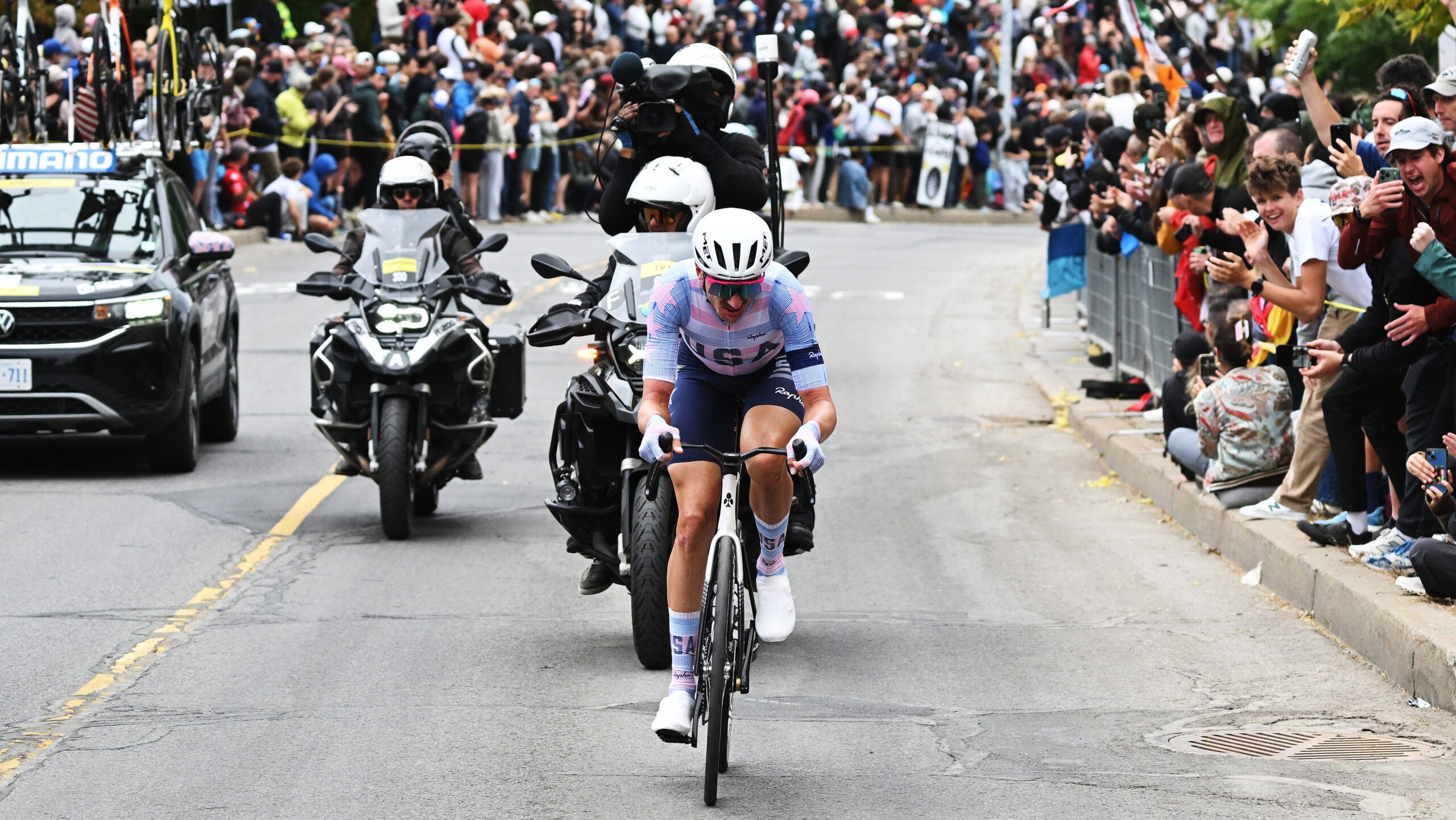
(Photo: Zac Williams - Pool/Getty Images)
Brandon McNulty is a unique rider in more ways than one. Not only did he become the first American to win the elite road race at the 2026 UCI Road World Championships in more than 30 years, but he is also a rider who never goes to altitude camps. The Arizonan rides alongside Tadej Pogačar at the Tour de France, but instead of living on a mountain a month before the Tour, he is more often at home, training at 5:00 a.m. in the desert.
When McNulty lined up for the World Championships in Montreal, many considered him an outsider with a chance at a medal, but few thought that he had the capacity to win. The 28-year-old hadn’t won a race in the entire 2026 season, which was quite concerning after he rounded out the 2025 season by winning six races in two months, including the WorldTour-level Tour de Pologne and Grand Prix Cycliste de Montréal.
Whatever happened in the 2025/2026 off-season remains a bit of a mystery, yet McNulty started the year with a few top-five finishes in February. After a DNF at Paris-Nice, McNulty was solid again in April before taking a short break pre-Tour de Suisse. The American showed good form while helping Pogačar, but he was still never in the top five throughout the entire race. His best finish at the Tour was fifth place on a breakaway stage, and the rest of his time in France was spent helping Pogačar.
ADVERTISEMENT
McNulty’s results were nothing to write home about, so few considered him as a worlds favorite. But between his DNF on Stage 18 of the Tour de France on July 23 and winning the World Championships on September 27, something changed. This is how Brandon McNulty trained to win the rainbow jersey.
Post-Tour break
There were exactly 66 days between July 23 and September 27, which means that McNulty had nine and a half weeks to go from abandoning the Tour to winning worlds. First, he took 10 days off the bike. That is a long break in the middle of the season, but in hindsight, it was the perfect amount of time. McNulty then returned to training with five consecutive easy rides — that means Zone 1 and Zone 2, without intervals or any additional stress. He was riding 2-3 hours a day, not the 5-6 daily hours that you might expect from other professional cyclists.
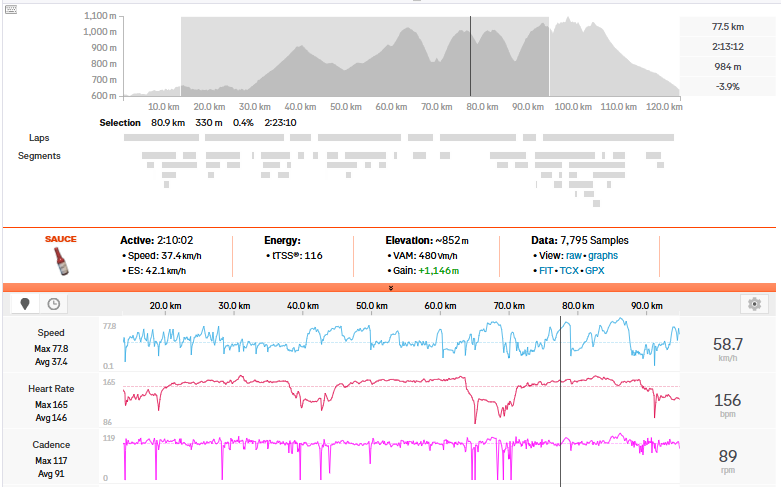
His first workout post-Tour de France was a classic UAE Team Emirates session: four-minute torque intervals. We’ll see these a lot in McNulty’s training plan, and they are much harder than they look. In this post-Tour workout, McNulty did 7x4min at 45 rpm, getting up to a max heart rate of ~170 bpm at the end of each interval. Knowing McNulty’s heart rate zones and history, we can assume these intervals were done at threshold power, which is likely around 450w for McNulty.
ADVERTISEMENT
Workout #1: 4-minute torque intervals (45 rpm) at 100% FTP
The day after this torque workout, McNulty completed 3x30min intervals with a heart rate of 155-165bpm during each 30min block. That means he was probably riding at Tempo, or Zone 3. McNulty said that he climbed the Voie Camillien-Houde in Zone 2 on the final lap of the World Championships, and by my calculations, McNulty’s Zone 2 is approximately 5.3w/kg, or 365w. That means these Tempo intervals are likely done at 380-400w, making for an interval session like this isn’t the toughest, but it’s crucial to get accustomed to riding at this pace for extended periods of time, especially when you are training to win races solo.
Workout #2: 3x30min tempo at 85-88% FTP
Adding intensity and overload
One of the key principles of McNulty’s training plan is progressive overload, and that’s exactly what we saw with his first ride five weeks out from worlds. The American did 3x35min Tempo at 145-155 bpm, up from 3x30min the week before. The same principle applies to the short torque intervals, which now added a 30-second sprint at the end of each interval. McNulty also completed an additional rep, which meant this week’s workout was 8x4min Torque intervals (45 rpm) at 100% FTP straight into a 30-second sprint.
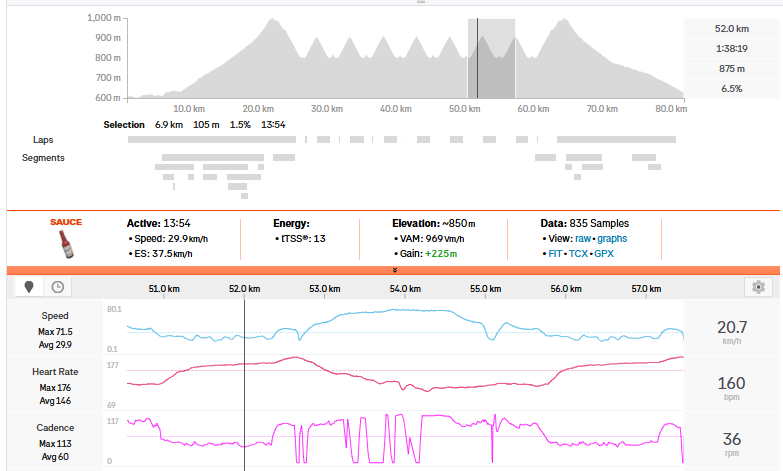
After a few days of Zone 2 and recovery riding, McNulty went out for a two-hour endurance ride on Friday, but this one was different. Twenty minutes after he got home, McNulty was on the trainer for an hour with his heart rate rising from 130 bpm to 170 bpm by the end of the session. It’s extremely likely that this was a heat training session, something that McNulty and so many other pros have been utilizing before key races each season. The following day included the same style of Tempo intervals that we’ve already seen, but this time they were 40 minutes each.
ADVERTISEMENT
The following day included a new workout in this block of training: 3x10min 30/30s from 160-170 bpm. Since McNulty is only hitting 90% of his max heart rate, my best guess is that these 30/30s are done just below and just above threshold. For McNulty, this could be something like: 30 seconds at 420w followed by 30 seconds at 470w.
Next up was another threshold interval session, but this time with much longer blocks. This workout was 2x20min over/unders with one minute VO2 Max followed by four minutes just under threshold. Intervals like these are designed to train your body to clear lactate, even at a high power output. The days of 2x20min at FTP are gone; almost every modern-day pro is doing over/unders instead.
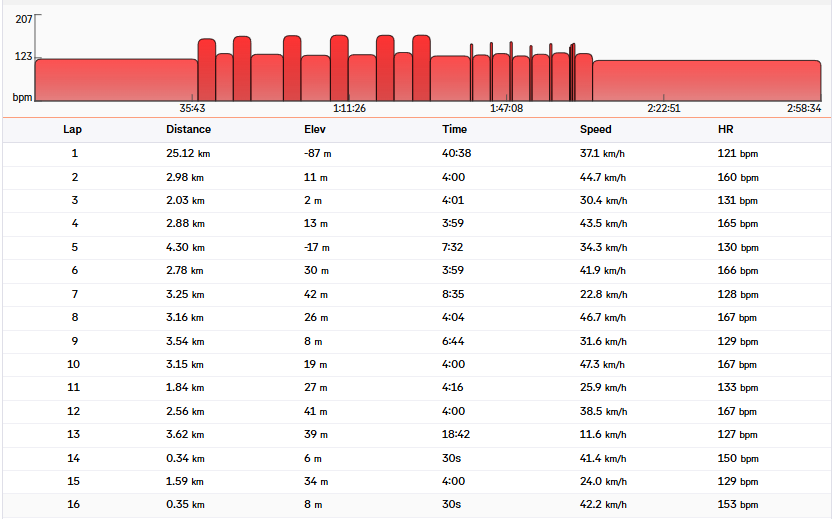
At the end of this training week, McNulty did his worlds prep session: 6x4min VO2 Max and 6x30sec sprints. This is an incredibly hard workout, but one that McNulty uses to get into race shape. Not only are the VO2 Max intervals challenging, but the sheer number of efforts in this workout is a true challenge of fatigue resistance. Doing a fresh 30-second sprint is one thing; now try doing 30 seconds all-out after spending 24 minutes in your VO2 Max zone and sprinting five times full gas. These are the kinds of workouts that give McNulty the ability to attack four hours deep into a hard race.
More race-winning intervals
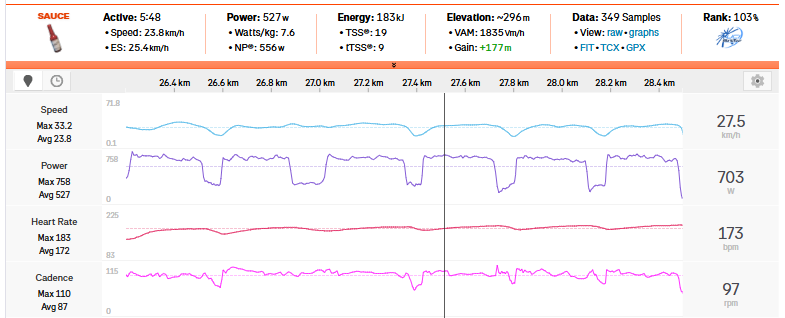
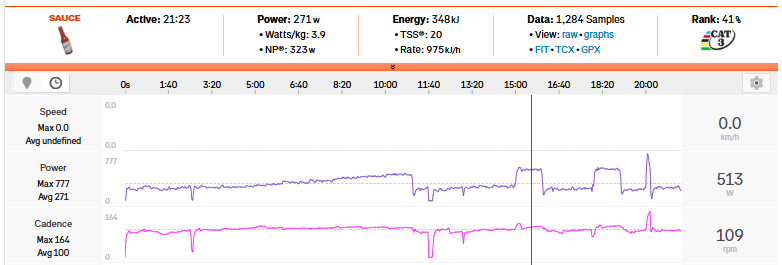
Two weeks before the two Canadian Grands Prix, additional high-intensity work was added to McNulty’s training plan. On back-to-back days, McNulty did 5x15sec sprints, then 3x6min 40/20s. While he didn’t post power from this ride, we do know that McNulty has been doing 40/20s at 700w for years. Take a minute to read that again: 40/20s at 700w. Here is what one of those workouts looks like.
In the final few weeks before the World Championships, McNulty was doing active heat training at least twice per week, typically after a two-to-three-hour endurance ride. He also started doing a new workout that included two blocks of five-minute builds to maximal effort. There were fewer Tempo rides, more sprints, and more 40/20s. As McNulty got closer to his goal races, he did more Zone 4 and Zone 5 interval sessions while cutting out the Zone 3 workouts.
ADVERTISEMENT
Eight weeks after pulling out of the Tour de France, McNulty was tapering for the GP Quebec. His training was minimal as he flew to Canada and prepared to race, and his pre-Quebec openers included 2x2min VO2 Max and 2x3min 40/20s. McNulty rode well in both races, but he was especially strong in the GP Montreal, where he finished third behind Isaac del Toro and Paul Seixas.
Loading the legs up just before Worlds
Now, there were only six days until the worlds time trial, and less than two weeks until the worlds road race. To balance fatigue and freshness, McNulty only rode 13 hours the week of the Worlds TT, rather than his typical 20.
He finished fourth in the time trial, rode three hours the following day, and then four and a half hours with 30sec sprints on Tuesday. Was Wednesday a rest day? Nope – five hours at endurance pace. Surely there was fatigue in the legs, but perhaps that was the intention when McNulty did his Worlds prep workout on Thursday: 4x4min VO2 Max and 4x30sec sprints. McNulty finally rode easy on Friday, then did 3x2min VO2 Max, 2x3min 40/20s, and a 10min Tempo effort on Saturday.
After that, we all know what happened on Sunday.
ADVERTISEMENT
Should you follow McNulty’s training plan?
There are so many different takeaways here, and many of them are things I would not recommend for the average cyclist. First, we have to account for the fact that McNulty is a special athlete. He does basic intervals, Zone 2 endurance rides, and 20 hours per week; yet, he is one of the strongest bike riders in the world. His tapering plan is not applicable to the average bike racer; most of us would be destroyed by maintaining such a high training load so close to a goal race.
The helpful takeaways are progressive overload, specific interval sessions, and family time. McNulty and his coach steadily increased his training load from the moment he returned to riding all the way up to the World Championships. He started with endurance, then moved to Tempo intervals, and just before worlds, he was doing sprints and VO2 Max. The specific training sessions such as 4min torque intervals, threshold over/unders, and 40/20s are fantastic workouts. But perhaps the most important thing is that McNulty values his time at home in Arizona. Countless pros get burnt out at high-altitude training camps where they won’t see their family for months at a time. McNulty is the opposite, flying home multiple times per year to train in his hometown.
That could be the biggest surprise about McNulty’s World Championship training plan, the fact that he didn’t go to altitude. Almost every professional cyclist goes to altitude before a key race, and many pros will do multiple altitude camps per year. Heat training can be somewhat of a substitute for altitude training, but the biggest caveat here is that we don’t know exactly what McNulty was doing. There is a chance he could’ve been sleeping in an altitude tent during this training block, or using an intermittent hypoxia device like the HEPOX mask.
ADVERTISEMENT
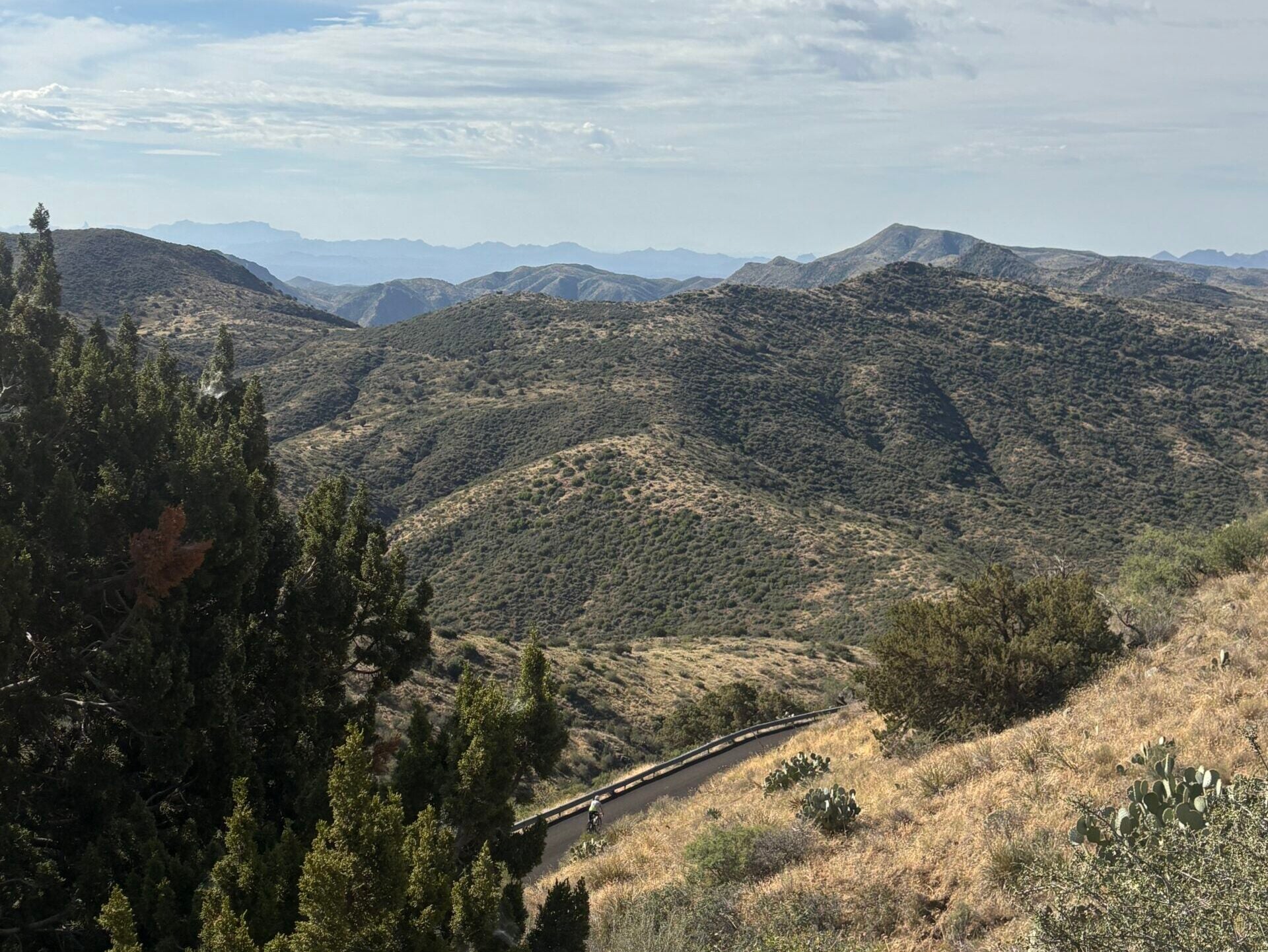
In addition to active heat training on the indoor trainer, McNulty was getting plenty of heat training stimulus by simply riding in Arizona in August. Despite starting the majority of his rides before 7:00 a.m., McNulty was regularly riding in 95-104°F (35-40°C) heat. That is certainly enough to count as heat training, especially once you consider that McNulty was regularly doing 400-500w intervals in these temperatures. There is a lot to learn from McNulty’s World Championship training plan, and more than a few things you should be cautious of if you’d like to try them yourself.
That said, here are some of Brandon McNulty’s Worlds-Winning Workouts:
McNulty’s training you can try at home
- 4-min torque intervals (45 rpm) at 100% FTP, with the option of adding a 30-second sprint
- 3x30min tempo at 85-88% FTP
- 3x10min 30/30s at 93% FTP/107% FTP
- 3x6min 40/20s at 150%/55% FTP