Updated October 7, 2026 07:07AM
Pogačar's Viral Booty Band Warm-Up Routine Might Just Be a Placebo, but Here's Why It Might Work for You
Should cyclists warm up with mini bands? Why the placebo effect might outweigh any true muscle 'activation,' and how riders can make better use of glute bands.
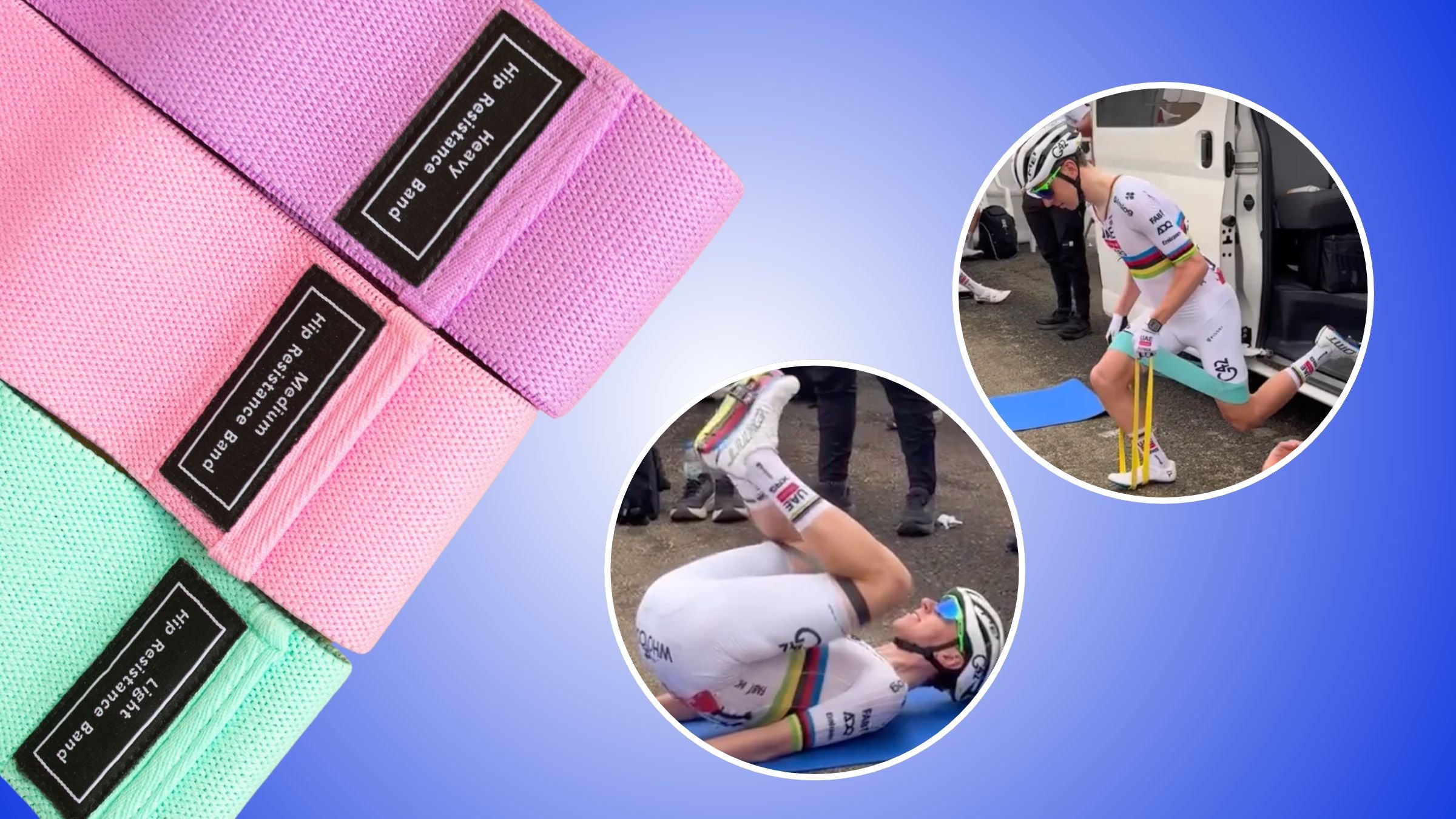
(Photo: Lashkhidzetim)
Tadej Pogačar made “booty bands” everybody’s favorite warm-up ritual when he was filmed twerking and squatting his way through a pre-race routine, bands around his knees.
But it turns out that these wildly popular pre-ride workouts might largely be a placebo.
Waddling, lunging, and squatting through a mini-band session before a ride doesn’t “activate your glutes” or prime you to push max power.
According to WorldTour experts, the power of glute bands might largely be in the mind.
“These mini band moves are beneficial, but it’s more from a pseudo-science perspective. Someone riders might feel like, ‘Oh, I’m doing something, I’m preparing myself to ride’ by doing them,” Jayco-AlUla physiotherapist Dan Guillemette told Velo.
“But in terms of actual performance, it’s really unlikely there’s any actual benefit.”
So how have mini-bands become one of sport’s most popular primers?
They’ve become no-brainers for WorldTour and triathlon pros, TikTok influencers, 4w/kg Velo writers [ahem], and everyone in between.
Here’s why mini band warm-ups might not be worth your time – unless you’re already doing them – and how to make better use of these wildly popular home workout tools.
ADVERTISEMENT
Pogačar puts booty bands into every cyclist’s social feed
Pogačar’s pre-race warm-up video was one of the viral cycling clips of 2025. The meme pages loved it.
The Instagram reel shows Pogačar and his teammate Juan Molano working through a series of mini band exercises ahead of a stage at the UAE Tour. Pogi’s now-famous “bum to the sky” hip opener was a particular highlight.
It was a rare behind-the-scenes glimpse at how pros prepare to push wild watts for hours on end.
Since then, clips of Matteo Jorgenson, Jonas Abrahamsen, and Remco Evenepoel doing similar routines have reinforced the thinking that a few minutes inside a mini band will push you to new performance peaks.
And unlike a set of Pogačar-approved 165mm cranks or an indoor trainer “heat suit,” there’s no expensive equipment, excess sweat, or annoying apps involved.
All you need is a $10 band from Walmart and one of the routines being pumped into your cycling social feed.
ADVERTISEMENT
Bursting the bubble around booty bands
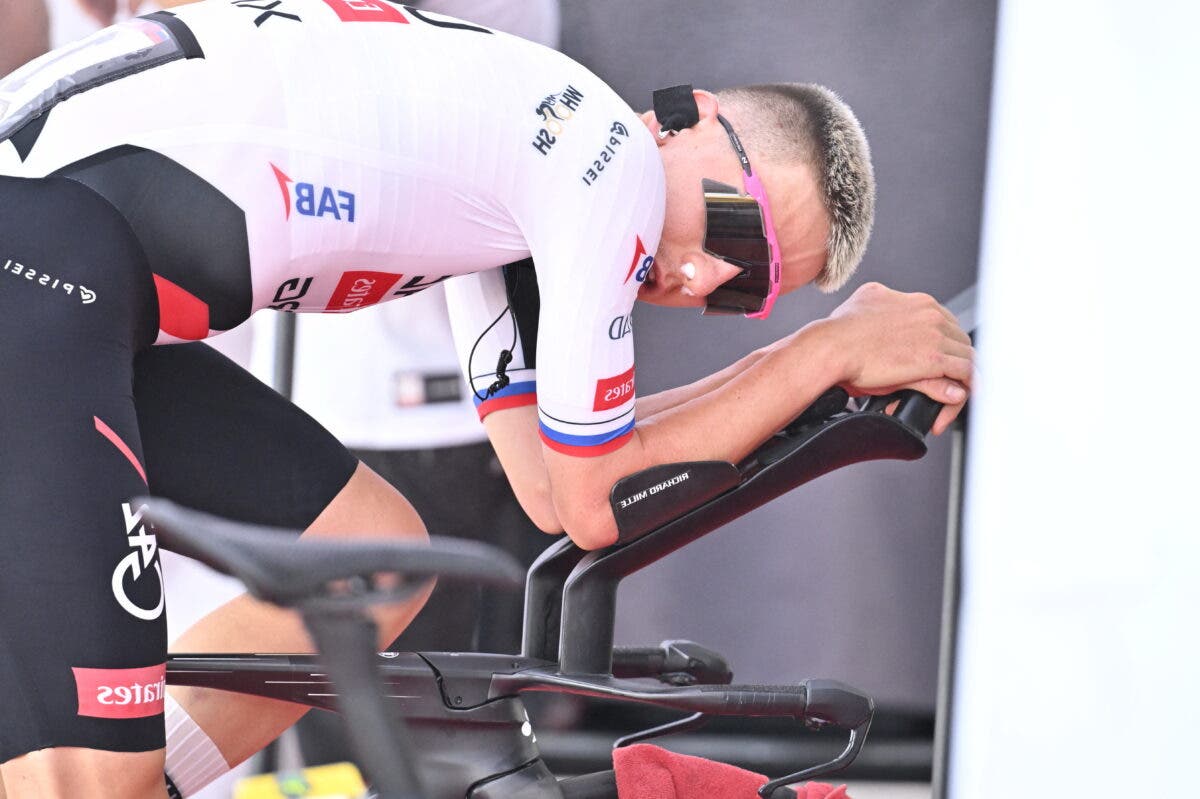
No, your glutes don’t ‘turn off’
The big selling point of booty band routines for cyclists and endurance athletes?
That they waken your glutes from their slumber after too long being sat on. A few minutes pushing at a mini band will buzz your butt into “workout mode.”
Strength expert Chris Peden burst that bubble when he spoke to Velo.
Peden, the head of S&C at Decathlon-CMA CGM, said pros and amateurs alike have been fooled by a misapplication of the term “sleepy glutes.”
“These routines are always advertised as ‘you’ve got weak glutes, your glutes don’t work, or are ‘asleep.’ That’s the result of medical terms transferring to the performance world that don’t really apply,” Peden told Velo. “It’s a medical term from those who are extremely inactive, not somebody who does even a low level of training.
“And anyway, muscles don’t ‘switch on’ or ‘switch off.’ Your neuromuscular system is always working. Your brain knows exactly what to recruit at any one time,” Peden continued.
ADVERTISEMENT
“A band workout does not make that signal ‘better’ or ‘cleaner,’ as some suggest. It’s unlikely to have any benefit at all.”
If you’re reading this post, you’re likely interested in bikes and maybe ride one every so often.
You don’t have sleepy glutes.
A mini band will not boost muscular contractility
A second misconception? That squeezing some torque out of your glutes with an oversized elastic band will ready you for your 400-watt interval workout.
That’s founded in another misapplication, this time of the term “PAP.”
PAP, or Post Activation Potentiation, refers to the acute boost in muscular performance following a previous activity. A set of heavy back squats before attempting a maximum vertical jump is a common real-world application of PAP.
But sadly, a set of waddling “monster walks” won’t come close to delivering the muscular force or speed required for any meaningful PAP.
In the world’s biggest bike races, turbo trainers – not mini bands – are used to provide an effective potentiation.
ADVERTISEMENT
These torture devices are wheeled out of team trucks ahead of time trials, hard uphill starts, or for those wanting to make the day’s early break. Riders work through a progressive build before a series of short submaximal efforts that fully stimulate the muscles for a fast racing start.
Mini bands before a ride: Mental preparation or physical preparation?
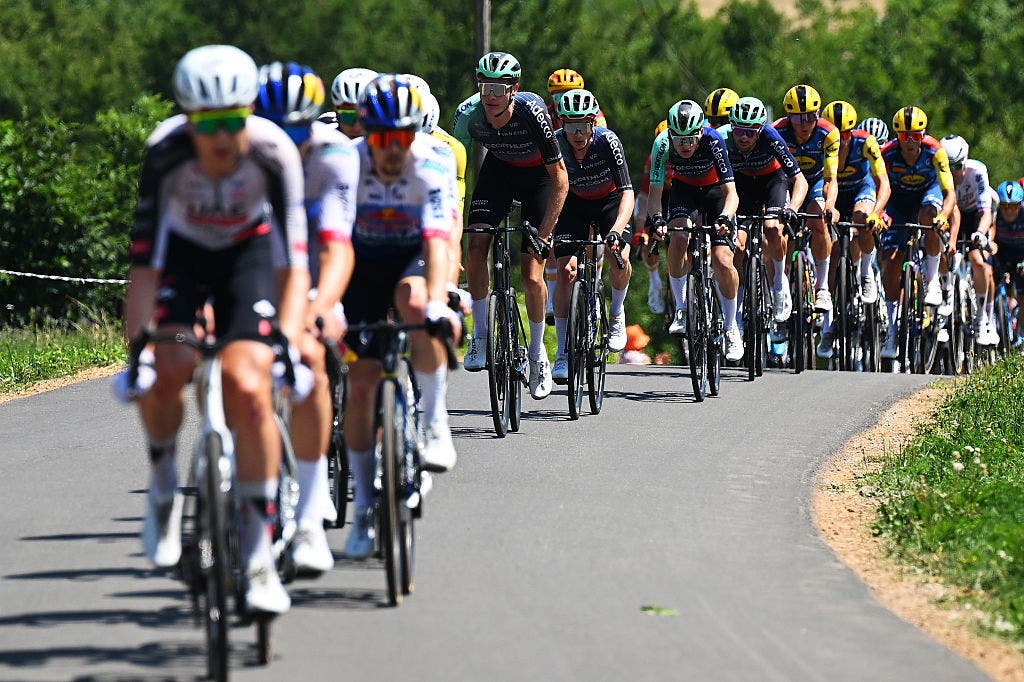
So, wait one sec. If the popular theories behind booty bands are a load of BS, why are they still so popular in the dialed-down, scientifically-backed WorldTour?
Even Peden admitted his own athletes on Decathlon-CMA CGM do them, even though he dismisses their direct impact on performance.
Both he and Guillemette at Jayco-AlUla think that for many riders, the gains are all in the mind.
For many, workout bands became part of their pre-ride routine as juniors, either as a misguided warm-up tool or as a minimal dose of strength work.
A decade later, it’s just what they do.
“Psychologically, the placebo effect is massive,” Peden said. “Our riders still do them regardless of what we might say. They’ve been told to do it since they were 15 years old, and that it’s beneficial to them. So I can’t turn around to tell them to suddenly stop.
ADVERTISEMENT
“They’re not doing any harm, but they’re not achieving anything meaningful as a supposed ‘activation,’” he continued. “If they’re proving some psychological benefit and riders believe they help, I’m not going to hold them back. However, I might try to suggest they include some more useful practices, instead – say, around mobility.”
A mental cue / mobility
Guillemette, who worked at Team Sky before he joined Jayco-AlUla, added that a band routine can also help riders transition out of inactivity.
They prime the mind and loosen the body.
“It’s really unlikely that there’s any benefit to using bands in terms of race performance,” Guillemette said.
“However, dial back to the fact that a rider has maybe been sat in a bus, is maybe in the final weeks of a grand tour, or they’ve had a crash. They’re feeling a little bit stiff. They’ve got tightness in their hips and back. Moving with a little bit of resistance really helps establish some connection between the brain and body,” he said.
“It’s a simple, quick way to get mobility and ease tension in the body.”
ADVERTISEMENT
A proper resistance band workout both promotes better long-term mobility – the ability for a joint to move through a full range of motion – and greases up joints that have been rusted by inaction.
This indirectly promotes better power transfer, the ability to hold an aero position, and helps in injury prevention.
When mini bands do matter
Strength maintenance
Pro team trainers let athletes decide whether they start doing monster walks and glute bridges while they savor their pre-ride espresso.
They won’t deny them a long-time ritual, nor with they mandate something that might be a waste of time.
But sometimes mini band workouts are non-negotiable, whether they’re done before a ride or completely separately.
For pros away racing or stuck in a crusty hotel at high altitude for weeks on end, they help maintain gym gains while their regular strength regimen is on ice.
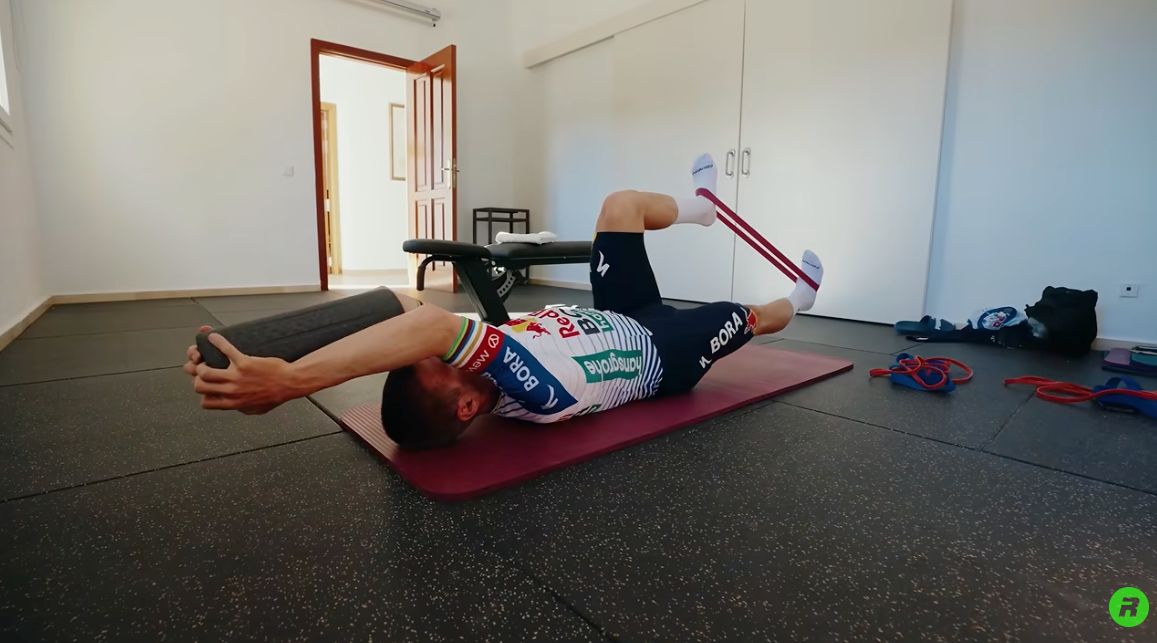
Remco Evenepoel’s YouTube vlog this spring provided a good example of a quick filler routine. In the video, Evenepoel works through a basic 10-minute S&C session targeting his hips, core, and lower back while he’s stuck on training camp up high in Tenerife.
“It’s to prevent injury, mostly,” a team trainer replies when Evenepoel quizzes him on the purpose of the session.
ADVERTISEMENT
“We try to prepare you as best as possible to be ready without problems at racing,” the Red Bull-Bora-Hansgrohe staffer says. “It’s important to do them every day, especially before training. Then your body is ready with tension, and you can go on the bike and push as much as you can.”
Injury prevention and rehabilitation
Evenepoel’s trainer alludes to the role of basic strength workouts in injury prevention.
These light banded sessions are also crucial prehab for injury-prone riders or rehab for those left with imbalances and weaknesses after previous problems.
A properly constructed band routine can target muscles prone to fatigue – particularly the small glute medius either side of your butt – and ensure they’ve got the staying power for a five-hour race.
“When you think about the endurance component of cycling, it’s the small mobilizer and stabilizer muscles– say those around the pelvis – that fatigue first. They go before the big, fast-acting muscles like the glutes, quads, and hamstrings,” Guillemette said.
“When these stabilizers fatigue, you start compensating in other ways. Then you’re more likely to get some kind of injury because muscles aren’t doing the job that they need to be doing,” Guillemette said.
ADVERTISEMENT
“Bands can really isolate and help the durability of some of those muscles.”
Do amateurs need to use mini bands? It depends.

So what does this mean for amateurs? Should those not already cocooned in the comfort of a pre-ride band routine pick up a set of booty bands?
If you don’t follow a specific strength program, a basic mini band routine should be considered essential. Even 10 minutes of properly focused work can help prevent injury and promote good power transfer to the pedals.
However, don’t expect to put 500 watts on your sprint with a big elastic band.
As we explored here, proper strength training should ideally be a part of every athlete’s program to ensure athletic longevity and progression.
Band sessions are also a no-skip for those working back from injuries – though your own medic or practitioner will have already told you that. Follow their advice on what you need to do.
ADVERTISEMENT
And who knows? Even those free of injury and with a full gym program might find that a few minutes waddling around with your legs looped into a band helps shift the mind from emails and spreadsheets to power targets and KoMs.
Some suggestions:
A few widely-approved basic moves that could get you started with bands include lateral / “monster” walks, glute bridges, psoas marches, and reverse lunges. Note you’ll need a full-length band for the lunges.
If you’re using bands before a bike ride and have been sitting at a desk all day, also consider some “cat cows” and lower back rotation mobilizations to loosen your gummed-up spine.