Updated November 21, 2026 04:31PM
Volta a Portugal Star Finally Nabbed, 11 Years After Suspicious Values First Detected
Delio Fernandez Cruz is a three-time Portugal stage victor. He’s now been handed a long ban at 40
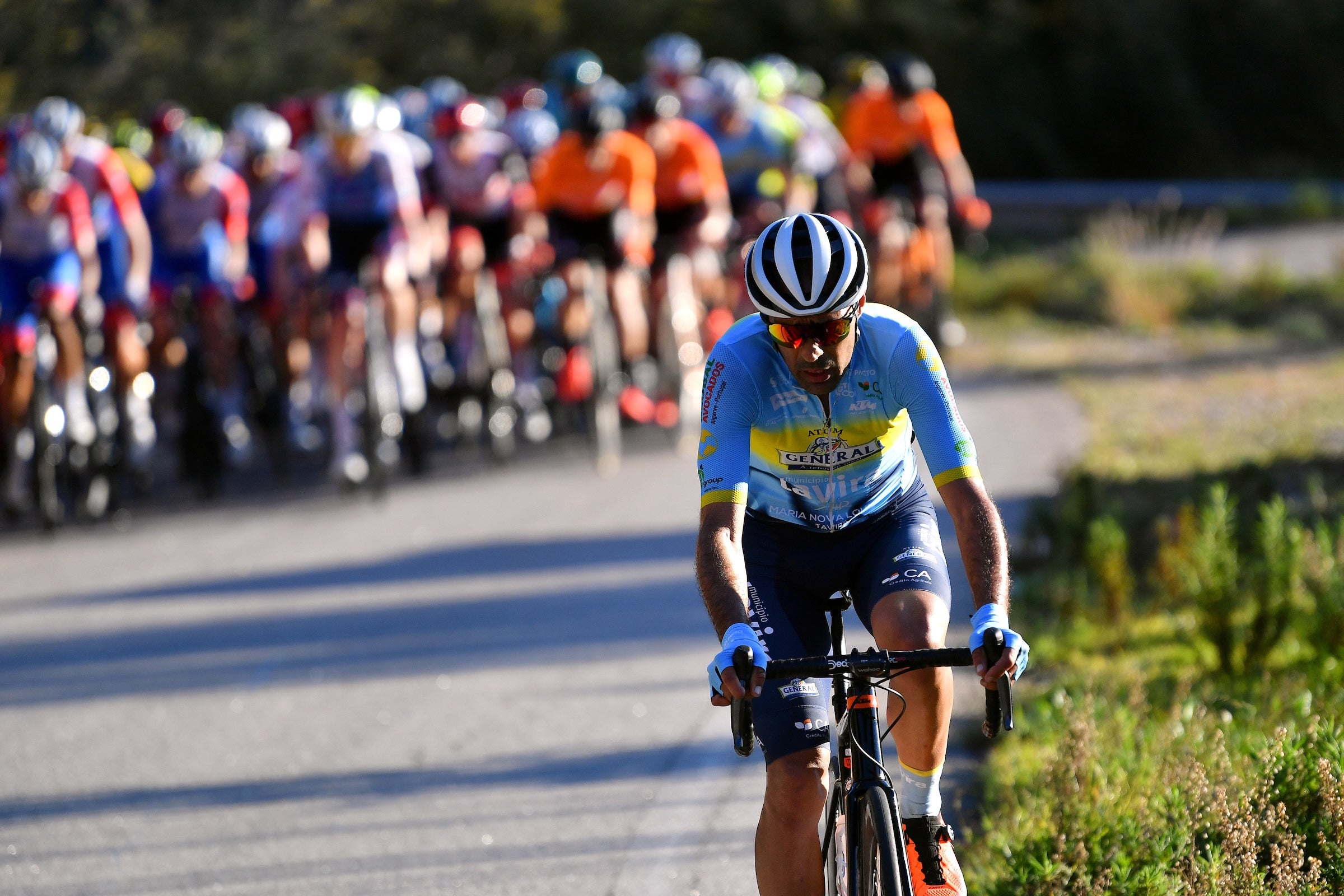
Delio Fernandez Cruz of Spain and Team Atum General/Tavira/in action in the 2022 Volta Ao Algarve (Photo: Luc Claessen/Getty Images) (Photo: Luc Claessen)
Eleven years after he first provided suspicious samples, the Spanish rider Delio Fernandez Cruz has been handed a four year ban.
The only problem? The 40 year old has already retired.
Fernandez Cruz walked away from the sport in April of last year, ending what was a four-season spell with the AP Hotels and Resorts Tavira SC Farenese team.
He won stage 5 of the 2023 Volta a Portugal as part of the continual squad, adding to the stages he had previous achieved as part of the notorious W52-Quinta da Lixa setup in 2015 and 2013.
It’s not clear if his mid-season retirement was because he realised the game was up but, a year and a half later, he’s facing the consequences of an investigation by the International Testing Agency (ITA).
“Spanish rider Delio Fernández Cruz has been sanctioned with a four-year period of ineligibility by the UCI Anti-Doping Tribunal (Tribunal) for an anti-doping rule violation (ADRV) established through his Athlete Biological Passport (ABP),” the ITA announced on Friday.
ADVERTISEMENT
The biological passport is different to standard anti-doping tests as it looks for unusual patterns in a rider’s blood profile in order to identify the use of banned substances or methods.
“In Delio Fernández Cruz’s case, independent experts unanimously concluded that the changes in his ABP values were highly likely to have been caused by a prohibited substance or method,” the ITA stated.
“The findings concerned samples collected during the Vuelta a Portugal on 28 July and 5 August 2015, and on 15 and 17 August 2023.”
Those dates were during the same editions of the race that he took stage wins, and were ultimately enough to prove wrongdoing.
Fernández Cruz also competed with the Delko Marseille Provence team, with which he won the Int.Österreich-Rundfahrt-Tour of Austria in 2017.
ADVERTISEMENT
Results stripped, a major fine imposed
Fernandez Cruz was not a major star in the sport, although he did ride the Giro d’Italia and Vuelta a España in 2009 and 2010 respectively.
He was 60th overall in the latter event.
His most successful season was 2015, the first year his biological passport raised issues. He somehow evaded repercussions over the years, but his return to winning form in the 2023 Tour of Portugal proved key to his eventual suspension.
In its announcement of the sanction, the ITA said that the UCI initially handled the results management process. The ITA subsequently took over the matter. It said that it “conducted the disciplinary proceedings before the Tribunal on behalf of the UCI following the delegation of legal proceedings to the ITA in February 2026.”
That tribunal ultimately ruled on November 12 that the rider had committed an anti-doping rule violation, and handed him a four year ban.
ADVERTISEMENT
That runs from 12 November this season until 11 November 2030, by which time Fernandez Cruz will be 44.
More serious is the stripping of all of his results over a six year period.
Those run from 28 July 2015, the day he returned his first abnormal sample, until 27 July 2019, and again from August 9 2023 until the official start of his suspension on November 12.
That will hurt, and so too a huge fine. He must pay a sum equal to 70% of the average gross annual income earned from cycling.
Fernandez Cruz has the right to appeal to the Court of Arbitration for Sport, as do a number of stakeholders. These are the UCI/ITA, the World Anti-Doping Agency and the rider’s National Anti-Doping Organisation (NADO).