Updated July 8, 2026 07:43AM
Tour de France Riders Are Using a Secretive New Fueling Solution That Could Blow Endurance Racing Apart
Velo speaks with founder of a world-first lactate energy gel that could mark as big a performance breakthrough as high-carb fueling.

(Photo: Gruber Images)
A new fueling revolution might be starting right now at the Tour de France.
Riders are trialing the first generation of a world-first lactate energy gel that’s got the potential to blow the limits of athletic performance.
Speaking with Velo on Tuesday, ExoLactate co-founder Aitor Viribay said his product could be as impactful as the first wave of the high-carbohydrate fueling revolution or the development of carbon-plated running super-shoes.
“I know this can be a game changer. And I’m a scientist, not a businessman trying to sell the product,” Viribay told Velo. “I’ve been working on this for seven years. Big researchers have chased this for decades before me.
“This is a real innovation that can be at the same level or bigger than the learnings about 120 grams of carbs [per hour],” he continued. “The difference though is that 120 grams might be the limit for carbohydrates. You can barely push more.
ADVERTISEMENT
“The only way to keep pushing the limits of performance with fueling right now is with exogenous lactate. That’s for sure.”
Viribay was unable to comment on which athletes and teams use ExoLactate due to commercial and sponsorship sensitivities.
However, Velo understands the product was in demand by multiple WorldTour teams ahead of the 2026 Tour de France.
The interest was so high, and the potential so groundbreaking, that one team is reported to have paid significant dollar to gain exclusive access.
A first-of-its-kind fueling solution enters the Tour de France
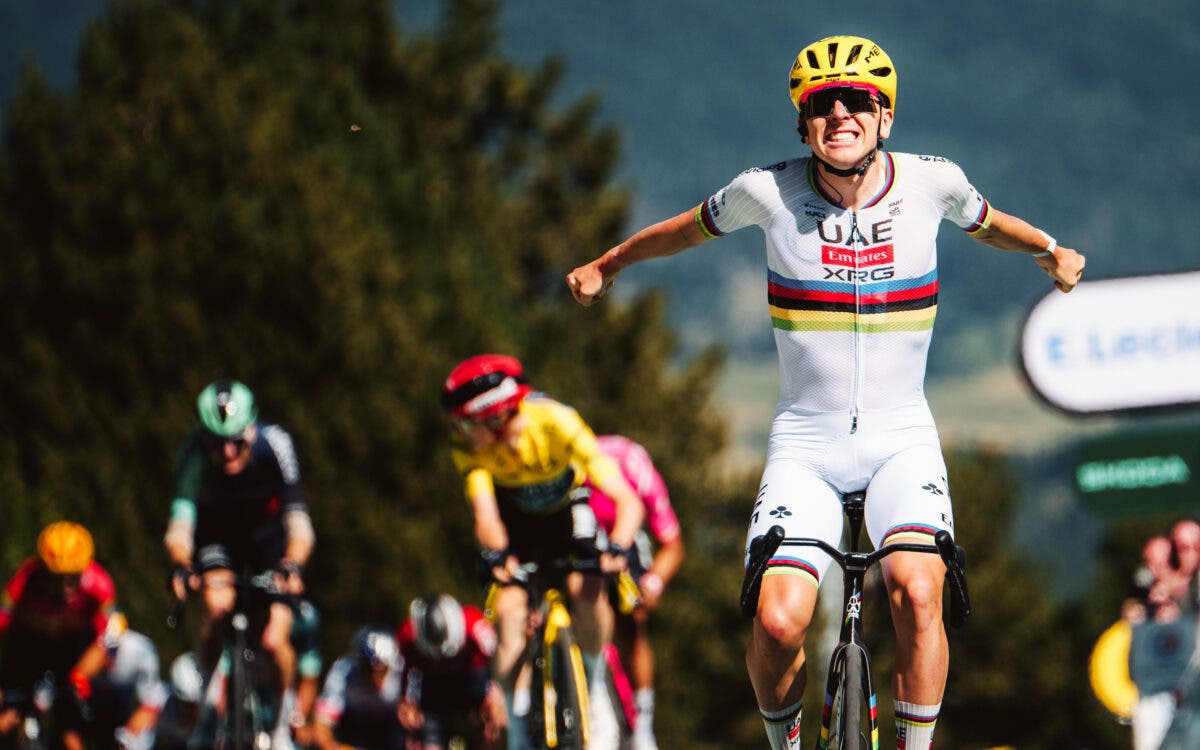
It seems that whichever Tour de France team – or teams – got early access to ExoLactate got lucky.
The development of ExoLactate is generating a small wave of hysteria across the sports science community and the endurance elite. There’s not been a WADA-compliant performance supplement to receive as much hype in decades.
“The first and most important thing the Tour de France riders are finding is that they are tolerating 20 grams of lactate per hour with no G.I. distress,” Viribay told Velo. “That’s absolutely insane. Until now, you could only ingest milligrams.
“So far, the anecdotal feedback is that riders are finding a lower rate of perceived exertion, and their durability is better. And we’re only at the start of discovering its potential.”
ADVERTISEMENT
ExoLactate gel has also been used by athletes this year at the Zegama Aizkorri mountain marathon and the Western States ultramarathon. They’re the Paris-Roubaix and Milan-San Remo of trail running.
The gel will also be used at the Tour de France of ultra-marathons, the Ultra-Trail du Mont Blanc (UTMB).
Understanding lactate
But wait right there, isn’t lactate bad? Doesn’t it make you legs hurt?
No. That old thinking is founded on outdated science.
Lactate is the body’s prime fuel source.
It acts faster than carbohydrate, and is a key signaling molecule that boosts metabolic efficiency.
At higher workout intensities, lactate production promotes carbohydrate oxidation over fat oxidation to provide a crucial source of fast energy.
Viribay also believes there’s potential for exogenous lactate to boost recovery, although that’s yet to be proven.
This misunderstood molecule is at the center of exercise metabolism, and now, for the first time ever, it’s been bubbled into a gel. Rival brands are scrambling to catch up.
ADVERTISEMENT
ExoLactate is on the brink of releasing its gel to the mass European market.
A rollout across the U.S. will follow soon after.
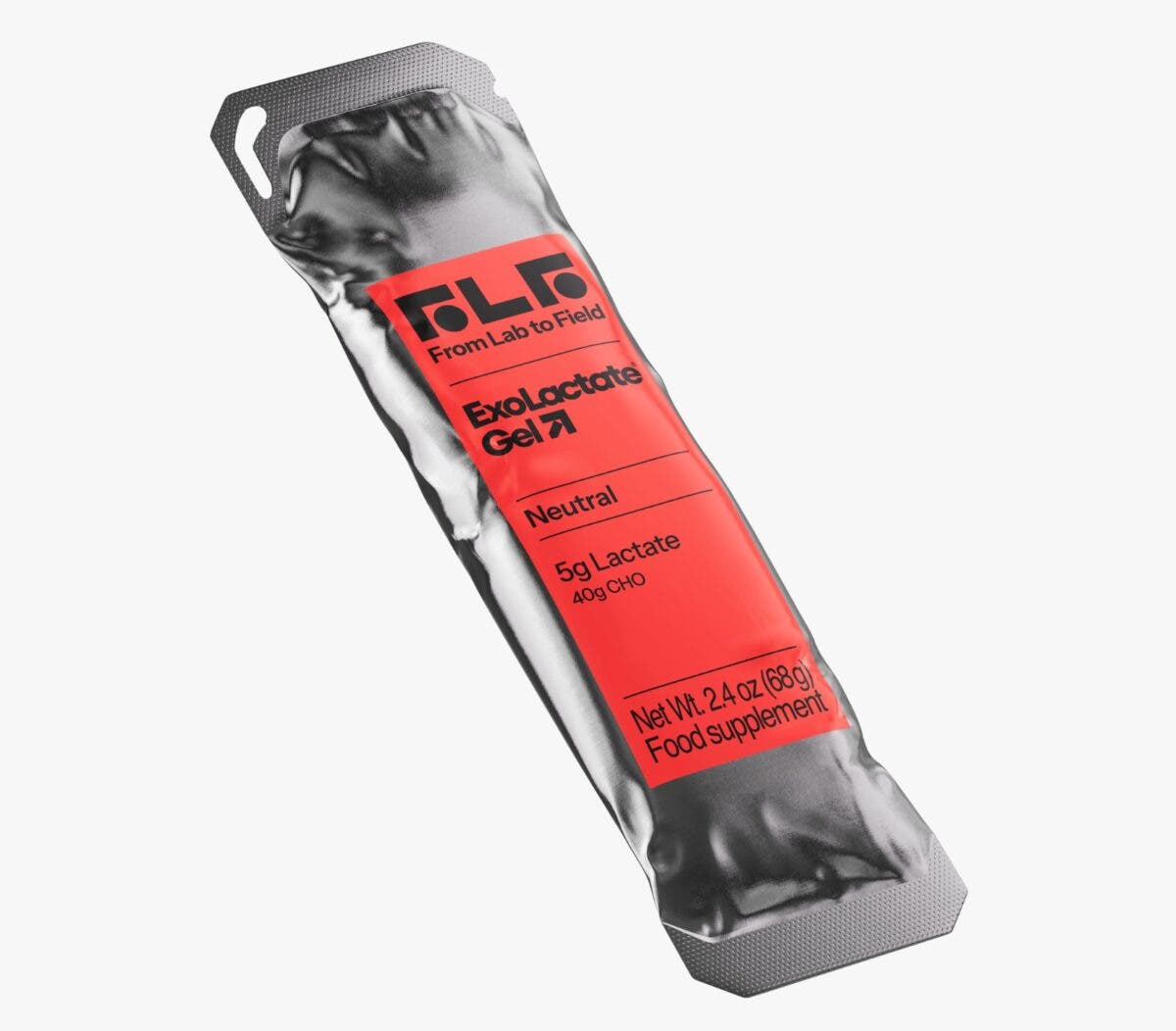
ExoLactate: 5g lactate, 40g carbohydrates, and in use at the Tour de France
Velo first covered the groundbreaking product in early June. At that point, details were scarce and under close wraps.
Viribay explained more to Velo on Tuesday on a call.
For context – Viribay is one of the most respected thinkers in fueling science.
The Basque researcher was one of the first to push theories about high-carb fueling and was a key voice in Velo’s breaking work on the “carbohydrate revolution.”
Viribay staffed with Ineos Grenadiers and is now head of performance at the Salomon ultra running team.
And as if he’s not busy enough, the “From Lab to Field” lactate research group he founded seven years ago has been painstakingly developing ExoLactate for more than three years.
Former WorldTour pro-turned trail runner Christian Meier has been central to its development and testing.
ADVERTISEMENT
Viribay said ExoLactate has been a long labor of love – a quest for a perfect product.
The result is a gel that provides 5 grams of lactate and 40 grams of carbohydrate in an optimal 1:1 glucose:fructose ratio. That’s a sugar-load that’s competitive with all the leading carb-only gels and drinks on the market.
Viribay added that ExoLactate’s mouth-neutral pH and lack of flavor set it apart from the bloated sport nutrition market.
“We’ve been obsessed with creating the perfect gel. Even if you remove the lactate, it’s a perfect carbohydrate product,” Viribay said.
In a world of sickly and acidic products that can cause gut rot, the gel is reportedly stomach-safe and tooth-kind.
“Texture, how it behaves in the stomach, pH, and flavor, they took us three years to develop properly,” Viribay said.
“The reason we’ve waited so long with this is we wanted the absolute ideal solution. We wanted it to be totally effective but respectful to the body.”
Too good to be true?
ExoLactate gels will retail at a price point similar to a top-tier energy gel.
ADVERTISEMENT
If the product is as good as Viribay says it is, it’s a fueling dream.
It contains a pile of carbs, and it’s stomach-friendly. And that’s before we consider the X-Factor: lactate.
But should we believe all this hype?
Is it just a passing fad?
New so-called “wonder fuels” bubble up and then fizzle out with every Tour de France cycle.
Viribay accepted that while the potential of exogenous lactate is supported by decades of research, there’s still a limited evidence base for its real-world application.
He’s wildly optimistic but understandably cautious about how long it will take to realize its full potential.
“Exogenous lactate is so promising that it makes me dream,” Viribay said. “However, real evidence is scarce at present. Our hypotheses are based on mechanistic studies and metabolic knowledge. We have to keep that in mind.
“We need to further research its effects on athletes using this solution as a fueling tool.”
ADVERTISEMENT
The riders guzzling ExoLactate at the Tour de France couldn’t be a much better set of guinea pigs for his pioneering product.
Velo will have more on the science and potential of ExoLactate in a deeper follow-up post very soon.
Stay tuned for more detail on what could be a huge new step for endurance nutrition.