Updated July 13, 2026 11:15AM
Massif Central Mayhem: Five Reasons Why Stage 10 Could Explode the Tour
Pogačar’s unfinished business, the "rest day legs" that could ruin a GC challenge and the fired-up Frenchmen racing to become national heroes
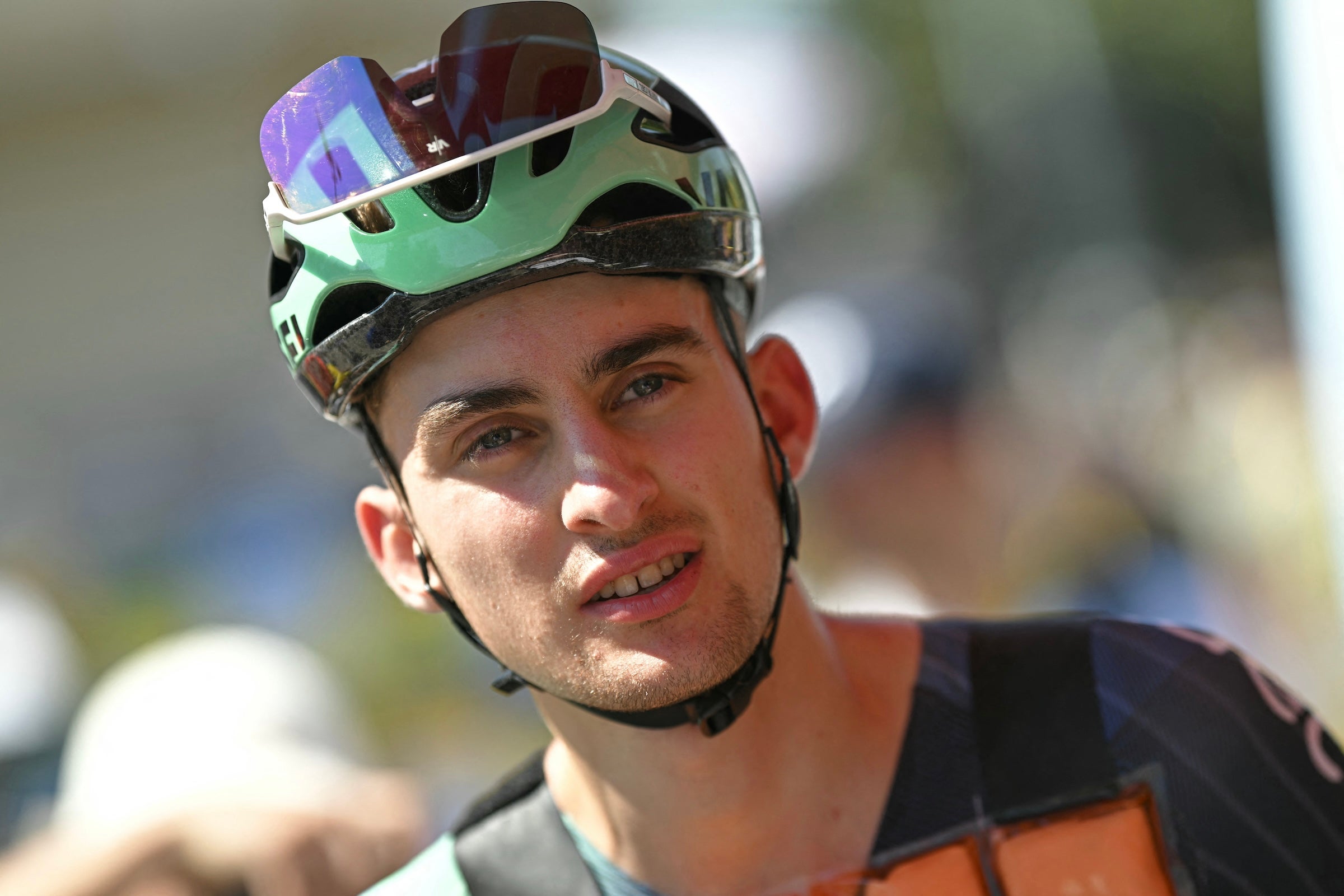
Paul Seixas is riding his first-ever Tour de France (Photo: Loic Venance / AFP) (Photo: LOIC VENANCE)
Traditionally, the Alps and the Pyrenees are where the Tour de France is won and lost.
The old model is evolving. In the last 15 years, the modern edition of the sport’s show-stopping bike race has sought out tough new finishes far and wide, with other mountain ranges shaking up the race. Enter the Massif Central in France’s mid-south.
“I always go back to Andy Schleck in 2010 who said to me at Station des Rousses, ‘If I’d known it was this hard, I would have attacked.” Today, Pogačar knows, Vingegaard knows, Paul Seixas knows,” race director Christian Prudhomme said at the stage 10 start town of Aurillac in early May.
The Bastille Day stage Tuesday, with 3,800 m / 12,460 ft of climbing, is designed to excite fans and incite attacks from champions. There will be fireworks going off the front of the peloton hours ahead of the rockets and pyrotechnics literally lighting up the country’s night sky.
ADVERTISEMENT
12,000 feet of climbing
There is hardly a meter of flat on the energy-sapping, twisting Cantal roads, with seven categorised climbs in the last 100 kilometers, saving some of the hardest climbs until the finale.
Who needs a long steady Alp or altitude when the last two kilometers of the first-category Puy Mary averages 8.8% and the Col de Pertus is 4.5km at 8%?
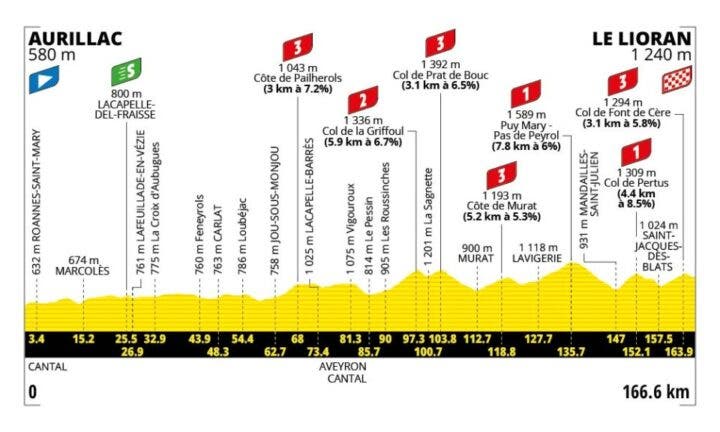
Such gradients lessen the advantage of slipstreaming and make it every man for himself, encouraging favorites to come out and play. With seven riders separated by 90 seconds, there is a big fight to be had for the lower steps of the podium. Expect a GC re-shuffle.
Pogačar’s unfinished business
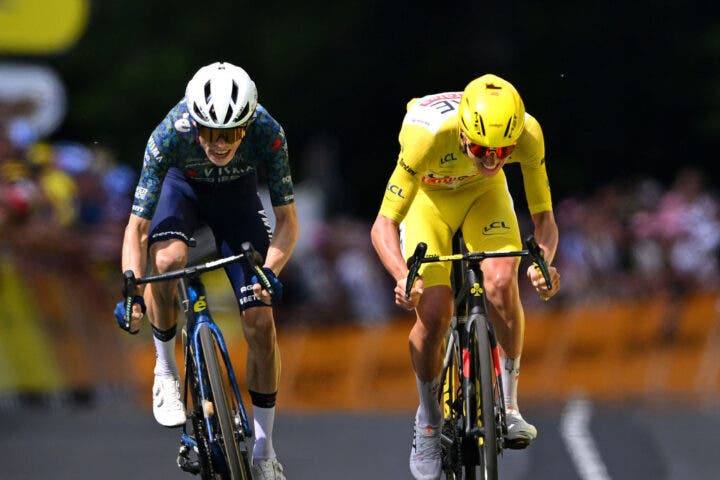
The finish destination of Le Lioran might be on the mind of Tour titan Tadej Pogačar. It saw the only blip in his dominant 2024 race victory. Pogačar attacked in the last kilometer of the Puy Mary, with 31 kilometers to go, and it looked like another cut-and-shut triumph for the yellow jersey.
Yet Jonas Vingegaard surprisingly fought his way back and beat him in the sprint by a wheel. His thrilling win marked his comeback from a career-threatening crash at Itzulia Basque Country three months earlier. No wonder it went down as the best stage of the race that year for race director Prudhomme.
There were whispers of Pogačar failing to fuel fully and paying the price. He may want to banish any bad memories and hit home just how strong he is, giving Vingegaard no chance to make it game on for the GC. The punchy climbs of the final hour’s racing, very similar to the 2024 stage, suit the UAE Team Emirates-XRG leader.
ADVERTISEMENT
The race leader’s team also possesses the strength-in-depth to grind the reserves down of their rivals and isolate them ahead of a Pogačar acceleration.
Rest day legs
Oh, they’re a thing. Some riders would rather sit in AC and not even touch a bike after nine days of suffering; others go on short café rides. Either way, the mind, body and nervous system relaxes and it means some riders are out of the rhythm.
The return to full-gas racing can be a shock. People whose legs don’t turn quite like they did in the first nine stages, whose head isn’t quite in the game, who find themselves suffering even more in the hairdryer-like heat. And far from a flat, windless sprinters’ stage with fewer obstacles on the route, this is the hardest stage the Tour de France has had after the opening rest day since 2018.
ADVERTISEMENT
Could Paul Seixas, who is experiencing his first ever rest day and does not know how his body will react, be one of the GC challengers to fall out of contention?
He would be far from the first. In 2022, after the second rest day, Romain Bardet went from fourth to ninth overall, losing almost four minutes to the favorites’ group after one of his worst days on the bike. In 2015, American hope Tejay van Garderen tumbled out of the top ten after the last rest day, losing almost 20 minutes to race leader Chris Froome.
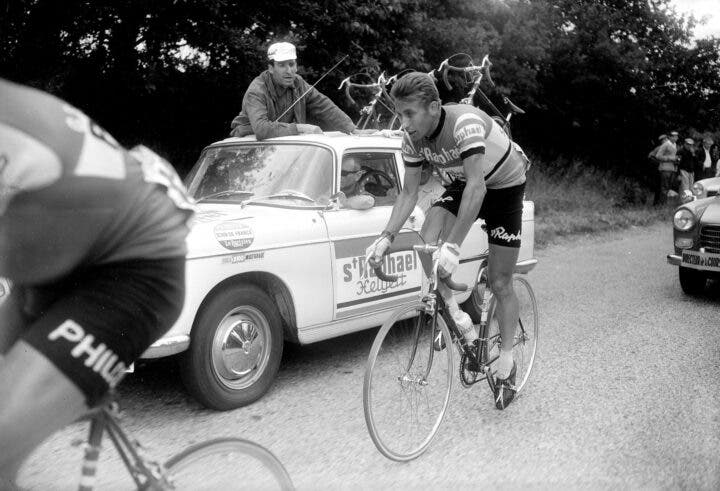
However, the most famous example of a post-rest day hangover in the saddle comes from French superstar Jacques Anquetil. In 1964, the maillot jaune accepted a barbecue invite from a radio station, drinking sangria and eating meat. The next day’s stage started uphill and he was in trouble. Almost four minutes down on the leader over the first climb, Andorra’s Port d’Envalira, he was in danger of losing the Tour.
In spite of dense fog, the Frenchman passed group after group downhill, caught his teammates and they did an 88-kilometer battle to make it back to the leaders and save his fifth and final Tour win.
ADVERTISEMENT
Times have changed nutritionally: Tadej Pogačar will not even be touching chicken wings and burgers from the grill, let alone over-doing it, “Maître Jacques”-style.
French fever
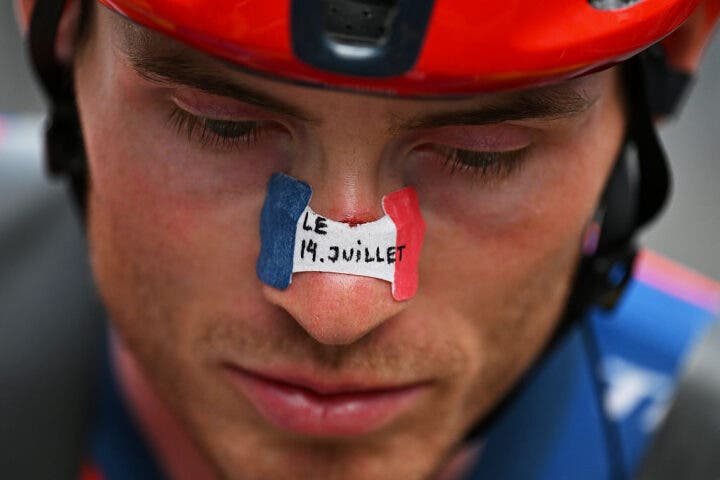
This is not going to be one of those sleepy days where a lonely Lotto rider finds himself hanging out in front with a few minutes’ lead.
It’s Bastille Day in the green, cow-filled Cantal region and this national holiday celebrating French independence gives home nation riders a little more pep in their pedal stroke. In-form Alex Baudin (EF Education-EasyPost) and Kévin Vauquelin (Netcompany Ineos) are contenders for the escape on a grueling route made for hard-going breakaways.
Warren Barguil was the last Frenchman to win on Bastille Day, back in 2017. Pull it off, through the throngs of bellowing fans waving the country’s blue-white-red flag, and you get remembered as the guy who won on 14 July for the rest of your career.
Boiling temperatures
While the temperatures of 90-95°F (32-35°C) will be slightly lower than stage nine, the heat will still be on. The average temperature has been 9 degrees C (16.2°F) hotter than last year, and that means this is a bunch under strain. Given the weather, the amount of elevation, and breakaway bids going up the road, those ice socks will melt even faster. This could be one stage too many for a Tour de France rider struggling in the broiling conditions.