Updated July 13, 2026 03:39PM
Riders' Group Calls for Action as Tour de France Cooks
Riders, race staff and public all wrestling with dangerous conditions at the Tour de France.
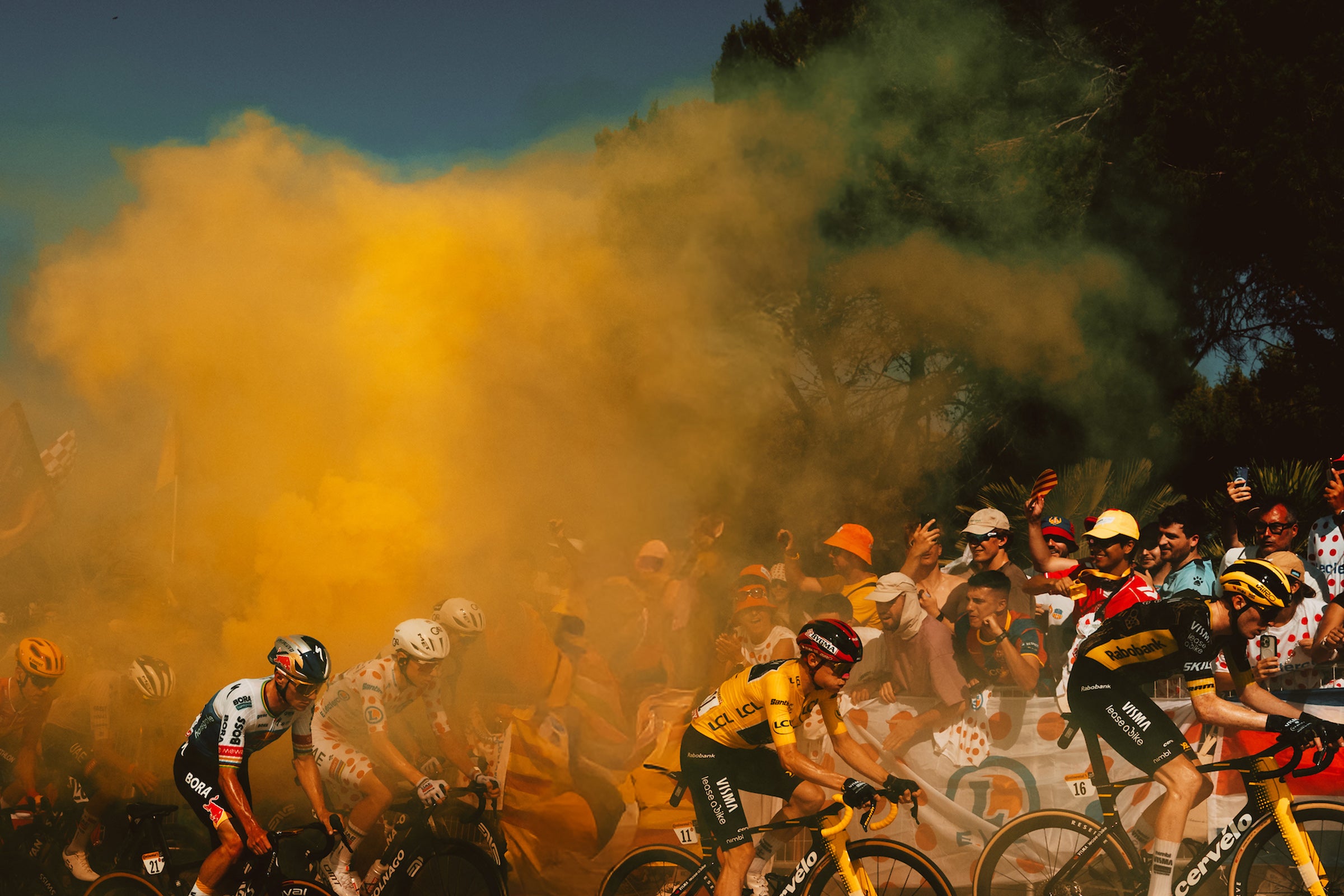
It's been extra tough for the riders this year due to the extreme temperature at the Tour de France (Photo: Gruber Images)
Competitors at the Tour de France have always had it tough, but aside from the speed, the mountains and the wind, they have an additional barrier this year.
The sun.
The Tour has been pummeled by repeated heatwaves since the race start in Barcelona on July 4. On stage 3 the publicity caravan and many spectators were absent due to public safety rules being imposed over related wildfires.
Then on Sunday stage 9 was slashed by 30km due to what race organizers ASO labelled ‘an exceptionally intense heatwave.’
Now both the Professional Riders’ Association (CPA) and the Tour de France race leader Tadej Pogačar have called for a big rethink about the sport and about the Tour.
The CPA addressed the subject on Sunday morning, suggesting the situation is a dangerous one that needs to be tackled.
In a statement it said it that it had consulted with both race organizer ASO and the president of the jury in relation to the extreme weather conditions protocol, and that agreements had been made as a result.
ADVERTISEMENT
The group—which was set up to give riders leverage within the sport—said that it had leveraged a 2% increase to the time limits to help the riders cope with the grueling conditions.
For the future, it stated that all parties—CPA included—will meet whenever difficult weather conditions endanger the health of the riders.
It also called for further change, echoing calls that the current Tour time schedule is no longer safe.
“Given the increasing frequency of extreme heat waves, the CPA reaffirms that summer race start times must evolve in order to protect athlete’s health,” it stated in the press release.
The CPA added that it “urgently calls for discussions” to be held with all stakeholders this winter in order to find a solution prior to the 2027 season.
There is a sense of urgency right now that it wants to carry forward.
Yellow jersey Pogačar wants calendar to be reinvented
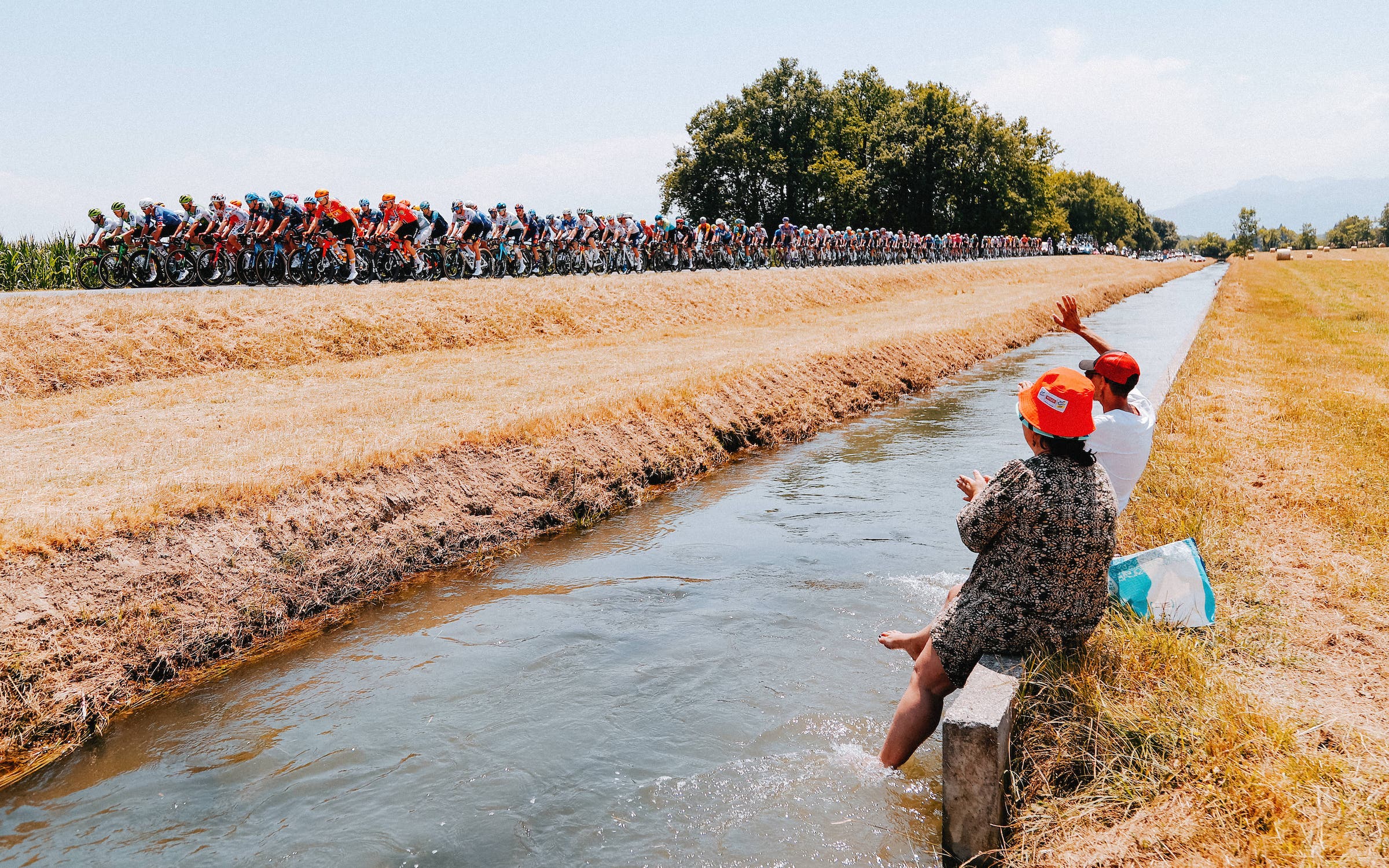
Pogačar, too, has clout in the sport. He’s the most recognizable rider and the most successful of the modern era. Leading the Tour gives him an additional platform and he used that to speak his mind in recent days.
ADVERTISEMENT
He floated a radical transformation of the Tour de France and the sport itself as a possible solution.
“In my opinion, it’s a big topic to discuss,” he said at the finish in Ussel. “If I could have the power to change it all, I would change all the calendar.
“I would not race in July and August in the hot places and do a completely different calendar. But that’s something that you need to think through very well.
“It’s not something I can do. Maybe the next step will be to start earlier the stages.”
Modifying start times has been proposed by others as a possible short-term change. The theory is that it would expose the riders less to the hottest part of the day, leveraging relatively cooler temperatures in the morning to tick off at least some of the kilometers in more humane conditions.
However Pogačar did accept that such an option is not straightforward.
ADVERTISEMENT
He pointed out that starting stages at 10am would mean that they would finish in a hotter time of day than at present. Most stages finish around 5.30 pm local time.
“For example, today when we arrived at the finish, it was way cooler than at the start,” he said.
Changing finish times to 3 or 3.30 pm would undo that benefit, even if it would be cooler when the flag drops for the start of racing.
And there’s another complication too.
Were earlier start times to go ahead, he said that this would impose a different demand on riders.
“Then you need to start the stage at eight or nine or even earlier,” he said. “That’s also a little bit shit. But I think the body can adapt to do that as well, that you wake up at five o’clock in the morning and do the stage at eight.”
Something has to be done. What exactly that is remains to be decided.
‘We’re in something extreme’
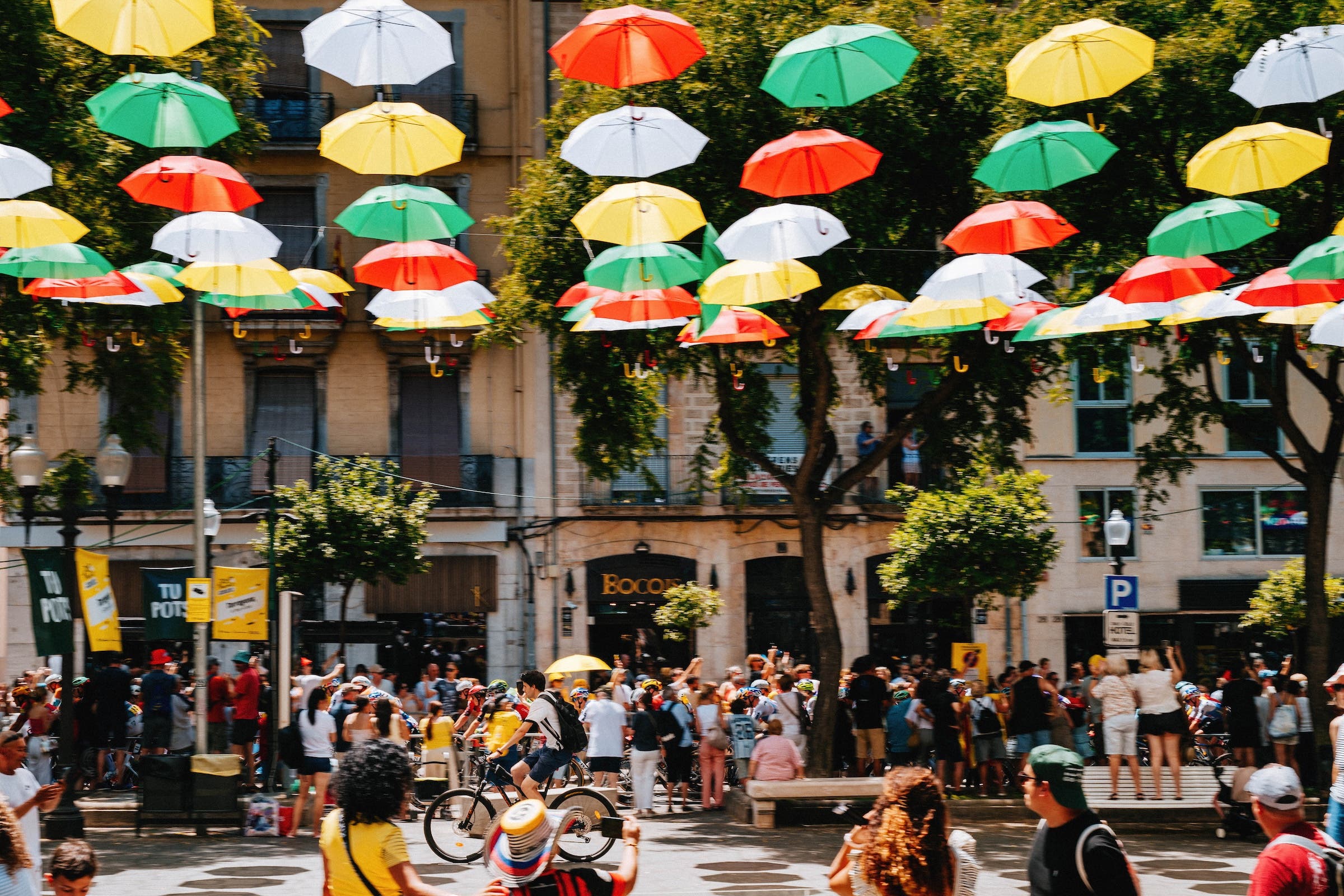
For now riders have to just cope the best they can.
ADVERTISEMENT
The Tour’s competitors have taken every step possible to deal with the conditions, with many teams running short on bottles due to the sheer volume of water being guzzled, sprayed or dunked over heads.
EF Education-EasyPost has a separate vehicle on the race purely for making and transporting ice, while Ineos Grenadiers used some quirky lateral thinking to try to cool down their riders prior to the opening team time trial.
It’s been a real slog, and it’s taking its toll.
“The riders are starting to get fed up, they’re worn out, everyone’s tired,” former rider Tony Gallopin told l’Equipe.
“I’ve already experienced extreme heat, but like this, with big temperatures every day, without ever having a real lull or a little freshness, never! At times, it is 40 degrees in the car. We’re in something extreme.
“This kind of situation will become recurring in the future, so it may have to be taken into account.”
Double stage winner Tim Merlier hailed the decision to shorten Sunday’s stage.
ADVERTISEMENT
“For me, it’s a good idea,” he said. “Because it’s been a week now that we’ve run above 35 degrees. It’s the first time in my career that I’m so hot. The first three days, we only thought about the race, but the next three, we were just busy recovering water and ice from the cars.”
He thanked ASO for hacking 30km off stage 9, saying that they were “at least trying to do something.”
A leap in average temperature
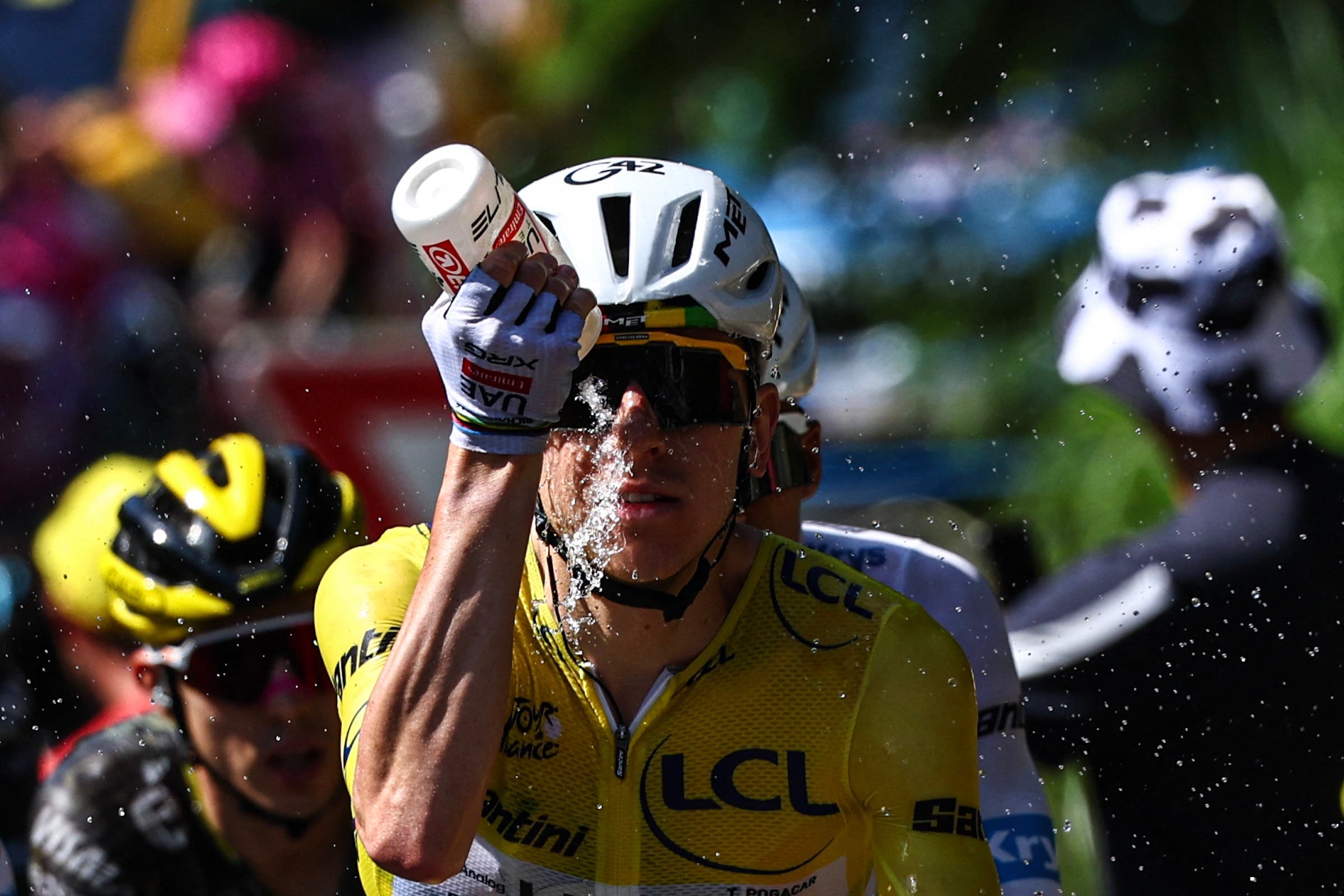
Heat has always been a challenge for riders at the Tour; one of the contributing factors to Tom Simpson’s death in 1967 was the ferocious temperature on Mont Ventoux.
However what is indisputable is just how much hotter this Tour has been. Climate change data shows an upward trend in general, but this July has been a real scorcher. The race has been noticeably hotter than previous years, with the stat below showing an average nine degree Celsius [rise when compared to last year’s event.
That’s why, despite all the gulping of water by riders some of them have lost up to 10 pounds of body weight on stages through dehydration.
They will all try to use Monday’s rest day as a chance for some respite.
ADVERTISEMENT
Matteo Jorgenson even said he was going to abandon the usual training ride on such days in order to soak up more time with the air conditioner.
Such lounging around in chill air appears not be an option for Pogačar’s team, which has been hit by an unforeseen problem.
El País journalist Carlos Arribas reported that the UAE team has been unable to use air condition at its hotel.
However it’s not all heat and hassle at UAE Emirates-XRG. RMC Sport has reported that during the Tour the squad has been using a customized Eight Sleep system to control sleeping temperatures.
The cost of the technology? More than 3,000 per rider, and therefore upwards of €26,000 for the whole team.
It’s a big bill, but an even bigger potential gain.
That’ll stop them getting hot under the collar about the air con.
Still, in the absence of an equivalent for racing kit, riders and teams are faced with a new challenge to solve.
ADVERTISEMENT
The heat is a headache too for race organizers, who have some big picture thinking to do for the years ahead.