Updated August 6, 2026 02:56AM
Is More Stages Better? Tour de France Femmes Stars Pick Their Magic Number
Le Court-Pienaar and fellow stars push for growth, with a warning: ‘Add days because it’s good for us, not to be more like the men.’
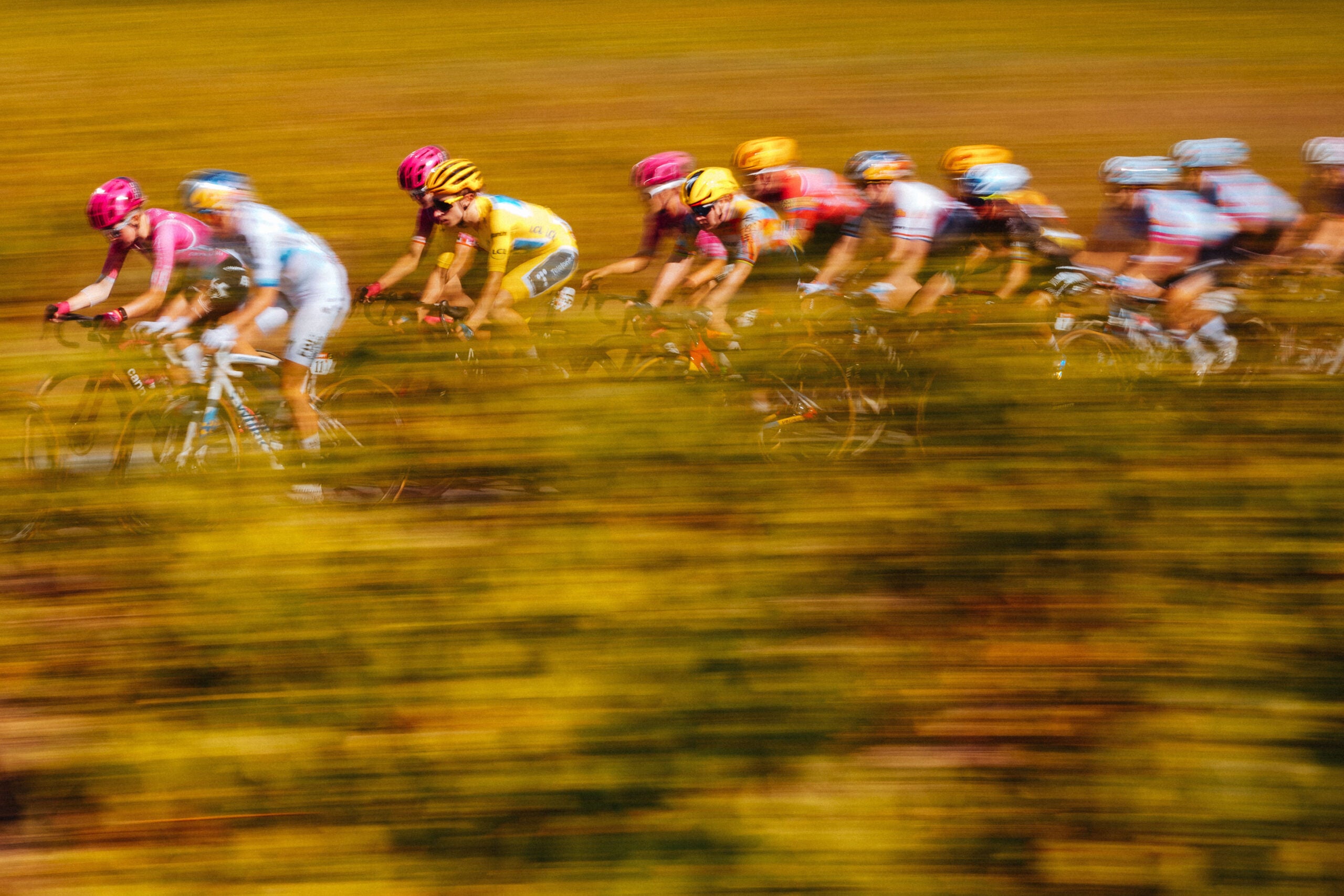
(Photo: Gruber Images)
The only way is up for the Tour de France Femmes avec Zwift.
It started out as an eight-stage race on its debut in 2022 and upped to nine last year.
Women’s racing’s leading race could have more stages in the very near future.
UCI president David Lappartient does not think the growth is too fast and wants to consolidate its popularity with development.
“To have also maybe live TV from the start to the finish which was the case today [stage one] and not for the other stages,” the Frenchman told Wielerflits. “But we can already see the organizer ASO is trying to improve every year. So there will be some more stages.”
Sounds pretty official, then.
There is little doubt for many members of its peloton too that there is room for more growth to make the sport’s most prestigious race longer and even more compelling.
ADVERTISEMENT
But what is the magic number for the racers? The nine-stage status quo? 21 like the men’s Tour? Or something in between? Velo asked the bunch.
Le Court-Pienaar: give us 14 stages and a rest day
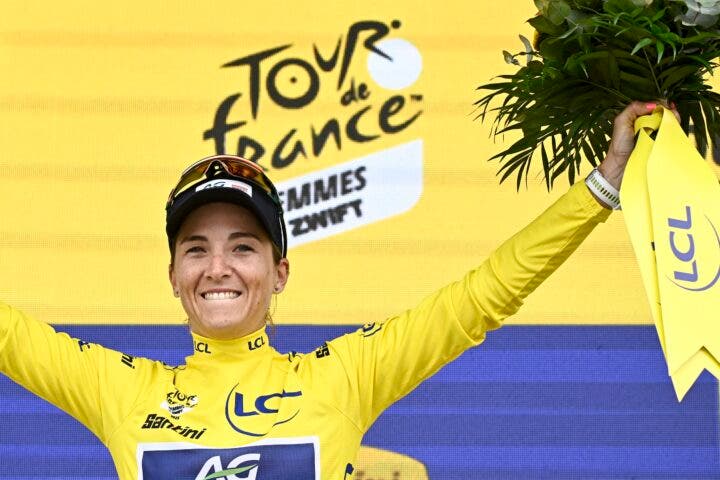
2025 Liège-Bastogne-Liège winner and Tour animator Kim Le Court-Pienaar (AG Insurance-Soudal) told Velo: “I think two weeks would be great because then we could add a rest day.”
“We don’t get to have one, a day where we can really enjoy the moment like the men’s last day. So if they make it a bit longer, maybe there’s more time to make the racing.”
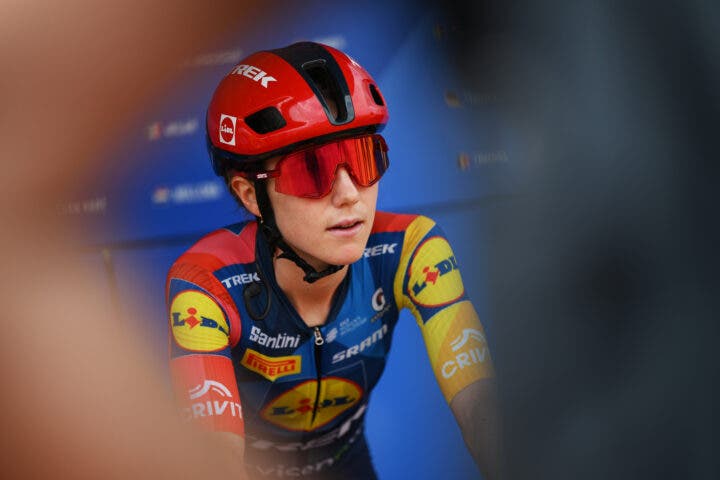
Meanwhile, Lidl-Trek leader Niamh Fisher-Black would welcome a 12-stage Tour de France Femmes.
“I like it’s getting longer already,” she says. “Personally, I think actually it could get a little bit longer. It just suits me and my personal strengths.”
Canada’s Paris-Roubaix winner Alison Jackson (St Michel-Preference Home-Auber 93) is another rider who thinks a dozen would be just right.
Let fatigue and stamina tell
Historically, the sport’s grand tours have been a test of stamina, staying power and recovery.
ADVERTISEMENT
Fifth overall last year, Fisher-Black came on strong in the attritional Alpine last two days in 2025, making her move from eighth overall on the last day.
“I tend to be stronger in the last few days, but I don’t think it needs to get much longer than 12 days, two weeks,” the New Zealander said.
“I think by the end of that first week, you really start to see the difference that fatigue makes, and so I think it makes it exciting enough.”
More stages is not necessarily better
After years of campaigning for this blue riband race, the sport has had its Tour de France Femmes since 2022.
But not everything has to have parity with the men’s sport or be compared, especially given the risk of growing too fast without crucial infrastructure in place.
As they say in these parts, vive la différence.
“I think every day we have so many fans tuning in online and in person and I wouldn’t want to dilute that by having a Tour that’s too long,” double Olympic champion Kristen Faulkner (EF Education-Oatly) says.
“At the same time, I do feel that the sport is growing and can support more stage races.”
ADVERTISEMENT
“I also don’t necessarily believe that more stages is better,” she says. “Just because the men have more doesn’t mean it’s better. I don’t necessarily think we need to look to men’s racing as what we need to be or the North Star we should strive for.”
Faulkner wants to make sure if extra stages do get added, it’s because it’s good for the women’s sport rather than a copy and paste job.
“Part of why I love women’s racing is because every day matters and every moment matters in a stage,” the 33-year-old said. “I just really don’t want to lose that. I personally enjoy races that don’t feel so controlled, I wouldn’t enjoy racing if it were like the men’s – I prefer our racing style.”
Back to the future
Her compatriot Heidi Franz (St Michel-Preference Home-Auber93) did La Course par le Tour de France in 2021, back when it was a one-day showcase.
Doing the full-on stage race for the first time, the American wants a fortnight of action.
ADVERTISEMENT
“Personally, I think I would really enjoy two weeks. We’ve never had a two-week race before, since the 1980s or something, you’ve got to go back a long time,” she says.
The Ore-Ida Women’s Challenge in Idaho ran to 17 days in the 1980s and the women’s Tour de France in the same decade had several editions with 18 stages, albeit covering shorter distances than the modern iteration, taking place ahead of the men’s event.
“We’ve come so far in the last five years, I think we can pretty easily build up in the next few years to a two-week tour,” Franz says.
“Also, the resources and the structure of the sport needs to grow alongside that. The energy and just pure resources that it takes to do two weeks is a lot.
“It’s a big increase from nine to 14. But I think we can get there for sure. I’d like to give that a good test.”