Updated November 3, 2026 11:47PM
A Shimano Shoe Disaster, Bra Doping, and the 5 Biggest Controversies and Catastrophes of 2026
From Van der Poel's pedal meltdown at Roubaix to the beef-to-end-all-beefs at the Tour, these weird and wild moments blew up the cycling season.
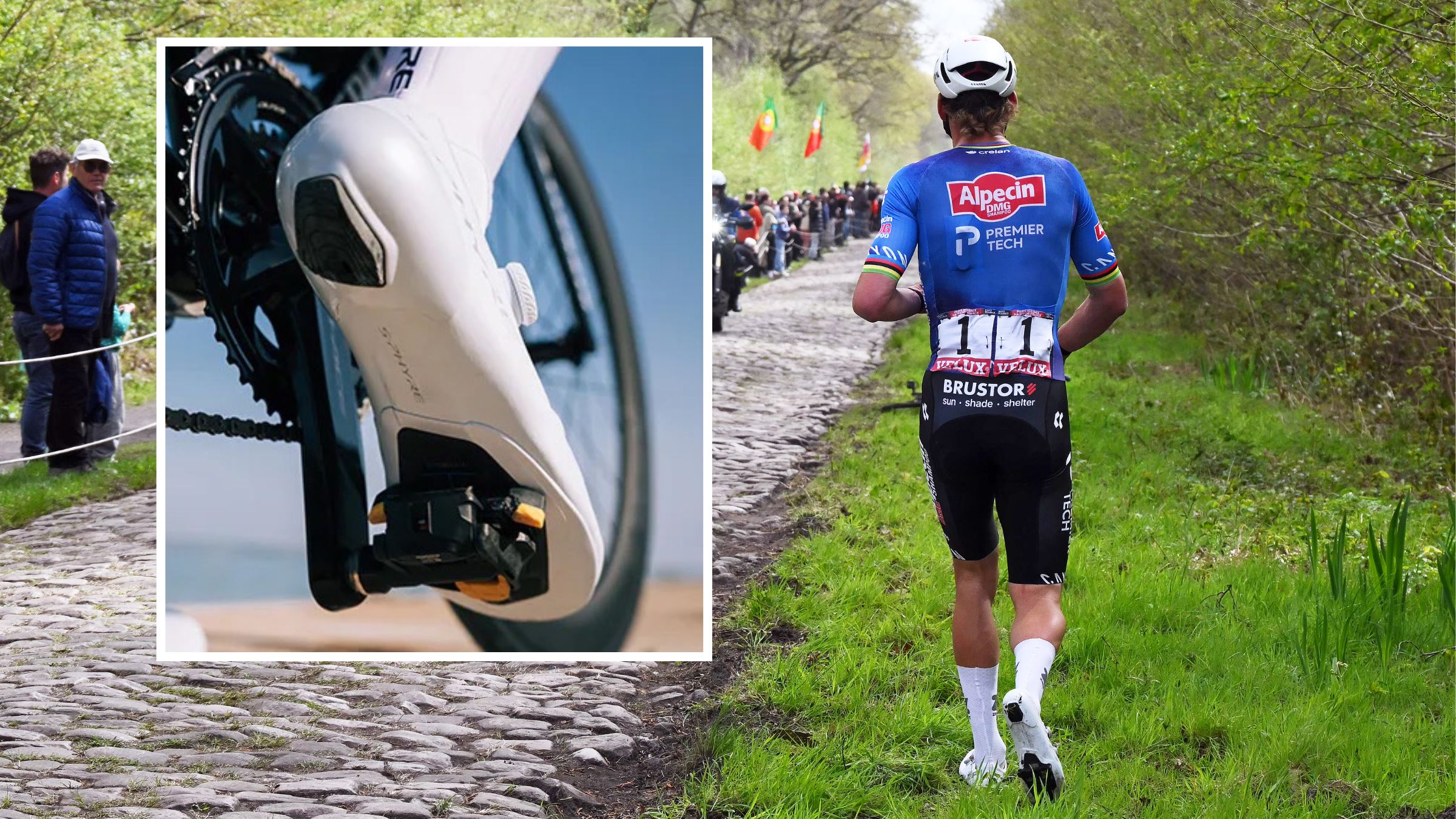
(Photo: Getty Images + Shimano)
Wout van Aert’s emotional victory at Paris-Roubaix. Demi Vollering’s rout of road worlds. Tadej Pogačar’s crash ‘n’ comeback conquest of Milan-San Remo.
The 2026 cycling season was loaded with races for the ages.
It was sprinkled with plenty of controversies, catastrophes, and meme-worthy WTFs, too.
Remember Mathieu van der Poel’s pedal fiasco at Paris-Roubaix?
Or the beef-to-end-all-beefs between Demi Vollering and Kasia Niewiadoma-Phinney at the Tour de France Femmes?
And there’s surely no forgetting Jonas Vingegaard’s dungaree-inspired solution to keeping toasty at Paris-Nice.
We’ve rewound through the bike-racing bloopers of 2026 to select the wildest, wackiest moments of the season. Strap in for a recap of mechanical meltdowns, dubious maneuvers, and some debate about “bra doping.”
ADVERTISEMENT
Kasia corner rocks the Tour de France Femmes
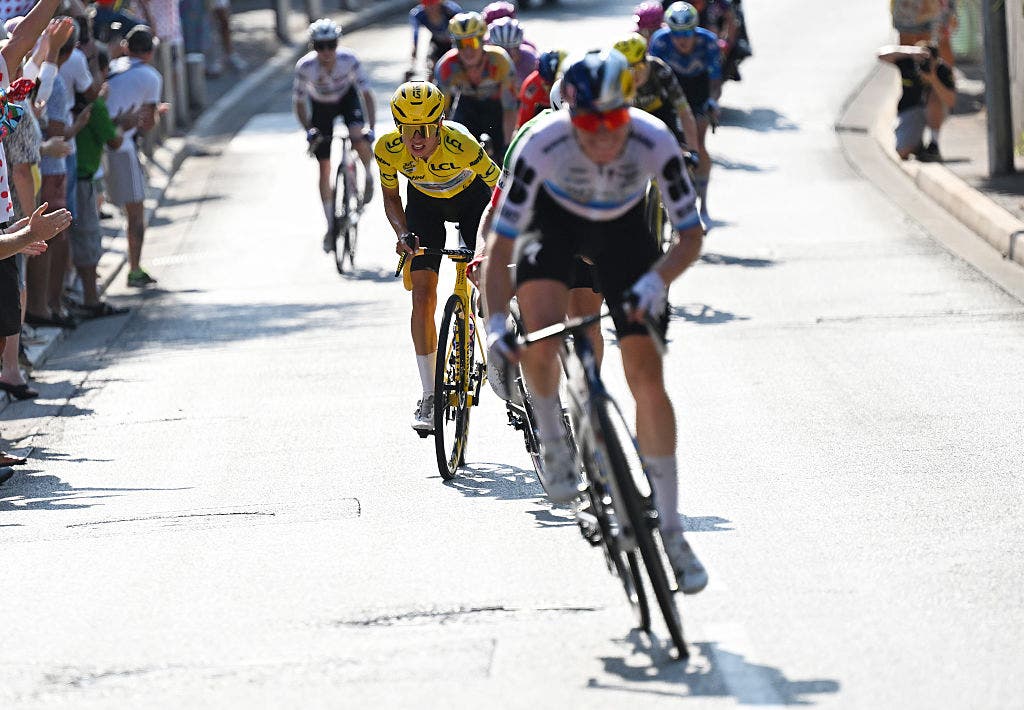
Release the tapes, dammit!
One of the most hotly debated, sensationally divisive moments of this cycling season occurred away from the damning proof of TV cameras.
The Tour de France Femmes exploded into the biggest beef in recent memory when something happened between Kasia Niewiadoma-Phinney and Demi Vollering’s superdomestique Célia Gery on stage 8 of the race.
Riding at the front of the pack, Gery, Vollering, and Niewiadoma blasted into a tight left-hand corner at the entrance to a decisive kicker climb.
Broadcast footage cuts from an overhead drone shot as the bunch dives under tree cover, and returns to a front-on moto camera shot a split second later.
The race tilted on its head in that one unseen moment.
ADVERTISEMENT
According to Niewiadoma, Gery took her out of Vollering’s wheels as the Dutchwoman attacked. Niewiadoma was unable to respond and was blown out of the yellow jersey by the end of the stage.
“Gery on purpose just blocked me to the barriers where I had to stop pedaling,” Niewiadoma claimed.
“If they want to compete, they should compete fair play and not look for me to close me in the barriers,” Niewiadoma said. “I feel like it’s so childish.”
What happened?
UCI commissaires had nothing to say. The cycling world was left attempting to piece together fragmented fan footage to figure it out.
Social media duly blew up with speculation and armchair sleuthing.
Gery was blasted by online death threats.
The final stage of the Femmes played out in the shadow of a volatile, bubbling beef between eternal rivals Niewiadoma and Vollering.
The two superstar riders attempted to turn down the volume on the controversy ahead of Vollering’s crowning stage 9 victory, but by then it was too late.
ADVERTISEMENT
“Kasia Corner” had launched the Femmes beyond cycling media and onto the world stage.
Van der Poel and Philipsen’s cleat disaster at Roubaix
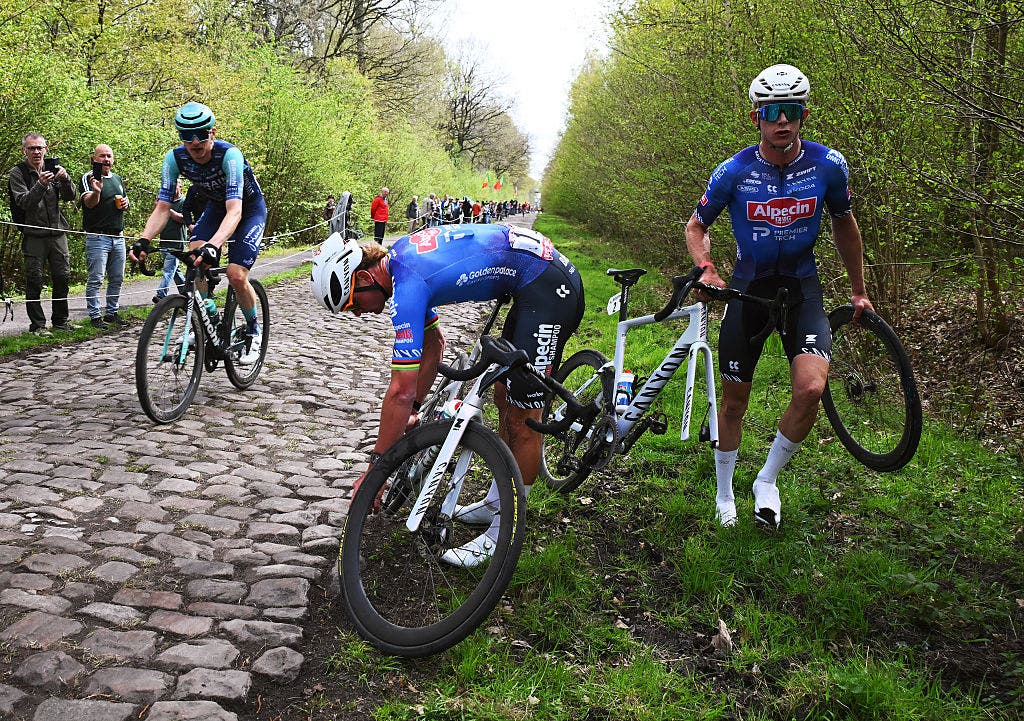
Alpecin-Premier Tech showed the peloton how not to win Paris-Roubaix with smart tech choices this year.
Mathieu van der Poel and Jasper Philipsen threw away their podium chances in a meme-worthy cleat kerfuffle on the kingmaker cobbles of the Trouée d’Arenberg.
When three-time Roubaix champion MVDP punctured on the notorious stones, Philipsen selflessly handed his wingman his bike.
Only there was a problem.
Philipsen was riding a prototype of Shimano’s new cleat-pedal system. Van der Poel and the rest of the team were rocking the standard-issue, outgoing set-up.
The two aren’t compatible, as MVDP was about to find out.
Clearly unaware of the mismatch, Van der Poel hopped onto Philipsen’s bike and optimistically pushed off onto the cobbles. After a few foiled attempts to clip in, the cobblestone crusher tossed aside the useless bike and walked forlornly back down the verge in hope of some help.
ADVERTISEMENT
Meanwhile, Alpecin-Premier Tech’s Tibor del Grosso had been busy swapping an inflated wheel from his bike to Van der Poel’s original, discarded ride.
More than two minutes after his puncture, Van der Poel was back on a bike with two inflated tires, a pedal system that suited his cleats, and was chasing hard.
Any hope of a comeback didn’t last long. A few hundred meters later, Van der Poel flatted again.
Title defense, over.
Team boss Christoph Roodhooft stepped up after the race to cop the blame.
“Of course, that came together at an incredibly bad time. I never thought it would happen,” Roodhooft told Sporza. “We made the decision to use the pedals in race conditions.
“I never thought it would come together like this,” he said. “It is what it is. It won’t happen again, but it’s over now.”
A hilarious epilogue to the tale?
Philipsen dutifully praised his team sponsor’s new shoes on Instagram when they officially launched this September.
“Finally, I can show you what I’ve been racing on all season. The new S-Phyre RC910 shoes and Dura-Ace PD-R9300 pedals,” Philipsen wrote alongside a Shimano promo reel.
ADVERTISEMENT
“I’m proud to have played a part in their development.”
We wonder what Van der Poel thinks of them.
Wrong turn fiasco upends Strade Bianche
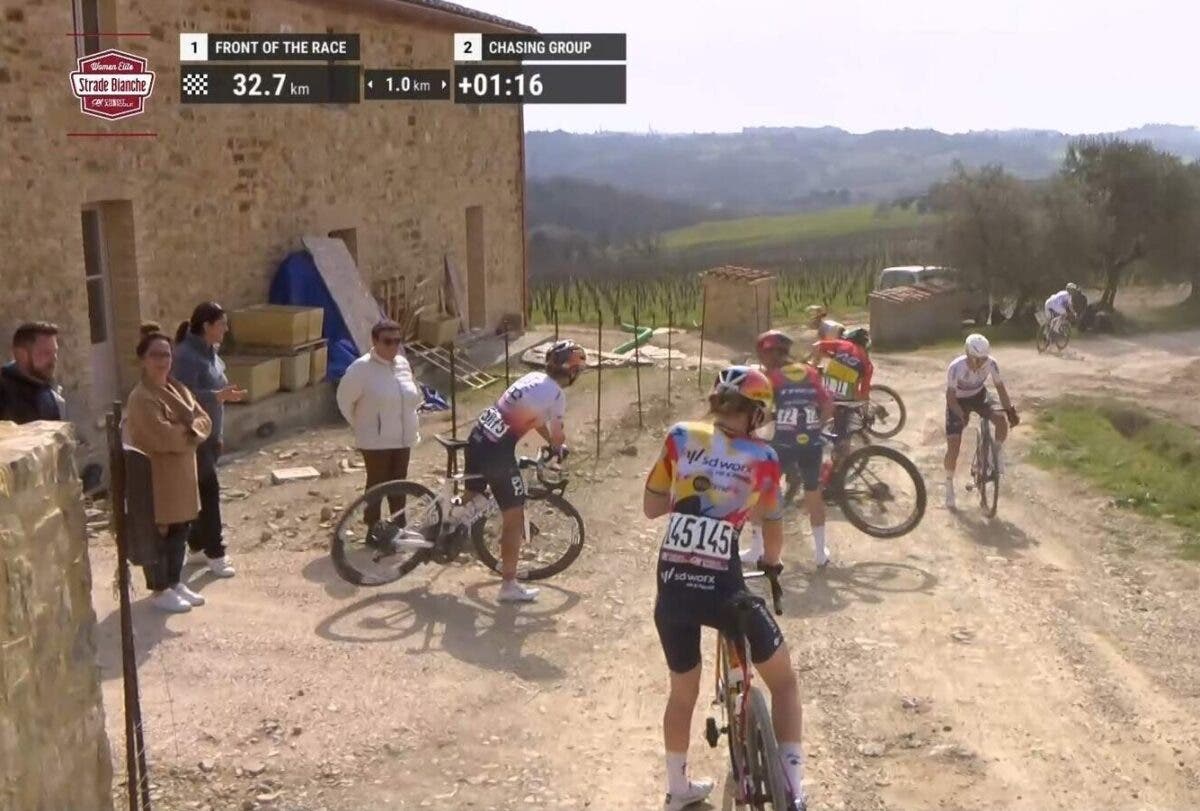
The only way to beat Demi Vollering in 2026 was to pray she took a wrong turn.
Vollering’s Hall of Fame season suffered its only blip this March when she and a whole horde of favorites took a wrong turn in the high-stakes denouement of Strade Bianche.
The race was at a crucial moment.
An attack group was around one minute up the road.
Only 33km remained to the iconic finale on the Piazza del Campo.
Vollering, Lotte Kopecky, Pauline Ferrand-Prévot, and Anna van der Breggen were in a small chase group with no time to lose.
Unfortunately, they all lost a lot of time when they mistakenly followed a race moto off course down a side track strewn with rocky boulders.
Vollering and Co. rattled down the stony path for a few hundred meters before realizing this was a level of sterrato far too extreme for Tuscany’s white-roads classic.
They pulled to a halt, awkwardly unclipped, waddled their bikes around a full 180, and returned to the race course. But by then, there was no coming back. They were three minutes behind the leaders and without hope.
ADVERTISEMENT
Who was to blame for the off-course chaos? The moto or the riders?
The driver no doubt made a mistake, but riders are required to know the course.
Kopecky later admitted herd mentality prevailed in the heat of the chase.
“You follow, and if the whole group is confidently moving to the right, you don’t just go to the left,” Kopecky said. “I didn’t realize it myself right away, but it didn’t really matter to me anymore.”
The wrong-way kerfuffle denied pre-race favorite Vollering the chance to defend her title, but she didn’t lose altogether. Her FDJ-Suez superdomestiques Elise Chabbey and Franzi Koch went 1-3 on the podium.
“I’m so proud of them. We did such a perfect race, really like perfect perfect,” Vollering said after the race.
If riding off course counts as “perfect,” that is.
ADVERTISEMENT
A comedy of errors at the Giro d’Italia
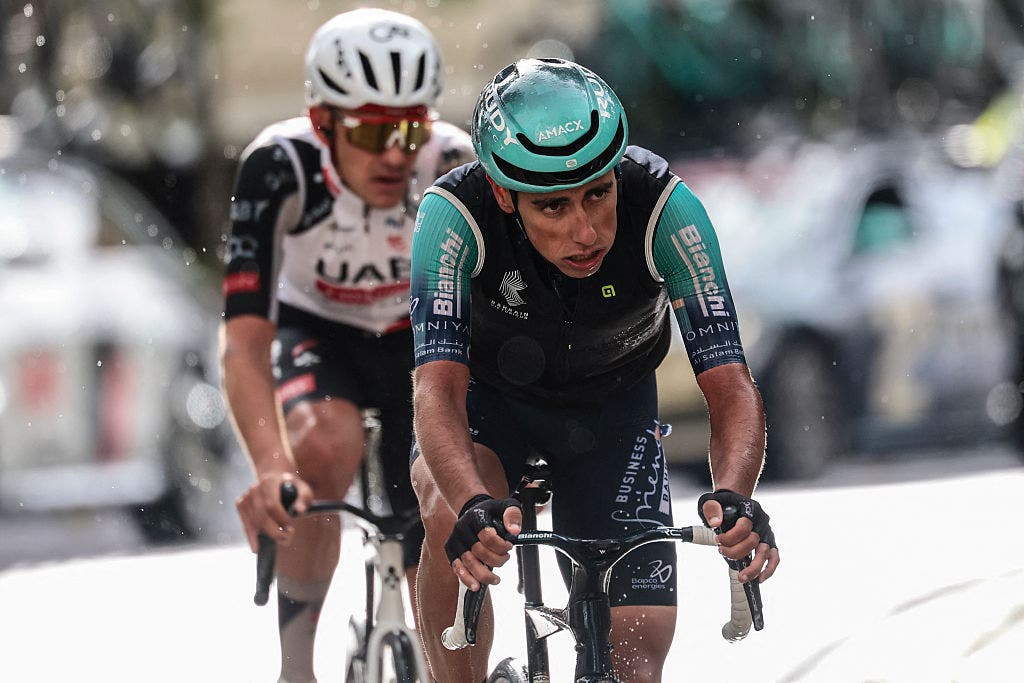
Rewatch the final 15km of stage 5 of the Giro d’Italia while playing the farcical “Yakety Sax” Benny Hill theme song on repeat.
The two will feel in perfect harmony.
The showdown between lead attackers Afonso Eulálio and Igor Arrieta on that filthy wet day in May was one for the ages – albeit for all the wrong reasons.
Arrieta was the first to crash at 13km to go. A sketchy wet descending corner wiped him out.
Seven kilometers later, it was Eulálio’s turn to taste the tarmac. The breakout Portuguese star looked on course for a marquee solo victory when he slid out on the treacherous slick surface.
A few seconds later, Arrieta had caught back onto Eulálio’s wheel.
But that was only the start of the absurdity.
ADVERTISEMENT
At 2km to go, Arrieta somehow misread a corner, steered into a side road, and took a faceful of course-marking tape along the way.
Arrieta rallied fast, chased after Eulálio – nearly crashing himself in the process – and made contact on the final rise to the line.
Eulálio, totally wiped after 200km of grinding climbs and blasting hail, had nothing for the sprint.
Arrieta crossed the line first, head in hands in disbelief after what was the season’s most barmy finale. Eulálio saw sweet consolation by taking the pink jersey.
TNT Sports’ veteran commentator labeled it “the most bonkers stage you’ll ever see at a grand tour” as he breathlessly called the sprint.
He wasn’t wrong.
ADVERTISEMENT
Bra doping roils the Tour de France Femmes
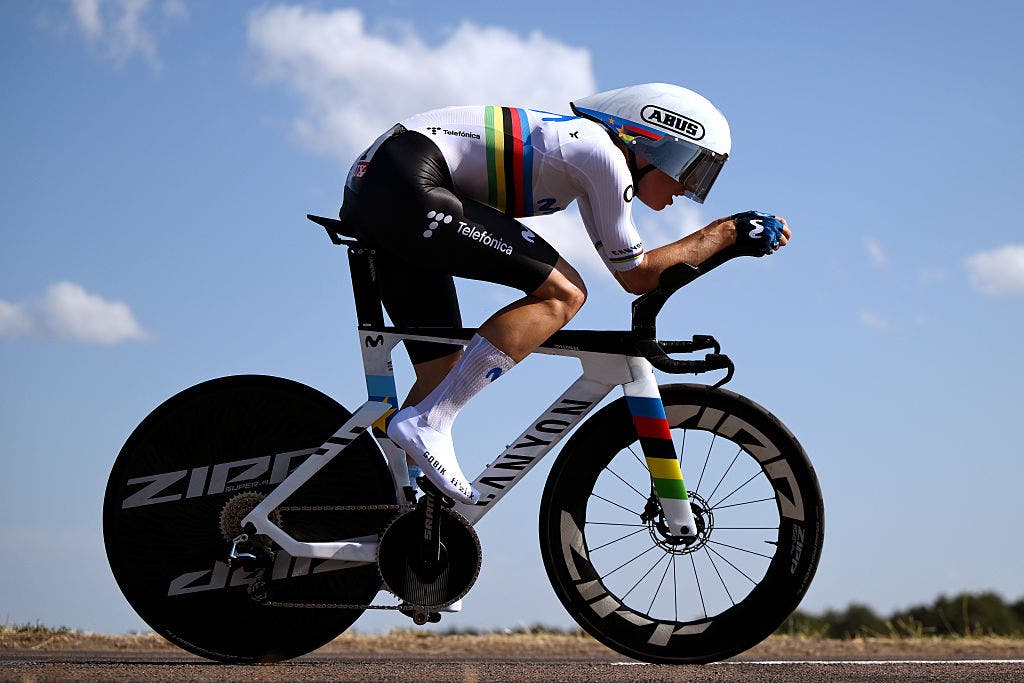
We all know about aero helmets, aero socks, and aero skinsuits. But what about aerodynamic chests?
Talk of illicit “chest maxxing” lit up the Tour de France Femmes after riders raised concerns about their rivals illicitly padding out their bras to gain free speed.
Bolstering the boob region can create a chest fairing that provides a small but significant advantage to riders tucked into the TT position.
Chest fairings can be so beneficial, in fact, that the UCI has banned them from competition.
UCI officials at the Tour de France Femmes weren’t going to let any “bra doping” cheats make gains in the race’s crucial time trial.
Just 24 hours after teams voiced concerns about the use and abuse of artificially inflated cup sizes, commissaires rolled out a wave of new measures to catch culprits red-handed, so to speak.
Riders faced extra clothing and equipment checks that, in the case of suspicion, extended to officials inspecting what the heck was beneath riders’ skinsuits.
ADVERTISEMENT
The CPA and Cyclists Alliance rider groups reacted with a mix of acceptance and horror at the rushed implementation of these unprecedented protocols.
And the world media took note, too.
Mainstream news titles in the USA, UK, Canada, China, and Australia all reported on the hullaballoo. Bra doping even got a segment on a three-minute BBC Radio broadcast. Sadly, many of those same outlets barely mentioned the battle royale that was unfolding between Demi Vollering and Kasia Niewiadoma-Phinney.
Ironically, the UCI didn’t report any riders being caught bolstering their bra sizes after the heavily scrutinized TT.
Even more ironic? Several months later, the aerodynamic experts at AiRO released a study suggesting that bigger boobs might not be faster boobs after all.
ADVERTISEMENT
Honorable mentions
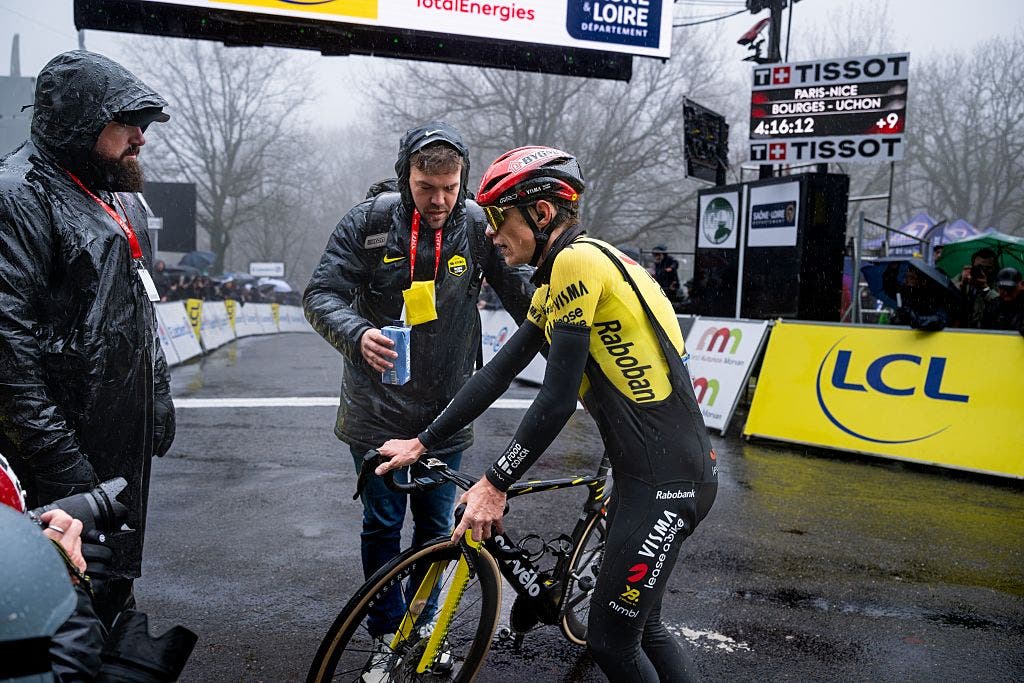
- Jonas Vingegaard’s unconventional attire at Paris-Nice.
- Lorena Wiebes being booted from the Giro d’Italia for riding a bike 20g under the weight limit.
- Kangaroo carnage at the Tour Down Under.
- Remco Evenepoel’s mysterious crash at Tour of Catalunya.
- Ethan Hayter’s high-speed middle finger at Tirreno-Adriatico.
- Tadej Pogačar being fined, then un-fined, at Liège-Bastogne-Liège.