Updated October 16, 2026 11:21PM
Sean Kelly: Here’s Why Pogačar Doesn’t Have to Fear Seixas Anytime Soon
Paul Seixas ended his season with a stunning Il Lombardia win, yet Kelly feels Tadej Pogačar’s reign is secure. For now at least.
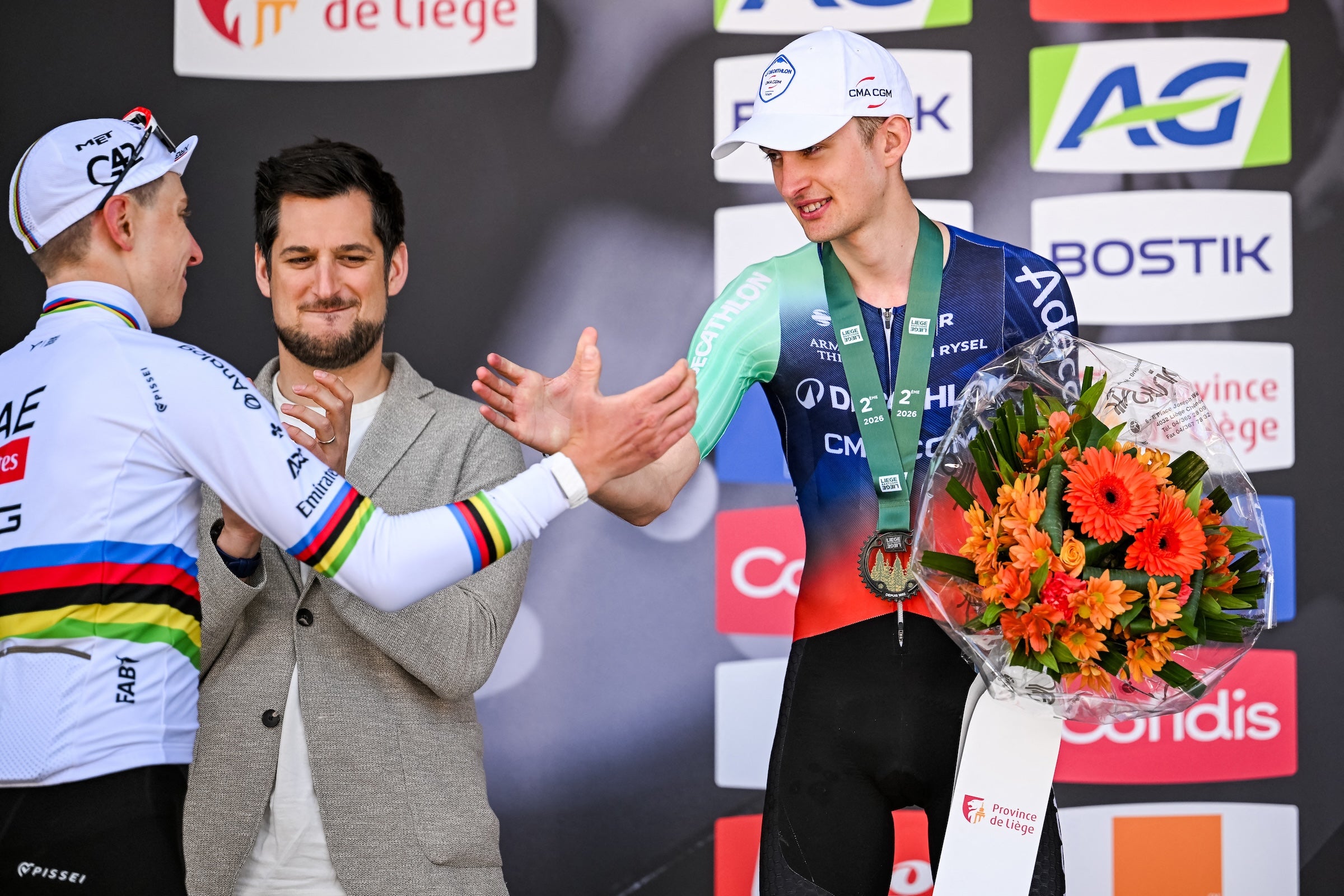
Paul Seixas is seen as a likely successor to Tadej Pogačar. (Photo: Maarten Straetemans / Belga / AFP) (Photo: MAARTEN STRAETEMANS)
Paul Seixas has made remarkable progress this season, notching up eight wins in all, including a Tadej Pogačar-type dominance of Il Lombardia last weekend.
However although Seixas’ Cannibalesque ascent of the Civiglio saw him break the record Pogačar set four years ago on the same climb, and despite a stunning rate of improvement this season, experienced cycling analyst Sean Kelly feels the world number one shouldn’t lose sleep anytime soon.
Kelly spoke to Velo this week about the two riders and explained why he is believes Pogačar will have the edge for some time yet.
“If you had Pogačar there on Saturday, Seixas probably would have been able to stay with him once again,” he said, speaking of the hilly finale of Il Lombardia. “But then in the flat sprint he doesn’t have any chance, because Pogačar is very fast in a two-up sprint or a little group sprint.
“It’s the other quality that he’s got. As I said many times, Pogačar can do fecking everything.”
ADVERTISEMENT
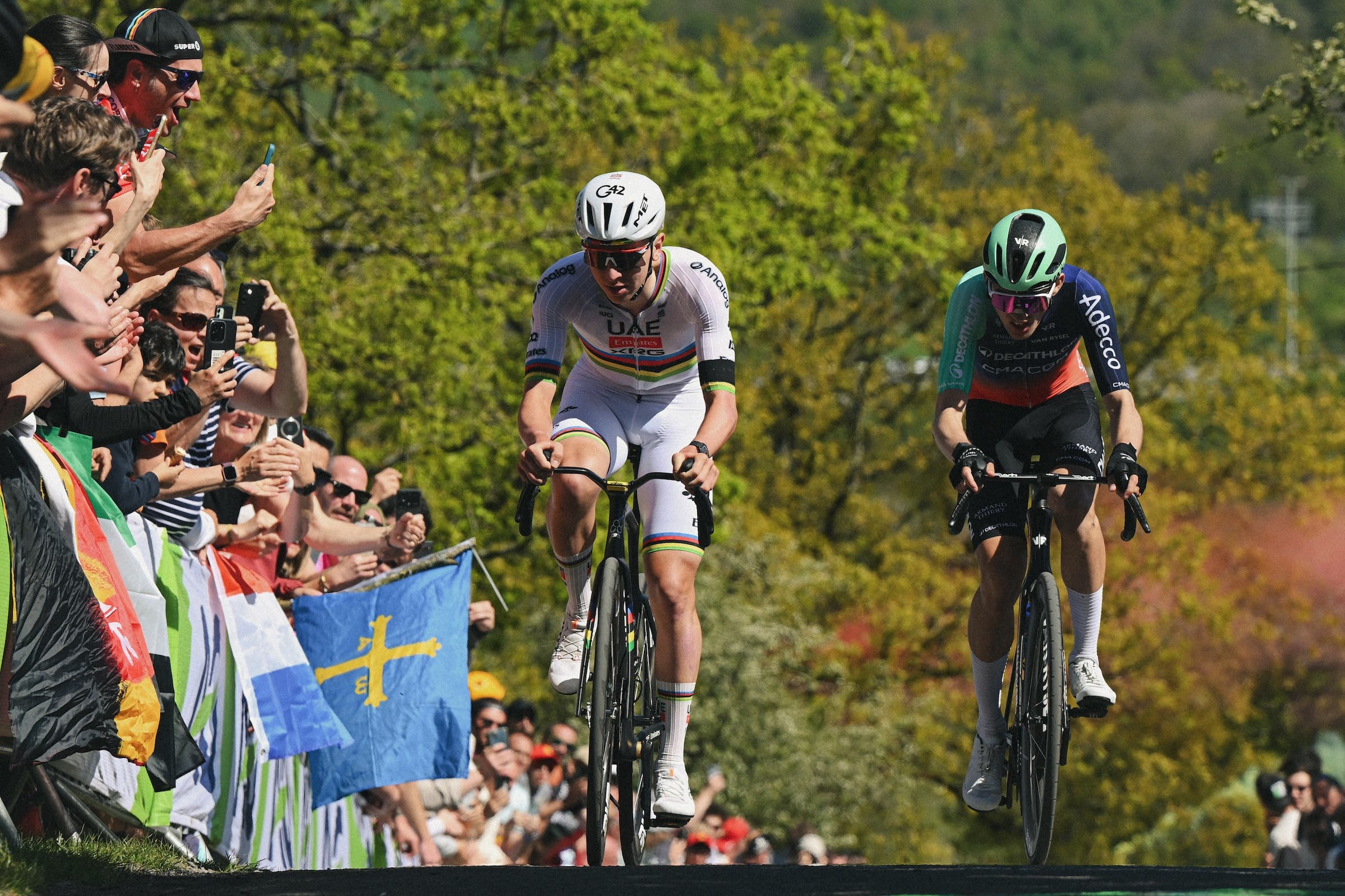
Seixas turned heads in Liège-Bastogne-Liège when the then 19-year-old was the only rider able to hold onto Pogačar when the UAE Emirates-XRG rider went all out on La Redoute.
He stayed with him to the summit and then began trading pulls with him afterward. The duo continued together out front until the defending champion put in a last-gasp surge on the climb of La Roche aux Faucons. That finally broke Seixas, but Pogačar admitted afterward that he had believed they’d reach the finish line together.
It’s incredibly rare for any rider to be able to cling on when Pogačar is going all out on a tough climb. It was an even more remarkable achievement for a 19-year-old second-year professional, and it highlighted the extraordinary talent the Frenchman has.
But Kelly insists that even if Seixas is able to remain with Pogačar, that’s only one part of the game.
ADVERTISEMENT
“There’s no weakness with him where you can say, ‘oh yeah, we can get him on that one.’ They’re just not there. So I don’t think Pogačar is going to be worried.”
It’s not just about the sprint
There will be some who will disagree with Kelly’s point. They will point to the large age gap between the two riders, a full eight years. They will note that Pogačar has just turned 28, an age when riders are in their prime, and note that it’s very often the time where performances start to plateau and then, a year or two later, start to decline.
Still, Kelly doesn’t think that will be an issue anytime soon. He argues Pogačar will remain the best rider in the sport as long as one thing is in place: motivation.
ADVERTISEMENT
“Pogačar at 28, 29 or 30 – if mentally he’s hungry enough to do it, I don’t think there’s going to be a problem age-wise,” the former world number one said. “Pogačar definitely has another three or four top years left in him. But will he do four years? Will he have that focus, the mentality to continue on?
“We hear about these long term contracts and that, but in three years’ time, if Pogačar said after the Tour de France, ‘I’m finished, that’s it, I’m stopping at the end of this year,’ it wouldn’t surprise me.”
Pogačar’s ability to stay at the top level is one vital element in any speculation about their future tussles.
The other relates to the Frenchman himself. Kelly acknowledged that Seixas is forging new ground, being the youngest-ever winner of Il Lombardia, and also becoming the youngest rider to start the Tour de France in 89 years.
Those kinds of performances, plus Seixas’ stunning rate of improvement this year—remember, he had no pro wins at all prior to 2025, and now he has eight—lead many to assume that he will leap up another level in 2027.
Hold on, says Kelly. It’s not necessarily accurate to make such presumptions.
ADVERTISEMENT
“It depends now where Seixas goes from here,” he explained. “Will he continue on improving? Is there much more improvement left in him? Or is he a very early developer, and the level he’s at now is pretty much the level he’s going to be at?
“Maybe that is going to be his best level.”
Steady does it
It seems unlikely that a talented young rider could stop improving, but Kelly believes an error was made this year. He explains what that was and how he thinks it might affect cycling’s most exciting young rider.
“I would be concerned that it was too young to do a Tour de France this year,” he said. “And also to ride it as he did, going for the general classification, every day being there in the battle. His potential might suffer because of doing the Tour de France too young.
“I would be concerned that a guy at 19, doing a Tour of France [as intensely] as they do it now, it could affect his performance next year, the year after. He mightn’t get that potential that would be there if he had been taken along at an easier level.”
ADVERTISEMENT
Kelly mentions Laurent Fignon as a rider from his era who was incredibly good very young. The Frenchman won the Tour at 22 and 23 but, despite those incredible early performances, never won the race again. He missed out by eight seconds to Greg LeMond in 1989 and won the Giro that same year, but it’s fair to say that his early momentum didn’t lead to the dominance many had predicted.
To be clear, Kelly is wowed by Seixas. He does suggest that slightly sub-par performances by Isaac del Toro and Remco Evenepoel in Il Lombardia made the Frenchman look even better than he was but, nevertheless, he applauds his performance.
He also gives credit where credit is due for the year as a whole.
“You couldn’t but be impressed about the performances. We were hearing about the power outputs that he was doing in training,” he said. “We were hearing all that and then he comes to Pays Basques, the way he dominated there.
“The way he dominated the beginning of the year, that confirmed what we were hearing, what the French were talking him up about. And he’s confirmed all that through the year.
“Il Lombardia showed that he’s going to be a good all-rounder as well as a as a three-weeker.”
ADVERTISEMENT
Still, his unease about that very early Tour ride remains. Kelly reiterates that could have a long term impact on Seixas’ form.
And even if that doesn’t happen, he has faith that the current king of the peloton will continue to reign.
“To beat Pogačar next year, unless there is a major drop in performance from him because of his accident in the Vuelta, I don’t see Seixas beating him. If he’s at the level he was this year before his crash, I can’t see Seixas doing it.”