Published September 24, 2026 04:32AM
Power Analysis: Tour de France Climbing Speeds Are a Class Above the Giro and Vuelta
When it comes to climbing speeds, there's a vast divide between the Giro, Tour, and Vuelta.
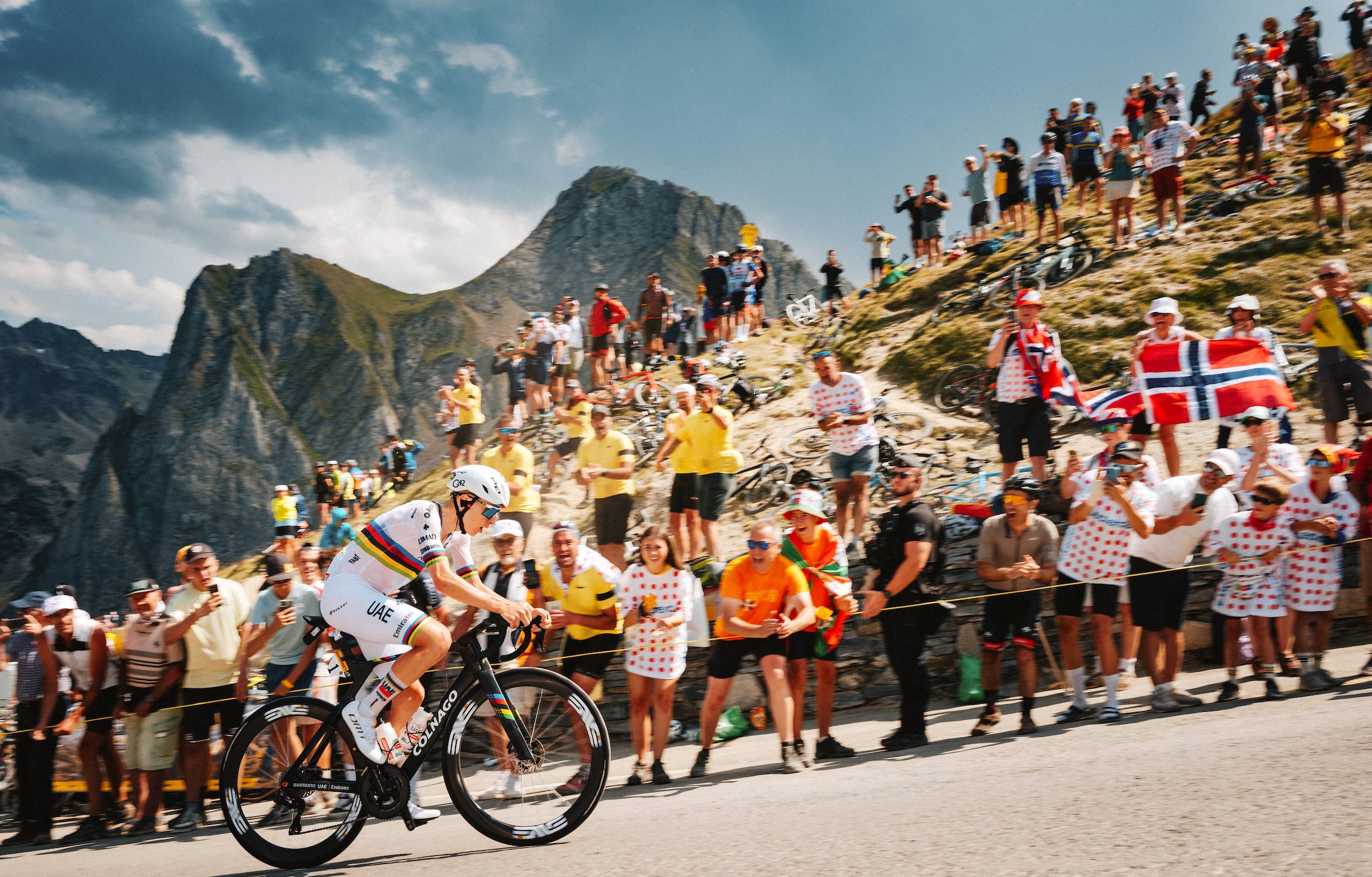
(Photo: Gruber Images)
We already know that the Tour de France is the peak of professional cycling. But how different are the Giro d’Italia and Vuelta a España?
It’s safe to say that the Italian and Spanish grand tours are slower, but I wasn’t sure exactly how big the difference was until I started piecing together this article.
In truth, the differences are much more dramatic than you might think. There is a reason some riders have won five Vueltas but never the Tour. The differences are staggering, not just in the climbing times, but with the overall stress of each race.
The Tour de France is bigger, crazier, and more stressful than any other race in professional cycling. Not only are the stages faster than ever, but recovering from them is more difficult.
ADVERTISEMENT
The Tour takes place in July, which means that most stages are raced under sweltering heat. There are more fans, interviews, and media obligations than ever, which means that the rest days are perhaps the only chance all Tour that a rider will get to see their family.
Despite the Tour frenzy, riders are in their best shape each July. After months of carefully timed altitude camps, race programs, and chef-prepared meals, riders are leaner and stronger than ever at the Tour.
Most of us cycling fans already knew that, but in this article, I wanted to find out exactly how big of a difference there is between the Giro, Tour, and Vuelta.
First up was the Giro, won by Jonas Vingegaard who raced most of the mountain stages on cruise control. The Dane put up some of his best numbers ever, beating Felix Gall to win the GC by more than five minutes.
ADVERTISEMENT
But at the beginning of the Giro, Vingegaard wasn’t at his best. He won atop Blockhaus on stage 7, but was only 13 seconds ahead of Gall and losing time in the final kilometer. It almost looked as if the Dane had blown up, and the climbing times reflected that. Vingegaard had done an estimated 6.4w/kg for 37 minutes, far from his career-best performances where he had held more than 6.8w/kg for half an hour.
He did a similar performance on stage 14 where he won on Pila ahead of Gall and Jai Hindley. It was 6.4w/kg again, this time for just over 40 minutes. But the best was yet to come, and only two days later, Vingegaard showed his best legs of the Giro. On stage 16 to Carì, Vingegaard pushed an estimated 6.7w/kg for just over 30 minutes, soloing to the win in the pink jersey.
The cherry on top of Vingegaard’s perfect Giro was his performance on stage 20. It was one of the toughest stages of the race, and despite three weeks of fatigue, Vingegaard did a career performance with over 6.8w/kg for 36 minutes on Piancavallo. Keep these numbers in mind as we move onto the Tour, where Tadej Pogačar was waiting to take on his biggest Tour rival.
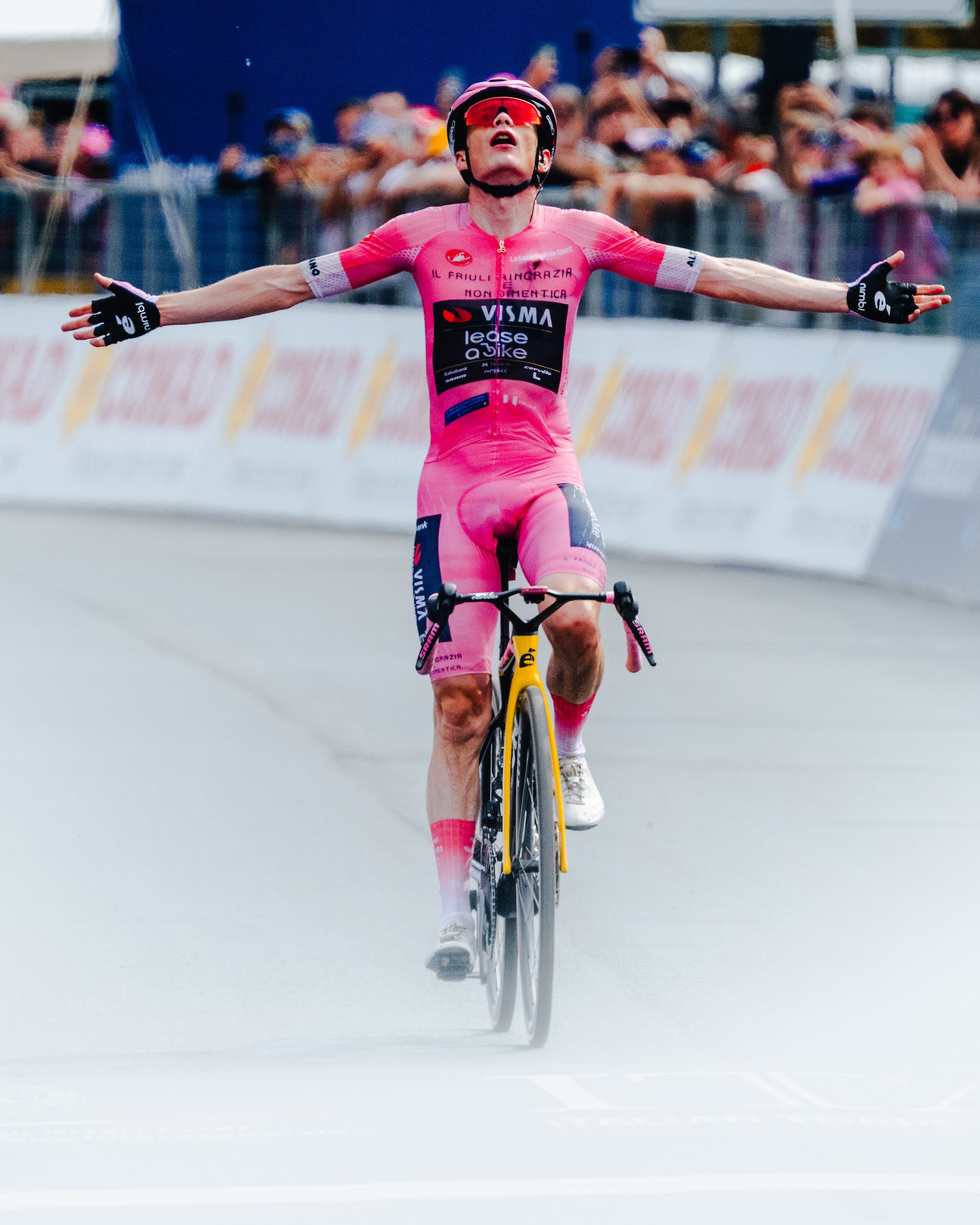
Vingegaard – Piancavallo
- Time: 36:12
- Estimated Average Power: ~6.8w/kg
Best Giro Climbing Performances | Vingegaard
- Blockhaus Stage 7 – 37min at 6.4w/kg
- Pila Stage 14 – 40min at 6.4w/kg
- Carì Stage 16 – 31min at 6.7w/kg
- Piancavallo Stage 20 – 36min at 6.8w/kg
We all knew the climbing level would be higher at the Tour de France, but the question was: How much higher? Vingegaard had beaten Pogačar in the 2022 and 2023 Tours, but the Slovenian started dominating in 2024. Since then, Pogačar has always been stronger than Vingegaard on the climbs, sometimes by seconds, and sometimes by minutes.
ADVERTISEMENT
The first test came on stage 6 which went up and over the Col du Tourmalet before finishing in Gèdre. Everyone expected Pogačar to attack, but then it was a question of if Vingegaard could follow. The Dane could not, and Pogačar soloed to victory more than two minutes ahead of his rival. It was a crushing blow for Vingegaard who didn’t seem to find his best legs until the third week of the Giro. Was he having the same problem now at the Tour?
Pogačar’s numbers revealed that Vingegaard must not have been at his best yet. With an estimated output of 7.2w/kg for the last 13 minutes of the climb, Pogačar had climbed the steep section of the Tourmalet at roughly 6.6w/kg for 35 minutes. On paper, that was something that Vingegaard did at the Giro. But instead of a steady effort, Pogačar had attacked in the final third of the climb, getting the gap on the Dane before the long, high-speed descent. But just like in the Giro, the best was yet to come.
On stage 15 of the Tour, Pogačar and Remco Evenepoel climbed the Plateau de Solaison in just over 32 minutes. Vingegaard had unfortunately crashed out of the race, which meant that Pogačar had a five-minute lead in the GC. The Slovenian didn’t need to attack, but that doesn’t take away from Evenepoel’s impressive win with one of the best climbing performances of his career. The Belgian did an estimated 6.8w/kg for 32 minutes and had enough energy left to crush Pogačar in the final sprint.
ADVERTISEMENT
At this point, we were starting to see climbing performances on-par with peak Vingegaard at the Giro. But that all changed on Stage 19 to Alpe d’Huez.
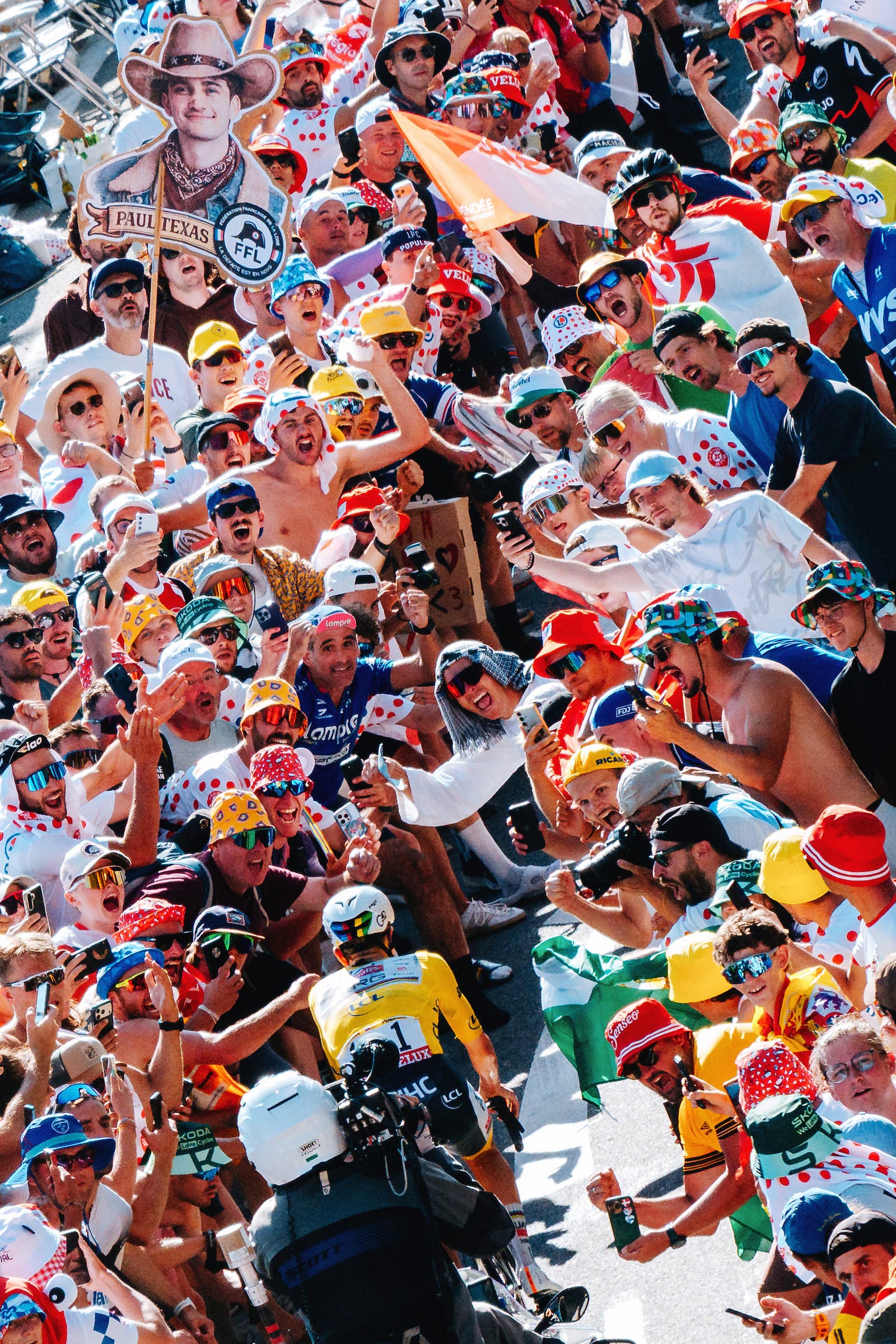
With a massive lead in the GC, Pogačar didn’t need to attack on Alpe d’Huez. But this is Tadej Pogačar that we’re talking about, so, of course he went for the all-time climbing record and stage win in the yellow jersey. This was Pogačar’s best climbing performance of the Tour, an estimated 7w/kg for over 32 minutes. We have not seen a climbing performance that has come close to this in the rest of 2026.
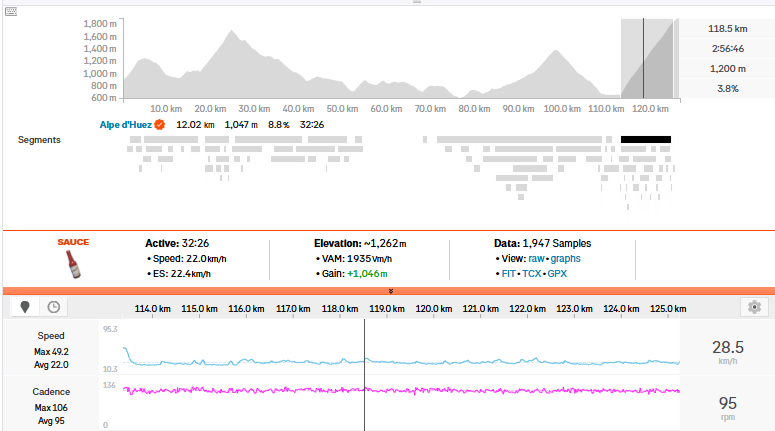
Pogačar – Alpe d’Huez Climbing Record
- Time: 35:27
- Estimated Power: ~6.9w/kg
Alpe d’Huez Strava KOM: 32:26 at ~7w/kg
Best Tour Climbing Performances | Pogačar
- Tourmalet Stage 6 – 35min at 6.6w/kg with the final 13min at 7.2w/kg
- Plateau de Solaison Stage 15 – 32min at 6.8w/kg
- Alpe d’Huez Stage 19 – 35min at 7w/kg
For the first time since 2019, Pogačar lined up at the Vuelta a España with everyone expecting him to win. The Slovenian started by winning three of the first seven stages, which meant he was leading the GC by nearly four minutes less than a third of the way through the Vuelta. One of those wins came on stage 4 in Andorra la Vella. Pogačar attacked on the Collada de Beixalis and soloed to victory more than two minutes ahead of the nearest chase group.
ADVERTISEMENT
The Slovenian had an estimated 7w/kg for 17 minutes on the Collada de Beixalis, followed by 6.8w/kg for 23 minutes on the Coll d’Ordino. With the calm manner that Pogačar seemed to be handling these climbs, it was clear that he was essentially riding at threshold without going into the red. The only thing that could stop Pogačar from winning La Vuelta was disaster, and that’s exactly what happened on stage 8 when he hit a rock and crashed out with a concussion and broken collarbone.
With Pogačar out of the race, the GC became wide open, mainly contested by Mas, Gall, and Primož Roglič. This is where the climbing performances took a dip…a big dip. When Mas won on the Alto de Aitana, he did an estimated 6.4w/kg for 34 minutes, enough to gap Roglič and Gall by 12 and 18 seconds, respectively.
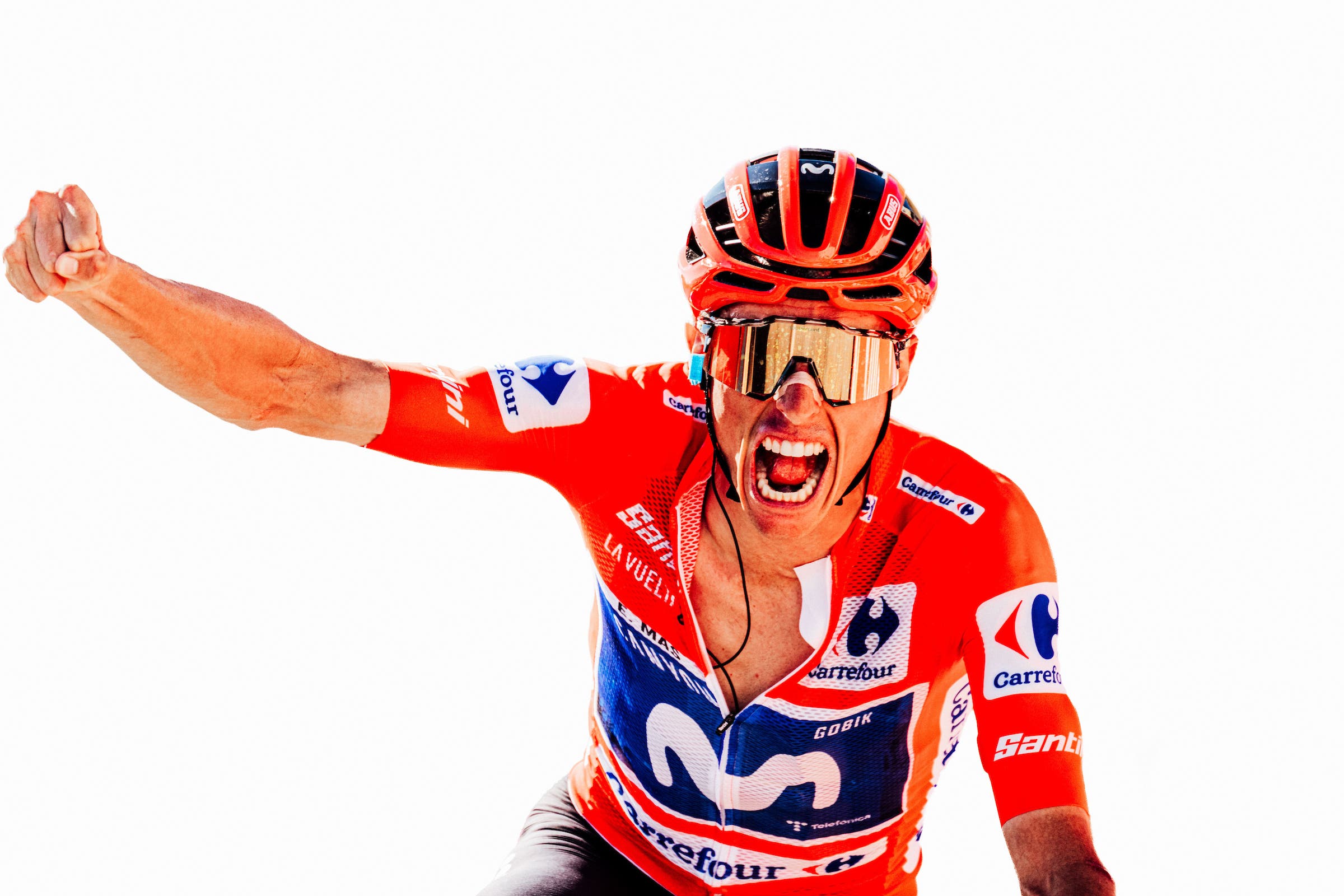
There were a few more climbing tests along the way, but none that were more impressive than Mas’ stage 9 performance. After three weeks of racing, it was time for the Queen Stage to the Collado del Alguacil, a 187km monster with nearly 5,000 meters of climbing. In the end, Mas sealed the GC victory with a 6.2w/kg performance on the 28-minute final climb. Perhaps the previous climbs had been faster, or perhaps the fatigue of the Vuelta was catching up. Needless to say, it was one of the least impressive race-sealing climbs that we’ve seen in 2026.
ADVERTISEMENT
Best Tour Climbing Performances | Pogačar, then Mas
- Collada de Beixalis Stage 4 – 17min at 7w/kg with Coll d’Ordino 23min at 6.8w/kg
- Alto de Aitana Stage 9 – 34min at 6.4w/kg
- Collado del Alguacil Stage 20 – 28min at 6.2w/kg
It is obvious that the Tour de France offers the highest level of climbing performances in professional cycling. But what wasn’t so obvious (until I wrote this piece) was the vast divide between the Giro, Tour, and Vuelta. What we are mainly discussing here is the difference between Jonas Vingegaard, Tadej Pogačar, and the rest of the world. You can fit a handful of riders between the two top-tier climbers and the best of the rest, mainly Evenepoel, Isaac Del Toro, and Paul Seixas. But to really illustrate the differences, let’s break down the numbers.
If we are talking about a 30-minute climbing performance at the end of a 200km Grand Tour stage, we can draw some fair comparisons between the Giro, Tour, and Vuelta. We’ll use Pogačar’s Alpe d’Huez performance as the gold standard at 7w/kg.
ADVERTISEMENT
The best climbing performance at this year’s Giro was Vingegaard on Piancavallo: 6.8w/kg for 36 minutes. That is a 2.9% difference from 7w/kg.
At La Vuelta, the best 30+ minute climbing performance from Mas was 6.4w/kg on the Alto de Aitana. That is an 8.6% difference from 7w/kg.
To put that into context, let’s say that Pogačar is pushing 450w on these climbs. A 2.9% drop in performance would be 437w, while an 8.6% difference would be 411w. These are the differences that we are talking about between peak Vingegaard at the Giro, peak Pogačar at the Tour, and the best of the rest at the Vuelta. That is why it looked like Pogačar was racing against juniors in Andorra.