Published April 14, 2026 10:51AM
Paris-Roubaix Power Analysis: Wout van Aert's Dream Day on the Cobbles
We dive into the power numbers from an epic day on the cobbles.
(Photo: Gruber Images)
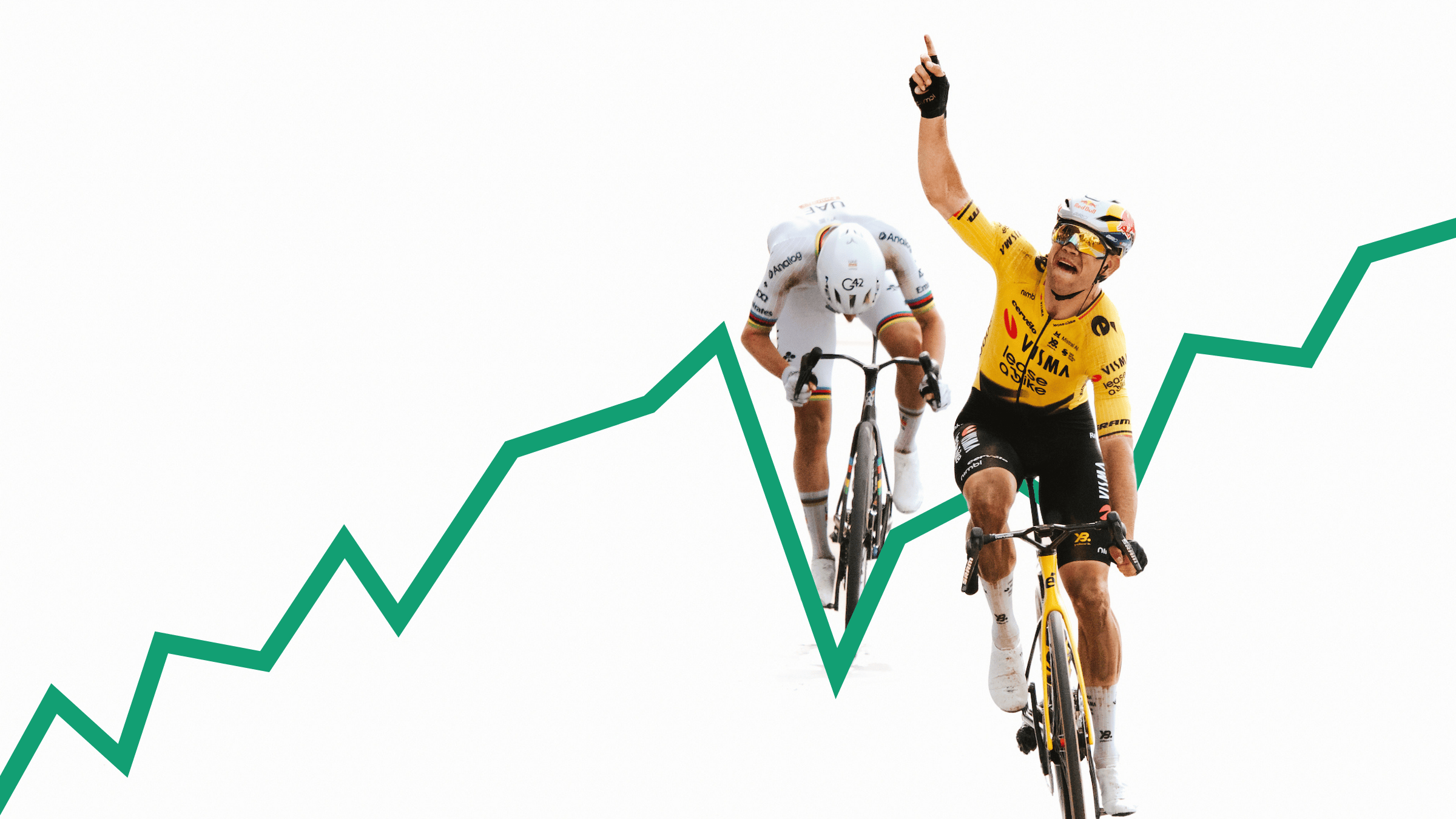
With 200 meters to go in Paris-Roubaix, Wout van Aert knew exactly what to do. He had practiced the sprint over and over again in his dreams. On the banking of the Roubaix Velodrome, Van Aert launched his sprint with all the years of pain and sacrifice behind him. His scarred knee pushed over a thousand watts into the pedals as he overtook arguably the greatest rider in cycling history.
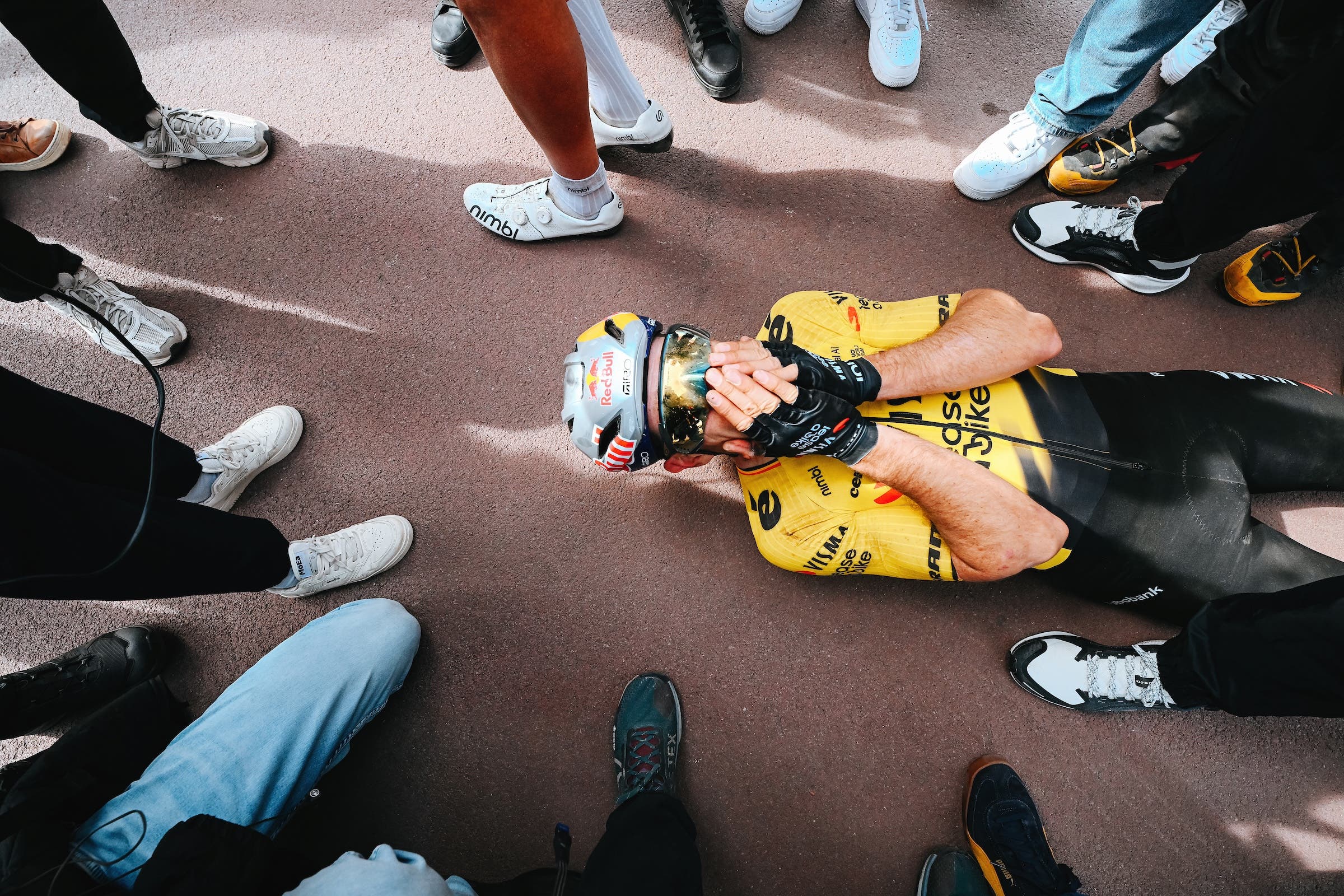
Moments later, he crossed the line and pointed to the sky, a dedication to his teammate Michael Goolaerts who passed away during Paris-Roubaix in 2018. Van Aert let out a scream before collapsing to the ground in tears, the win of a lifetime on the world’s biggest stage.
Van Aert’s performance is about more than just the watts. He fought back from ill-timed mechanicals, just as many of the favorites did in Paris-Roubaix. He said he doubted himself, but he never stopped trying. Time and time again, he fought his way back to the front of the race, leaving all but one of the world’s best cyclists behind. This is the story of Wout van Aert winning Paris-Roubaix.
The Never-Ending Fight for the Breakaway
There are many unique aspects of Paris-Roubaix that make it one of the least predictable races in cycling. First, the cobblestones. There were 30 cobblestone sectors in this year’s Paris-Roubaix, all packed into the final 165km of the 258.3km race.
ADVERTISEMENT
Anything can happen on the cobblestone sectors, including but not limited to: crashes, flat tires, dropped chains, mechanicals, and run-ins with spectators. Due to the chaotic nature of the race, everyone wants to be in the breakaway. In fact, many winners and podium finishers of Paris-Roubaix were members of the day’s breakaway.
Attacks are relentless at the beginning of Paris-Roubaix, with everyone wanting to get ahead of the favorites before the cobblestones. For those in the peloton, there is an additional fight for position ahead of every cobblestone sector. This creates a washing machine effect where the pace never slows: there are attacks to get in the breakaway, accelerations to position before the sectors, and riders pushing hard to close gaps after crashes and mechanicals.
The end result is Paris-Roubaix turning into a five-hour effort with a positive split. That means the riders are slowing down and weakening over the course of the race rather than speeding up. In a Tour de France mountain stage, for example, the fastest and most powerful climbing efforts come at the end of the race, not on the first climb of the day. At Paris-Roubaix, almost every rider is their strongest for the first 100km of the race, and then they gradually weaken all the way to the finish.
ADVERTISEMENT
The two exceptions were Tadej Pogačar and Van Aert.
After two hours of racing, the peloton had split and reformed more times than you could count. All the main favorites were in the lead group, but that’s when mechanical issues started taking their toll. Van Aert punctured with 150km and had to chase back onto the peloton, burning a crucial match in a race when most riders’ matches were reduced to ashes.
Mikkel Bjerg was pulling at the front of the peloton for UAE Team Emirates-XRG, and here we can see the ridiculous effort required at Paris-Roubaix. Bjerg’s job was to keep the pace high and steady, simultaneously helping Pogačar stay safe at the front of the peloton and preventing dangerous breakaways from getting up the road.
ADVERTISEMENT
Before the Strava ride was removed, Bjerg had posted an average power of 350w and Normalized Power of nearly 375w for the first three hours of Paris-Roubaix. That’s what it takes to keep Pogačar and UAE Team Emirates-XRG at the front.
Everything was going according to plan for UAE Team Emirates-XRG until Pogačar punctured with 120km to go. The team car was a long way behind, so the world champion settled for a Shimano neutral service bike for the next 4km.
Instead of dropping out of the lead group immediately, Bjerg and Nils Pollitt waited until 113km to go to drop back and help Pogačar. The world champion was still 25 seconds behind the lead group when Mathieu van der Poel attacked with 103.7km to go. This reduced the lead group to around 30 riders, and it wasn’t until 98km to go that Pogačar caught back on.
ADVERTISEMENT
This was the peak 5min power of the entire race for many riders, including Mick Van Dijke (74 kg), who would go on to finish sixth. While we don’t have power data from riders like Van der Poel and Van Aert (both weigh approximately 78kg), we can make educated guesses about the watts they were pushing. Just look at the number of 800-1000w spikes in Van Dijke’s power file as he tried to follow Van der Poel.
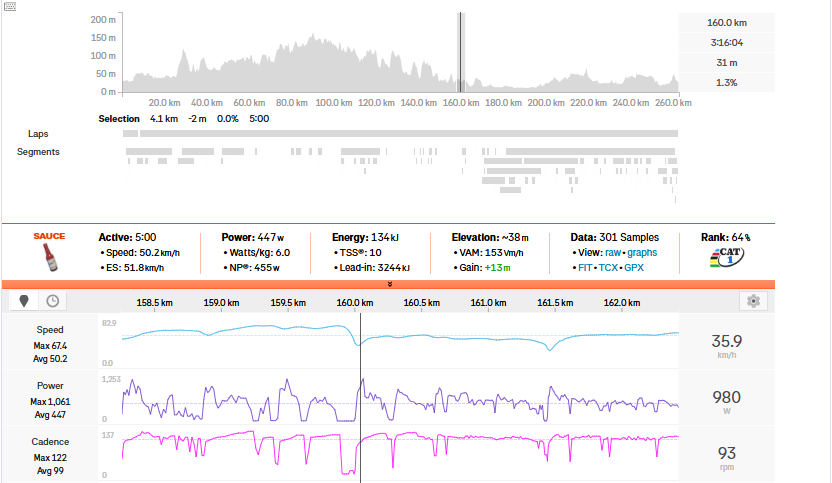
Van der Poel’s Attack with 103.7km To Go – Pave Haveluy-Wallers
- Time: 4:55
- Estimated Average Power: 490w (6.3w/kg)
- Van Dijke: 5:00 at 447w
There wasn’t much time to recover because the Trouée d’Arenberg was next, one of the most dangerous and decisive sectors of Paris-Roubaix. In a beautiful case of foreshadowing, Van Aert led through the Arenberg forest with Van der Poel and Pogačar on his wheel. But then, disaster for Van der Poel.
The Dutchman had an unrideable flat, so he attempted to swap bikes with teammate Jasper Philipsen. However, Philipsen had different pedals than Van der Poel, so the Dutchman couldn’t clip in. What followed was a hilarious snapshot of Van der Poel walking backwards on the course to retrieve his bike which had been fixed by teammate Tibor Del Grosso.
ADVERTISEMENT
By the time the favorites exited Arenberg, the lead group consisted of six riders including Van Aert and Pogačar, while Van der Poel was more than two minutes behind after switching bikes from his team car. The Dutchman’s race was seemingly over, but during the next 25km, half of the lead group punctured at one point or another. First it was Pogačar, and then it was Van Aert who punctured with 72km to go. This is where we begin to see the positive split of Paris-Roubaix.
After riding full gas for 30-40km, the lead group was now in shambles, constantly waiting for one or two riders that had punctured. They were actually slowing down over the course of the race, whereas Van der Poel was speeding up and catching riders one-by-one. Kim Heiduk was one of the few riders able to hold Van der Poel’s wheel during his rampage return. The German averaged 370w for nearly an hour as Van der Poel smashed both the cobblestone and paved sectors. This is what it takes to sit on the wheel of MVDP at Paris-Roubaix.
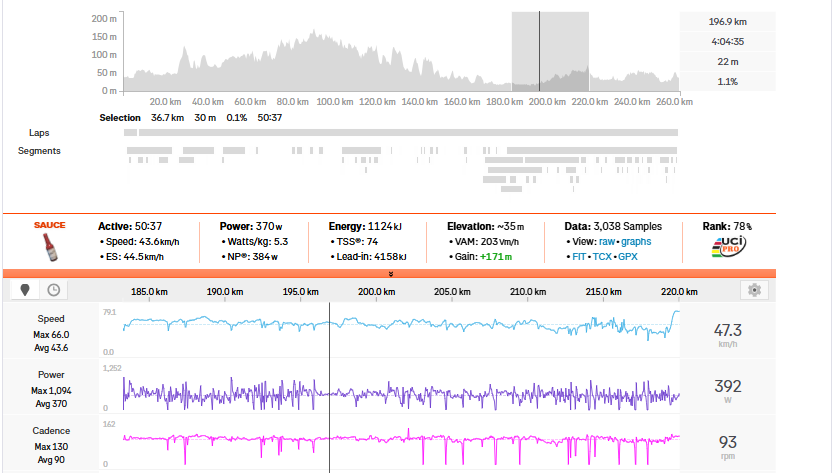
Heiduk following Van der Poel’s Chase
- Time: 50:37
- Average Power: 370w (5.3w/kg)
- Van der Poel’s Estimated Power: 50 minutes at ~440w
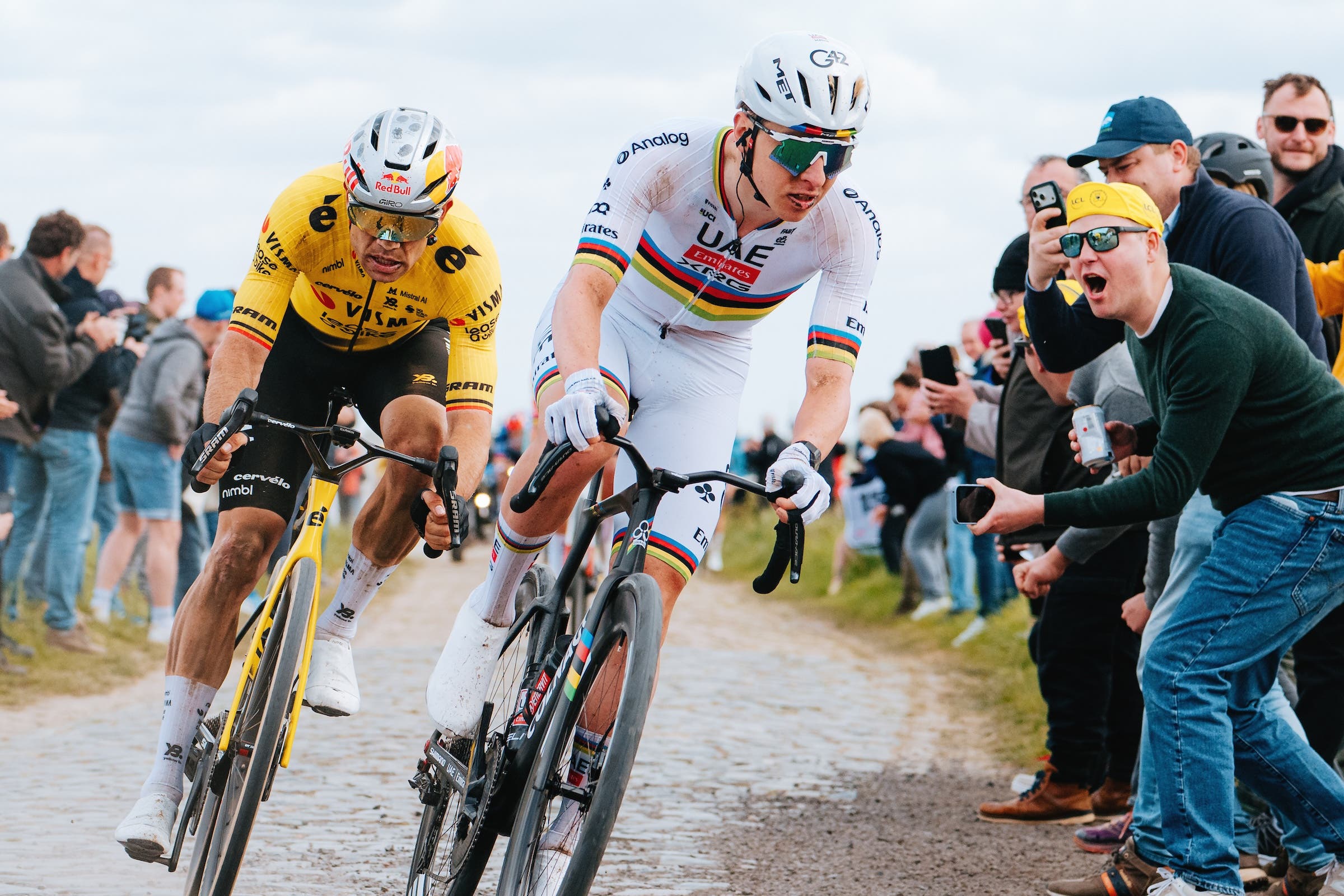
With 54.2km to go, Van Aert made a crucial tactical decision that ultimately decided the race. The Belgian attacked when Van der Poel was only 20 seconds behind the lead group who’d been stalling for far too long. The attack drew out Pogačar, who immediately countered and started pushing the pace so hard that the rest of the lead group was dropped.
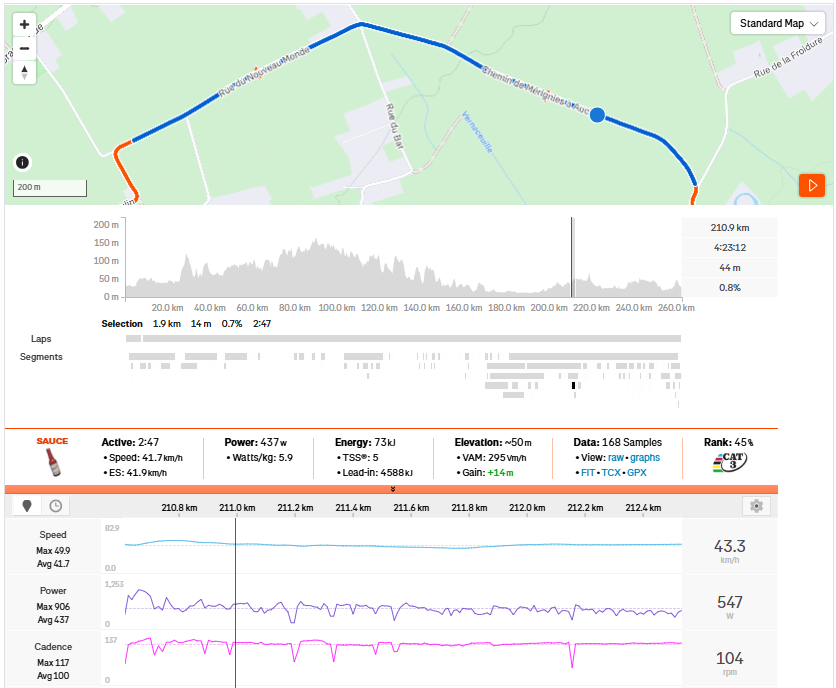
Van Aert’s Attack at 54.2km to go – Auchy-lez-Orchies à Bersée
- Time: 2:40
- Estimated Average Power: 500w (6.4w/kg)
- Van Dijke: 2:47 at 437w
Pogačar and Van Aert increased the gap to Van der Poel, and this was the crack in his armor that Van der Poel couldn’t seal. After closing the gap from two minutes to only 20 seconds, the Dutchman couldn’t finish it off, and he spent the rest of the race in the chase group.
ADVERTISEMENT
Over the next 50km, Pogačar attacked again and again, but he couldn’t shake Van Aert. The Belgian pulled through at times, but the world champion insisted on attacking repeatedly. The duo were locked together for the remainder of the race, even when Pogačar nearly crashed in a slippery cobblestone corner.
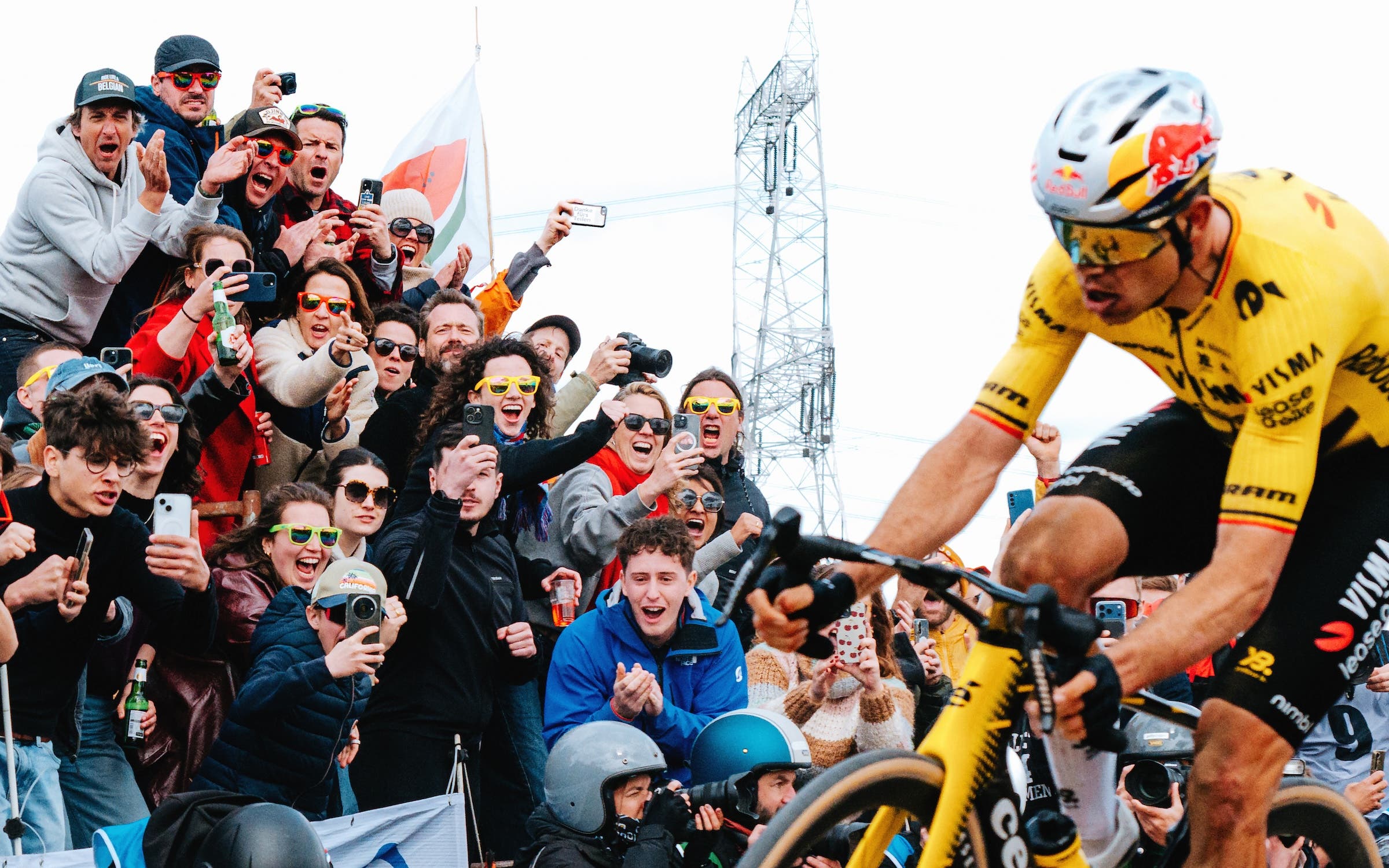
Both riders kept it upright, and Van Aert started pulling harder with 10km to go. The chase group was more than 30 seconds behind, so there couldn’t be too much cat-and-mouse before the finale. As the kilometers ticked down, the world champion led onto the velodrome with Van Aert inches away from his back wheel. After more than five hours of racing, it would all come down to a sprint.
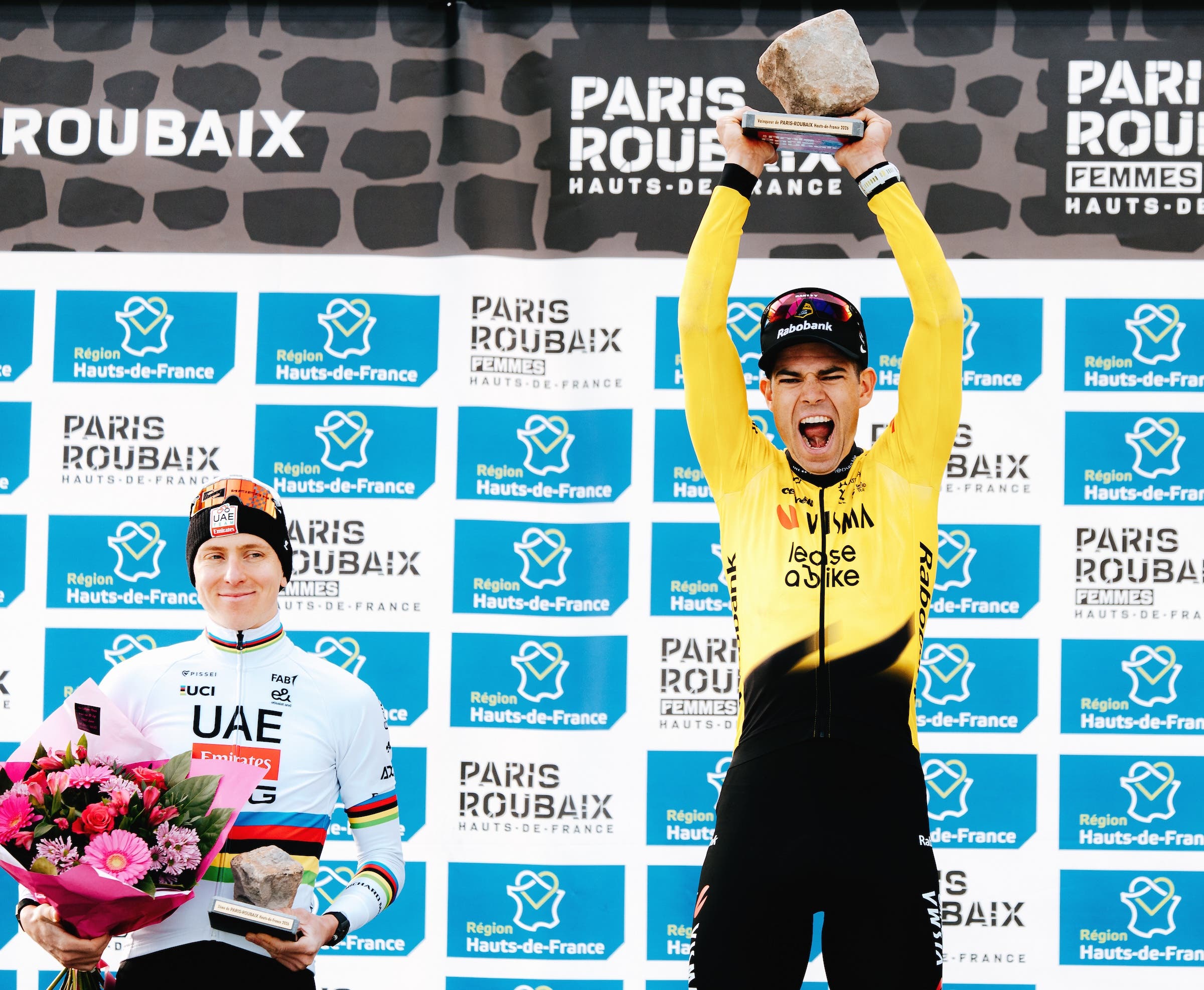
Normally, you would say that anything can happen after a race as long and hard as Paris-Roubaix. But from the moment that Van Aert kicked, he absolutely destroyed Pogačar. In the end, it wasn’t even close, and Van Aert crossed the line to take the biggest win of his career. After so many second places and near misses, Wout van Aert righted it all to win Paris-Roubaix.
Power Analysis data courtesy of Strava
Strava sauce extension
Riders: