Updated June 6, 2026 12:15PM
Forget Seixas, Matteo Jorgenson Believes in the Win at the Criterium du Dauphiné
Jorgenson returns to competition following fractured collarbone, Van Aert also at Tour Auvergne-Rhône-Alpes.
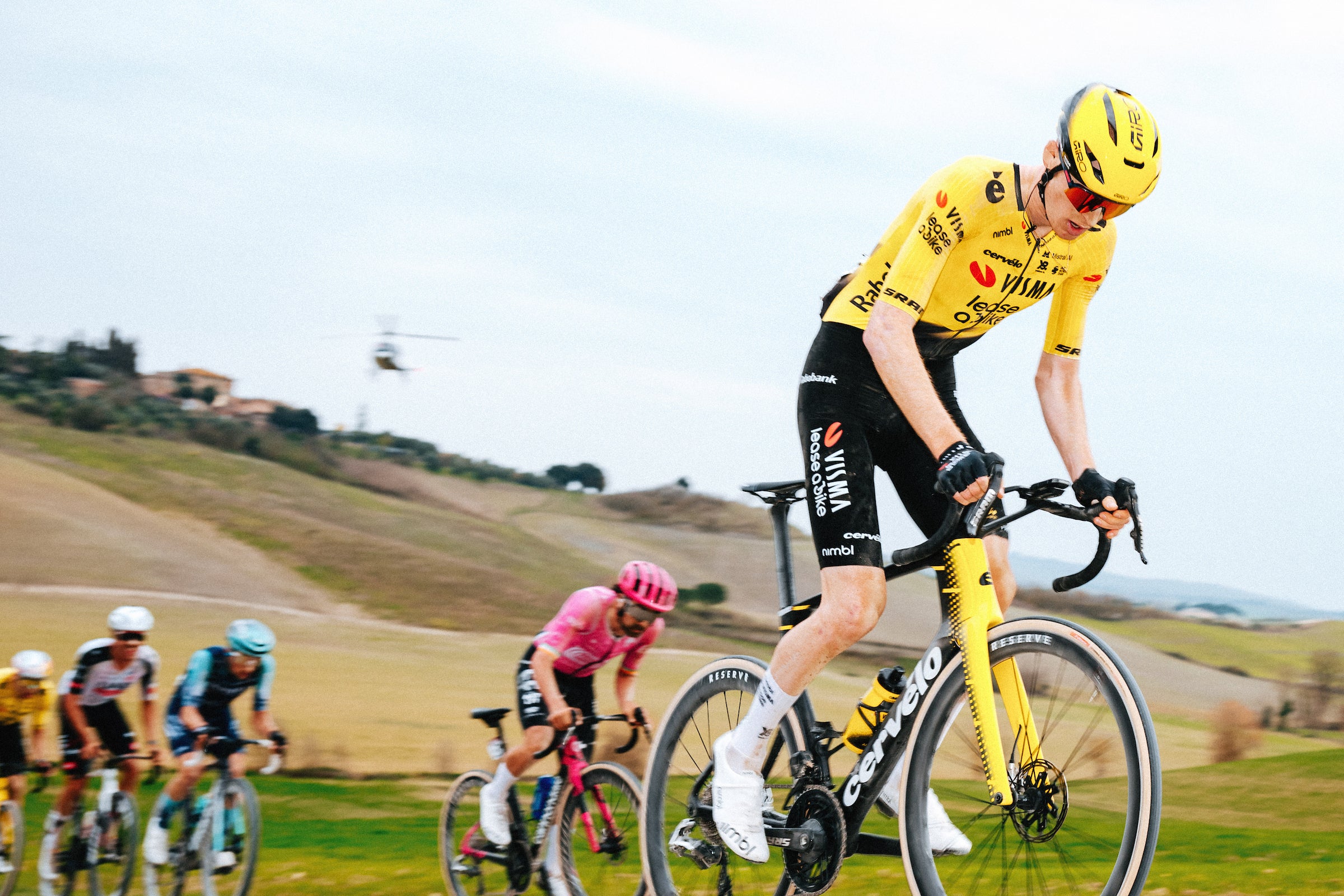
Matteo Jorgenson in Strade Bianche 2026 (Photo: Gruber Images)
All the hype is about Paul Seixas, the hugely gifted 19 year old who gave Tadej Pogačar a big scare in Liège-Bastogne-Liège, but Matteo Jorgenson isn’t intimidated.
He’s back, he’s ready, and he wants to win.
The American, who captured Paris-Nice titles in 2024 and 2025, will line out in the Tour Auvergne-Rhône-Alpes on Sunday in what is his first competitive event since breaking his collarbone in the Amstel Gold Race.
He’s been away from the peloton for seven weeks but still talks up his chances.
“I am really looking forward to racing again. I think this year I haven’t raced that much, which was by choice,” Jorgenson said in a Visma-Lease a Bike team release.
“Once I broke my collarbone, more races were removed. I’m really looking forward to getting back and to getting a number back on again.”
Riders traditionally would have taken a few days of competition to sharpen up but in this age of altitude training, power meters and more, it’s not always necessary.
ADVERTISEMENT
If they know themselves well enough, it’s possible to hit the ground running and go for the biggest result.
Jorgenson certainly sounds confident that he is in the right shape to take on the prodigious Decathlon CMA CGM leader Seixas, Isaac del Toro and João Almeida (UAE Team Emirates), Mattias Skjelmose (Lidl-Trek), Oscar Onley (Netcompany Ineos) and others.
“In the last three weeks I have trained really well with my teammates in Sierra Nevada,” he said. “I have felt really supported by the team throughout the whole recovery process. I feel healthy and 100% so I am ready to race.”
How ready?
If you take him at his word, he’s exactly where he needs to be.
“I always want to try to win. It’s been my goal all season to win a race,” he said. “In the end, I only missed two weeks of training. The injury set me back, but I was able to train really well and feel completely ready now.”
Van Aert returns after Roubaix success
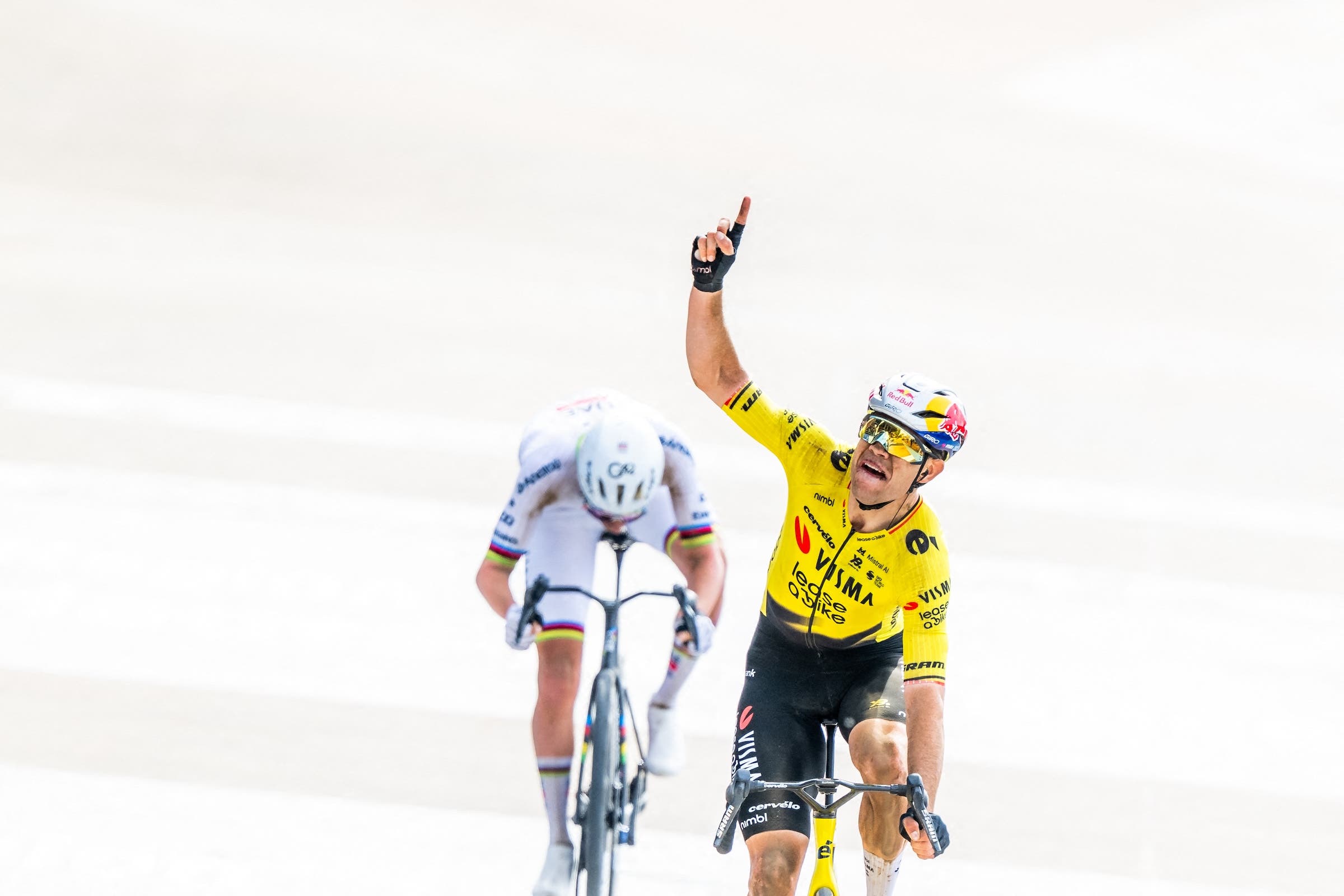
Jorgenson is not the only Visma-Lease a Bike rider returning after a long gap in racing. Wout van Aert has been away from road competition ever since he dazzled fans and outsprinted Tadej Pogačar to win Paris-Roubaix.
ADVERTISEMENT
Sure, he did compete in and win the Marly Grav UCI Gravel World Series event on May 10, but road racing is a different matter entirely.
He’s not a GC contender on a parcours as tough as this, but he will have opportunities in the days ahead.
“For Wout, it’s his first race back after his win in Paris-Roubaix, which means he is really motivated,” said sports director Maarten Wynants.
The race begins Sunday with a mountainous stage running to Saint-Ismier. Day two looks less difficult on paper but actually has more altitude meters, almost 3700. It’s punchy towards the end but the finale is mostly downhill, making a regrouping of sorts possible.
Tuesday’s 28.4km team time trial is followed by two lumpy stages which are very up and down before both having much flatter runs in to the line.
The Tour Auvergne-Rhône-Alpes then concludes with three summit finishes, at Crest-Voland, Grand Colombier and Plateau de Solaison.
ADVERTISEMENT
“It will be a tough Tour Auvergne-Rhône-Alpes, especially with this strong list of participants,” Wynants said. “We are also present with a strong line-up and as always we will do everything to get the best possible result out of it.”
With the team on a high after Vingegaards Giro domination, it will seem like everything is possible. Does that extend to beating Seixas on home soil?
We’ll learn the answer to that in the days ahead.