Published October 2, 2026 06:43AM
‘That’s Ridiculous’: Team USA Captain Shoots Down Del Toro-McNulty Worlds Conspiracy
The controversy that won’t die: Warbasse and Creed tell Velo how Team USA’s bold tactics, not secret deals, put McNulty in the rainbow jersey.
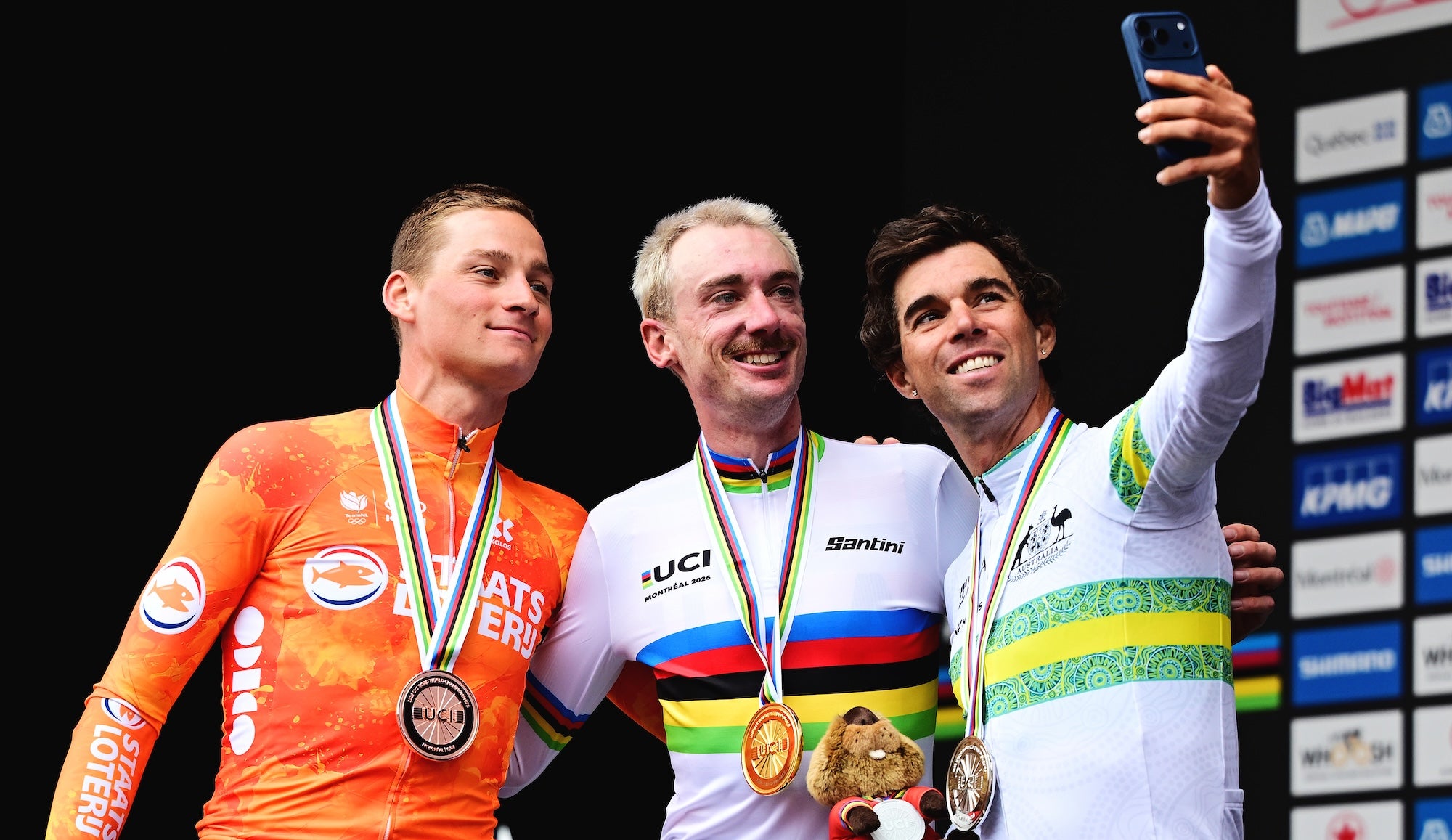
McNulty celebrates America's first world title in 33 years. (Photo: Tim de Waele/Getty Images)
Brandon McNulty had barely pulled on his rainbow jersey at the UCI Road World Championships before the internet goons started picking apart how he won it.
Tom Pidcock, perhaps frustrated at the finish line, threw the first barb, suggesting that Isaac del Toro helped his UAE teammate win the men’s road worlds in Montréal.
Then online sleuths found a clip of McNulty and Del Toro chatting at 36km to go, just a few kilometers before the Arizonan uncorked his winning move.
Conspiracy? Yes!
Not so fast, says Larry Warbasse.
Team USA’s road captain laughed off the idea that Del Toro would throw away the world title to McNulty.
“No chance,” Warbasse told Velo. “I don’t think he was riding for Brandon. That’s just a bit ridiculous, obviously people are looking for storylines to build. To give it up? No way.”
In separate interviews with Velo, Warbasse and lead Team USA sports director Mike Creed picked apart cycling’s biggest viral conspiracy.
Creed countered that it was U.S. tactics that proved decisive, not some sort of deal hatched out on the road.
ADVERTISEMENT
“It’s the tactic you learn when you’re juniors, use your teammates,” Creed said. “We’re just lucky we had three strong riders on really good days and we could do it.”
‘We needed to try something crazy’
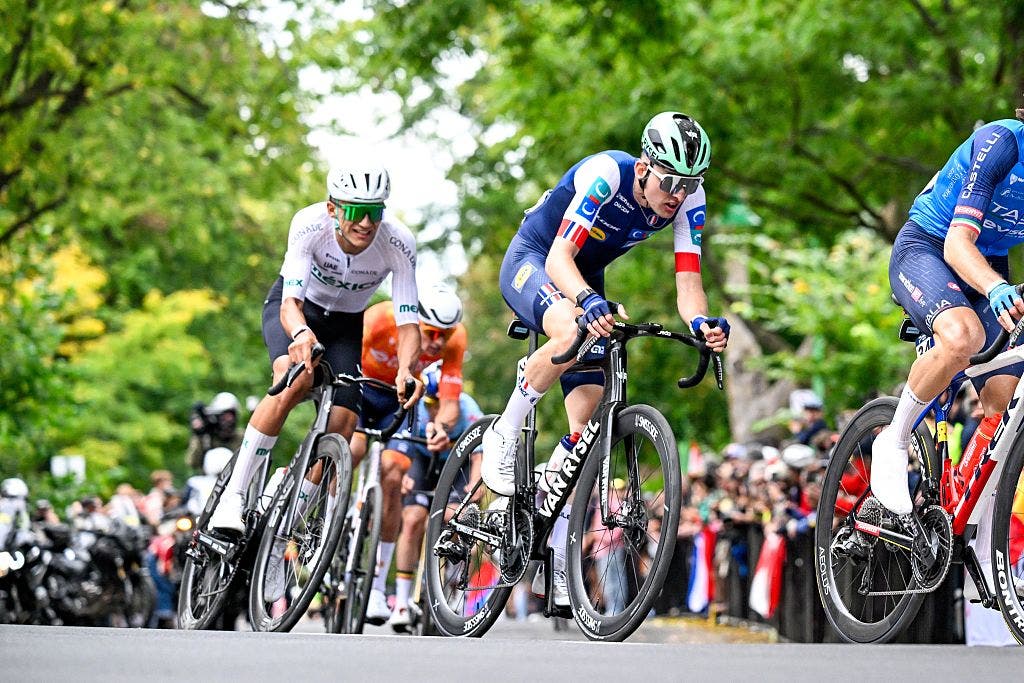
The UAE alliance theory just won’t die. Even nearly a week after the race, people are still debating it.
The final two laps of Sunday’s wild men’s worlds have been dissected more than the Zapruder film, with everyone seeing what they want to see about how McNulty stunned the favorites.
The fact that Team USA started with one of the strongest and most united teams in a worlds without the overwhelming favorite Tadej Pogačar doesn’t seem to matter.
“If Pogačar was there, everyone knew how the race would have gone,” Warbasse said in a telephone call with Velo. “We knew that if we wanted to get a result, we needed to try something a bit crazy.”
Del Toro, Paul Seixas with France, Mathieu van der Poel, and Belgium’s tandem of Wout van Aert and Remco Evenepoel were the big favorites.
The Americans were the ultimate underdogs.
ADVERTISEMENT
Come crunch time, however, Team USA played their cards perfectly.
France had burned through its matches early, Del Toro was isolated and taking long pulls, and Belgium was all over the place. McNulty was waiting for his chance to pounce.
A chat isn’t a conspiracy
That famous video clip of McNulty and Del Toro chatting at 36km has became “magic bullet” for the supposed trade team alliance between the two UAE Emirates XRG teammates.
Warbasse just rolled his eyes when asked if he thought there was a pact in the making.
“I was chatting to my teammates also in the race, but that doesn’t mean that you’re working together,” Warbasse said. “If you’re next to your teammate, you’re probably like, damn, this is really hard, right?”
Creed made the same point, and nobody watching a clip knows what the two riders said.
“People do know that teammates will talk to each other during a race, right?” Creed told Velo. “Who knows what they said, maybe how hard the race is? He wasn’t about to give away the rainbow jersey.”
ADVERTISEMENT
Del Toro did plenty of chasing
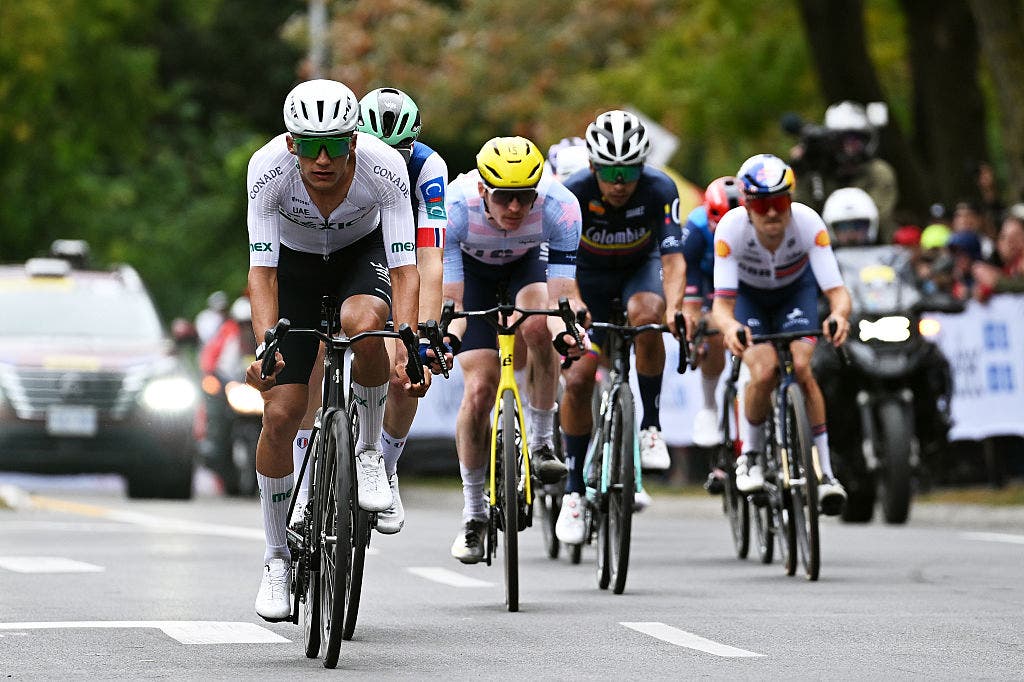
The awkward part of the theory is that it ignores everything Del Toro did trying to win the race himself.
Del Toro was racing like he wanted to win all day, even if the timing was a bit off sometimes.
But some point out the moment McNulty made his winning move with 32km to go, coming off the back of the group when Del Toro was at the front, and the Mexican didn’t immediately react.
Warbasse’s take is that Del Toro and Seixas took on too much responsibility too early, especially when Van der Poel went up the road with just over 90km to go.
And, like everyone else except the Americans, their legs were bien cuit going into the final decisive laps.
“I think both Del Toro and Seixas, they really assumed their roles of favorites, and they did a lot of work, probably a bit too much,” Warbasse said. “That really worked in our favor.”
ADVERTISEMENT
With Quinn Simmons marking MVDP, their efforts played directly into American hands.
So when McNulty bolted, the favorites were already on their knees.
‘No one would give away the world title’
Velon posted a graphic on Instagram tracking the number of times the favorites accelerated over the final 100km.
Pidcock and Ben Healy topped the count with nine apiece, followed by Del Toro and Jorgenson with eight each. Van der Poel made six, while Giulio Ciccone and Seixas unloaded four each.
Jorgenson was covering moves. McNulty made one decisive acceleration that stuck.
Creed watched Del Toro taking repeated turns on the front. From his front-row seat in the lead U.S. team car, that hardly looked like a rider preparing to hand over a world title.
ADVERTISEMENT
“I’m not going to go Alex Jones and put 90 clips online to make my case, but you don’t pull all day and then just give the race to McNulty,” Creed said. “If you just finished 270km and you’re frustrated, and your name is Tom Pidcock, that’s understandable.
“For everyone else, it’s just stirring the pot,” Creed said of the Del Toro-McNulty conspiracy. “I don’t know anyone who would give away the world championships.”
Quinn Simmons made everyone else pay
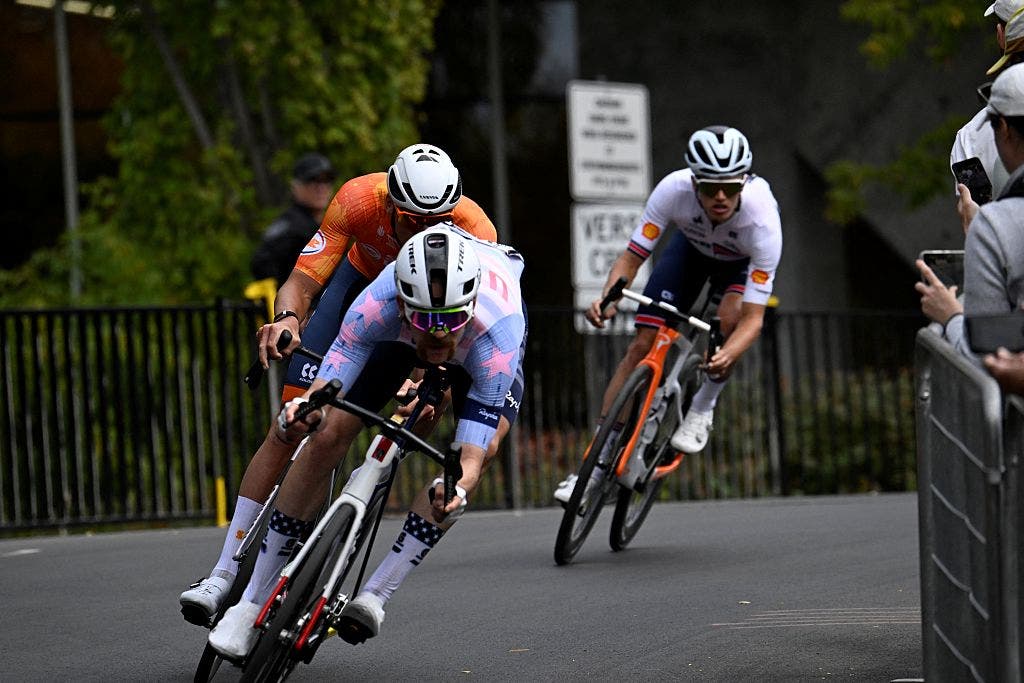
The Americans came into Montréal with three leaders: McNulty, Simmons, and Jorgenson, more than any squad in the elite men’s race.
That they finished with three in the top 10 — first, fourth, and eighth, respectively — shows how well the team raced.
“We were confident going in and we had probably one of the like strongest all-around teams, but maybe we just didn’t have that one like big name like a Remco or a Van der Poel,” Warbasse said.
Simmons circled Van der Poel as one to watch, so when the Dutchman attacked around 90km to go, Simmons was all over it.
ADVERTISEMENT
With Simmons in front, McNulty and Jorgenson could sit on behind as their rivals did the work to pull back MVDP.
“So they were kind of able to get a free ride,” Warbasse said.
Creed described Simmons’ move as exactly what the Americans wanted. But getting a rider up the road only helps if he has the legs to stay there.
“That was the perfect move by Quinn,” Creed said. “The way Van der Poel killed himself to drop him and how Quinn raced like that was amazing.”
By the time the race came back together, several favorites were isolated and already gassed. The Americans still had options.
ADVERTISEMENT
Giving the US tactics their due
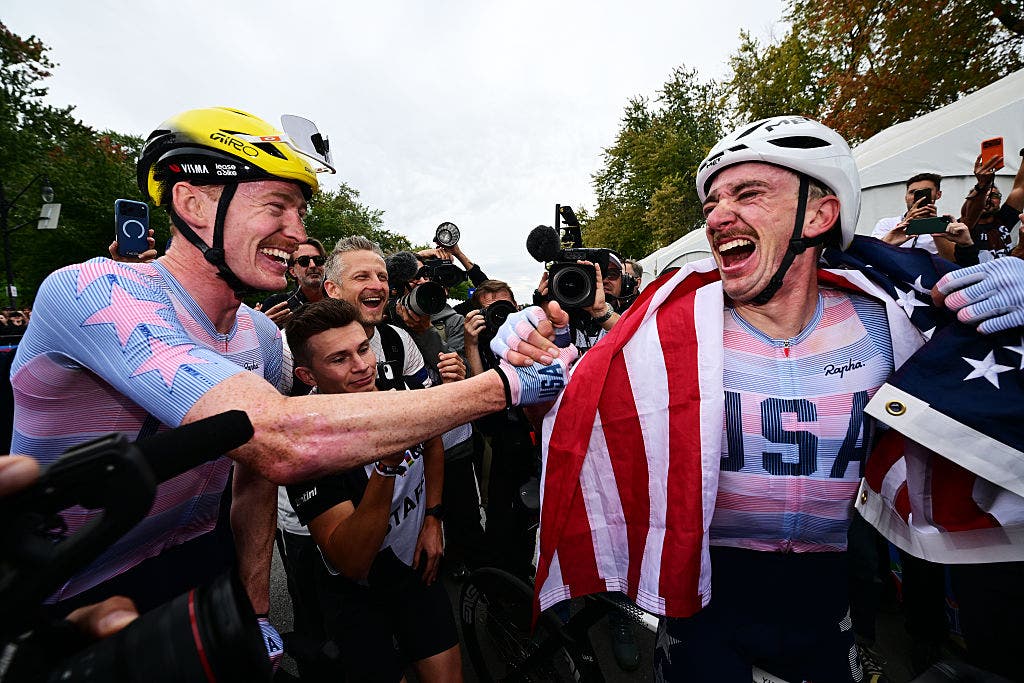
What annoys Creed about the Del Toro capitulation talk is that it devalues what the Americans pulled off.
“It’s one thing to have the tactics in your mind, but to have the legs to actually do it in the race, you don’t see that often,” Creed said.
“We were the only team with three left in the final laps,” Creed said. “McNulty went at the perfect time. You have to hit them when they’re down.”
Without race radios, it was up to McNulty to pick his moment. Creed was still well behind in the team car.
McNulty read the situation and jumped with just over two laps to go.
ADVERTISEMENT
“I think it was the perfect time to go,” Warbasse said. “Brandon’s probably one of the only guys in the group who could pull off a move like that, because, you have to be a pretty damn good time trialist to stay out front for that long, especially at the end of that hard of a race.”
‘OK, we’re back on’
McNulty hit the bell lap with a lead of nearly a minute, but it shrank to under 10 seconds at the top of the main climb.
Creed, who had been allowed to drive up to McNulty in the U.S. team car, thought it was all over when he saw the chasers looming in his rearview mirror.
“On the last lap, he still was about one minute at bottom of the climb, but it was only 10 seconds at the top,” Creed said. “I was thinking that the race is over for him, but now Matteo is going to go for the win now.
“If Brandon could have made it to the Polytechnique climb, then Matteo can take off,” he said. “When they came back within eight seconds and then we saw them sit up and spread across the road, OK, we’re back on.”
ADVERTISEMENT
Jorgenson also played an invaluable role, marking surge after surge from Pidcock, Van der Poel, and, yes, Del Toro.
Velon counted eight Jorgenson accelerations over the final two laps. His presence mucked up the chase, because nobody wanted to tow another American jersey up to McNulty.
“Matteo was chirping at them a few times. ‘Yeah, yeah, I’ll pull through if you just slow down!’” Creed said. “Matteo was on a good day, and when you’re red-lined, no one was in the mood to pull him up to McNulty.”
Worlds is the great equalizer
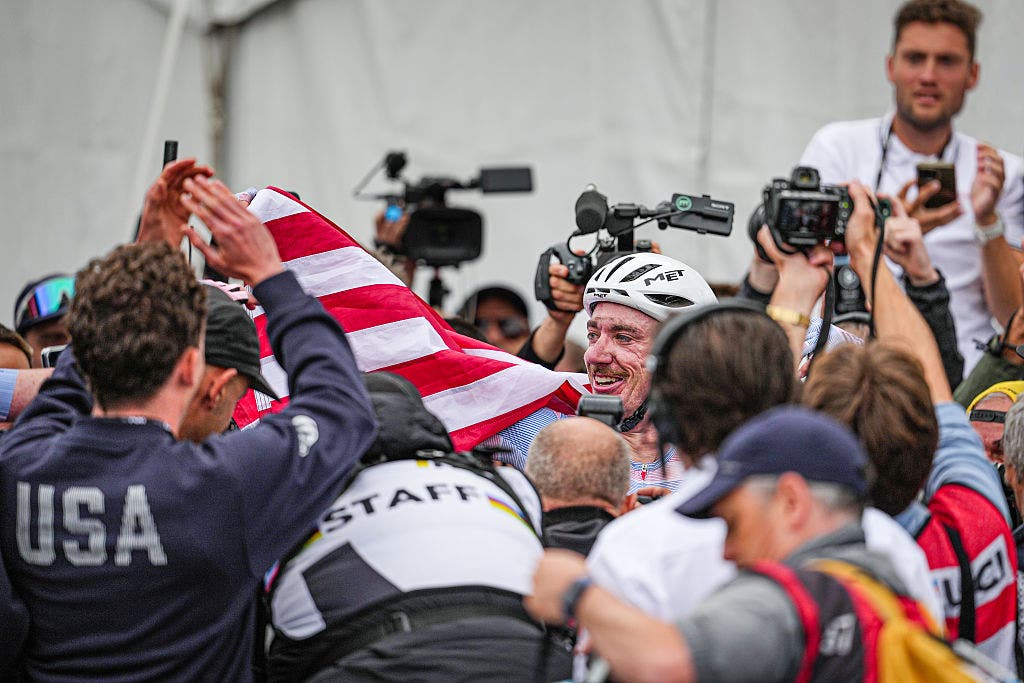
Warbasse said the Del Toro alliance talk also misses the bigger picture of how brutal Montréal’s unrelenting circuit truly was.
“Del Toro was also pulling plenty of times, but then I think he was just on his limit,” Warbasse said. “It was insanely hard and fast the whole time.”
In a finish-line interview with ESPN, Del Toro said he tried everything to win and left with a “bittersweet taste” without the world title.
On the closing laps, Warbasse followed the finale on big screens and through updates shouted by roadside fans, who started chanting, “Larry! Larry! Larry!”
“Once he won, everyone was going crazy. It was a real honor for me to be part of the team,” Warbasse said. “Maybe that’s the only time in your life you get to be a part of such a huge victory.”
ADVERTISEMENT
The race went down to the wire, and Creed could only start to believe that McNulty was about to win America’s first men’s road world title in 33 years when he hit the final corner with seconds to burn.
“We were watching the gaps, thinking, OK, he needs 30 seconds at 3km to go, and he was really cutting the minimums,” Creed said.
“When we saw the last right-hand turn and the group hadn’t started yet, we thought, OK, we got this.”
An ecstatic and unbelieving McNulty crossed the line all alone in the photo in Montréal.
Behind him, the world’s best were burying themselves for the remaining medals at 13 seconds back.
It was a historic victory built on great tactics and superb legs. Not any pact.