Updated November 3, 2026 07:20AM
Giro d'Italia 2027 Route Reveal: Two Time Trials and Return of Zoncolan in Savage Final Week
Double Mortirolo, the Gavia, then the Zoncolan: The 2027 Giro delivers its biggest punches in brutal final week.
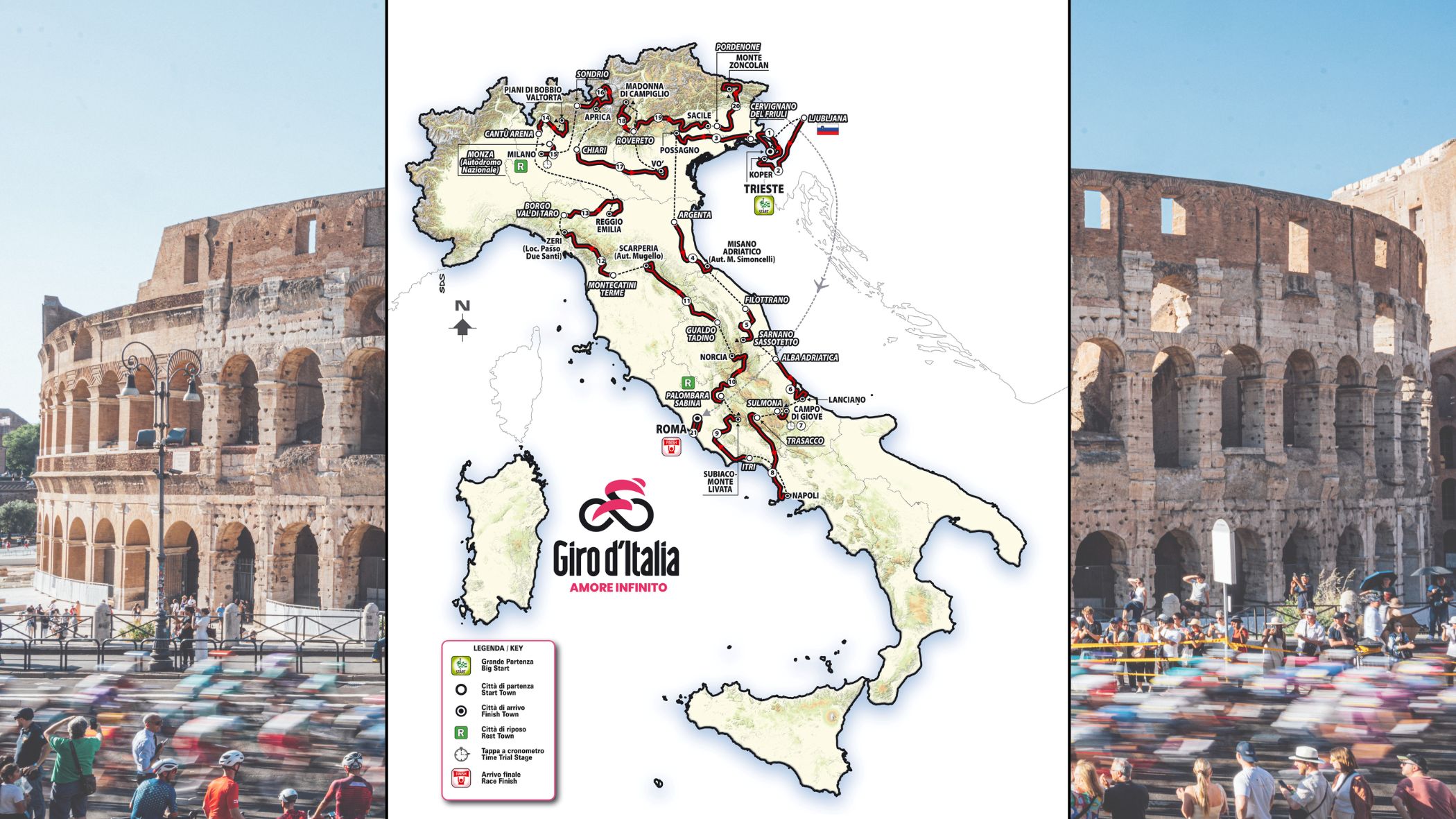
(Photo: Gruber Images/RCS Sport)
Monte Zoncolan returns to the Giro d’Italia in 2027 as the final exclamation point in a punishing third week that also packs in legendary climbs with a double ascent of the Mortirolo.
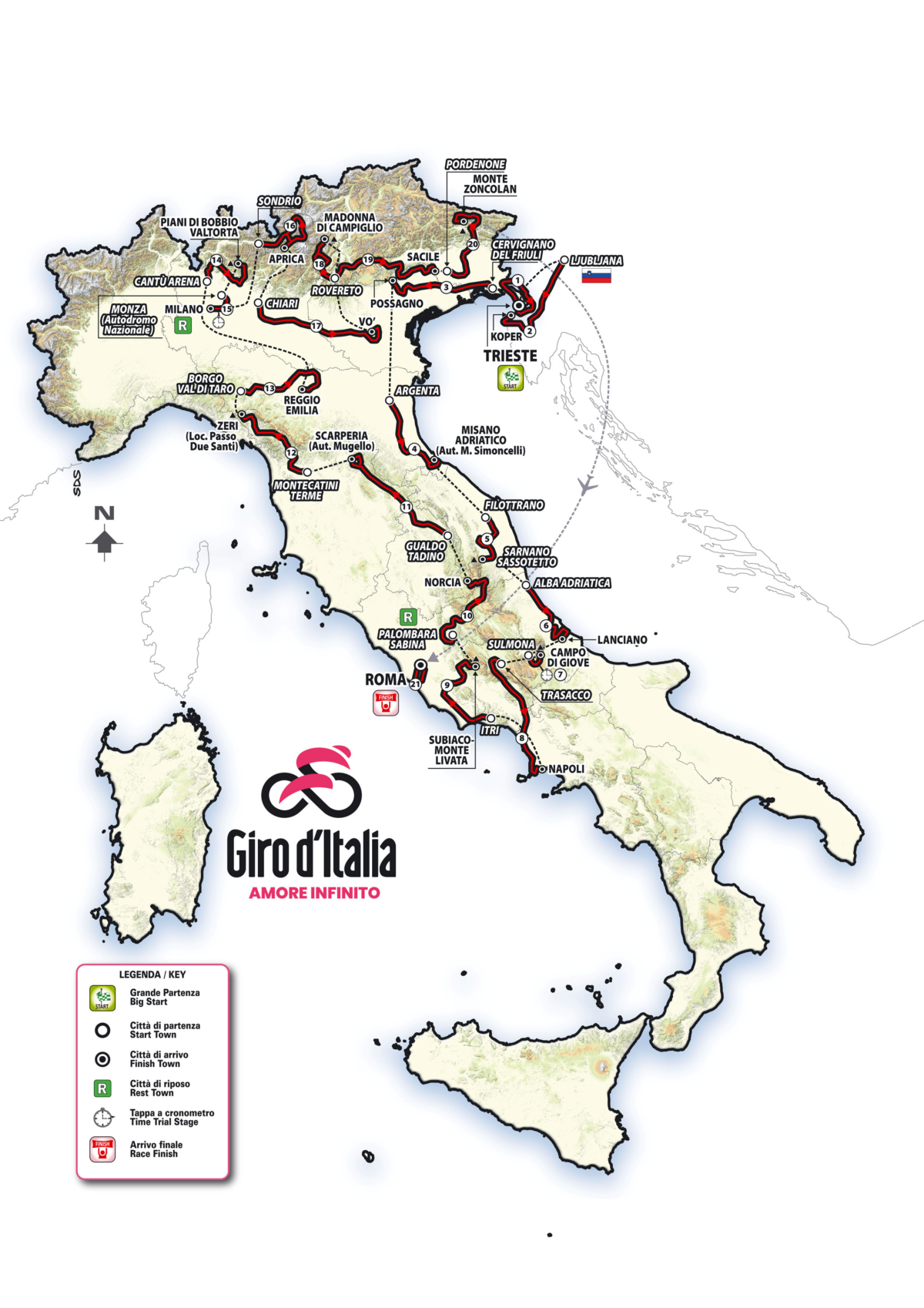
Organizers unveiled a challenging old-school course of 3,418.9km and 50,250m of climbing between the May 8 start in Trieste and the May 30 finish in the Italian capital, Rome.
The 110th edition of the corsa rosa will test the overall contenders, with two individual time trials totaling 56.9km, trademark early summit finishes, and an endless barrage of mountains following the second rest day across the Dolomites.
Will the course be tempting enough to attract the likes of defending champion Jonas Vingegaard or perhaps French ace Paul Seixas?
The headline act is the return to Monte Zoncolan — the OG of cycling’s “impossible climbs” — for the first time since 2021. Riders will climb up the Ovaro approach, where Chris Froome won in 2018, on the Giro’s penultimate stage.
ADVERTISEMENT
Before that comes an explosive day through the Alps, with the Mortirolo appearing twice along with the Gavia in a stage packing 5,700m of climbing in the Giro’s epic “queen stage.”
There is room for the fast men, too. Organizers circled six stages as sprint opportunities, alongside eight hilly stages, five mountaintop finales, and the two time trials.
Week One: Early mountains, TT
The Giro opens with nine consecutive racing days and enough climbing to separate the pink jersey pretenders from the contenders.
Trieste hosts an opening stage that crosses into Slovenia and squeezes three challenging climbs into the final 40km. Stage 2 stays entirely in Slovenia, linking Ljubljana and Koper, before another demanding day from Cervignano to Possagno.
Who knows? Maybe Tadej Pogačar will show up to race.
The sprinters should get their first clear opening at Misano’s motor racing circuit on stage 4.
The GC battle clicks into gear early with stage 5, starting in Filottrano to honor Michele Scarponi 10 years after his death. The day’s 139km pack 3,300 meters of climbing.
ADVERTISEMENT
The first of two TTs comes with the 19.6km run from Sulmona to an uphill finish at Campo di Giove.
Naples follows before the opening Sunday brings another summit finish at Monte Livata.
Week Two: Apennine ambushes before a crucial TT
The second week serves up plenty of asphalt to attack before the race reaches the brutal mountains looming in the north.
Racing resumes with 218km from Palombara Sabina to Norcia, where repeated climbs and descents totaling 3,600m sets the tone for week 2 packed with potential ambush country.
The race’s longest stage follows, finishing at the Mugello Circuit in a likely opportunity for the sprinters.
Tuscany then hosts the Tappa Bartali from Montecatini Terme to Zeri, featuring Passo dei Due Santi and a new uphill finish. A flatter run into Reggio Emilia offers some relief before a demanding weekend.
Saturday’s 187-kilometer stage to Piani di Bobbio/Valtorta gets heavy with 4,900m of climbing. The Ghisallo, Culmine di San Pietro, Miragolo San Salvatore, and Alino precede the uphill finale.
ADVERTISEMENT
The week closes with the 37.3km individual time trial starts inside Monza’s racing circuit and finishes in Milan. The flat but technical route will favor the specialists and pressure the pure climbers to limit the losses.
Week Three: Mortirolo double and Zoncolan to decide pink
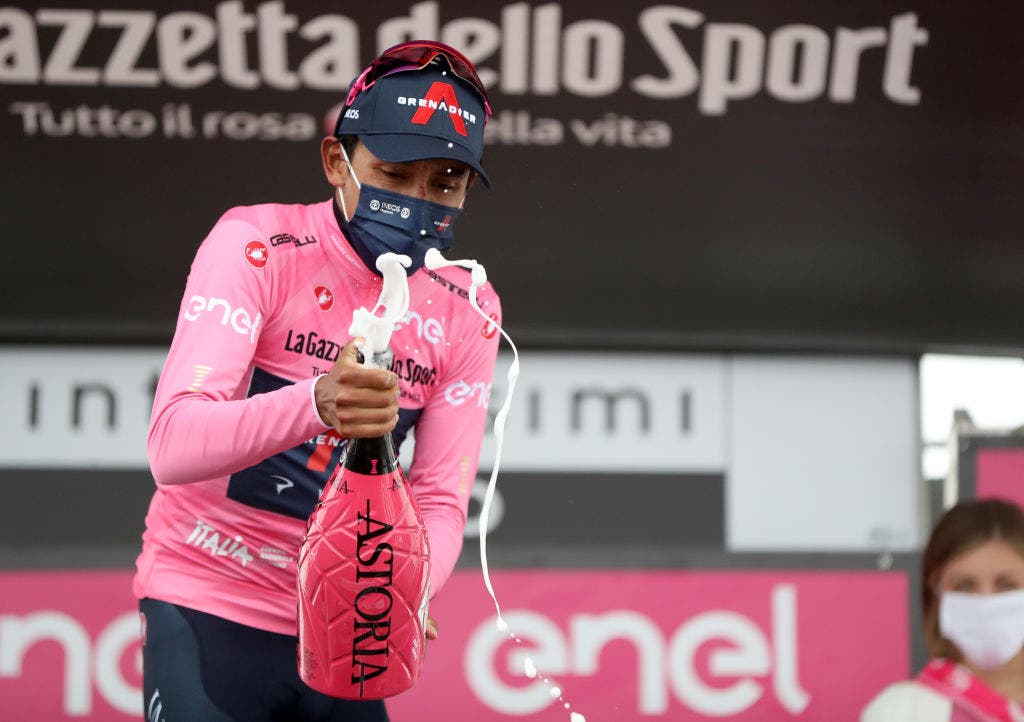
The Giro comes out swinging for a brutal, old-school third week.
Coming a day after the rest day, stage 16 from Sondrio to Aprica could blow up the race at 192km and 5,700m of climbing. The stage features two ascents of the Mortirolo with the feared Gavia packed in between. The Gavia carries Cima Coppi honors as the Giro’s highest point, while the Mortirolo is the designated Montagna Pantani.
The sprinters get another chance from Chiari to Vo’ before the mountains return on the road from Rovereto to Madonna di Campiglio. Rovereto to Sacile, featuring 3,000m of climbing in 199km is perfect for the breakaways.
Then comes the return of Monte Zoncolan. The penultimate stage starts in Pordenone and finishes up the steeper Ovaro face in the final chance to crack the race wide open.
ADVERTISEMENT
Rome is back for the final stage to pop the champagne after one last bunch kick.
2027 Giro d’Italia: All 21 stages
| Stage, date and route | Distance |
| Stage 1 — Saturday, May 8 Trieste to Trieste Hilly circuit passing through Slovenia | 136.2km |
| Stage 2 — Sunday, May 9 Gorizia to Lignano Sabbiadoro Flat stage for the sprinters | 148km |
| Stage 3 — Monday, May 10 Ferrara to Cervia Flat stage for the sprinters | 166.4km |
| Stage 4 — Tuesday, May 11 Cesenatico to Misano Adriatico Hilly stage with a Misano Circuit finish | 151km |
| Stage 5 — Wednesday, May 12 Urbania to Sarnano-Sassotetto Mountain summit finish | 154.5km |
| Stage 6 — Thursday, May 13 Ascoli Piceno to Lanciano Hilly stage | 185.3km |
| Stage 7 — Friday, May 14 Sulmona to Campo di Giove Uphill individual time trial | 24.2km |
| Stage 8 — Saturday, May 15 Roccaraso to Naples Flat stage for the sprinters | 178km |
| Stage 9 — Sunday, May 16 Nola to Monte Livata Mountain summit finish | 179km |
| Rest day — Monday, May 17 Rieti | — |
| Stage 10 — Tuesday, May 18 Rieti to Norcia Hilly stage | 148km |
| Stage 11 — Wednesday, May 19 Foligno to Sansepolcro Hilly stage | 174.5km |
| Stage 12 — Thursday, May 20 Pontassieve to Scarperia Hilly stage | 145.1km |
| Stage 13 — Friday, May 21 Barberino di Mugello to Zum Zeri Mountain finish | 199.1km |
| Stage 14 — Saturday, May 22 Sestri Levante to Reggio Emilia Hilly stage | 213km |
| Stage 15 — Sunday, May 23 Monza Circuit individual time trial Flat individual time trial | 42km |
| Rest day — Monday, May 24 Lecco | — |
| Stage 16 — Tuesday, May 25 Tirano to Aprica Queen stage featuring the Gavia and two ascents of the Mortirolo | 204.6km |
| Stage 17 — Wednesday, May 26 Edolo to Piani di Bobbio Mountain finish | 142.1km |
| Stage 18 — Thursday, May 27 Lecco to Madonna di Campiglio Mountain finish | 165km |
| Stage 19 — Friday, May 28 Malè to Sacile Flat stage for the sprinters | 181km |
| Stage 20 — Saturday, May 29 Udine to Monte Zoncolan Mountain summit finish | 165.5km |
| Stage 21 — Sunday, May 30 Rome to Rome Flat finale for the sprinters | 125km |
Giro d’Italia 2027 Race Map