Published September 25, 2026 07:29PM
Ashlin Barry's Audacious U23 Worlds Win Proves the Power of Aero in Modern Cycling
While Barry's win was massively impressive, his aero expertise and the new rules of hyper-fast road cycling show just how much cycling tactics continue to change.
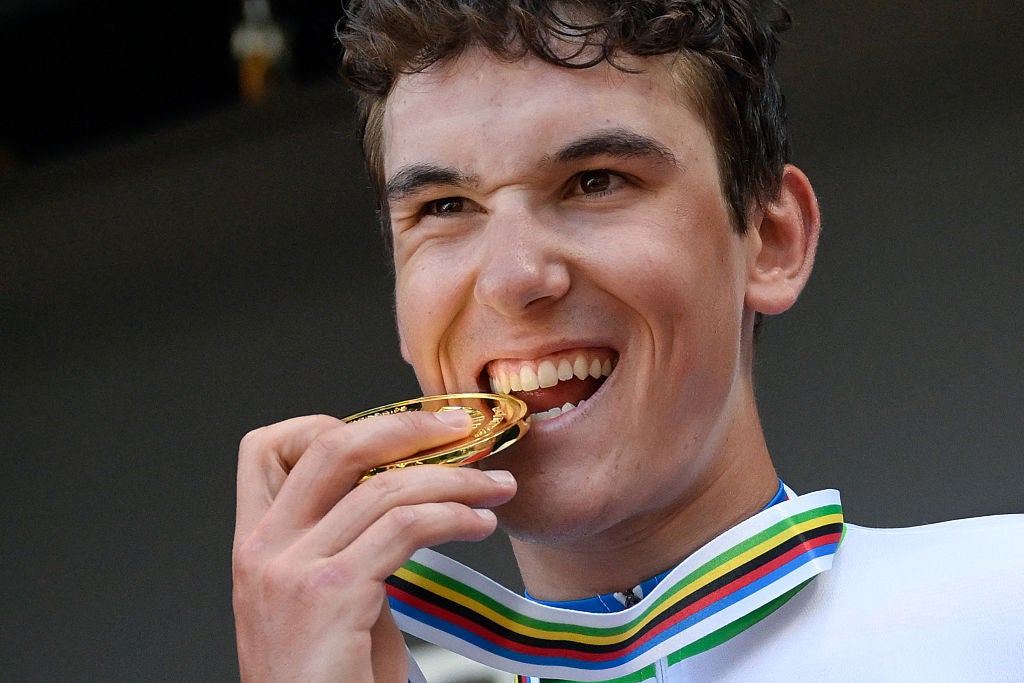
Ashlin Barry celebrates winning the U23 world title. (Photo: Andrej Ivanov / AFP via Getty Images)
With 30km left of the men’s U23 race at the UCI Road World Championships, it looked as if Ashlin Barry’s fate was sealed. The American phenomenon was off the front with a small group of riders after an audacious move early in the race. With three laps to go, the gap had dropped to under 30 seconds, and Barry had only one breakaway companion left.
Then, Barry went solo. Quickly, the gap started going the other way. Fate took a U-turn.
Two laps later, Barry was celebrating the first-ever American win in the U23 category. He had muscled his way to a gap of nearly a minute ahead of Hector Alvarez, another highly touted young rider in Lidl-Trek’s development pathway. Yet, perhaps the most striking aspect was not the way he won but the fact that he had a shot at all.
Barry is a big rider. At around 6’4”, the Visma-Lease a Bike development rider is not only tall but also powerful. His closest physical parallel in the pro peloton is Mathieu van der Poel, and he might be even taller than the powerful Dutchman. So, in front of so many of the best young climbers in the world on a hilly course, how did Barry pull it off?
ADVERTISEMENT
The easy answer? His power. Yet, the more accurate answer might be his capacity as a master of aerodynamics.
Barry is not just a road professional, he is also on the USA team pursuit team building towards the Los Angeles Olympics in 2028. Not only does this give him a ton of power, it also has him doing tons of aero work. Most of this is for the TT-type position on the team pursuit bike, but seeing him power around the course in Montreal showed just how much of that knowledge and flexibility translated to the road bike.
Barry was a picture-perfect example of aerodynamic excellence.
“I think it makes a big difference, there’s no doubt,” Barry told Velo after the race. ”I haven’t done much aero work on my road bike, but for the last few weeks, I was training a ton on my TT bike.
ADVERTISEMENT
“I thought the TT would be a really big opportunity for me, so that was what I was really focusing on in my training. And in the end, that probably helped quite a bit in the road race. Between the hills, I was able to stay really efficient and conserve energy well. So that definitely could have made the difference in the end.”
How Barry’s win fits into a bigger trend
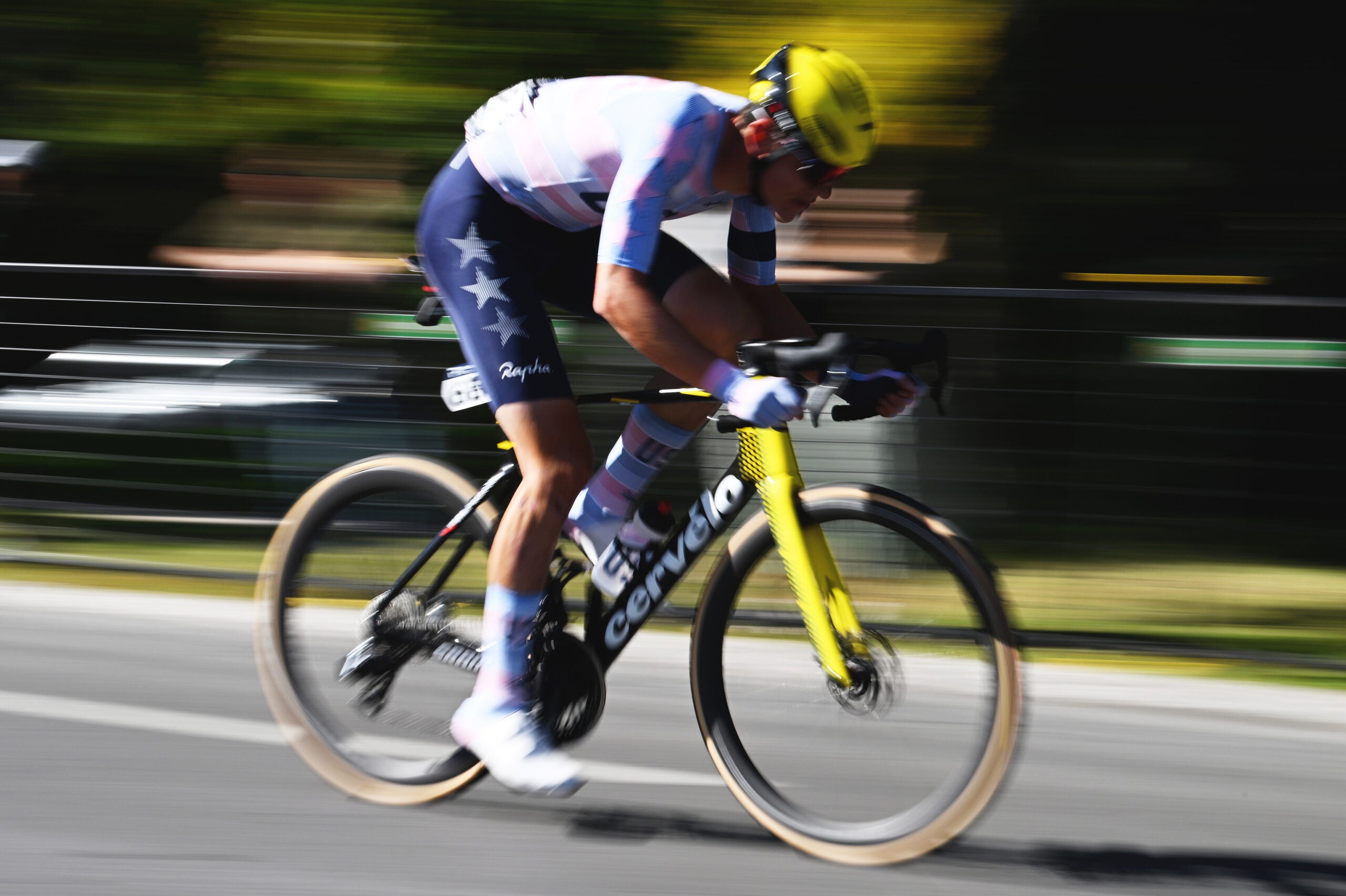
While Barry’s win is extraordinary, it does fit into a pattern we are seeing more and more of: successful long-range solo victories. The likes of Tadej Pogačar, Remco Evenepoel, and Mathieu van der Poel might be the most obvious examples, but it’s growing more frequent even among less touted and younger riders.
In conjunction with better training and fueling, the aero revolution has enabled solo riders to anticipate the moves of other riders, especially if they might be bigger riders on hillier courses. Going early not only smooths the power curve of the effort, but it also places the impetus on everyone else to work together. Normally, that collective power of many riders versus one is enough to bring it back.
Normally.
ADVERTISEMENT
“It was a hard start,” Barry said of his breakaway. “I felt there was like an opportunity there somewhere to get away and get ahead of the race. I didn’t have a script going in, I only had an idea of what I could do. But what I did was not what I expected at all.
“At one point when I was away, I really didn’t think it was gonna stick. I thought the pace would increase in the group behind and we’d get caught pretty quickly. I was just hoping I could make the front group and then stay there, but I don’t know how I stayed away.”
Certainly, part of the equation was what happened behind Barry.
“We don’t have radios here, so we only knew the difference each lap on line,” Hector Alvarez said after the race. “I felt that the break was not too far, but then when they said two minutes, I started to be a little nervous.”
ADVERTISEMENT
The chaos of no radios helped, but it wasn’t the whole story
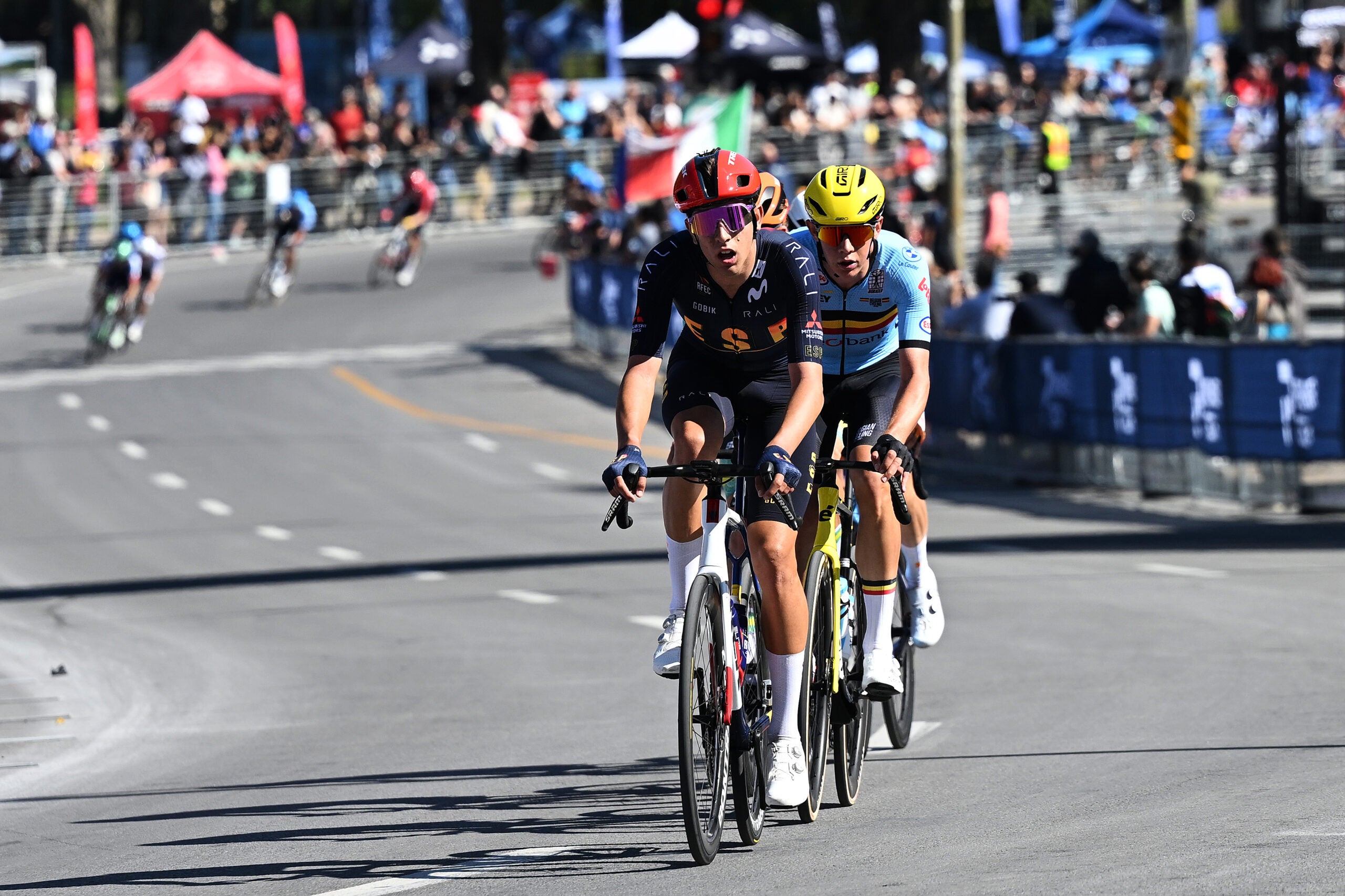
Alvarez came into Worlds on a heater. The Spanish puncheur who rides for Lidl-Trek’s development team was the rider in the peloton who has had the most success at the pro level this year and was looking to build on a third-place finish in the time trial last week.
When he came across the line banging his handlebars after winning the sprint for second, it was obvious that Alvarez saw this race as a massive opportunity for his first rainbow jersey. Both he and the rest of the chasing teams seemed to know he was the favorite.
“The goal was to not let the break get more than 40 seconds. With this circuit, we thought we would need to be careful with a break of more than 40 seconds to three or more guys. But yeah, the group was gone, and nobody wanted to take responsibility.
ADVERTISEMENT
“I sent guys to the front, but no one else wanted to take responsibility, and I think this was when we lost the race.”
Yet, these longer solo victories are not down to just dysfunction. Today, in particular, saw the Spanish team pull the gap back to under 30 seconds with 30km to go. Even with a less-than-perfect chase, cycling history says 30 seconds in 30km is not nearly enough to take the win.
What has changed is the actual physics of the racing. As the material gets faster and the bike positions get better, the baseline speed of road racing becomes so much higher. Not only does that make the races take less time (which means less actual time to close a gap)‚ it also makes small breakaways harder to chase—even if they have the numerical advantage.
ADVERTISEMENT
Since the relationship between effort and speed is not linear, it is literally exponentially harder for a peloton to chase a rider that is traveling at an average speed of 27-28 mph instead of 24-26 mph, regardless of the difference in aero equipment. Add in an aero-optimized rider with buckets of power for the climbs and descents, and you have a recipe for a solo effort that is so fast it can break even a big, committed chase.
“To be honest, I was so far on the limit that I didn’t know anyone was up the road,” Stiansen said. “A few laps before, I saw 40-50 seconds or something like that, and then I just assumed that he had been caught because we rode so fast.
“The front group was cooperating well, but there was also the unknown. You never know if some of the other guys will try to attack, so it was a bit difficult. But, yeah, I didn’t really know there was a guy up the road—it was a superstore ride.”
Road cycling’s new speed is changing the calculus of chasing
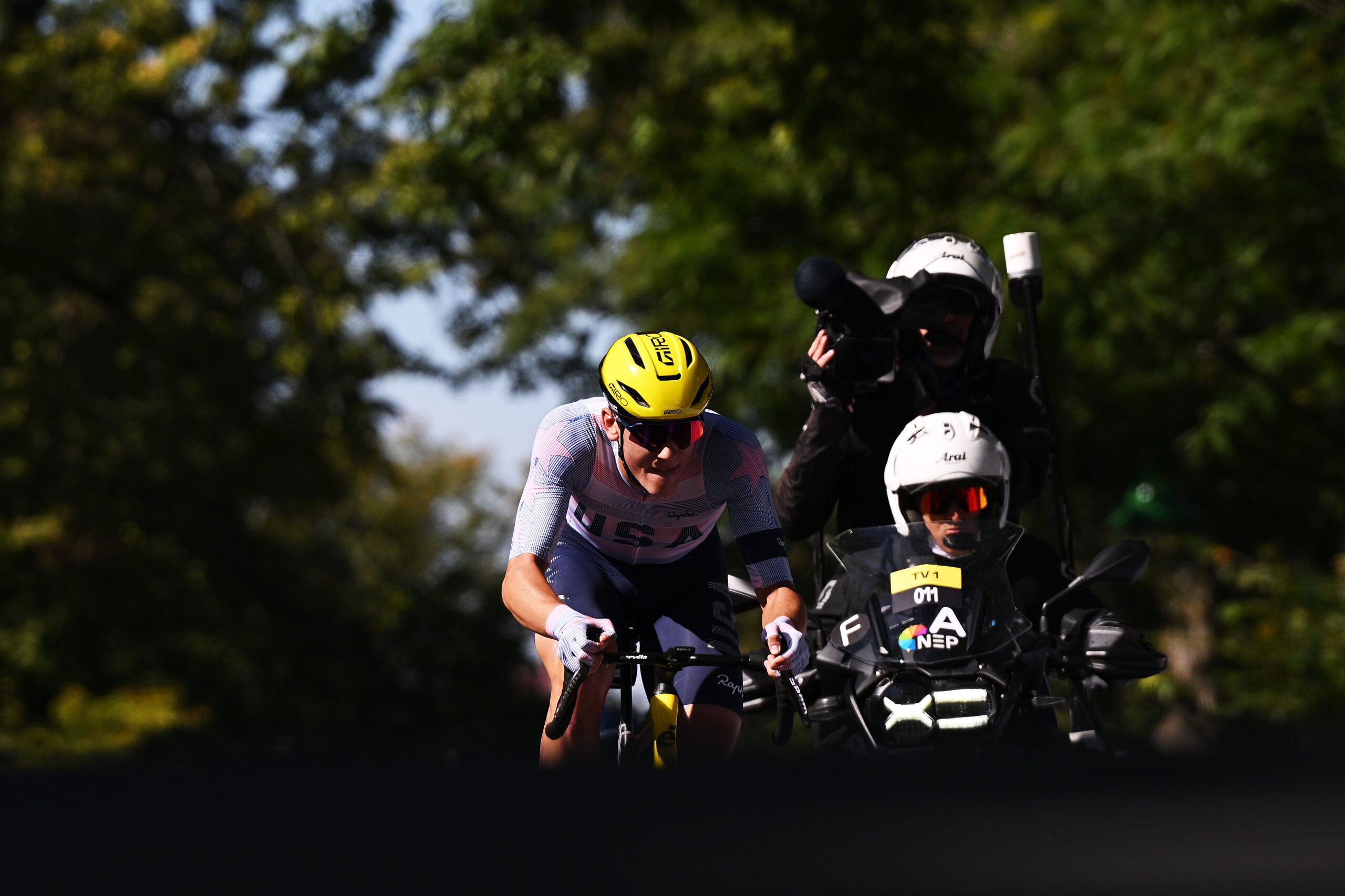
Ultimately, chalking the win up to aerodynamics is far too reductive. Barry is also one of the strongest riders and certainly climbed close to the speed of the riders chasing behind. It is also worth pointing out that Barry won the race on his 19th birthday, marking the end of his first year in the U23 category.
ADVERTISEMENT
In all likelihood, Barry will be on Visma-Lease a Bike’s WorldTour squad in two years, with Barry saying the call-up could even come in 2027 depending on what the team and his coach think. That type of talent will often cut through, regardless.
Yet, from a big-picture perspective, the win is very interesting. Even at the U23 level, solo victories are simply way more attainable, especially for big powerhouse riders. Even on this weekend, Barry set an example that some of the biggest riders in the world can follow—if they can get aero enough.