Published October 28, 2026 12:06AM
You’ve Heard the Short Crank Hype. Here’s Why You Should Listen.
I accidentally rode 160mm cranks, and now I’m ruined for anything else. Why everyone should consider going shorter.
(Photo: SRAM)
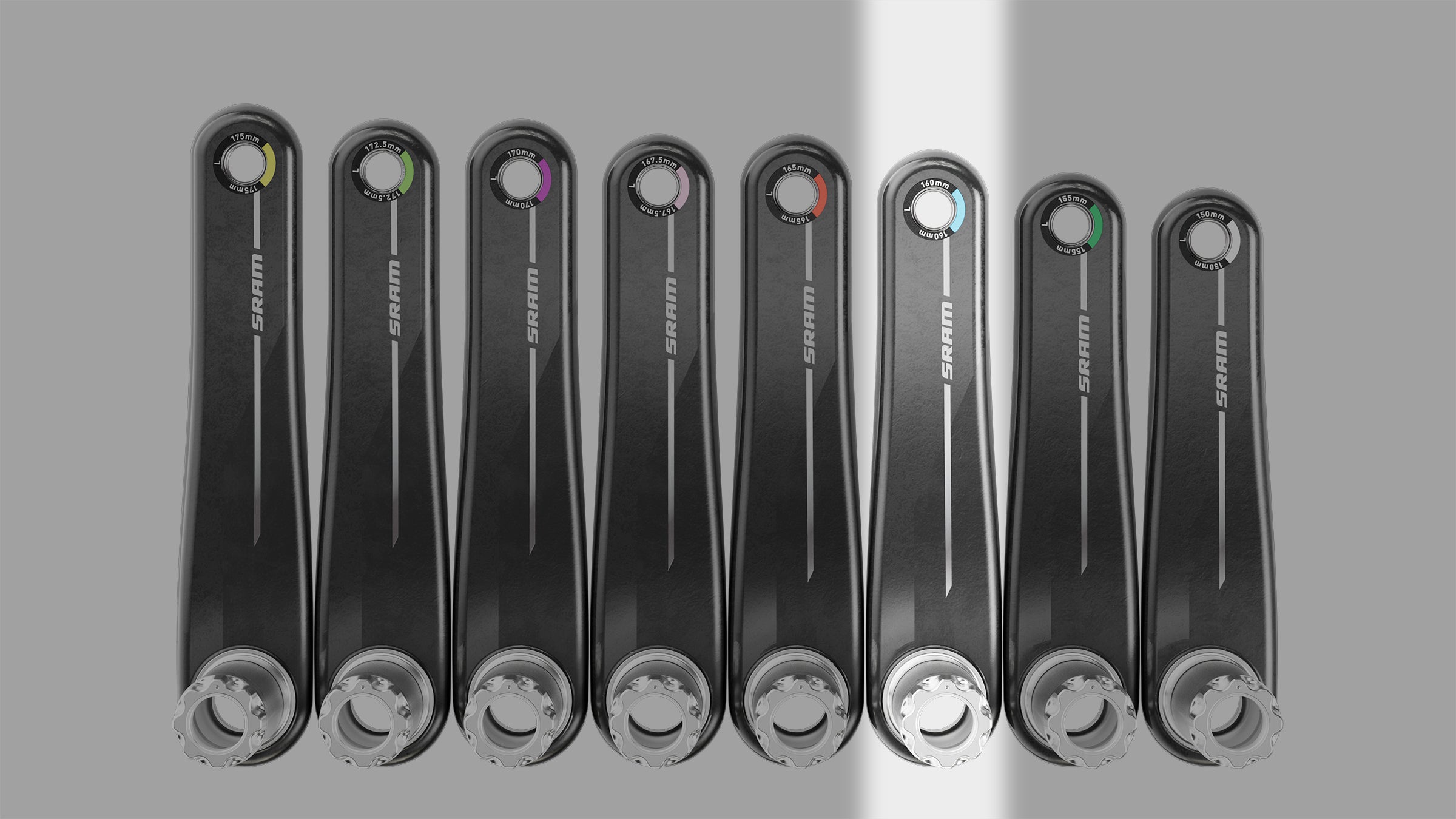
I never set out to sing the praises of 160mm cranks. Having already made the transition from 170mm to 165mm cranks several years ago, I felt like I had reached the promised land of power and performance. There was nothing more to gain. Plus, as a 5-foot-6 cyclist, how much shorter could I reasonably go? Apparently another 5 millimeters.
The math behind shorter cranks
A lot of times innovations from the pro peloton don’t always make sense for us mere mortals. This one, however, is an exception. Shortening your crank length is a pro move that’s worth paying attention to, because the benefits aren’t just theoretical; they’re practical for riders of all levels.
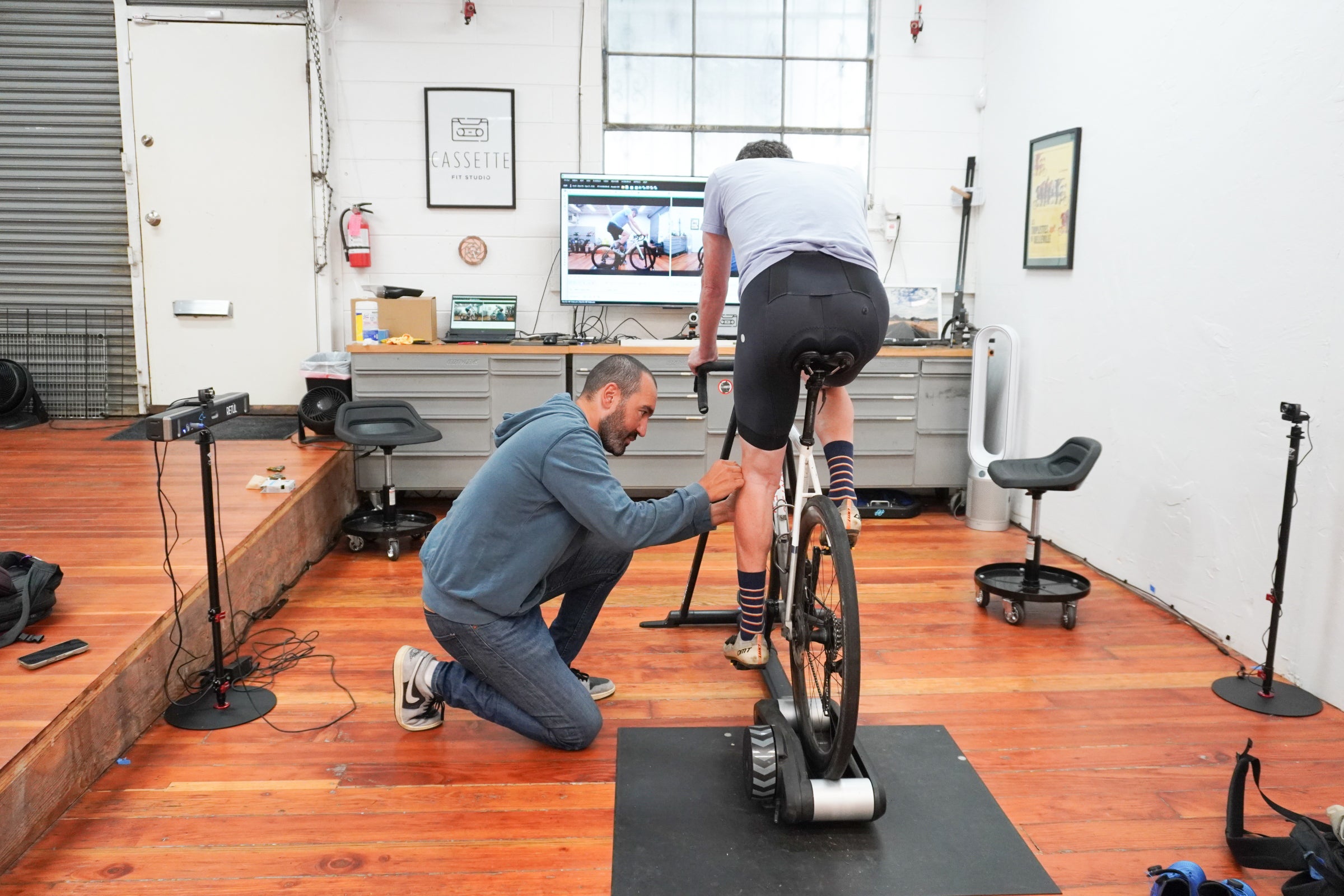
To get into the details I met with Cesar Correa, founder of San Francisco’s Cassette Fit Studio who has been fitting bikes since 2013, to see why more riders should start to think small. Correa has been recommending shorter cranks for years.
ADVERTISEMENT
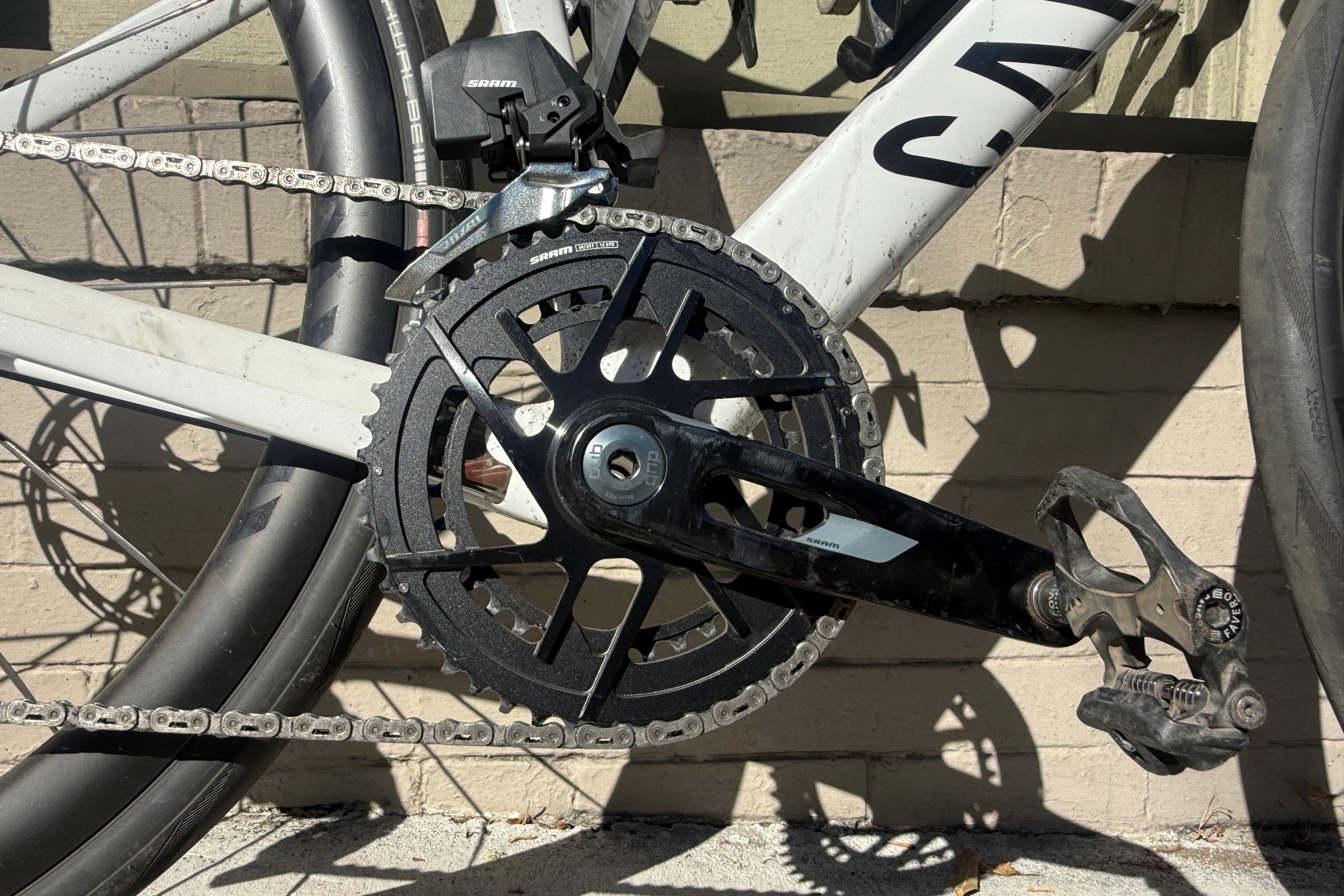
“Crank-wise, I do think it’s very important to go shorter,” he told me. When I rolled into his studio on a Canyon Endurace with its stock 160mm cranks, his reaction was considerably more enthusiastic than mine had been. “When you brought in that bike and we saw that it came with 160s, it was like, that’s amazing,” he says.
Let’s break down why.
More Room To Get Aero
Shorter cranks mean shorter virtual circles that your foot is tracing with each pedal rotation. Since your knee doesn’t rise as high at the top of each stroke, you can compensate for this positioning change by bumping up your saddle height.
As a general rule, when you shorten your cranks you raise your saddle height roughly the difference. So if you’re dropping down 5mm from 170mm to 165mm, you would bump up your saddle by 5mm. Give or take.
“That’s the easy way to do it,” says Correa. “But it could add up to about anywhere from eight, sometimes even 10mm different.” Correa says the final adjustment depends on the rider, their biomechanics, and can involve moving the saddle both up and back.
ADVERTISEMENT
And there’s another catch. “When you move to shorter cranks, you raise the saddle, then some people tend to just drop the handlebars lower, but that means your hips are still going to close,” Correa told me. “So you’re not actually doing anything different.”
So simply going shorter doesn’t give you permission to slam your stem. “You can achieve a bit more drop with the shorter cranks, but it’s not as aggressive as people think.” It’s about creating more room between your knee and torso, which can give you more freedom to find an aerodynamic position without closing your hips back up.
Better hip angle
A lower knee raise creates a more open hip angle. But what does that actually mean? The best analogy is a squat at the gym. A closed hip angle is the equivalent of doing a partial squat, which really burns out your smaller hip flexor muscles and doesn’t allow you to produce a lot of power.
ADVERTISEMENT
Whereas a more open hip angle is akin to doing a full squat—it produces more power and recruits more muscles. From Correa’s perspective, the important part is simply giving your hip and knee more room to move. “When you go shorter in cranks, especially if you have knee issues, your knees are not going to have to bend as much,” he says. “They’re a lot freer.” And it’s something he can actually see during a fit. “Your foot gets through the stroke a lot better with shorter cranks,” Correa says. That extra room can also help the knee track more naturally through the pedal stroke rather than forcing your body to compensate for a position it doesn’t particularly like. For me it just felt more relaxed. Like sitting in a really comfy chair. The body just fell into place and the legs were able to turn over almost effortlessly. I could maintain a high cadence, turning over the pedals without much effort, and ticking up the hills like it was no big deal.
More Muscles = More Power
To be clear, shorter cranks don’t magically give you more watts. But the shorter arms change your riding position, and that’s where the magic happens. It all comes down to which muscles you can recruit. And on shorter cranks, you can tap into some big ones.
When you pedal through the power phase of your stroke, between 12 o’clock and 5 o’clock, you can engage your quads more and shift that load into a more efficient power transfer. The short cranks and more open hip angle allow this to happen. Now you’re shifting the load towards your quads, engaging bigger muscles that are more resilient and ideal for endurance efforts. It’s more efficient, more sustainable, and allows you to feel comfortable for longer. I immediately felt this on climbs, like I magically had another gear. I could feel more engagement from my quads, not just my glutes. It’s a little bit of an odd sensation at first, but you quickly get used to it and before long, you’re spinning easier doing some of your most efficient climbing ever.
Higher Cadence
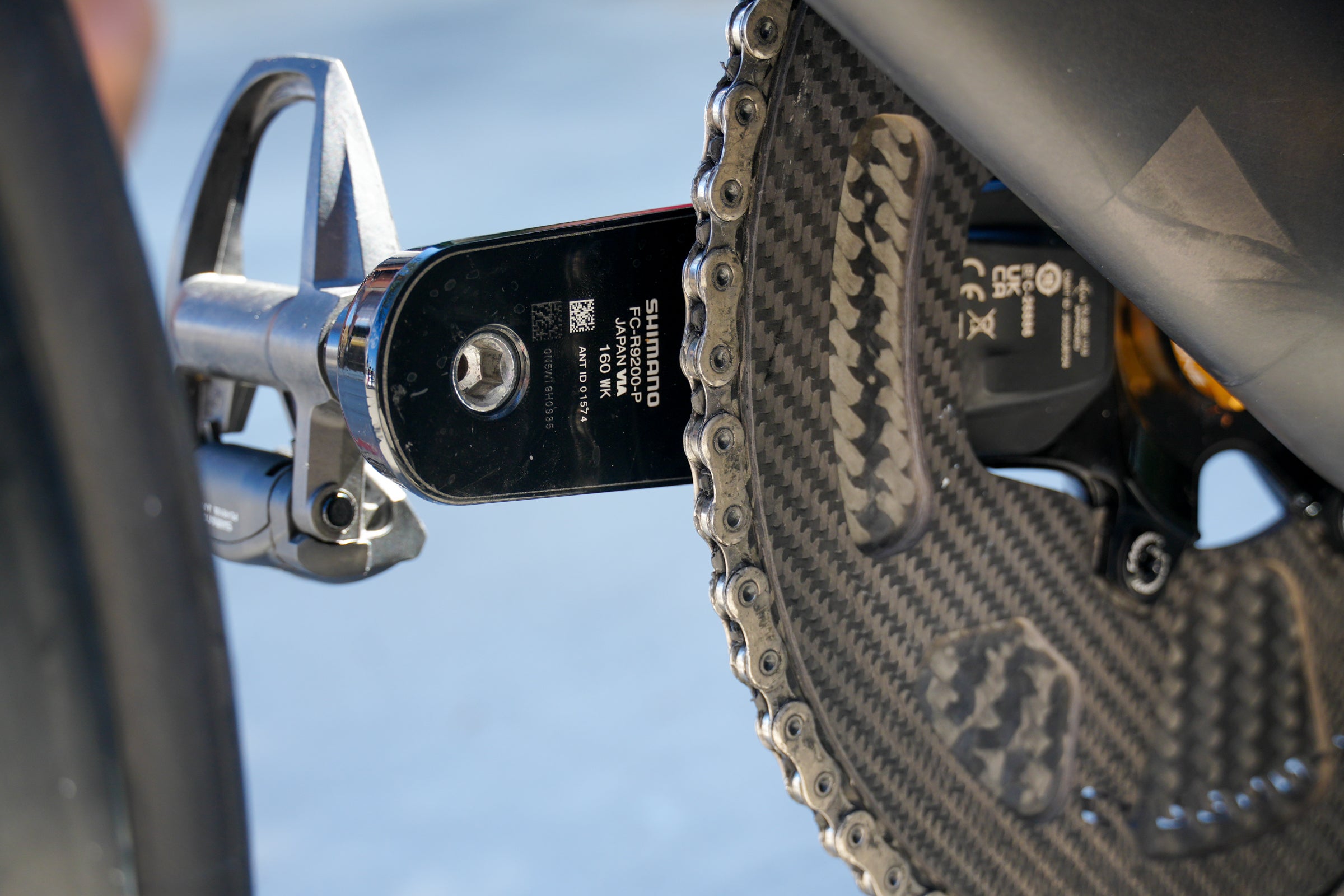
A 160mm circle versus a 175mm circle is a significant difference, and that means the rotations your foot will make are directly translated. You’ve instantly reduced the arc in which your foot travels across each revolution. It’s a tighter circle which means you can spin faster.
ADVERTISEMENT
For me, that’s exactly what I noticed on the 160s. Climbing felt easier. My pedal stroke felt quicker, and holding a higher cadence felt more natural than my 165s. And there are other benefits too.
Less Fatigue And Maybe Fewer Injuries
Office workers of the world listen up, this one is for you. “If you’re someone who sits at a desk all day, you’re gonna have the tightest hips in the world,” Correa says. “So shorter cranks will help with that.” Reducing that demand on your hip flexors could also help limit some of the stress that builds up over a long ride. Then there are the knees.
For Correa, watching what happens to the knee at the very top of every pedal stroke is key. “If you can not bend the knee at the top of the stroke as much, that will help, because it’s always that top of the stroke where that bend will cause a lot of issues.”
ADVERTISEMENT
And there’s another consequence I hadn’t really considered: what’s happening at your pelvis. “You can have a perfectly good saddle, but if the crank is too long, you can have problems,” Correa says. He explained that the longer the crank, the more lateral pelvic movement he can sometimes see as a rider works through the pedal stroke. That movement can make a perfectly appropriate saddle feel like the problem when the crank length may actually be contributing to it. On the shorter cranks my positioning just felt really planted and secured. And even after completing a century I didn’t feel completely destroyed. Tired, yes, but definitely still had a little more energy in the tank than usual.
Go short, no matter how tall you are—But there’s a limit
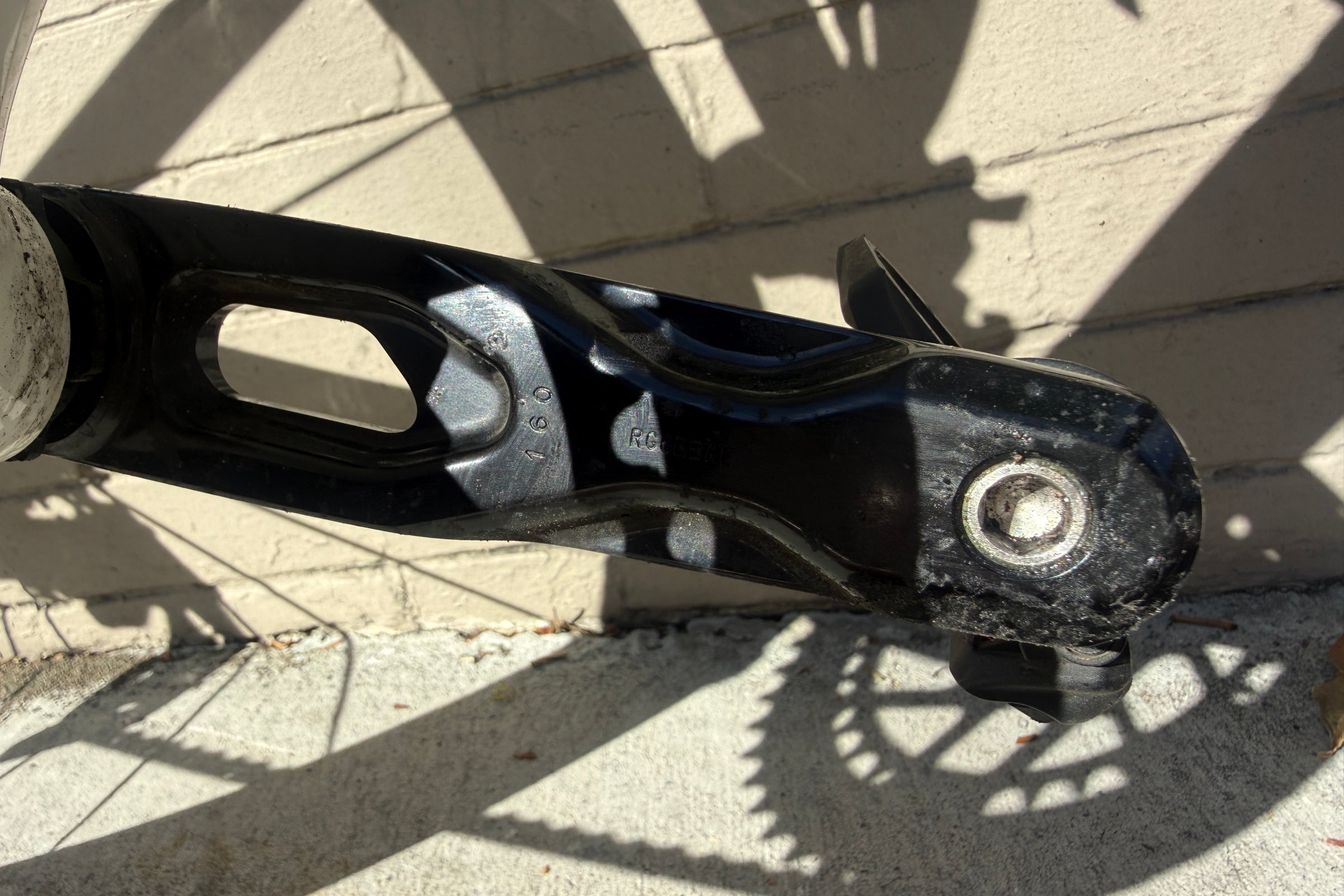
At the end of the day, you don’t need to be short to embrace shorter cranks. Correa told me about a 5-foot-10 rider he had fit that very morning. Her bike came with 172.5mm cranks, but because of her proportions and tighter hips, he thought she needed 165s.
But shorter doesn’t mean infinitely shorter. “Someone who’s 6’3” riding around on 155 cranks, that’s crazy,” Correa says. “That’s a little too much of a hamster wheel.” It comes down to the rider’s proportions, including femur and tibia length, saddle height, mobility and the rest of the rider’s position when determining how short to go. Even lifestyle can factor into it.
ADVERTISEMENT
So how short should you actually go? Correa created a rough guide based on saddle height. To find yours, simply measure in millimeters from the center of your bottom bracket to the middle of your saddle profile. For riders in the low-700mm range they’re often good candidates for 165mm cranks. Below 700mm and you’re looking at 160s. Once the saddle height gets above 730 to 740mm then you are in the 170mm range. If you’re on the higher end of 700mm then you’re looking at 172.5 cranks. Finally, 175mm are for riders at the extreme end of the spectrum, with saddle heights around 810mm or higher (looking at you, LeBron).
Consider This Your Sign
Put all these advantages together, and you’ve got yourself not only a more efficient ride, but a more comfortable one too. Everything compounds into one real-world answer: you can hold your position longer, more comfortably, with less physical cost.
Before I left Correa’s studio, I asked him one last question. Of all the fit-related changes someone could make to their bike, where would he start?
“If you’re talking fit, then yeah, I think shorter cranks would probably be ideal first,” he says. “That would be the first one.”
That’s a strong case for how less can really translate to more.
Keep Exploring