Updated August 26, 2026 10:42AM
Front Derailleurs Are Living on Borrowed Time: Why 1x on the Road Is the Inevitable Future
The front derailleur has reached its physical limits. While 1x drivetrains still have minor engineering hurdles to clear, the real-world math shows the transition is inevitable.
(Photo: Josh Ross/Velo)
1x is the future, and it’s coming to the road very soon. Now that 1×13 systems exist from both Campagnolo and SRAM, 2x is living on borrowed time.
I bet you have feelings about that. Some of you will agree, or at least be curious. Others will disagree. Everyone will have an opinion, though, and that’s exactly why I can tell you with such certainty that this change is happening. There’s an undeniable energy around this shift, but that momentum comes directly from the engineering realities.
We’ve finally reached a point where 1x delivers similar gearing as 2x, minus the drawbacks. And make no mistake—there are drawbacks to your current 2x setup, even if you’ve never stopped to consider them.
The front derailleur has solvable drawbacks
Road bikes have long been deep into marginal gains territory, but as we gain the ability to measure smaller and smaller differences, and competition gets ever tighter, details continue to matter more and more. The tiniest advantages now matter, and it’s no longer enough to simply move from a box section aluminum wheel to a deep carbon wheel. That low-hanging fruit is gone and engineers are now grabbing ladders to reach the highest branches.
ADVERTISEMENT
One of those is the front derailleur. The front derailleur has always been a compromise. At one point the issue was the amount of torque required to move it and how the drivetrain would respond to that. I remember when dropping a chain if you shifted it wrong was a distinct possibility, plus cross-chaining was always a thing to consider. Even as those engineering challenges were mostly solved over the years, aerodynamics came into play in a way that it never had before and, of course, weight will always on everyone’s mind.
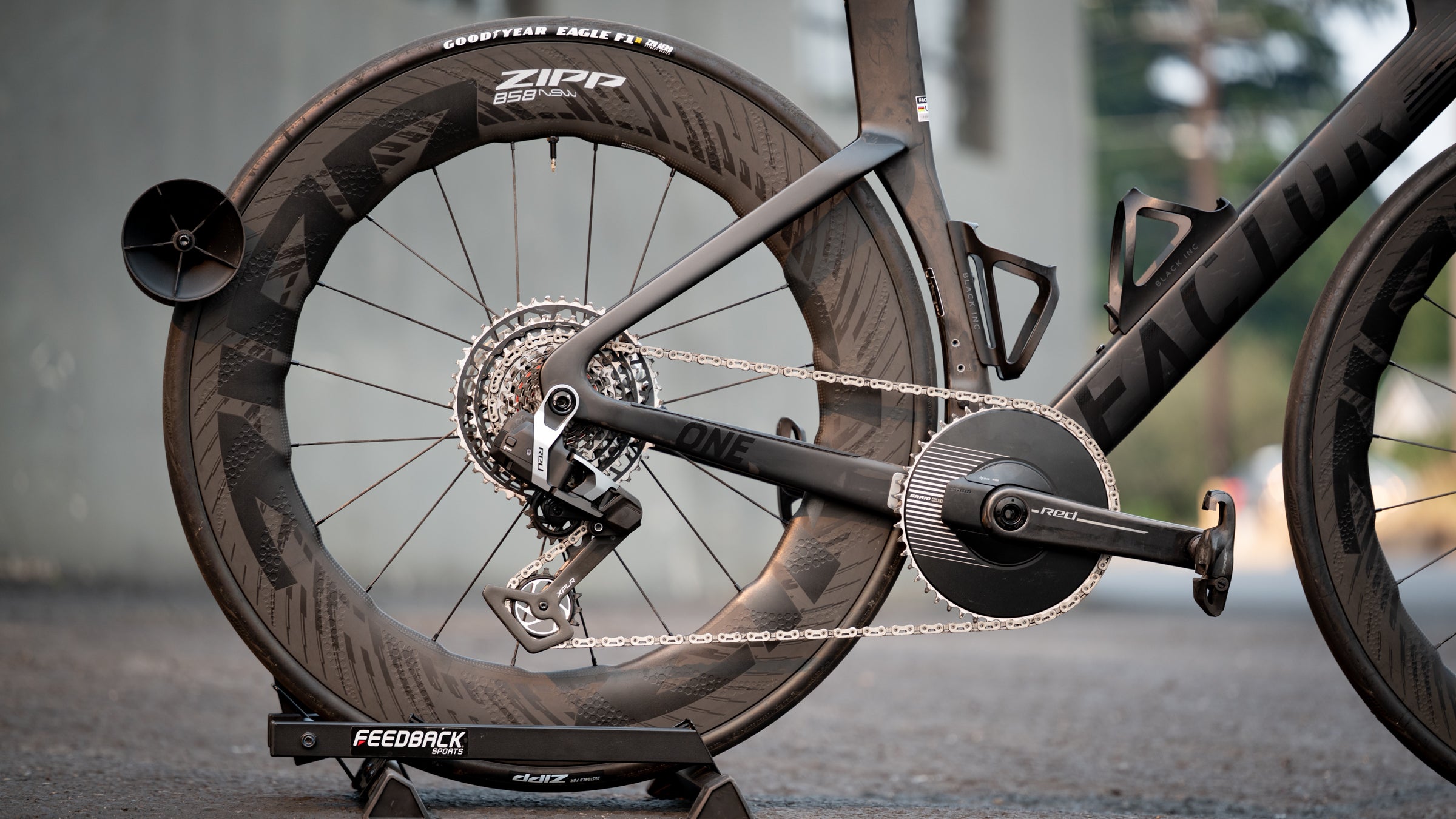
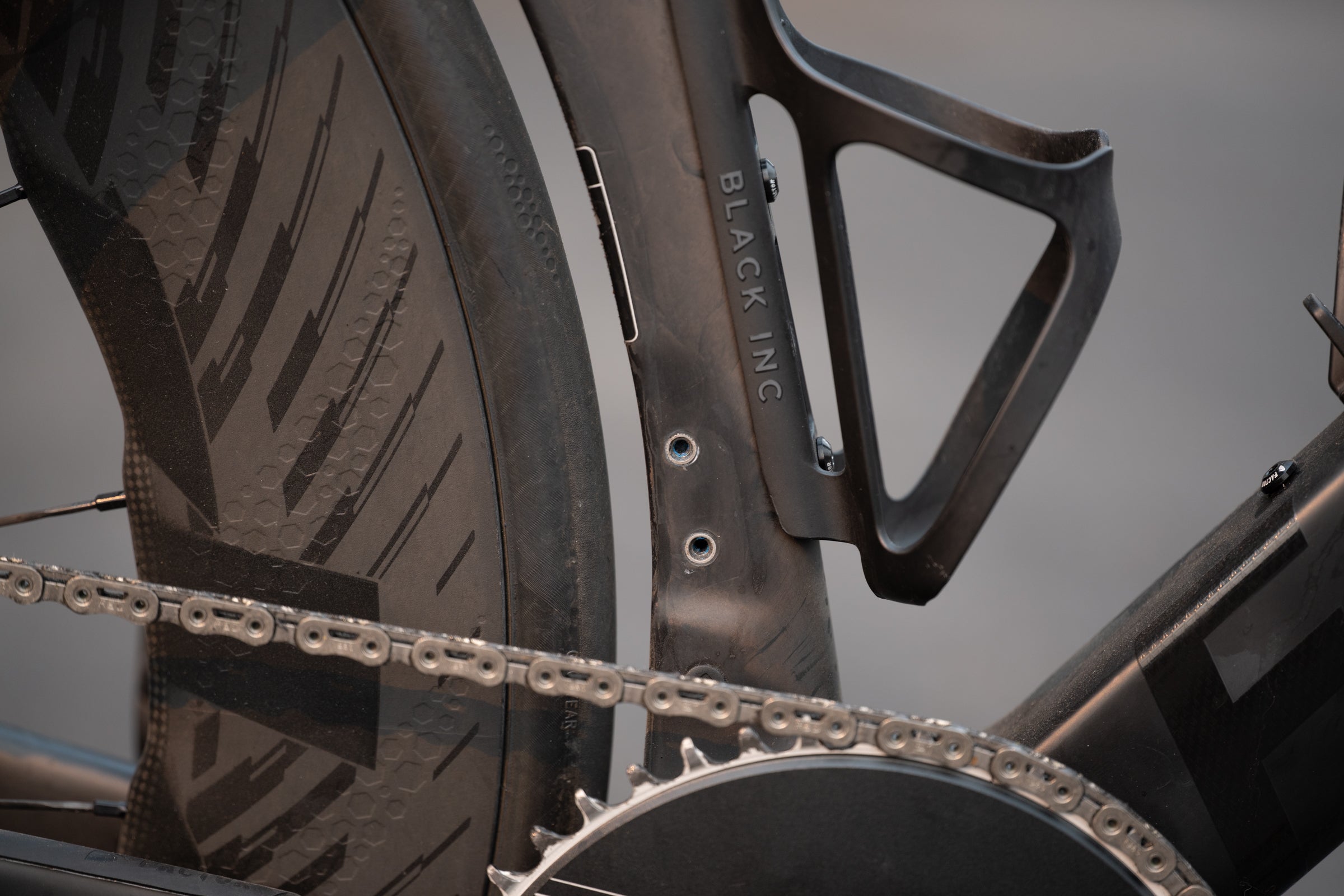
Moving to a 1x system has the potential to solve all of those issues. The most obvious of those, in terms of the cultural zeitgeist, is aerodynamics. Right now, if you want to build the absolute most aero bike possible—pushing boundaries to eliminate every fraction of drag—that means choosing 1x, and the results are measurable. Tour magazine recorded a 1.4-watt savings simply by swapping a 2x setup to 1x on a Factor One. Is 1.4 watts going to win you a local sprint? Maybe not. But if you are calculating yaw angles and optimizing cockpit routing, bolting a metal cage and an extra chainring directly into the wind makes very little sense.
Then there is the weight. When I weighed Campagnolo Super Record Wireless, Shimano Dura-Ace, SRAM Red 2x, and SRAM Red XPLR in highly usable configurations with a close to a 1:1 gear ratio, the 1x XPLR groupset came in 11 grams lighter. Again, 11 grams isn’t massive, but a win is a win.
ADVERTISEMENT
But there’s also another advantage. Cognitive load is the unspoken piece that actually created change on gravel, and it’s not always something people think about. Unlike gravel, on a road ride it’s easy to look at the cassette, or your computer, and manage what gear you are in. Modern groupsets can also, in theory, handle cross-chaining without too much complaint. That leaves it as merely a question of marginal gains. It might be easy enough to deal with a front chainring but what if you didn’t have to? Up or down, easy or hard, that’s it. There is no cross-chaining, just decide what change you want at any moment during a ride. That’s an advantage.
There are also drawbacks to 1x on the road
This is the most obvious thing in the world, but the drawback is that there are not enough gears. The reason this discussion has come to the forefront more at this point is that 1×12 is, in my opinion, dead in the water for the road. While 1×12 is enough for gravel applications, again in my experience and opinion, it’s not enough on the road. Fortunately, two of the major drivetrain brands have moved to 1×13, and that means there is now enough range and gears, but only barely.
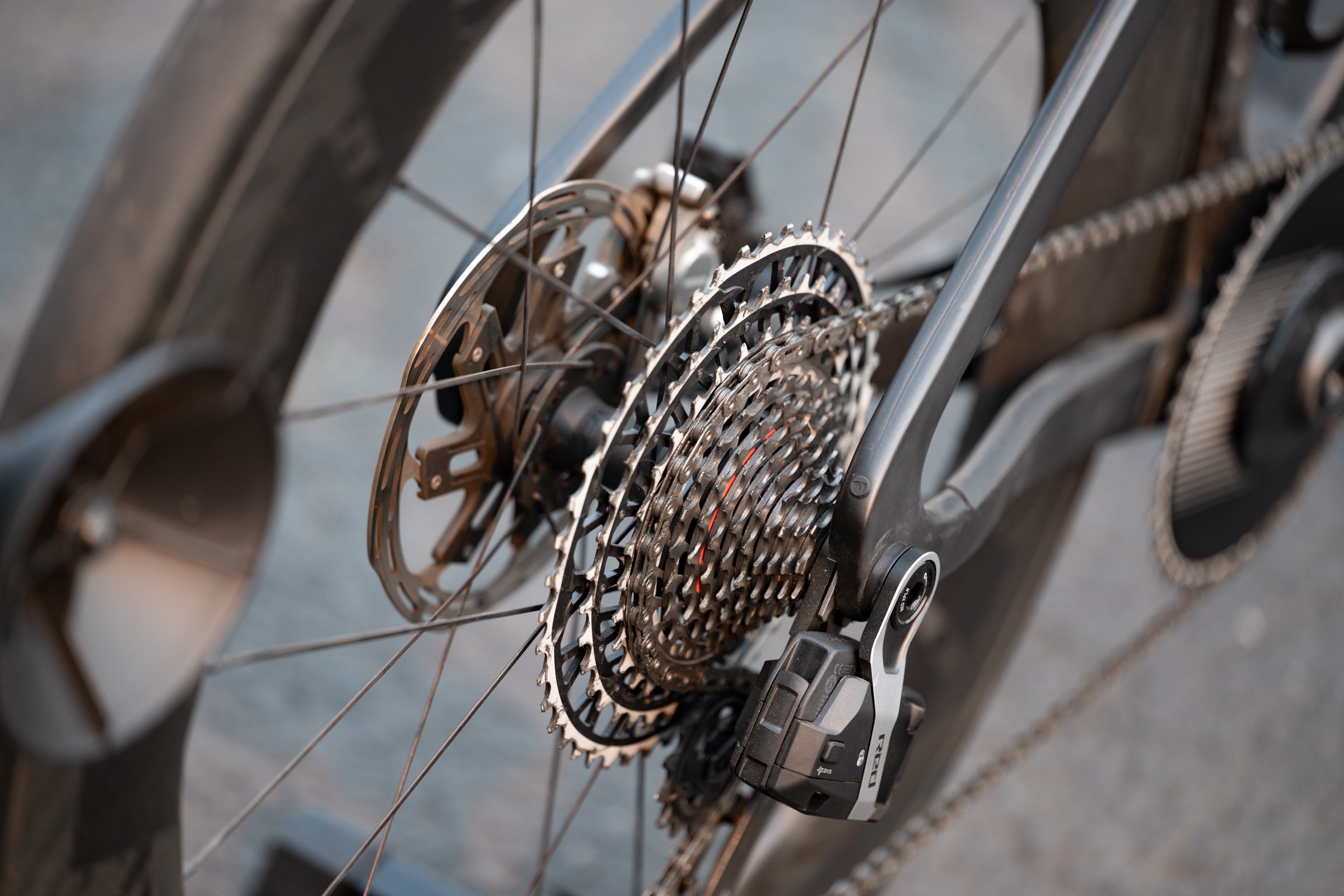
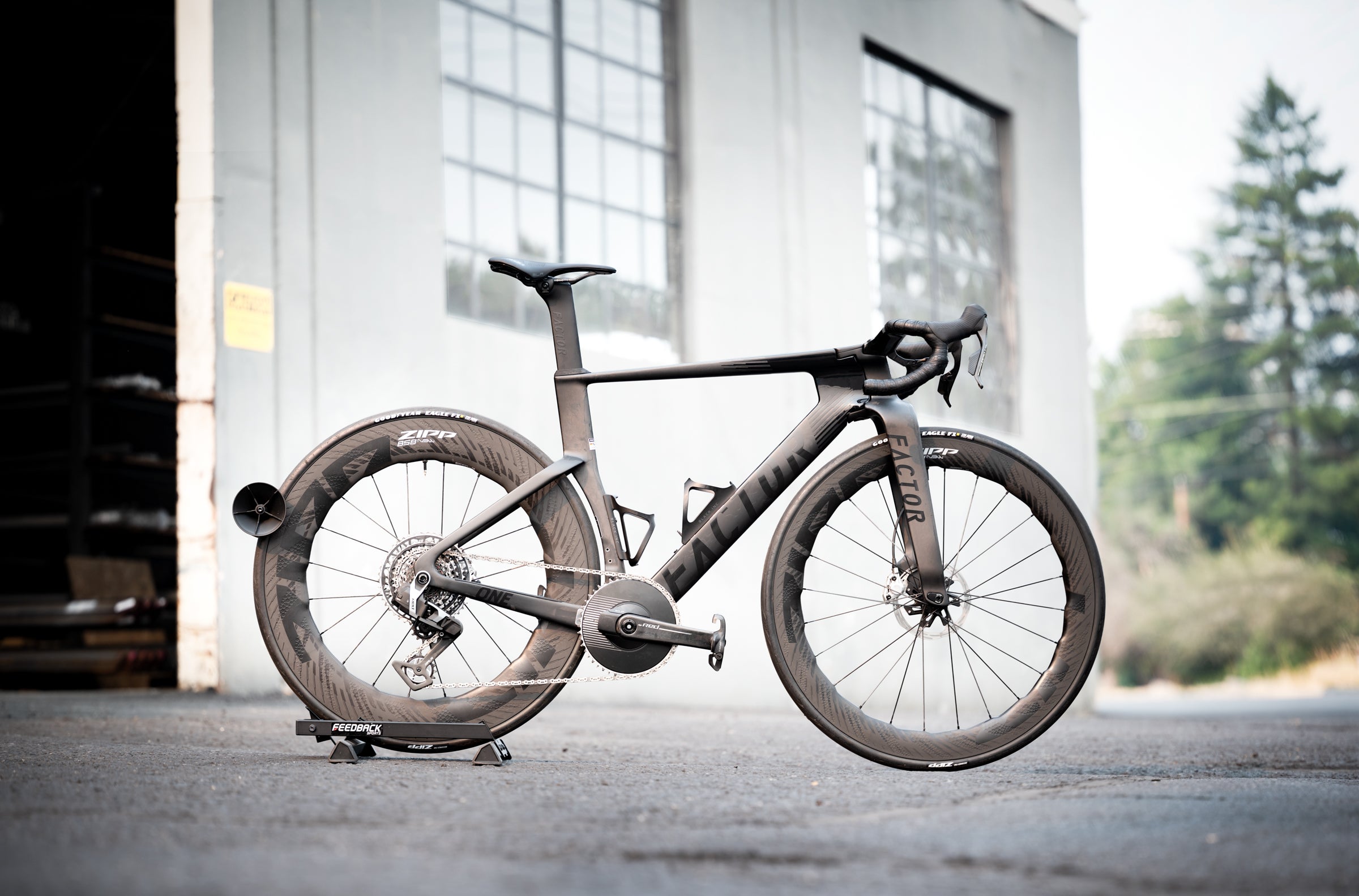
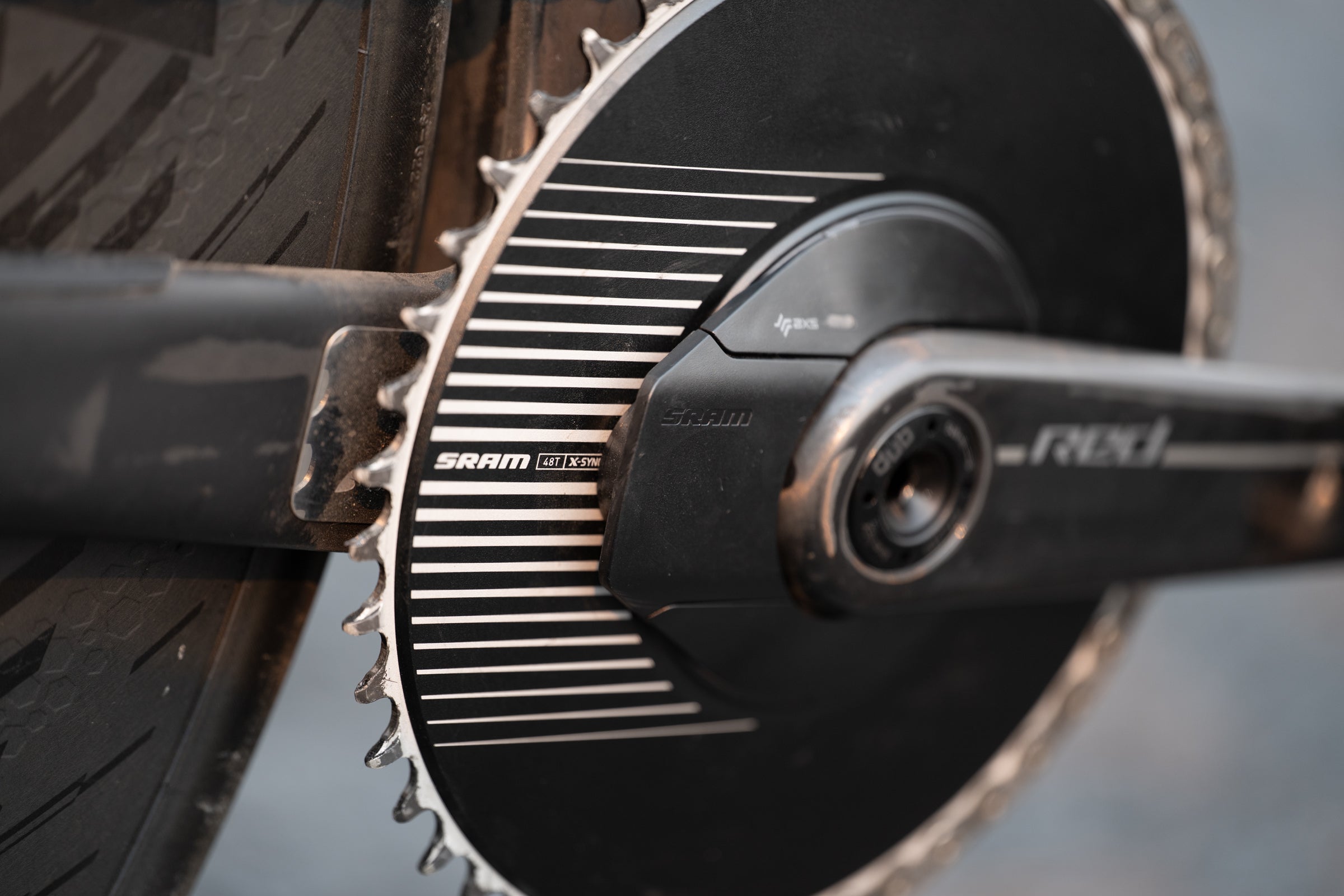
Both SRAM and Campagnolo have the ability to offer plenty of range for my needs. I’m running 1×13 SRAM XPLR on a Factor One with the required 10-46t cassette and a 48-tooth chainring. If I were running 2x, and I also chose SRAM for the sake of comparison, I’d be running 46/33t with a 10-33t cassette. At the low end, that would offer a slightly easier 33/33t (a true 1:1 ratio) vs the 48/46t on my 1×13. Most people don’t run 1:1 gearing on road bikes, and while I wouldn’t mind a slightly easier gear at mile 180 when climbing double-digit gradients, it was fine. Now on the other side, I’ve got a 46/10t on the 2x setup and a 48/10t on the 1x setup. I actually have a bit of extra speed should I ever want it. If you do the math on those setups, both give you exactly a 460% gear range.
ADVERTISEMENT
The problem is that you don’t get quite the whole story there. In your head, you think that 2x has 24 gears (or 26 for Campagnolo 2×13) and 1x has 13, so obviously 24 or 26 is better. The issue is that a lot of those gears overlap; the same exact gear ratios are achieved in both the small and big chainring at different points in the cassette range. That said, there is one spot in the cassette where a compromise has to happen for 1×13. For SRAM that is a missing 14t cog, and for Campagnolo, it’s a missing 15t. You can do a bunch of math and decide which one is your preference, but you will need to consider chainring sizes in relation to that missing cassette cog. For me, that meant sizing down my front chainring from a 50t to a 48t to get that hole to move to a spot where it doesn’t bother me. I did consider it, though.
The other problem—and this is much less of an issue, but it does exist—is that groupset manufacturers aren’t yet building true 1x road options. SRAM is actually the biggest offender here, as SRAM XPLR gets you a quasi-mountain bike derailleur that is strong enough you can stand on it. It’s fine, but what if it were smaller so it was lighter and more aero? Campagnolo does address this with an “all-road” option, but it’s still not as light and aero as it could be.
1x is the future because 2x is a dead end
Now it’s time to swing this back. There are positives and there are negatives to both systems, but why does it really matter for what the future will bring?
ADVERTISEMENT
The reality is that making 1x even more perfect for the road—and it’s already quite good—is a matter of future engineering. On the other hand, 2x has reached a structural dead end. The system will surely see incremental refinements; SRAM and Shimano will probably follow the Campagnolo path to 2×13, and the components will get marginally lighter and shift faster. But adding another overlapping gear doesn’t fix the fundamental limits of a front derailleur. That kind of tinkering doesn’t actually help much when riding a bike.
As I said before, it seems like 26 gears is better than 13 gears, but you don’t actually get 26 gears. Right off the top, you have about five overlapping gears in the middle of the cassette that have the same effective ratios. Then you also have to cut out the extreme cross-chained gears. What you are left with is still more gears than 1×13, and even more than a theoretical future 1×14.
The problem is that accessing those extra gears isn’t practical. The first issue is that no one jumps around between the front chainrings to optimize cadence. When you ride a bike, you generally stick to the large chainring and you shift across the cassette. At a certain point, you change from the big front to the small front and you continue the progression. That leaves you with only 16 gears. Again, still more than 13, but those extra gears are in your climbing range. How necessary is it to optimize cadence in your climbing gears? Do you really need extra gears there, or would you be fine with fewer gears optimized for where you typically need them? You do lose the ability to instantly dump a block of gears via the front ring, but this is rarely ideal anyway, and modern rear derailleur sweep speeds effectively neutralize the advantage.
ADVERTISEMENT
The math demonstrates the situation clearly: 1x drawbacks are engineering problems, not structural problems. Shifting will only get faster across the cassette, there will certainly be a 1×14 at some point, and the rear derailleur will get lighter and more aero. Current 1×13 systems are excellent already, and there is room to get better. Current 2x systems are nearly at the pinnacle of what is possible, with the real problems that remain being unsolvable issues related to having more mechanical pieces.