Published October 30, 2026 11:03AM
If you buy through our links, we may earn an affiliate commission. This supports our mission to get more people active and outside.Learn about Outside Online's affiliate link policy
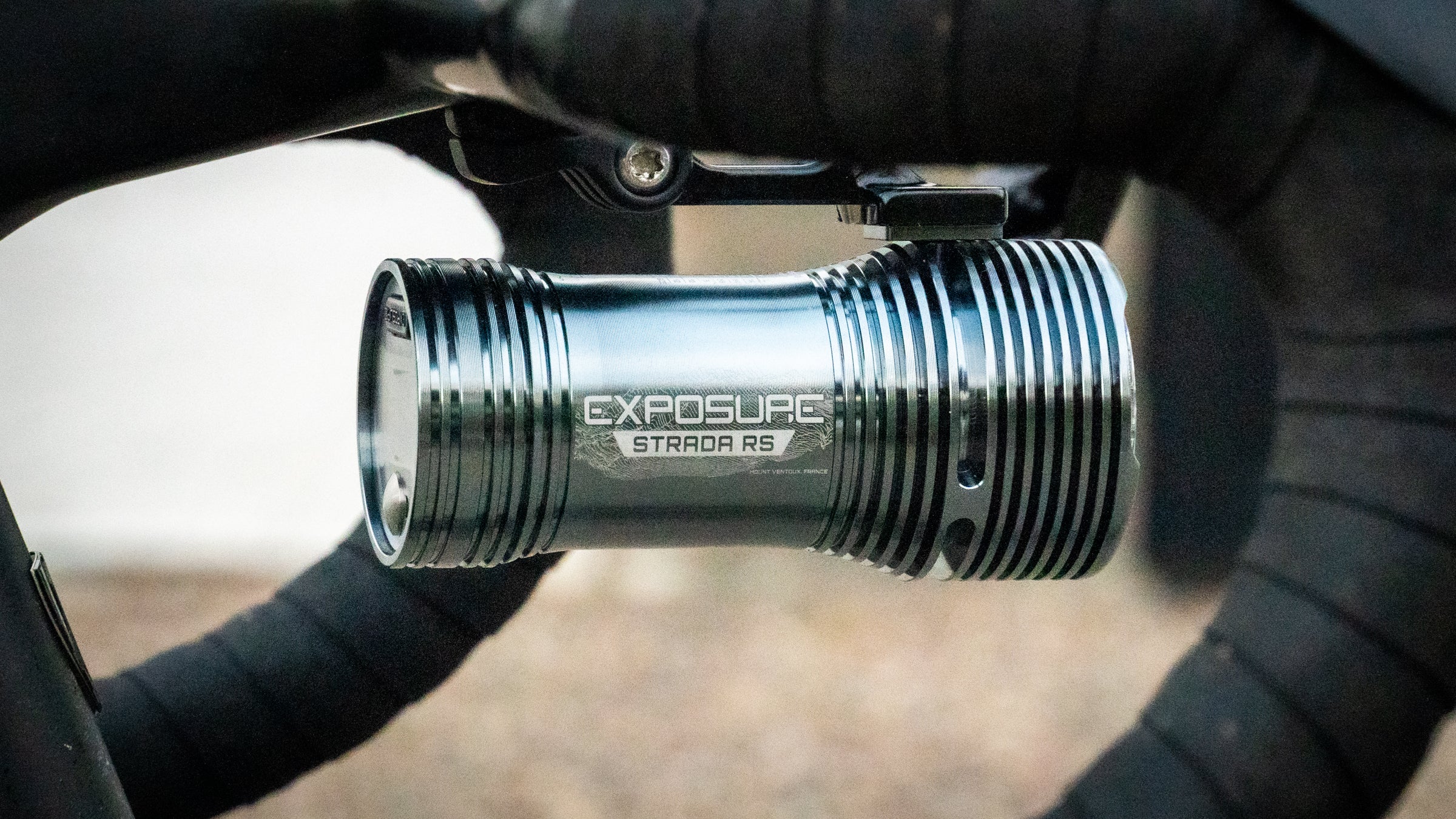
Review: The Exposure Strada 13 RS Light Begs You to Ride a Little Longer
The new top-dog from the UK-brand brings a level of ease to night riding that is vital to cycling through the darkest months of the year.
(Photo: Logan Jones-Wilkins/Velo)
Pros
- Class-leading battery life
- Sleek aesthetics with a robust construction
- Easy-to-use and compact attachments
- A highly adjustable and powerful beam
- Doubles as a battery pack
Cons
- Heavy and bulky for a road light
- The single-button system can be tough to navigate at first
- The attachment might not work with modern drop bars
Strada 13 RS – Specifications
| Specification | Details |
| Weight | 217g |
| Maximum Lumens | 1,700 |
| Runtime | 2–36 hours (depending on setting) |
| Waterproofing | IP67 |
| Cable Compatibility | USB-C |
| MSRP | $475 / £355 |
Headlights for road riding need to do different things for different people. For some, it’s just about the bare minimum: something for cars to see and to illuminate the road so drivers can spot upcoming potholes. For others, it is a key tool in their stable: big lights that power early or late rides that salvage exercise in the hectic pace of a busy life.
For most of my life, I have been the former. My headlights have been just enough to be seen in the dawn and dusk. As I have gotten older, however, that has changed. Lights have become more important as my time to ride has shifted to the early morning hours that are the bread and butter of Phoenix, Arizona, riding.
Lights are now essential kit that I have to think about differently. It is technology I need more from.
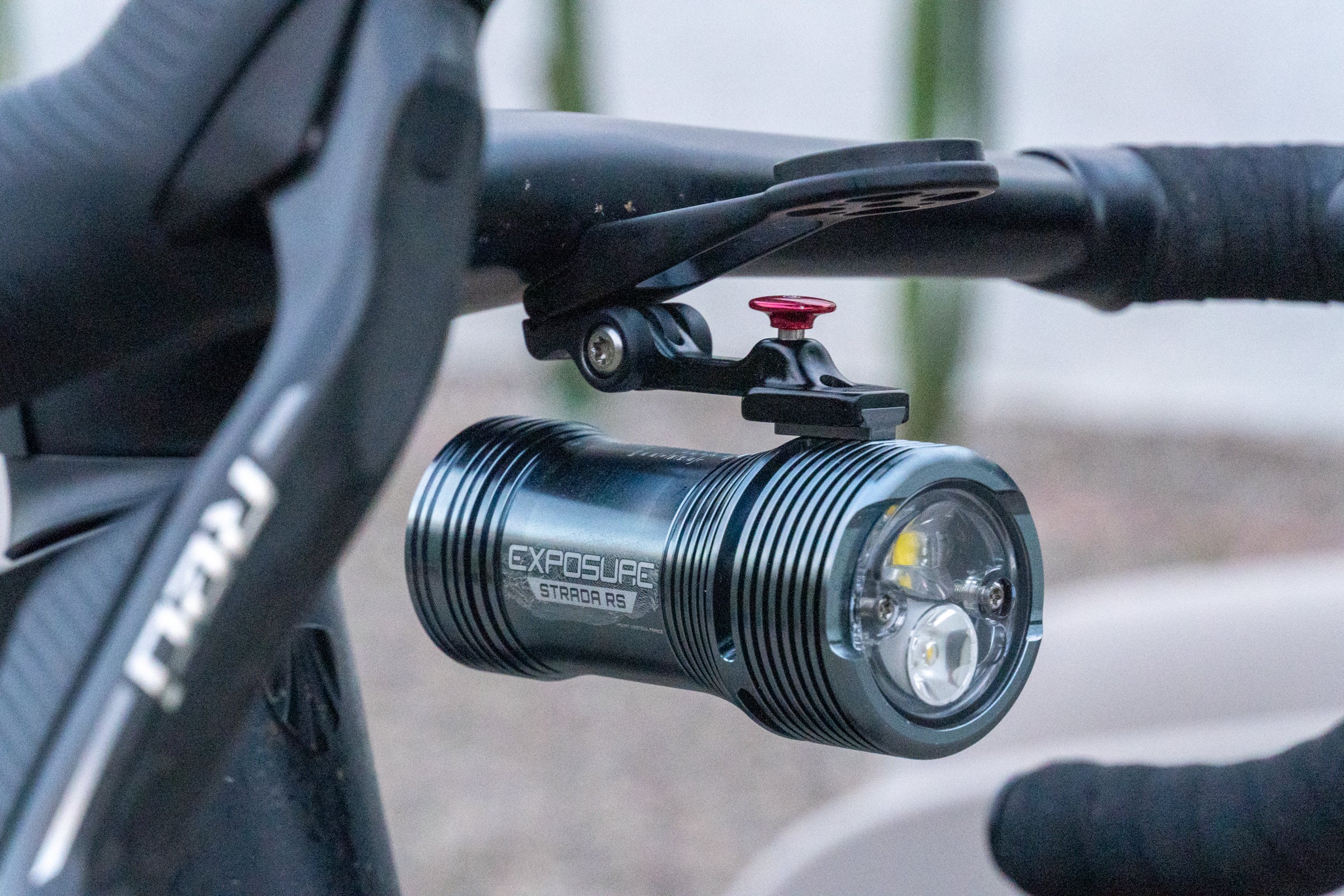
Exposure Lights has built a brand upon that attitude. The small UK-based shop has grown to prominence with lights that match reliable performance, long battery life, and sleek aesthetics.
ADVERTISEMENT
Nowhere has this been more obvious than with the brand’s new Strada 13 RS light. As I have ventured deeper into the night as the seasons have changed, the Strada has been a fantastic companion in getting much more out of night riding.
What I like about the Strada 13 RS
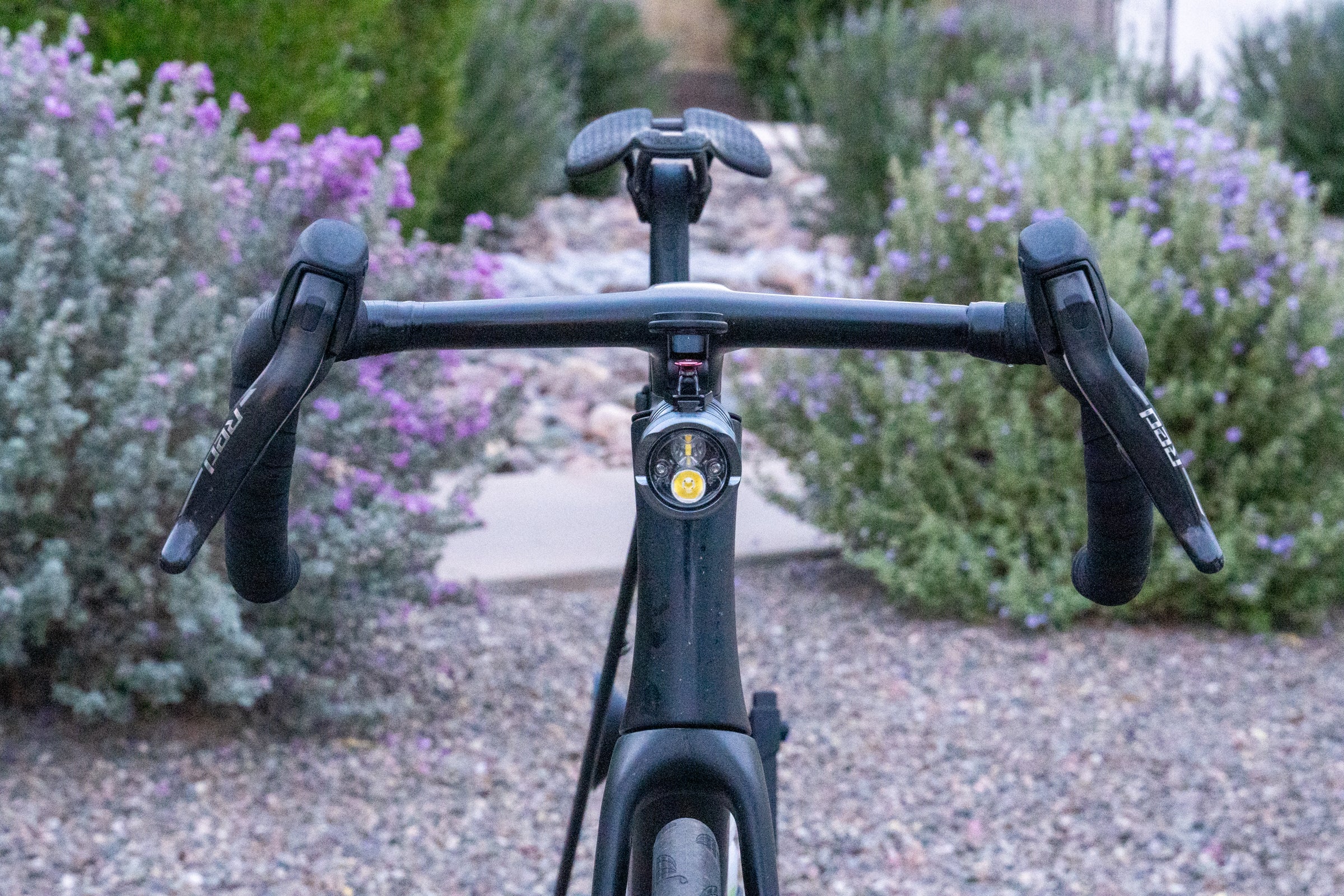
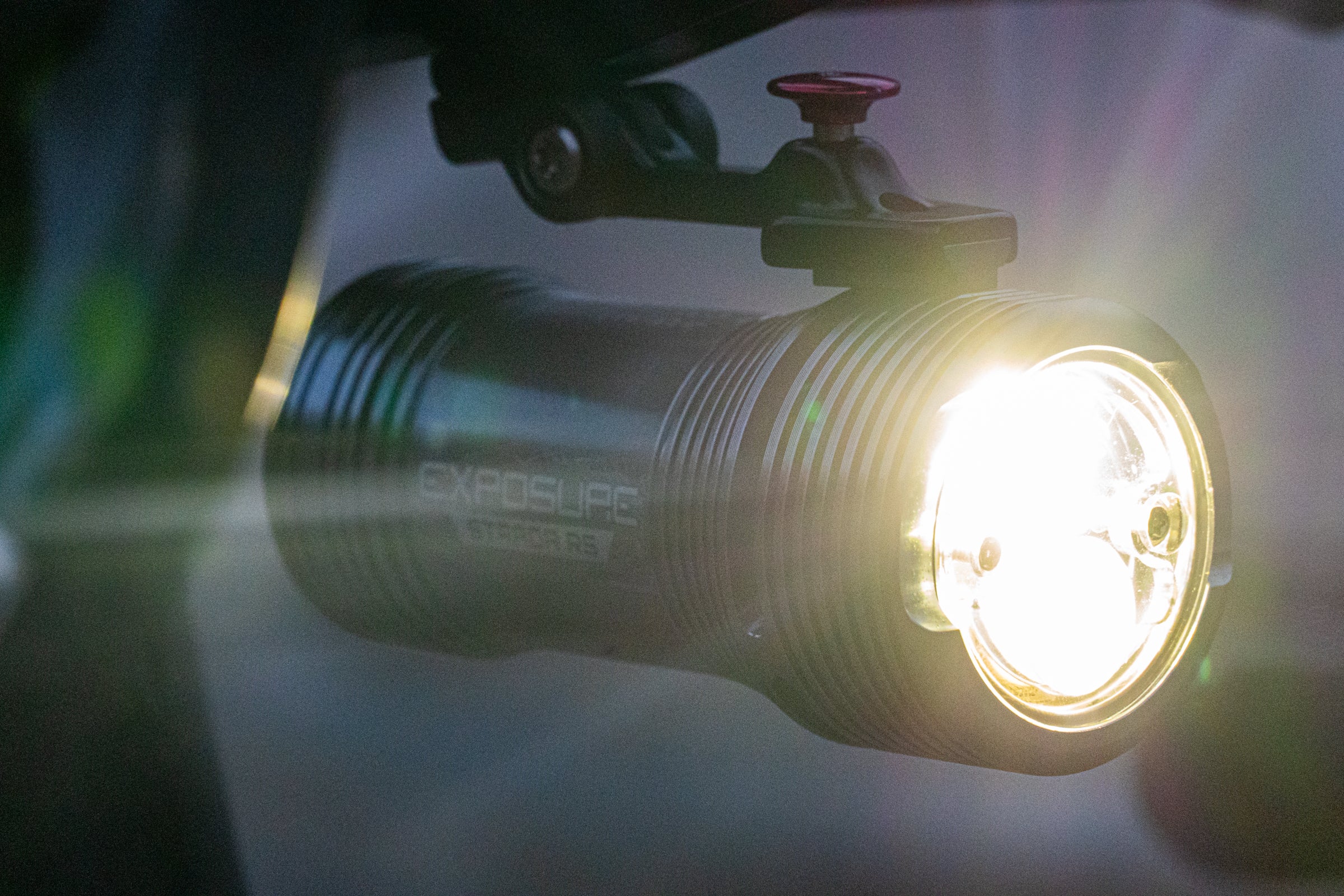
Despite a size that is typically reserved for off-road-focused lights, the Strada 13 is a purpose-built tool for road riding. Chief among those features is the lights’ auto-dimming AKTiv technology.
AKTiv is automatically configured on the Strada 13 and is set to dim its beam when it senses an oncoming car. The AKTiv technology has been a fixture on previous models, but the new Strada has two sensors that allow for increased precision. On rides, this makes for rapid adjustments that keep my hands on the bars and the driver from being blasted by a few hundred lumens of light.
ADVERTISEMENT
Speaking of lumens, while it might seem that the bigger light is there for more lumens, that isn’t exactly the case. Exposure does pack more lumens in smaller packages, like the Diablo off-road light. The size of the light is more for the battery life and the added road-based functionality.
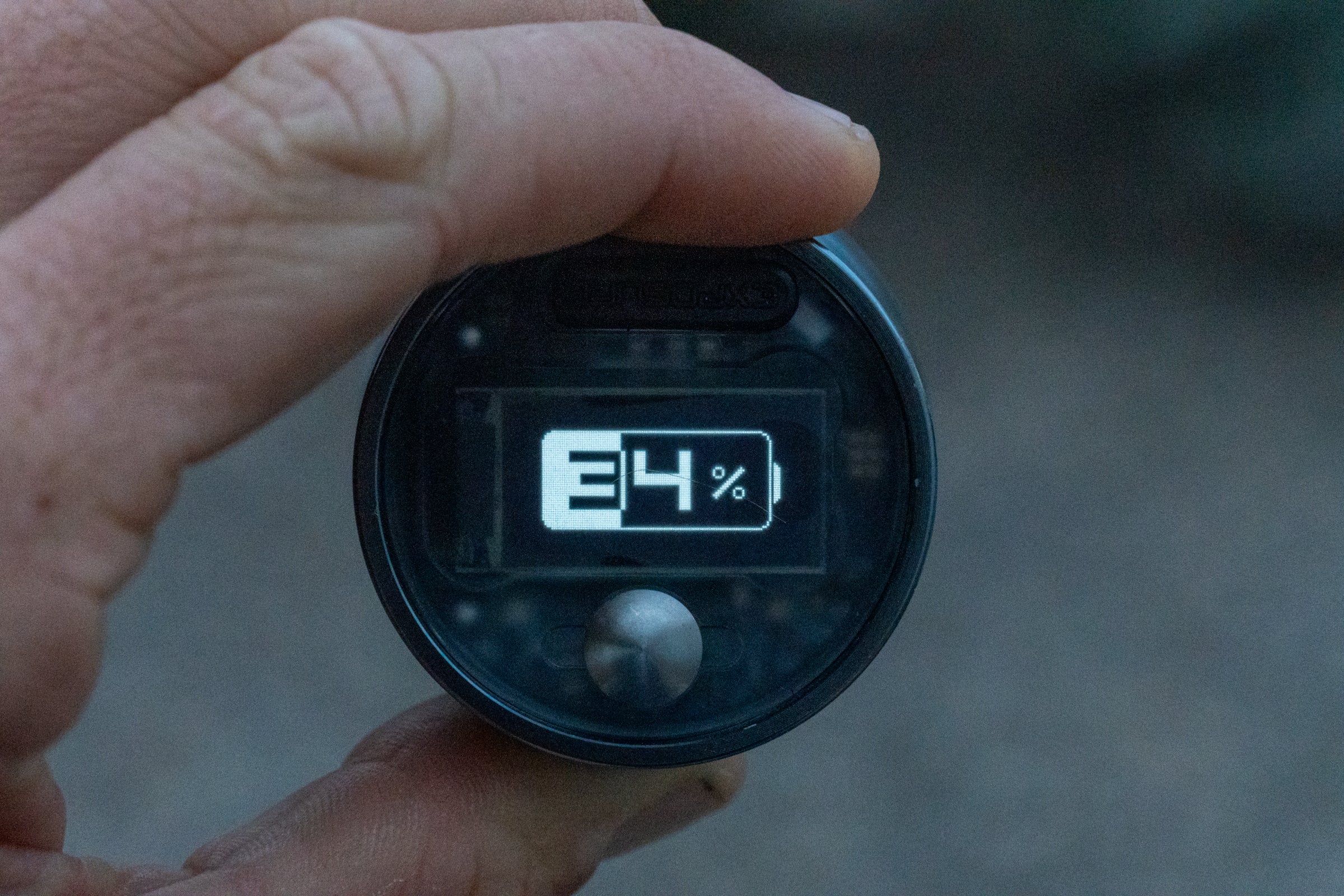
That battery has been a huge plus in my riding. While I haven’t yet ridden through the night with it yet—which would certainly be possible for the Strada 13 on one charge—the longevity of the battery has been a huge benefit.
Compared to smaller lights, I have been thrilled by the combination of a powerful beam and the set-it-and-forget-it battery life. Through a full week of riding, with more than a few hours before dark, the light can stay on with no issues.
ADVERTISEMENT
What I don’t like about the Strada 13 RS
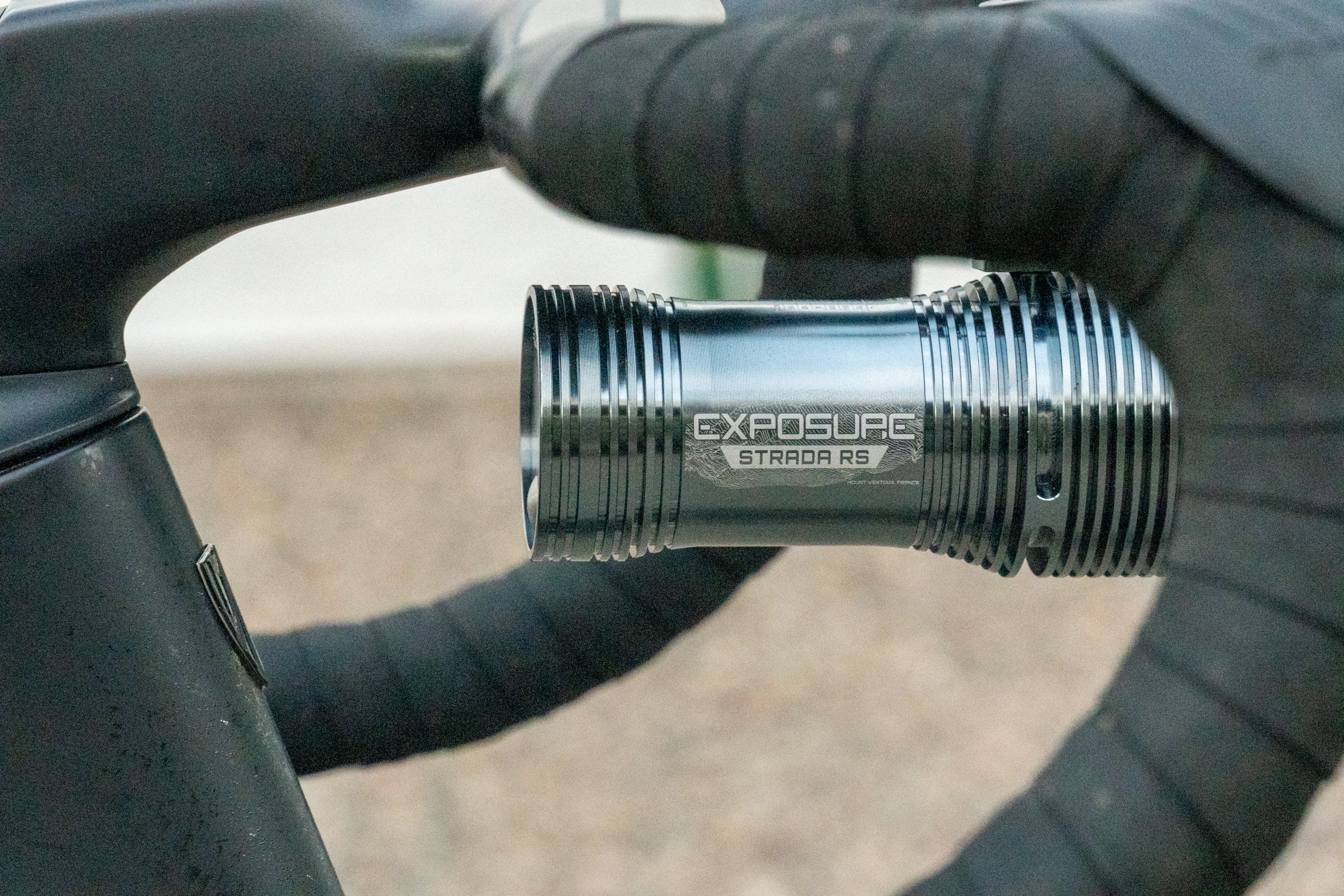
To put it plainly, 217g is a lot of weight for a light. Part of me loves a small, easy-to-add headlight for road riding. The Exposure’s Sirius 11 road light is a mere 90g, and it can still kick up to 1,300 lumens. Yet, it doesn’t have the same adjustability, beam range, and most significantly, battery life.
Previously, if I had the choice of a light the size of the Sirius and the Strada for the fast group ride, I would have picked the Sirius every time. Now, the choice is not so clear-cut, although if I were measuring my night riding time in minutes and not hours, I would still perhaps pick the Sirius for its weight and sleek size.
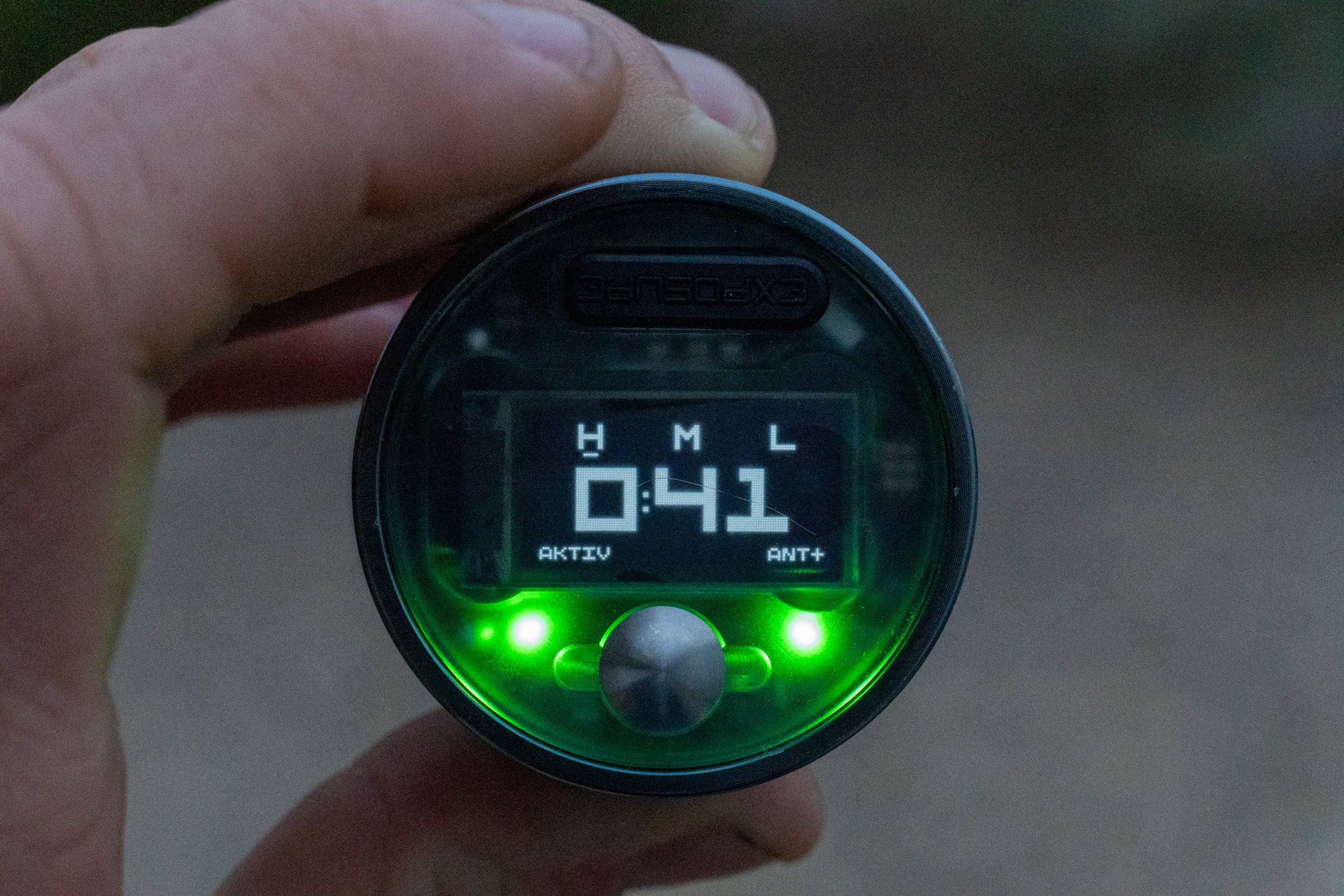
The other real wonky aspect of the light is the single-button interface. It takes a bit of trial and error to figure out how the sequencing of button presses yields the desired results. Even so, I find that I don’t always get the light to do what I want straightaway. There is a way to bring some of the light controls and displays to any head unit to make that functionality simpler. But, straight out of the box, it is less than intuitive.
ADVERTISEMENT
Livability
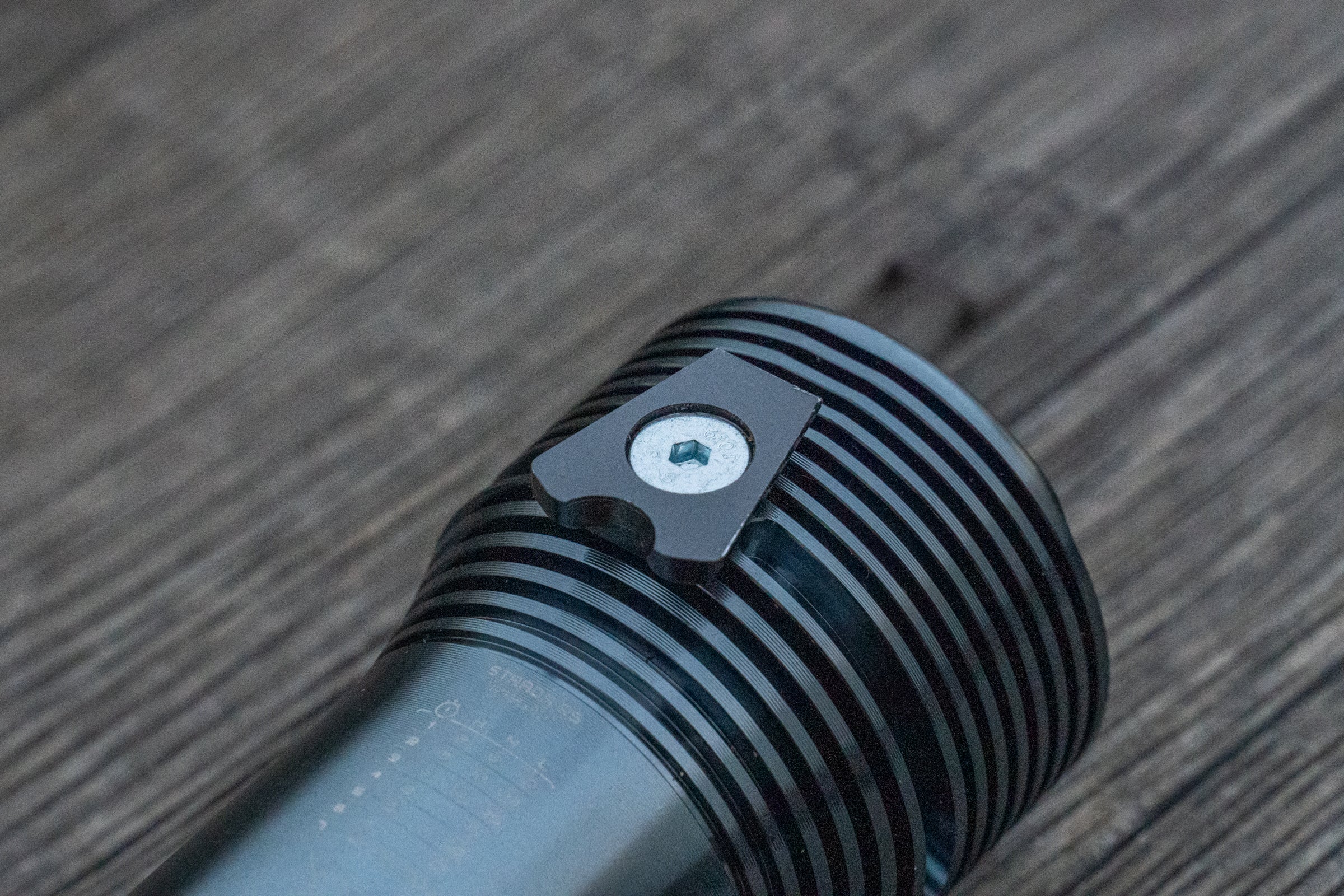
The Strada is perhaps most useful as a piece of kit that is low maintenance, easy to use, and easy to swap between bikes if you have multiple mounts.
The light has two attachments, one for a 31.9-diameter round bar and the other for an action mount that can be attached to an integrated computer mount, and both are stripped down but sturdy. Both mounts put the light further forward, away from the bike to provide a better position to illuminate the periphery of the road. That said, with the added weight, be sure to check the weight tolerances of the mounts before using the light since it could push the weight limit in some cases.
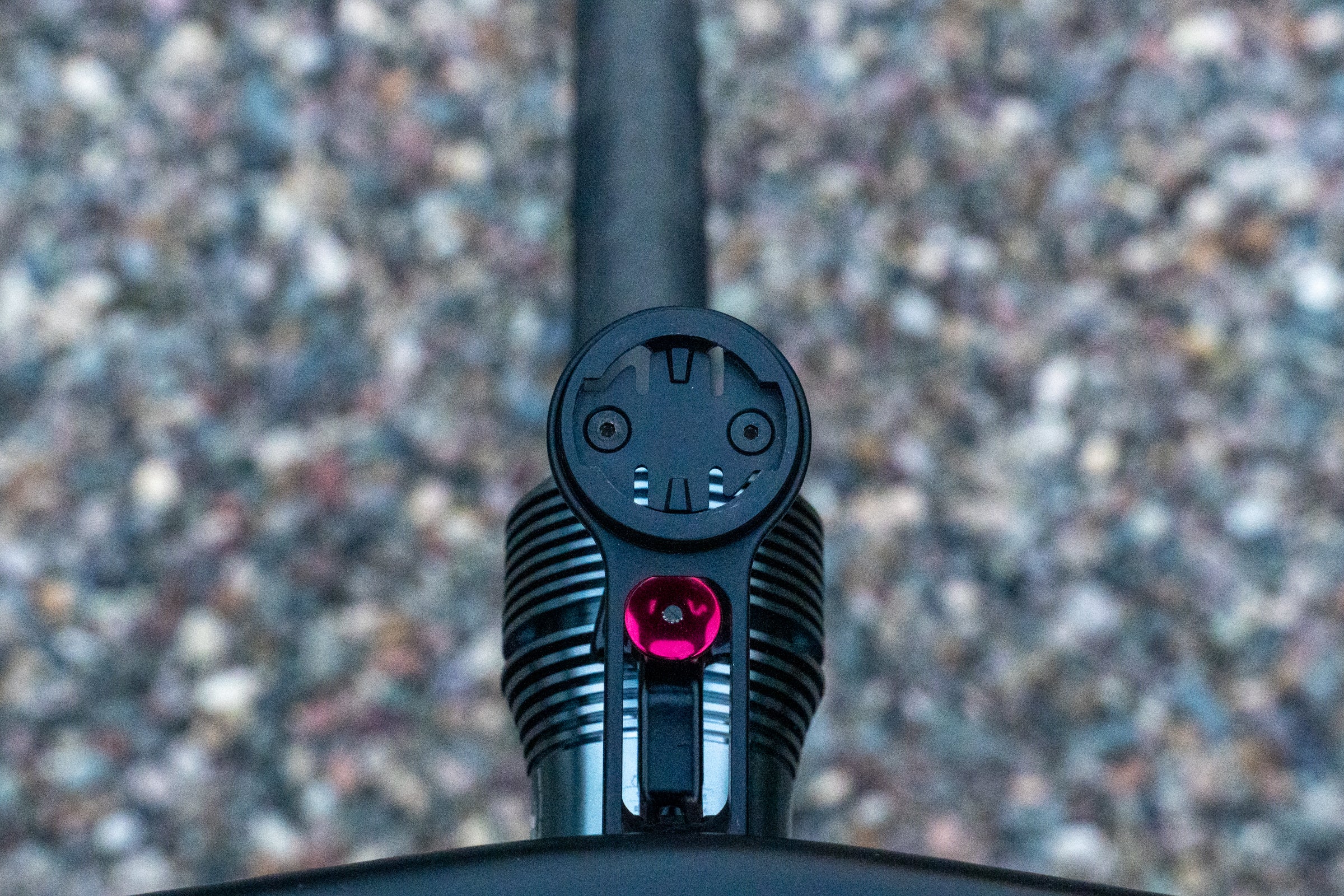
All of my riding with the light thus far has been with the action mount attached to the bar mount for the Trek Domane I have been testing with. It has been incredibly easy to use, easy to set up, and the big light almost disappears underneath the computer mount and bar. Out of sight, out of mind rings very true for a big headlight.
ADVERTISEMENT
Lastly, with a USB-C cable port, the light is always easy to find a charger for. It can also be easily flipped and used to top up other electronics in a pinch. While the battery might last a while, charging it takes much less time. With the optimal cable, the Strada will fully charge in two hours.
Who is the Strada 13 RS for?
The Exposure Strada 13 RS is for two types of riders: those who ride at night multiple times a week, and those who will measure their time riding in the dark in hours rather than minutes. If you fit those categories, this is one of the best tech adds you can make to boost the quality of your rides. It is good enough to be that transformative.
To learn more, check out Exposure Light’s website, and to see more bike lights, visit our best bike lights buyer’s guide.