Updated July 20, 2026 12:48PM
Wheel Brands Are Quietly Shrinking Their Rims for the Tour. That's Bad for Regular Cyclists. | Dropped Newsletter
A high-profile crash, a strict UCI rule, and Tour de France aero demands just killed the 25mm road rim. Here’s why that’s bad news for regular cyclists.
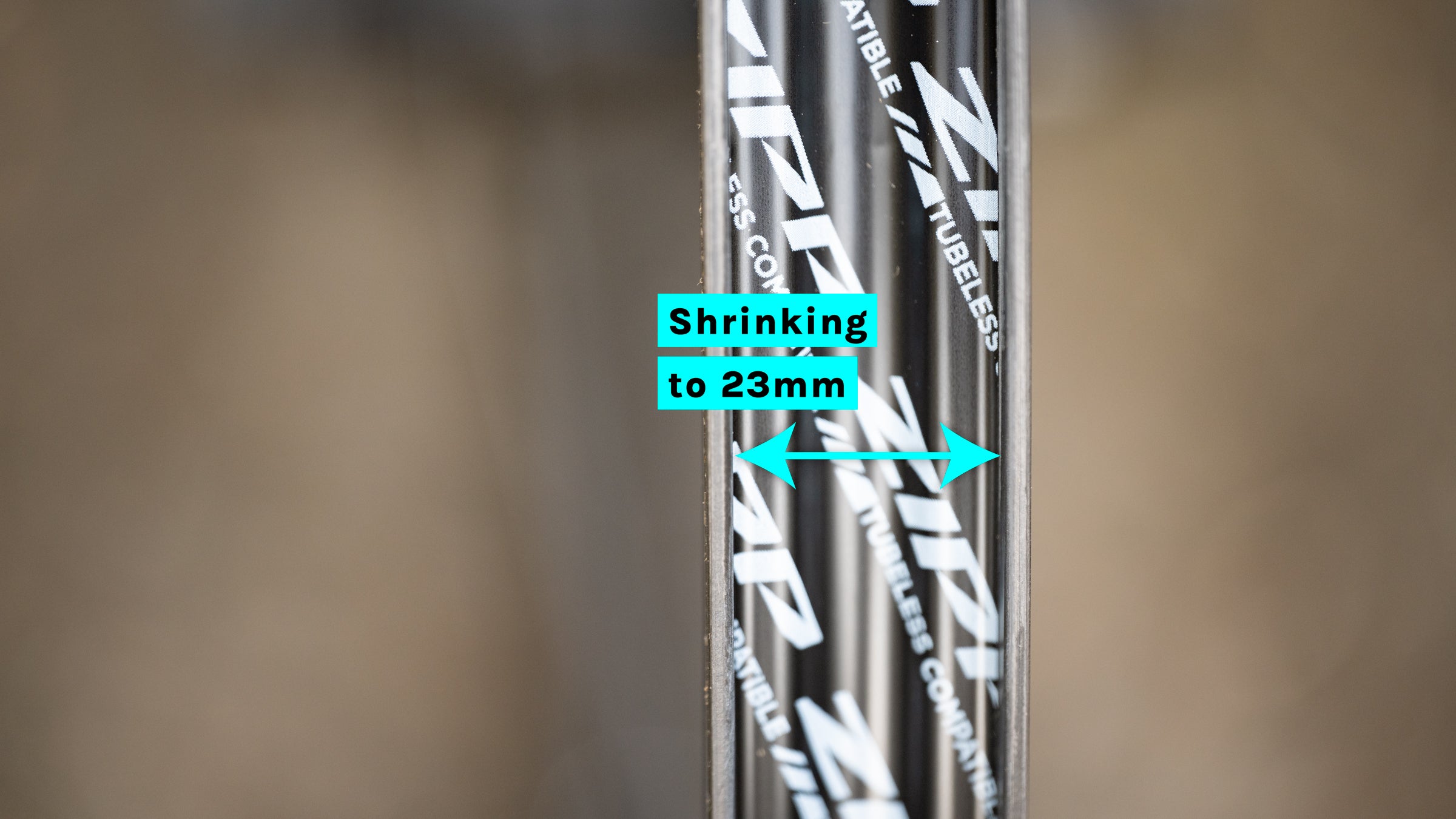
(Photo: Josh Ross/Velo)
Welcome to Dropped, a new weekly road and gravel cycling newsletter from Velo that brings you the latest ideas we’re debating endlessly on group rides, and a look behind the scenes of our coverage.
During the Tour de France, you will hear endless talk about aero gains and lightweight tech. But there is a massive shift happening right under the riders that the industry isn’t eager to broadcast: major wheel manufacturers are suddenly retreating to a 23mm internal rim width. Before I really get into this though, I have to back up a little and give some behind-the-scenes context about something I’ve been working on for years.
The Crash That Changed the Rules
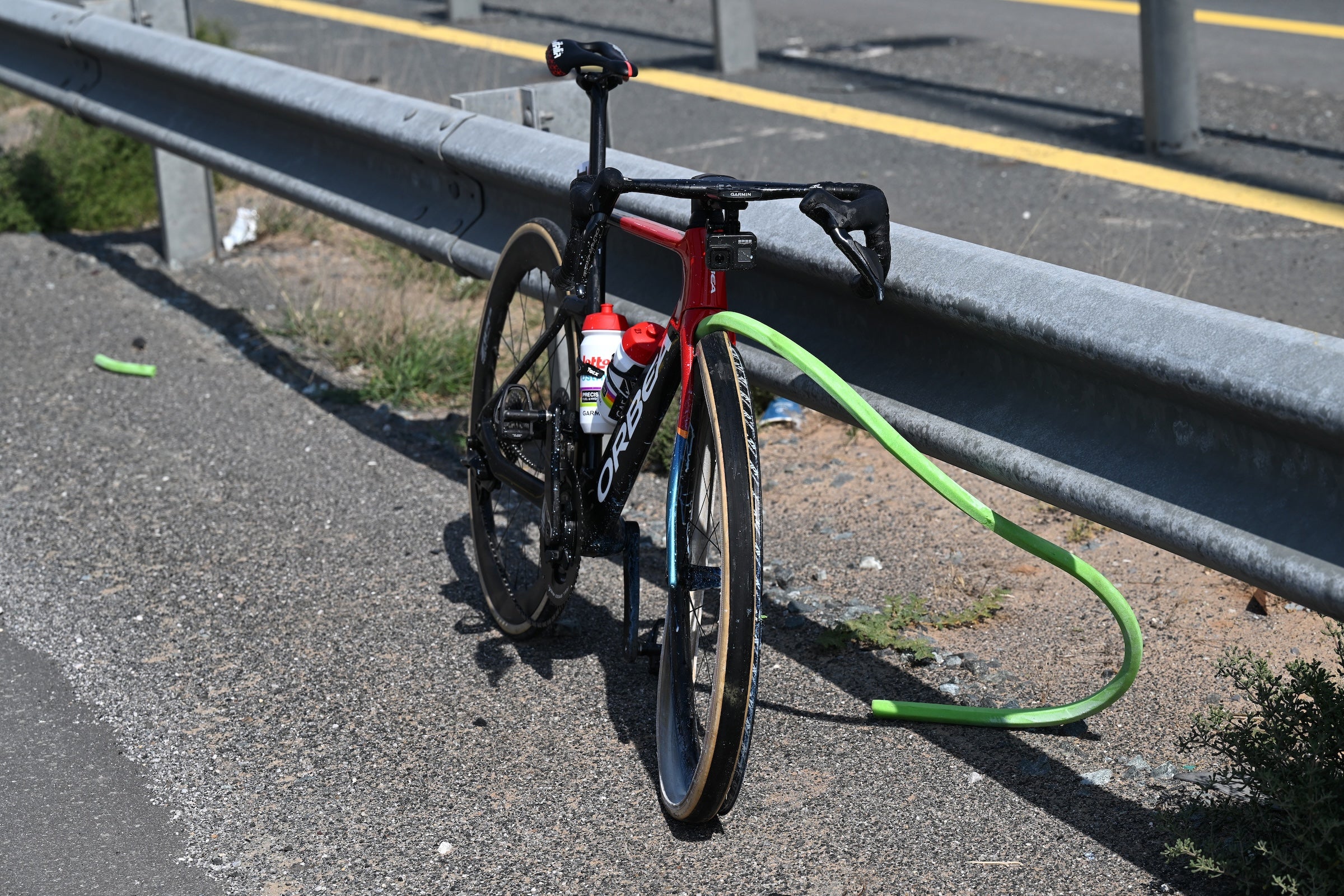
Back in 2024, Thomas De Gendt crashed at the UAE Tour while riding a Zipp 353 NSW. There were dramatic images of the tire completely off the wheel and sealant everywhere. Because that wheel was hookless, it became a flash point. Articles were written immediately claiming that it happened because of the hookless design. At the time, De Gendt, Vittoria, and Zipp all said that De Gendt hit a rock, but it took days for photographic proof to come out. The tire came off because the wheel was destroyed, but the correction didn’t matter.
ADVERTISEMENT
Those images and those conclusions stuck. Hookless may or may not be safe—this isn’t really about that distinction. What this is about is the fallout from that crash. The most immediate was that in March of 2024, the UCI issued a statement saying, “The UCI reminds teams and riders of the requirement set out in article 1.3.018 of the UCI Regulations, which imposes compliance with International Organisation for Standardisation (ISO) standards 5775-2:2021 and 5775-1:2023 in cycling competitions.”
Simply stated, the ETRTO and ISO standards had come together and recommended that 29mm was the minimum size for a tire on a 25mm internal width rim. This is actually not distinguished by whether the wheel is hookless or hooked. That’s the rule, and the UCI reminded teams and manufacturers that in competition they must abide by it.
Teams mostly switched to 30mm tires for 25mm internal width wheels, and things moved on. Arguments online about hookless never stopped, but it didn’t really matter at that point.
Things are changing again
I didn’t forget about this blip of history. I watched closely, and I wrote a number of stories about hookless safety and rim width. Even I kind of moved on at a certain point, though. It seemed like everyone was moving to 30mm tires and the issue was disappearing. Then I noticed something more recently: the era of the 25mm internal width rim is coming to an end.
ADVERTISEMENT
You have been told for years that wider is always faster. So why the sudden reversal? It is being driven entirely by the realities of racing the Tour.
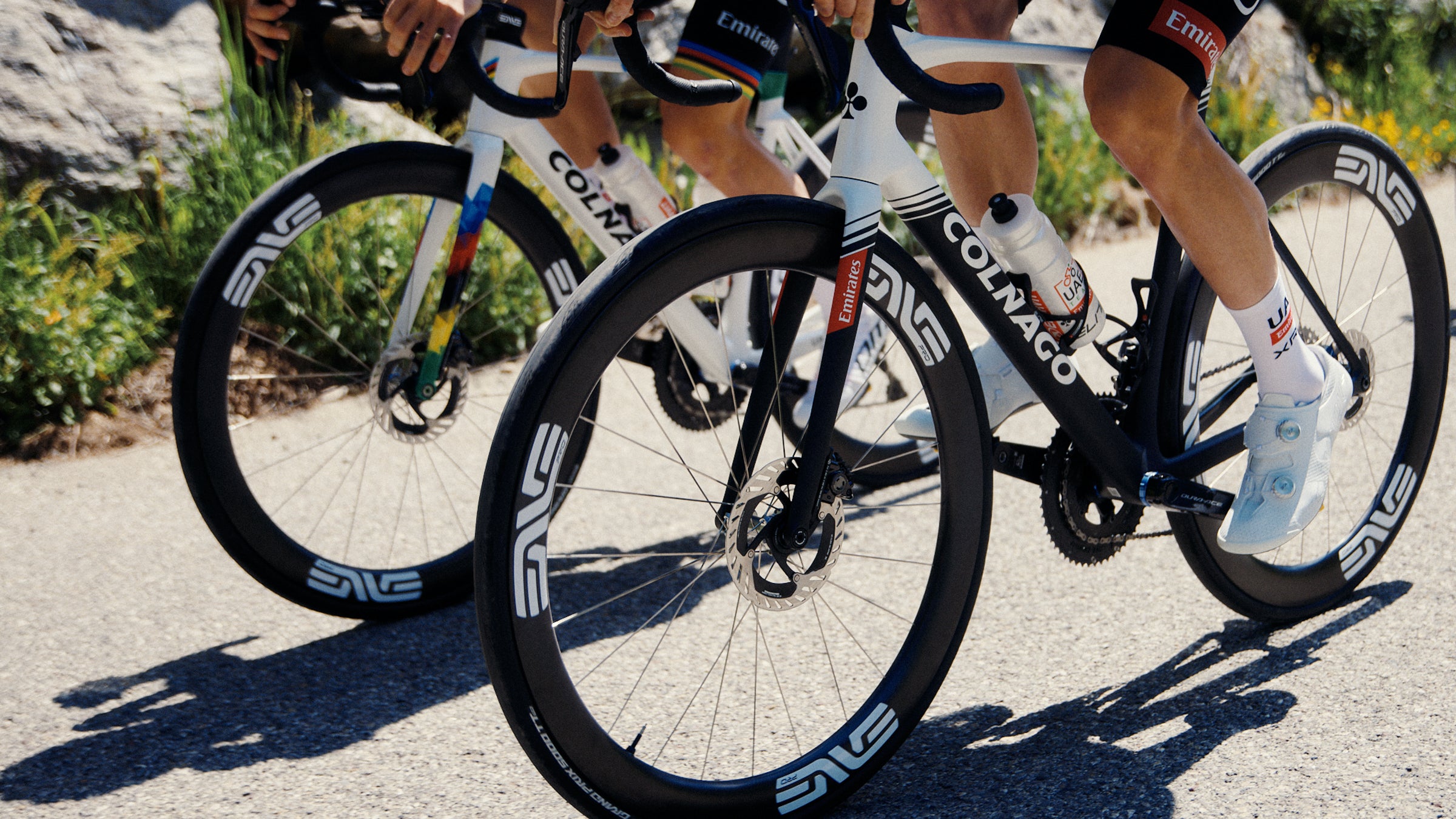
First, Enve launched a modified SES wheel with a 23.5mm internal width designed specifically for Tadej Pogačar’s Grand Tour ambitions. That leaves the standard, wider SES 4.5 (25mm internal width) to be used largely as an all-road option, while the sharp end of the brand’s road lineup shifts to a smaller internal width. Zipp is doing the exact same thing. As they update their road-racing specific wheels like the 404 and 454, they are shifting to a 23mm internal width, leaving the 25mm internal width exclusively for their endurance and all-road focused 303 and 353 lines.

Professional racing is ruining it for you and me
The reason a 25mm internal width rim and a 28mm tire is magic is all about weight versus aerodynamics. That combo allowed you to take the rolling resistance and comfort advantages of a 30mm tire and get them with the weight and smaller frontal area of a 28mm tire. It’s a trick that moves air volume out of the tire and into the rim channel.
ADVERTISEMENT
Once you are forced to run a 30mm tire to satisfy the rule, the math falls apart. A 30mm tire increases your frontal area. To satisfy the aerodynamic Rule of 105—the rule that the rim must be at least 105% the size of the tire for optimal aerodynamics—you then need a significantly wider external rim, which increases the frontal area even more. And because there is physically more material required to build that wider rim and tire, the entire system gets heavier.
When tackling the Alps and the Pyrenees, Tour de France teams are drawing a hard line in the sand at 28mm for pure road racing. A wider tire is more compliant and has better rolling resistance, but there is a tipping point where the aerodynamic drag and rotational weight overtake those benefits. WorldTour teams simply aren’t buying the extra bulk.
The result of all this is that 23mm internal width is the new unofficial standard. Zipp, Enve, Vision, Cadex, and Hunt have done extensive research and landed at 23mm independently. To go any wider in road racing, a manufacturer would need to solve the physics of weight and aerodynamics for a larger tire and rim combo. That’s a tall order, and I bet we see 23mm stick around for a long time.
ADVERTISEMENT
But that brings us back to you and me, who aren’t racing in the WorldTour. A 30mm tire on a 25mm internal rim provides a bigger volume of air and a ride feel that still absolutely shines for everyday riding. You do lose some aero efficiency, but everyday riders are likely to benefit more from comfort. With the industry phasing out 25mm internal rim width road-specific wheelsets, we are all missing out on a better ride because manufacturers are catering to the needs of a minority of professional racers over the needs of the rest of us. Of course, there are plenty of new brands coming out of China that are embracing both wide internal widths and hooks, so perhaps we are really just seeing a shift in brand dominance?