Updated October 6, 2026 08:14AM
The Kenda Velora Pulls Endurance Road Tires Into the Modern Age
The new premium road offering from Kenda brings a lot more puncture protection and improved speed to its endurance platform.
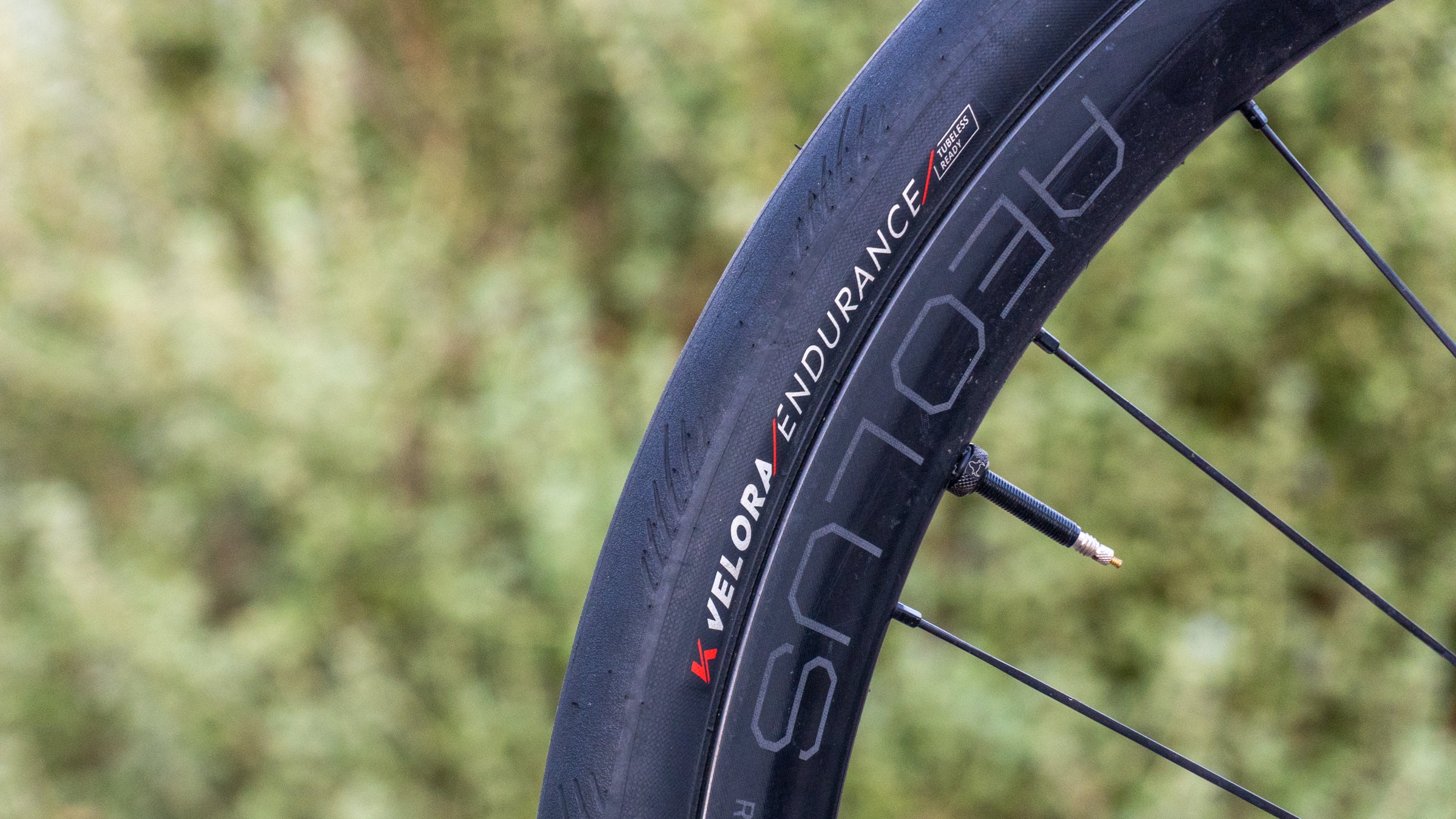
(Photo: Logan Jones-Wilkins/Velo)
Kenda has launched the Velora Endurance, a new set of endurance road tires that offer a premium feel with a range of puncture-resistant long-haul options.
The Velora brings durability and low rolling resistance to the table, with Kenda claiming major improvements in puncture protection and watts saved over its previous models. The model also comes in three sizes: 28, 32, and 35 mm.
With Kenda’s re-entry into the premium endurance tire market—in addition to other tires like the Silca Protocol RCR—the 32-40 mm range for all-road tires is quickly filling out. Not too long ago, that range of tires was a quirky grey area between road and gravel, but now it serves as another area of the industry where there are scores of good options.
Read on to see how the Kenda Velora Endurance fits into the mix. Hint: it’s one of the better options available.
ADVERTISEMENT
Kenda Velora Endurance specifications
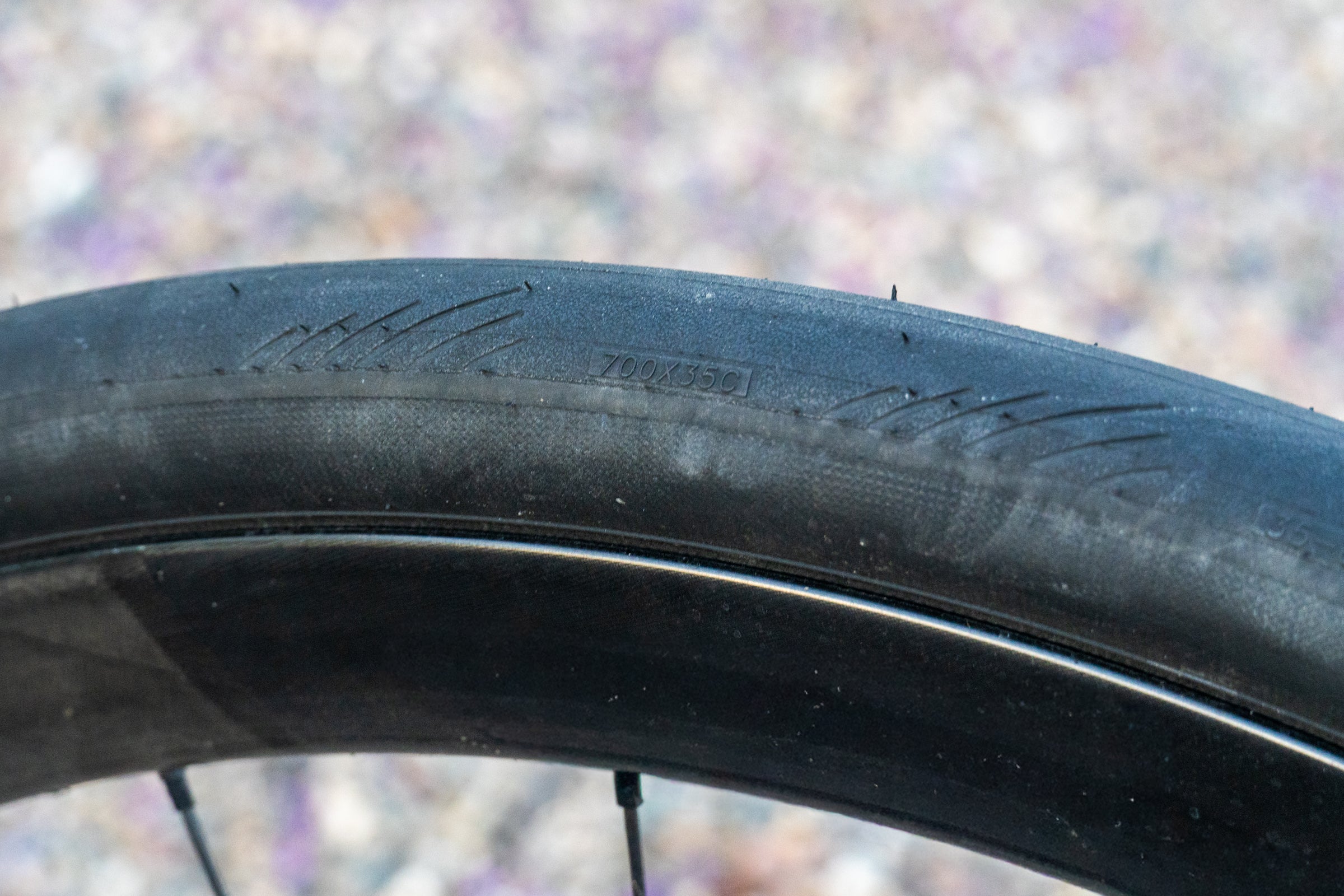
- 28, 32, and 35mm width options.
- 120 TPI across all three widths.
- 35% improved puncture protection with new “puncture” layers.
- Dual rubber compound to boost rolling resistance while retaining speed
- 12-watt improvement in rolling resistance compared to Kenda’s previous endurance tire
- Weight: 330g, 370g, 425g, respectively.
- For more information, visit Kenda’s website.
Built to be strong, with speed found along the way
While the Velora Endurance brings new options to the endurance/all-road tire market, Kenda is taking a fairly traditional approach overall with this model. It’s built, first and foremost, for durability.
That durability is derived primarily from the puncture-resistant base layer of the tire casing. Instead of loading puncture-resistance features into the entire tread, the base layer runs just along the center of the tread. This keeps the tire weight low and the tire relatively thin, despite the 35 percent improvement in the center tread’s ability to withstand debris and detritus.
While the Velora prioritizes the same puncture resistance as previous endurance tires, it is still a big evolution from the heavy, plodding endurance tires of years past. Kenda pairs the endurance-oriented puncture-resistant base layer with a premium rubber compound that is much more pitched towards speed.
ADVERTISEMENT
To find this speed, the Velora uses the new K-Series rubber compound that has been slowly rolled out across several of Kenda’s recent new releases. That new rubber compound has been specifically formulated for performance on tarmac and yields a significant 12-watt reduction in rolling resistance compared to the previous Kenda endurance tire.
While Kenda also claims better rolling resistance compared to unnamed competitors, there is no third-party data yet for the tire’s overall rolling efficiency.
That being said, that compound is built to be both fast and durable. Kenda claims that the Velora Endurance is very wear-resistant, with a 27 percent reduction in tread degradation compared to the brand’s previous endurance tires. You could say the Velora is built for endurance in more ways than just long rides.
ADVERTISEMENT
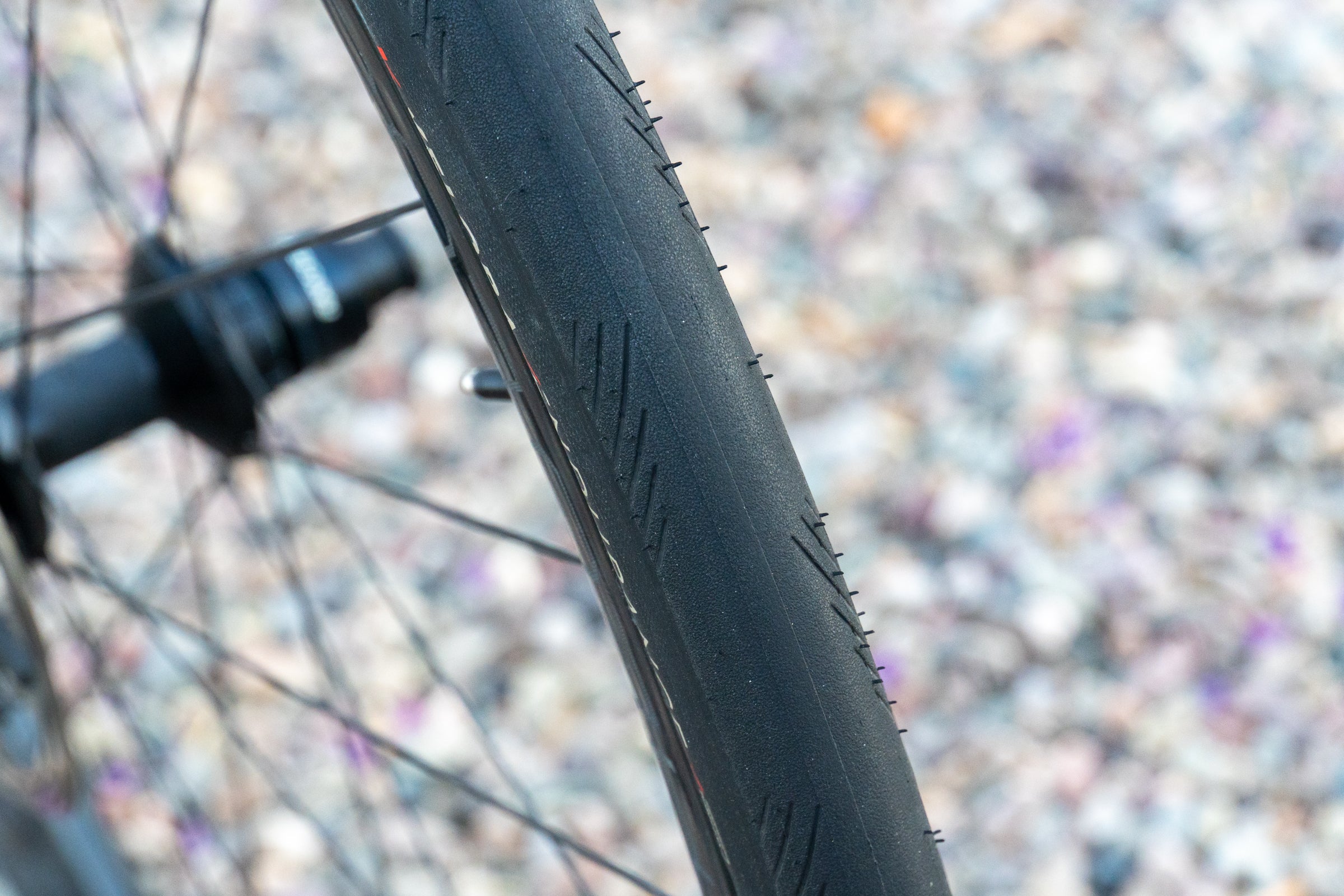
Lastly, while the tire is firmly a road tire, it does have prominent shoulder “siping” that runs in clusters along the tire. Those sipes, which are thin grooves cut into the shoulder of the tire, are specifically designed to help boost traction in wet environments. The grooves help funnel water away from the broad, slick center tread, which boosts traction especially on slick corners. The siping also helps add a bit of traction in dry conditions when riding on light, loose-over-hard conditions.
Kenda Velora Endurance ride impressions: a true all-road option that is only lacking one size
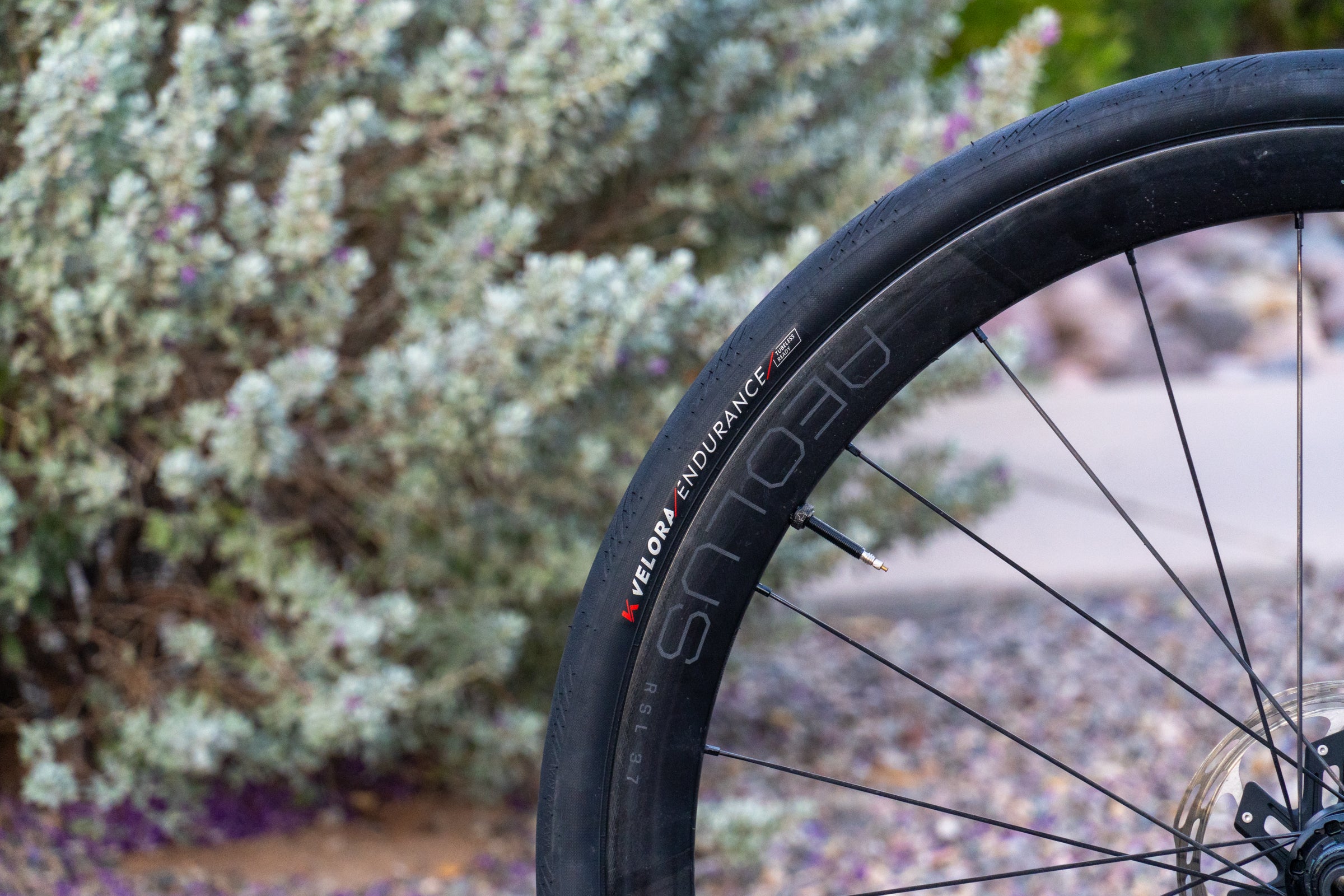
Over the last month, I have been able to put a few hundred miles on the 32 and 35mm versions of the Velora Endurance tires, and I have been very pleased with how the tires feel and perform in the right circumstances.
Personally, I felt more of a draw to the 35mm option as there are just fewer great options at that width. Additionally, as tires have gotten bigger, 30-32 mm is the range of width I use for race tires, so testing the 32mm—let alone the 28mm—just didn’t feel like it made much sense. Instead, having a nice 35mm endurance tire was the perfect pair for some adventures on the new Trek Domane, a modern endurance bike with clearance up to 40mm.
ADVERTISEMENT
Would I have loved to try the Velora in 38-40 mm? Absolutely, but unfortunately, Kenda cut things off at 35mm. Nevertheless, I found the 35s had a great balance of versatility, reliability, and speed that really surprised me.
Setup and weight
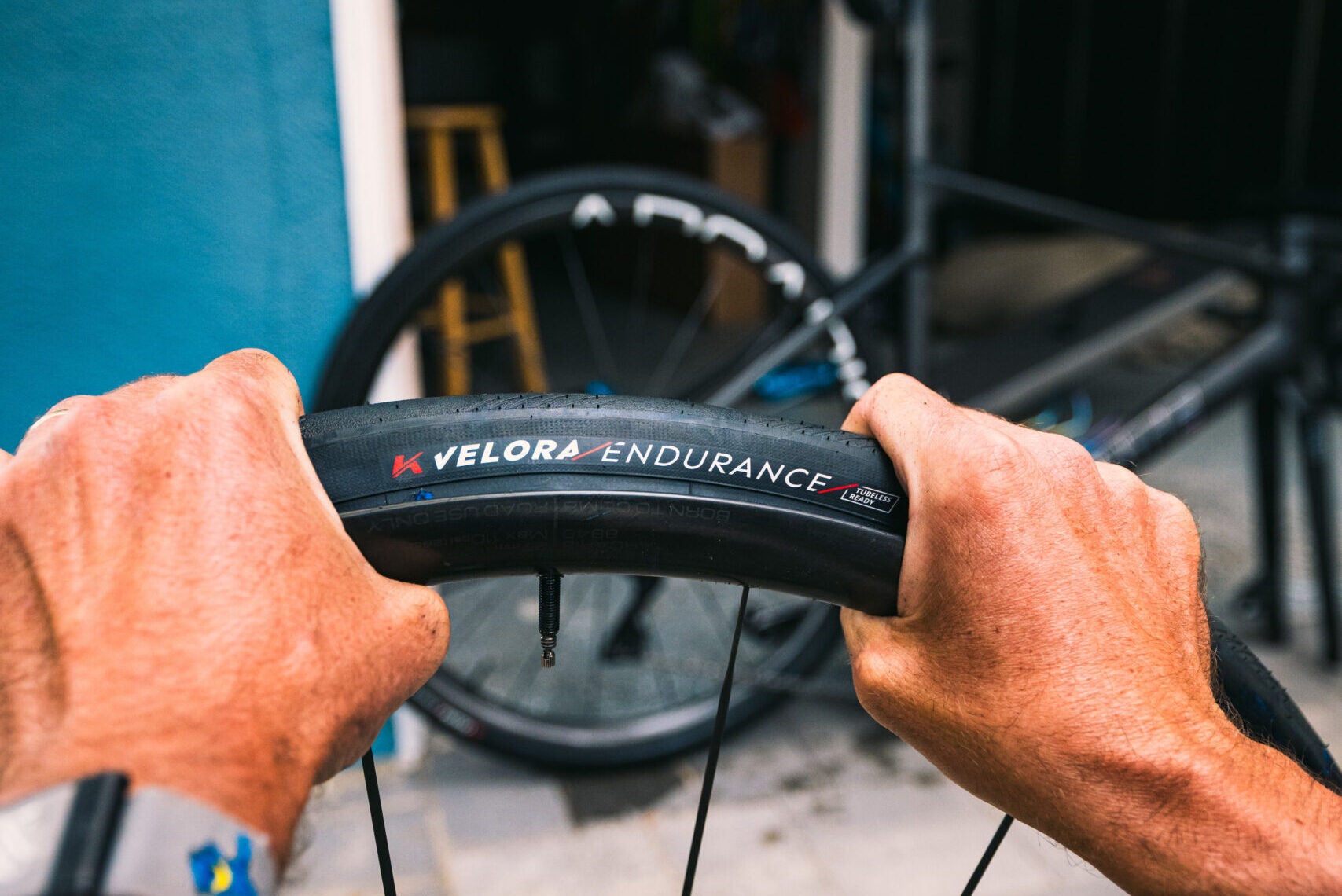
Out of the box, the Velora Endurance tires do look and feel like endurance tires. They have more structure, they feel on the heavier side, and the center tread is notably a bit thicker and more rigid than a pure road racing tire. But even with those attributes, the sidewalls felt fairly flexible. When I was mounting it onto the rim, the tire also felt more similar to a good racing tire than a rigid, heavier endurance tire.
Speaking of weight, the Velora is certainly no featherweight, but it holds its own. At 370g for the 35mm, the tire is about middle of the pack—similar to the Specialized Mondo, lighter than the Pirelli P-Zero, and heavier than the Silca RCR.
Ride feel, versatility, and speed
After the installation, I found that the tire felt alive straight away. There wasn’t any of the stiffness you might get from a tire with thick, new rubber. Instead, it rolled pretty fast and handled well, with the tire holding its structure even at a relatively low 50 PSI of pressure. One of my nitpicks with mid-width slicks is how inconsistent they can feel. The heavier, thicker tires can be too rigid and can be harsh and bouncy, neither of which inspires much confidence during cornering or at speed. Others are too light, and those can feel muddled and squishy at “all-road” pressure—even worse for confidence.
ADVERTISEMENT
The Velora Endurance has a good balance between rigidity and suppleness. My guess is that comes from the tire’s split personality, with a fast rubber compound and strong-but-narrow puncture protection creating an effective pairing for that balanced handling.
The out-and-out speed of the tire is where things are less clear. The big test for the tire’s speed was a long Saturday group ride that functions a bit like a segmented race. The first two efforts are both uphill drags, a perfect scenario to feel a tire’s overall speed, before I would set off on my own up a gravel road and a long, steep gravel climb to test the all-road chops of the tire.
True all-road capacity
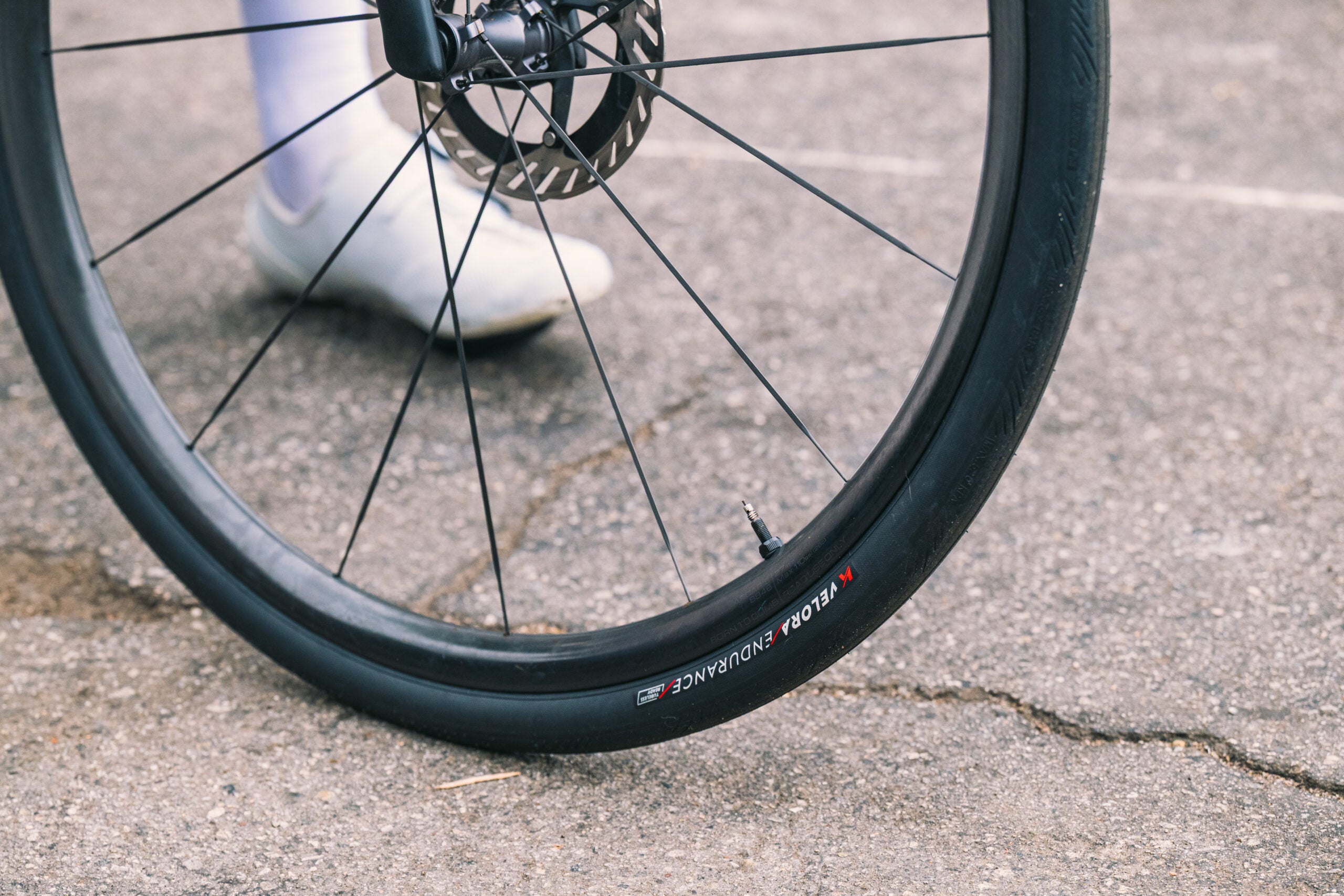
The high point of the ride was certainly the gravel section. At 50 PSI, the Velora felt wonderful on the light gravel roads I took on. Over all the chunkier terrain, it held its shape and deformed well around the bigger objects. Two riders joined me on my tire after the climb, and sure enough, one of them flatted their 30mm road tires. While they had to exercise an abundance of caution, I could take every downhill at 5- 10 mph faster, even though my tires were only 5 mm wider.
ADVERTISEMENT
Those draggy uphills were certainly a different story, although I wouldn’t say it was an issue with the rolling resistance. For 35 mm slicks, the Velora tires were certainly on the quicker-feeling side. At slower speeds, I wasn’t feeling like I was being held back, even in moments of acceleration where bigger tires can really feel like they drag.
As with all wider road tires, you do hear the air resistance when the speed gets higher. In the moments above 25 MPH, that sound can feel like it is holding you back. Anecdotally, the Velora felt better than other options I have tried, yet it is still noticeably slower than the premium 30mm racing tires I ride. A good comparison point is the Silca RCR 34 mm tires I have also been testing. Comparing the two, the Velora certainly feels faster, even though there isn’t data to back that up yet.
Conclusion and pricing
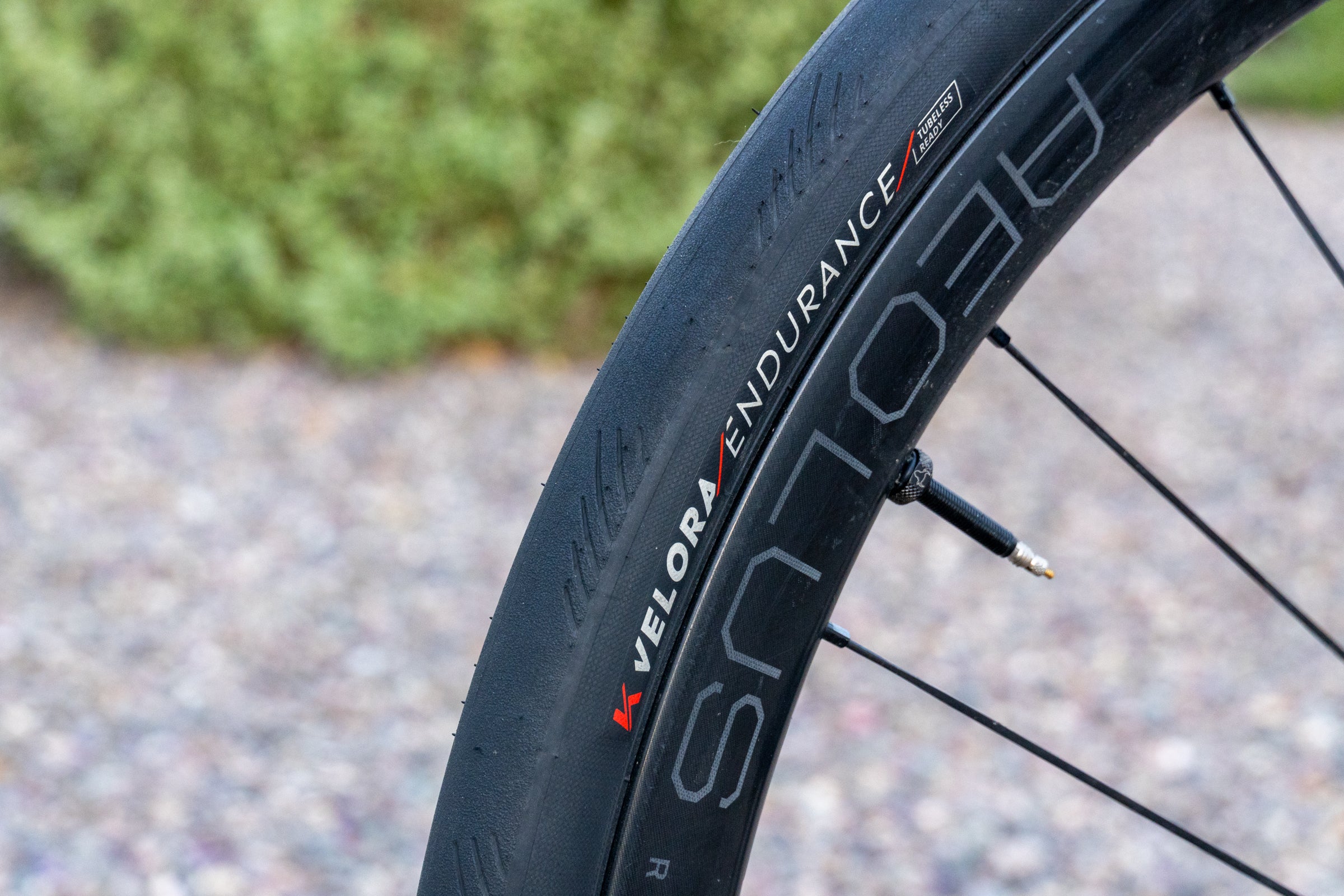
Overall, I find the Kenda Velora Endurance to be a great example of the strides tires have made in recent years. While previously the endurance tire category meant giving up all sensations of speed and sensitive handling for puncture resistance, new options like the Velora really do offer puncture protection that is much more palatable.
ADVERTISEMENT
The Velora isn’t the only one, nor is it the first, but it does provide an option that is up there with the best endurance options on the market.
The big miss for me is the lack of a larger size in the range. A 38-40 mm option would be fantastic for riders who might have a gravel bike that they want to speed up on the road. That is where the market is still lacking, even if the 30-35 mm range is now finally catching up.
The Kenda Velora Endurance is available now for $78.95 USD. You can also learn more about the tire on Kenda’s website.