Published September 30, 2026 07:00AM
If you buy through our links, we may earn an affiliate commission. This supports our mission to get more people active and outside.Learn about Outside Online's affiliate link policy
Aero Testing the Factor ONE: 1,400 Miles With the Ultimate Aero Weapon
After two double centuries, a 1x drivetrain swap, and real-world aero testing, I know this bike inside and out. Here is why it's one of the best I've ever ridden.
Pros
Modern progressive fit (if you want it)
Unapologetic aero focus
Exceptional momentum retention
Straight line stability
Stiff pedaling platform
Distinct, aggressive aesthetic
Stack adjustability without a saw
Cons
Relatively heavy
Very stiff front end
Factor One specs
| Specification | Details |
| Frameset | Factor One |
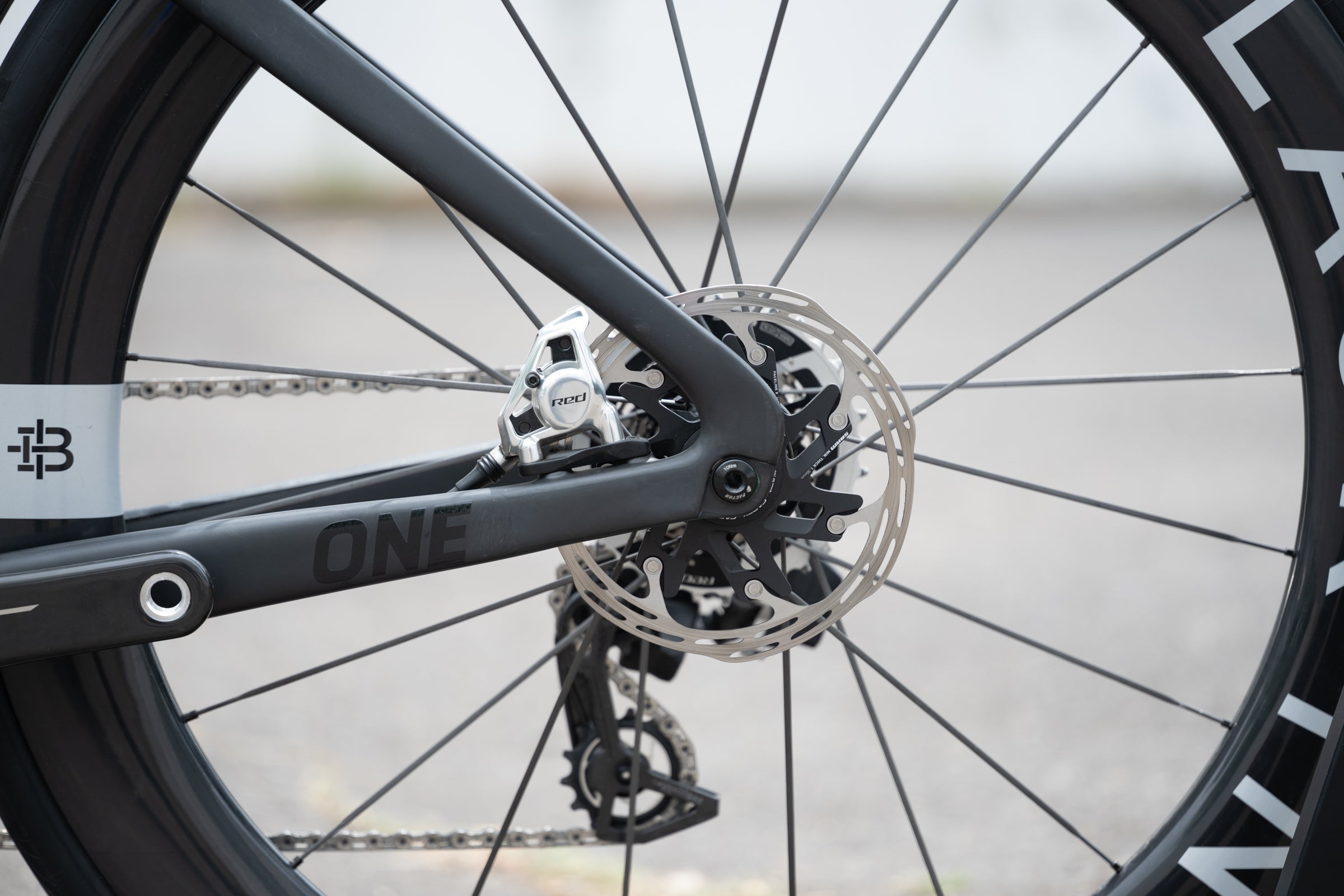
| Drivetrain | SRAM RED XPLR |
| Gearing | 48t Chainring x 10-46 Cassette |
| Handlebar/Stem | Size 1 proprietary barstem |
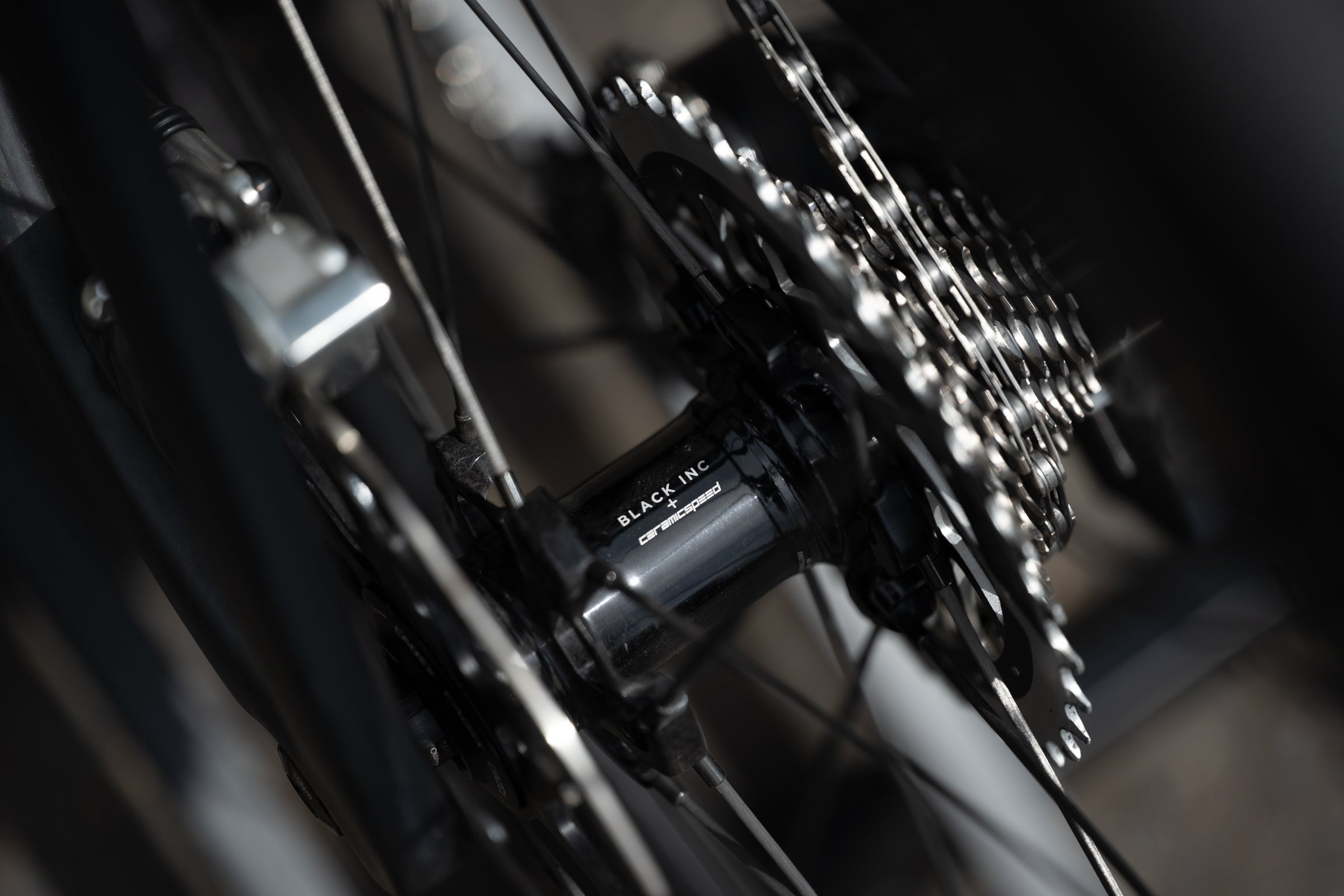
| Wheels | ZIPP 454 NSW front / Zipp 858 NSW rear |
| Tires | Goodyear Eagle F1 R Z29 Aero |
| Price | $14,199 |
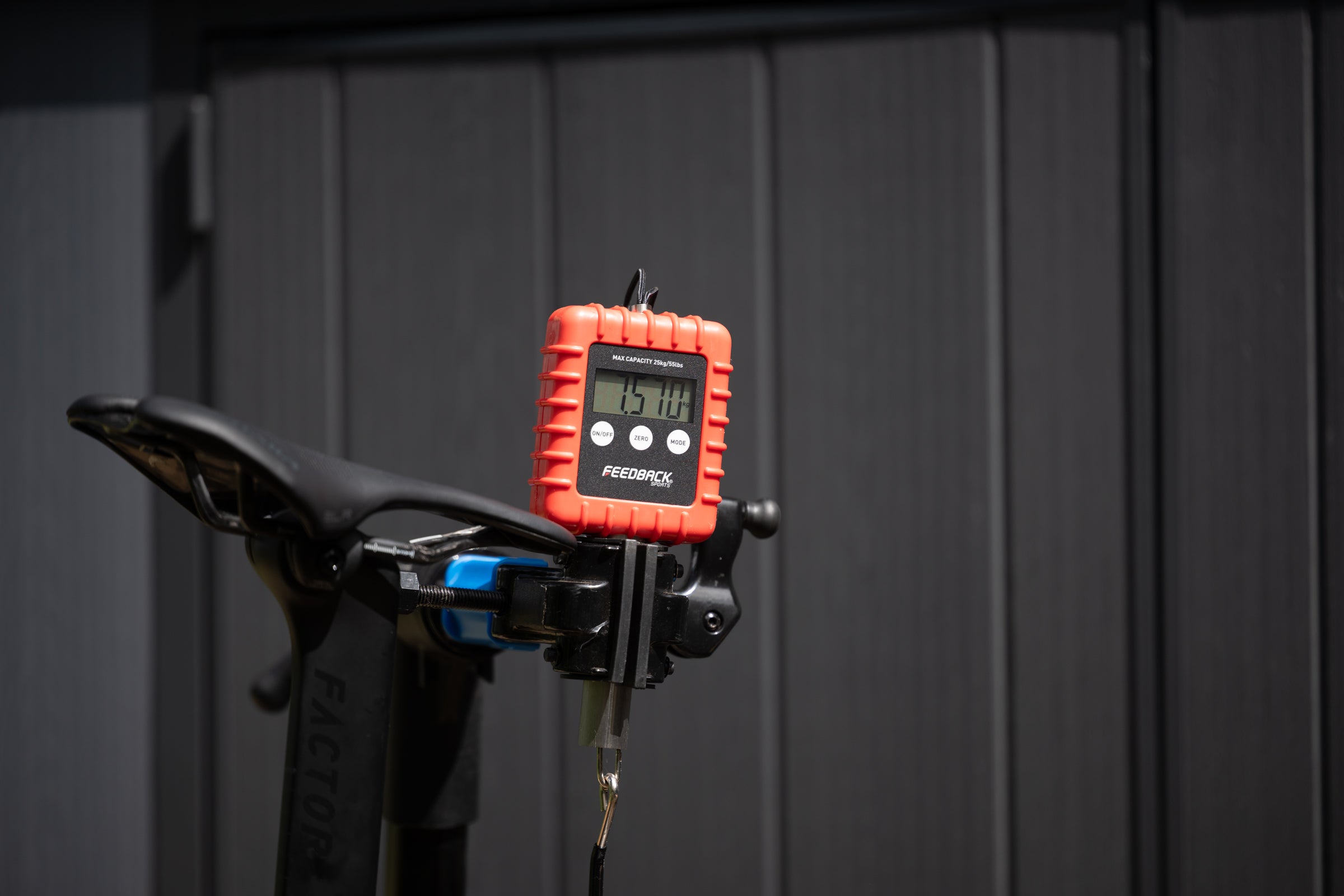
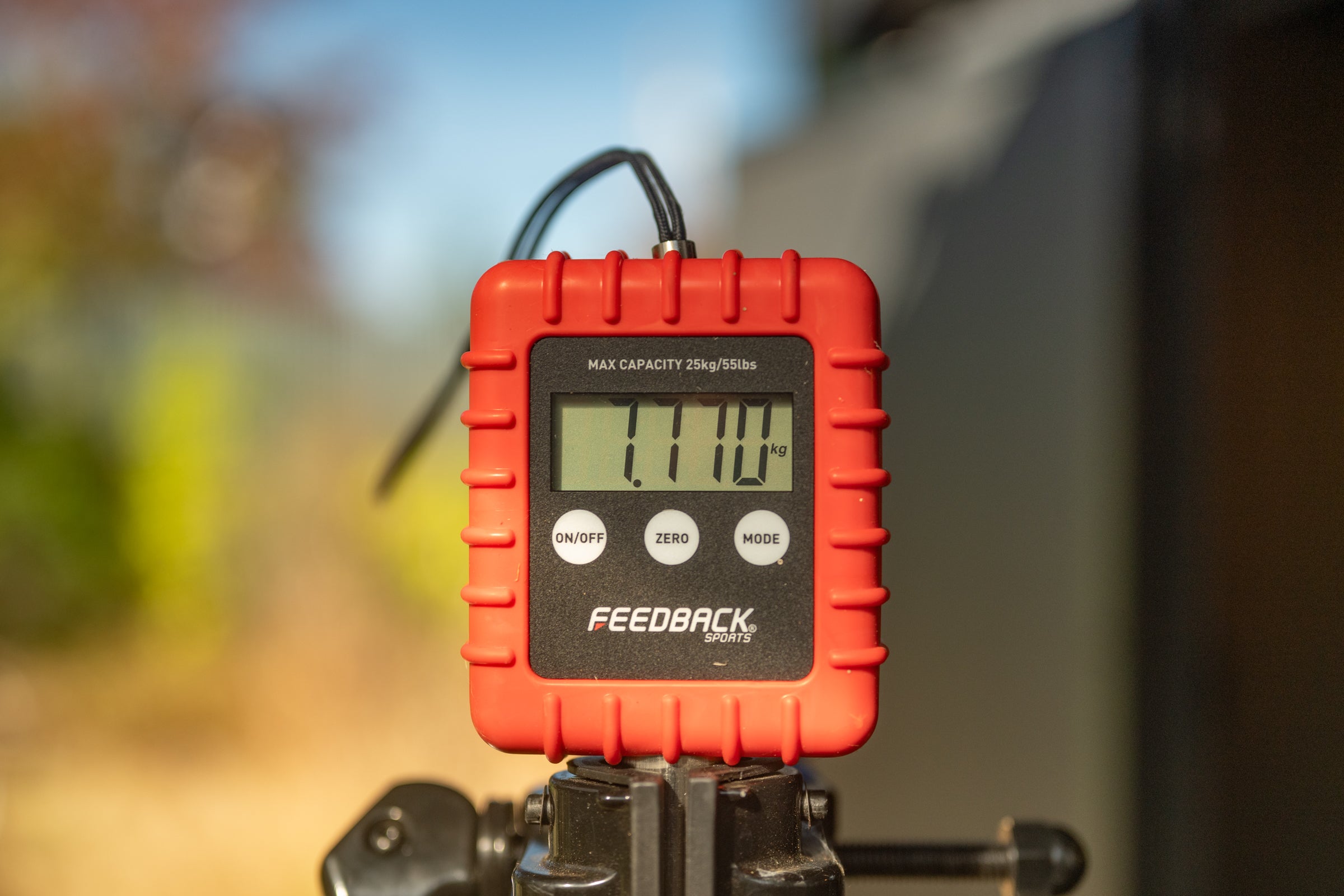
| Weight | 7.57kg from Factor / 7.77 kg as built: both ready to ride minus pedals |
| More info | Factor website |
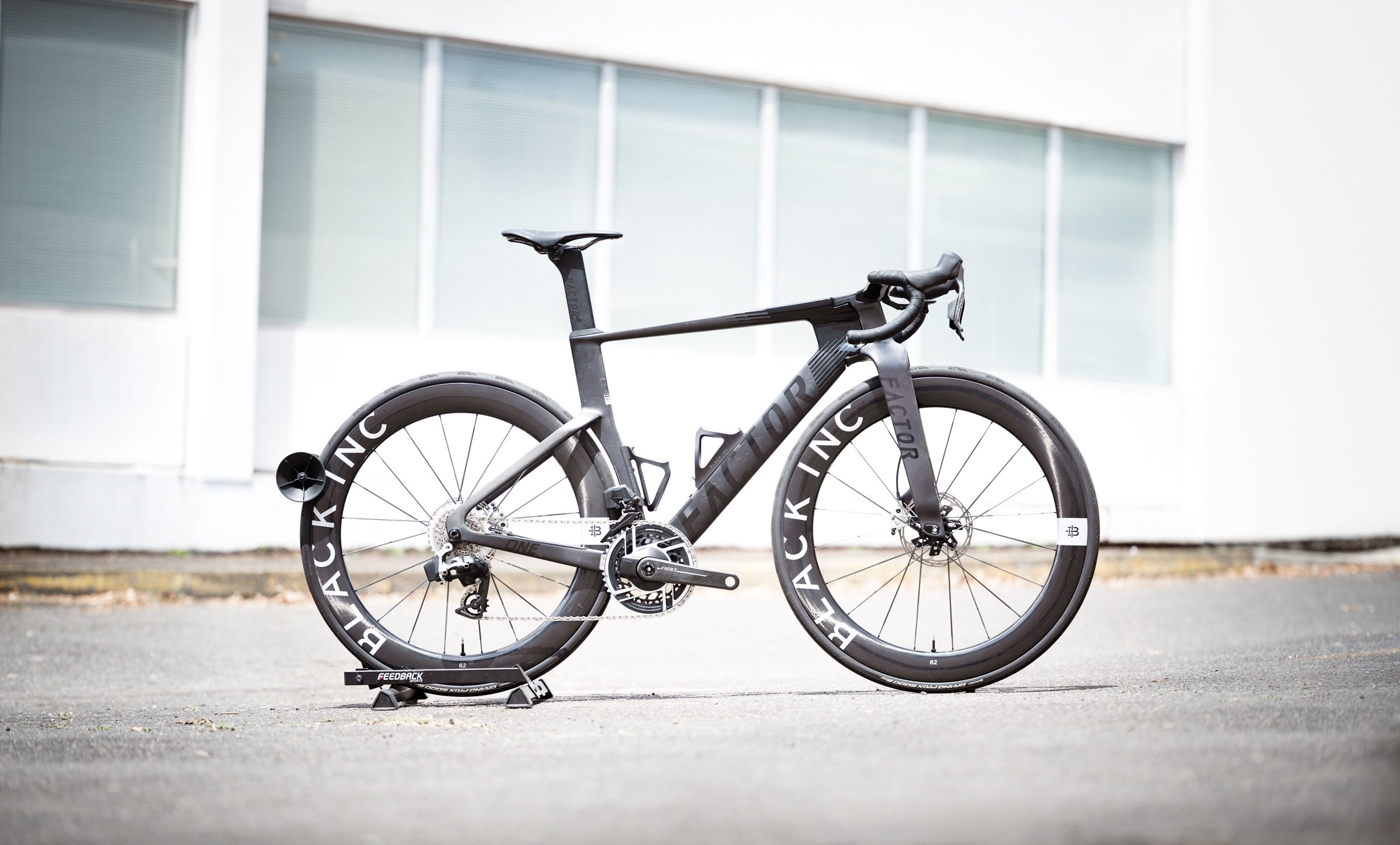
When the Factor One first hit the market, Velo did a short ride to understand the bike, and we wrote about what a departure it was from anything else on the market. What people see when they look at the Factor One is a wild aero bike, but for many, the real magic is the geometry. This was the first major road bike to introduce what is now considered modern progressive aero geometry.
Progressive aero geometry is a concept that solves the issue some riders have with getting ever more aero on a traditional bike. On something like a Tarmac SL9, most people can’t actually ride with no spacers because they don’t have the flexibility in their hamstrings and lower back. That means using spacers to raise the bars, which makes the position less aero.
To solve that, riders shove the saddle all the way forward and use a massive stem with short cranks. These changes rotate the rider’s position around the bottom bracket for a lower head and shoulders position in space without an extreme hip angle. Think of the body as a fixed triangle and rotate the front point down if that’s an easier visual. The problem with this arrangement is that you end up with unreasonably long stems, which impacts handling.
ADVERTISEMENT
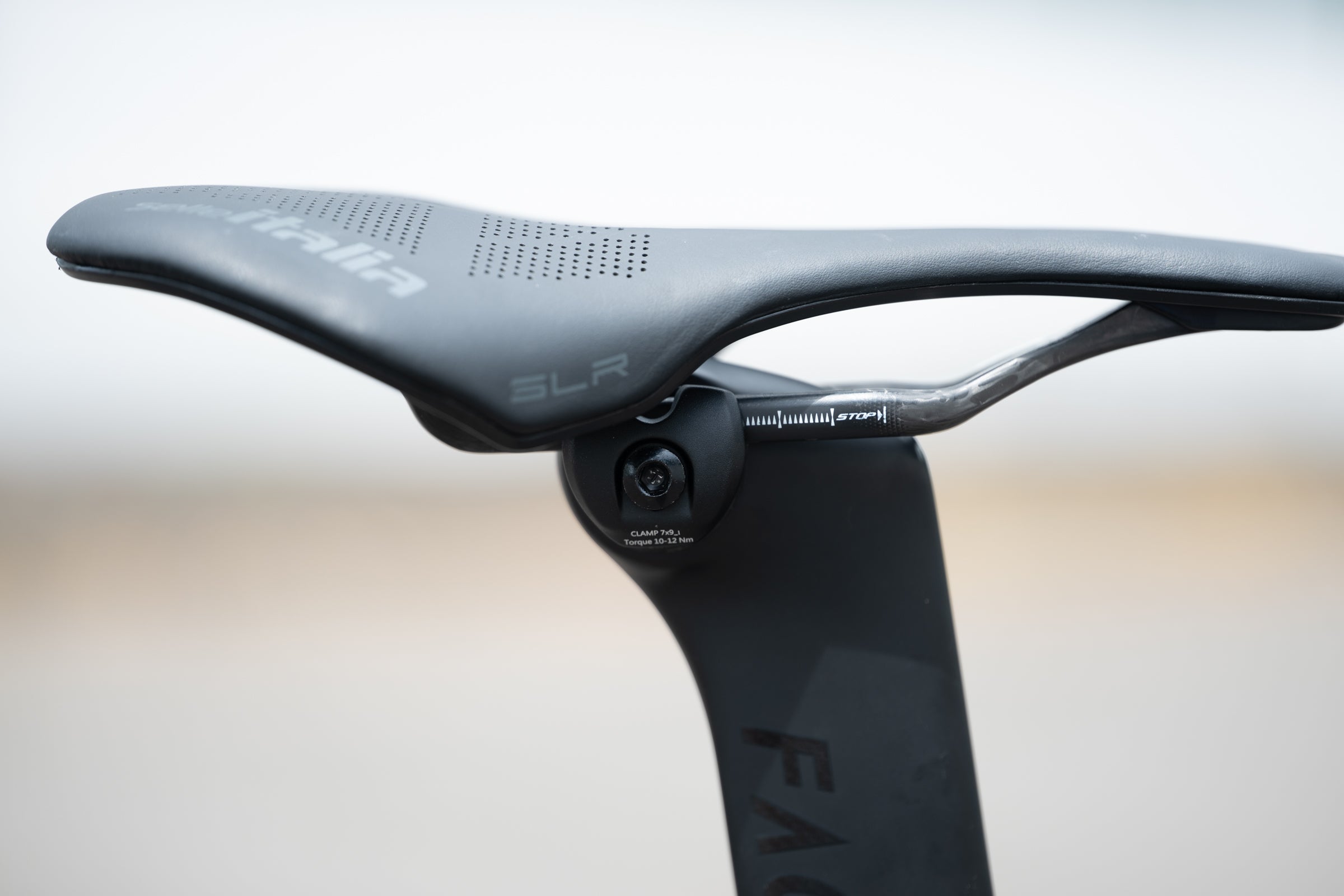
Progressive geometry solves this problem by designing the frame with this fit in mind. The frame is longer, the stem is shorter, and there’s a zero-setback seatpost available, plus shorter cranks specced. There are no odd handling artifacts because you aren’t stretching your weight way over the front wheel with a long stem.
That geometry concept is what Factor brought to the road bike world, but the ONE is still inherently a bonkers-looking bike designed to be the most aero in the world. I spent 1,400 miles, including two double centuries on two continents, testing what it is like to live with this bike. I didn’t just test it as it comes from Factor, though. I also wanted to see if I could make it even more aero—using scales and aero testing to check my work—and find out what that would be like to ride on those double centuries. Here’s what I found after a season with the Factor One.
Progressive geometry isn’t (completely) necessary
Now that you understand the concept of progressive geometry and what the Factor One is designed to do, I will admit: that’s not how I set up the bike. Despite what you may have read, nothing is forcing you into using progressive geometry with this chassis. That is a choice, but the baseline design intent can still solve traditional fit problems.
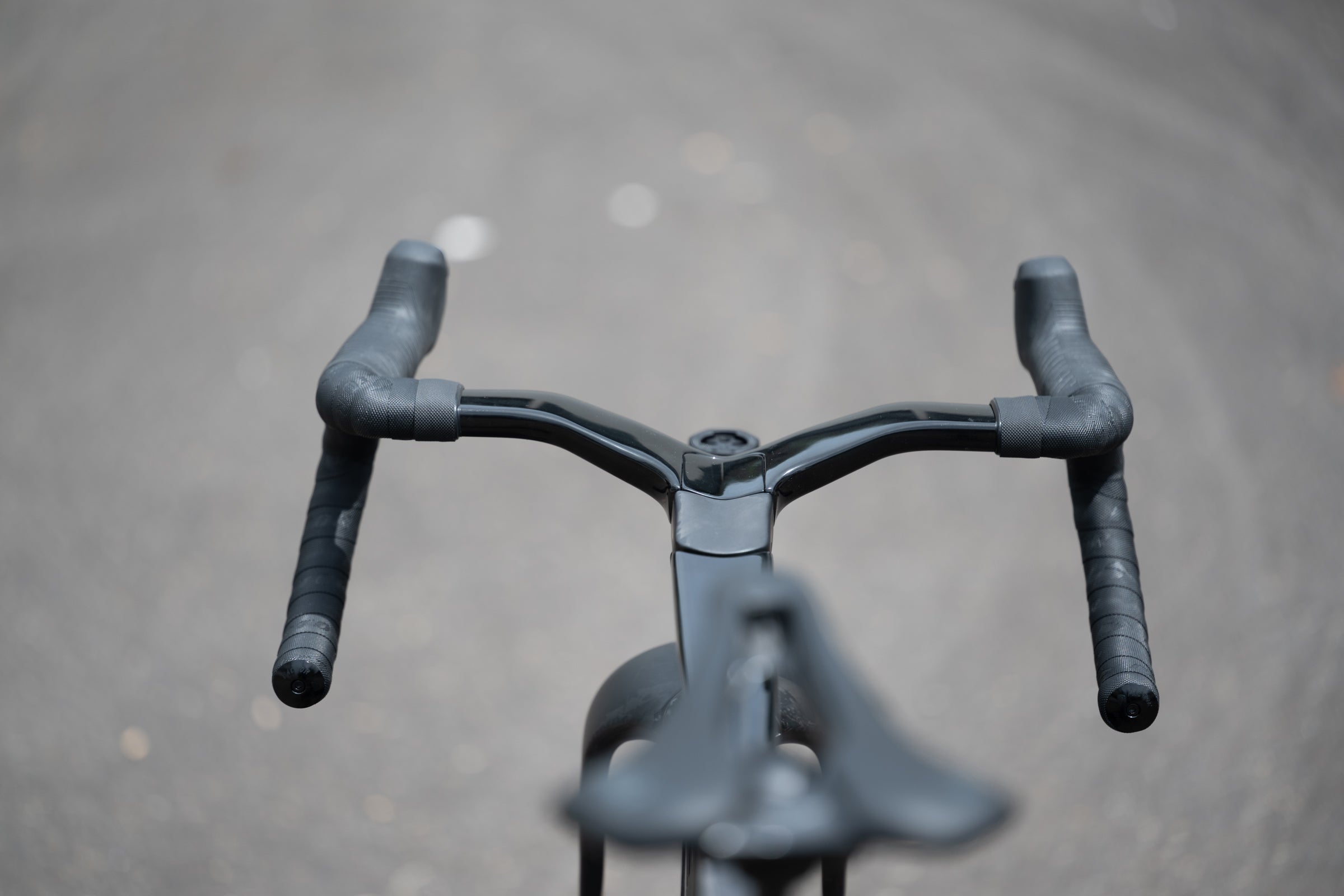
For my setup, I actually put my fit in the hands of the people who designed the bike. I did not try to reinvent my position to solve a problem I wasn’t having. I already run most of my bikes with no spacers and ride 6 to 20 hours without issue. For the Factor, I went with the setback seatpost and the Size 1 bar/stem that is meant to mimic a 110mm stem on a traditional bike. Even understanding what that means can be a challenge, though.
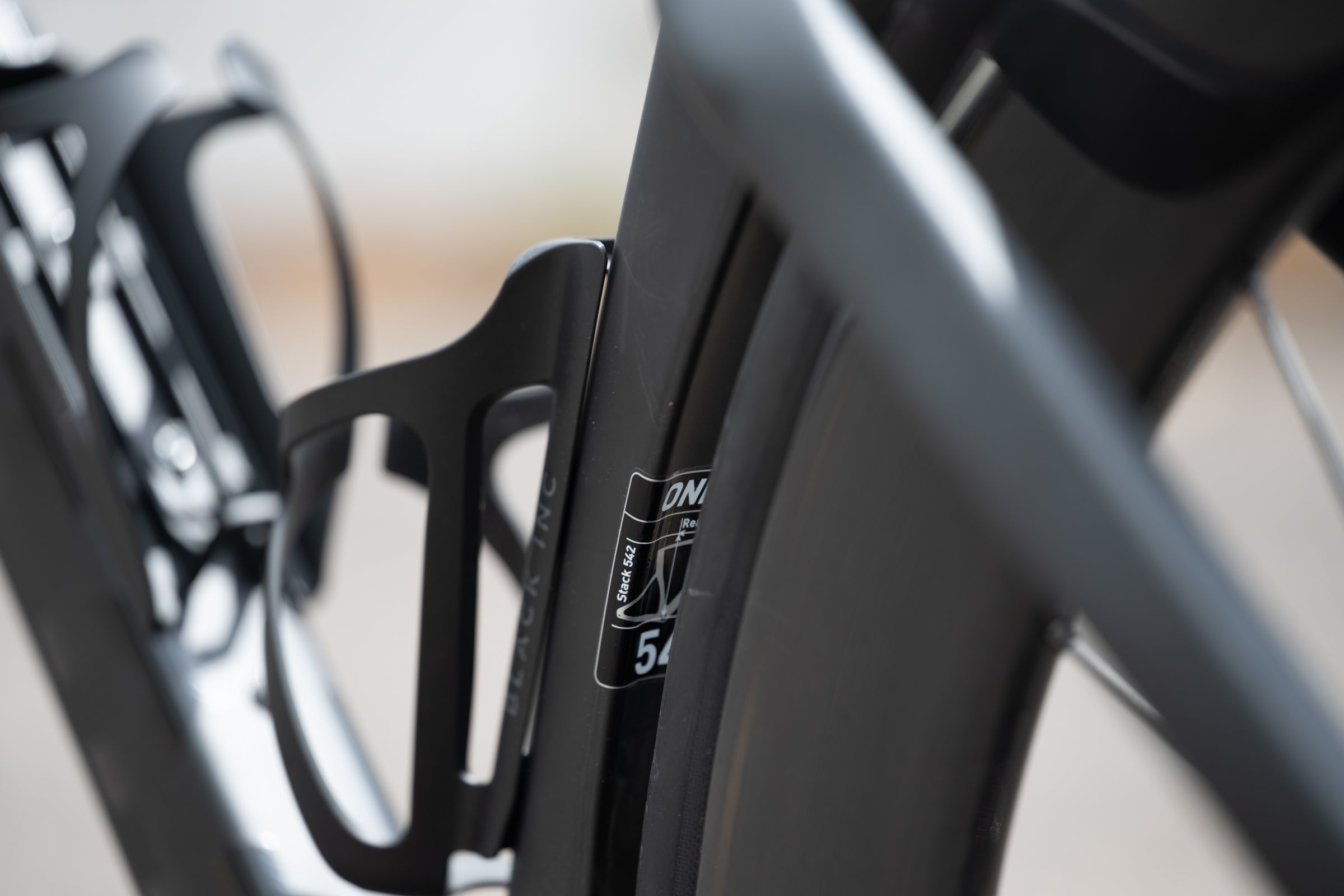
| Frame size | 47 | 52 | 54 | 56 | 58 |
| Stack (mm) | 503 | 523 | 542 | 565 | 587 |
| Reach (mm) | 390 | 396 | 404 | 412 | 421 |
| STA (degrees) | 76.5 | 76.0 | 76.0 | 76.0 | 75.5 |
| HTA (degrees) | 72.5 | 73.3 | 73.3 | 73.3 | 73.3 |
| BB Drop (mm) | 77 | 77 | 75 | 75 | 75 |
| Trail (mm) | 57.4 | 57.5 | 57.5 | 57.5 | 57.5 |
| Fork Offset (mm) | 48 | 43 | 43 | 43 | 43 |
| Chainstay (mm) | 405 | 405 | 405 | 405 | 408 |
| Wheelbase (mm) | 972 | 972 | 988 | 1002 | 1020 |
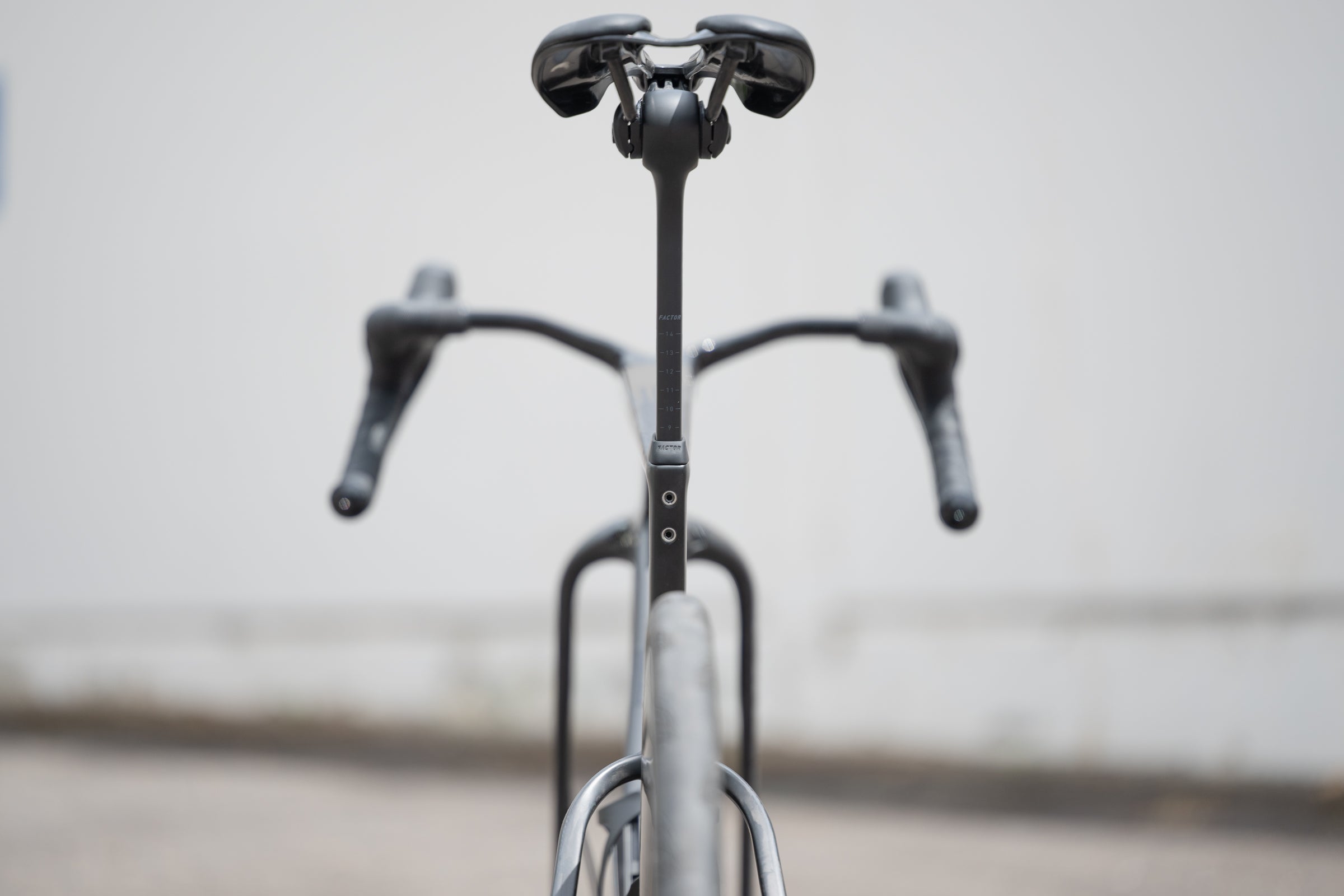
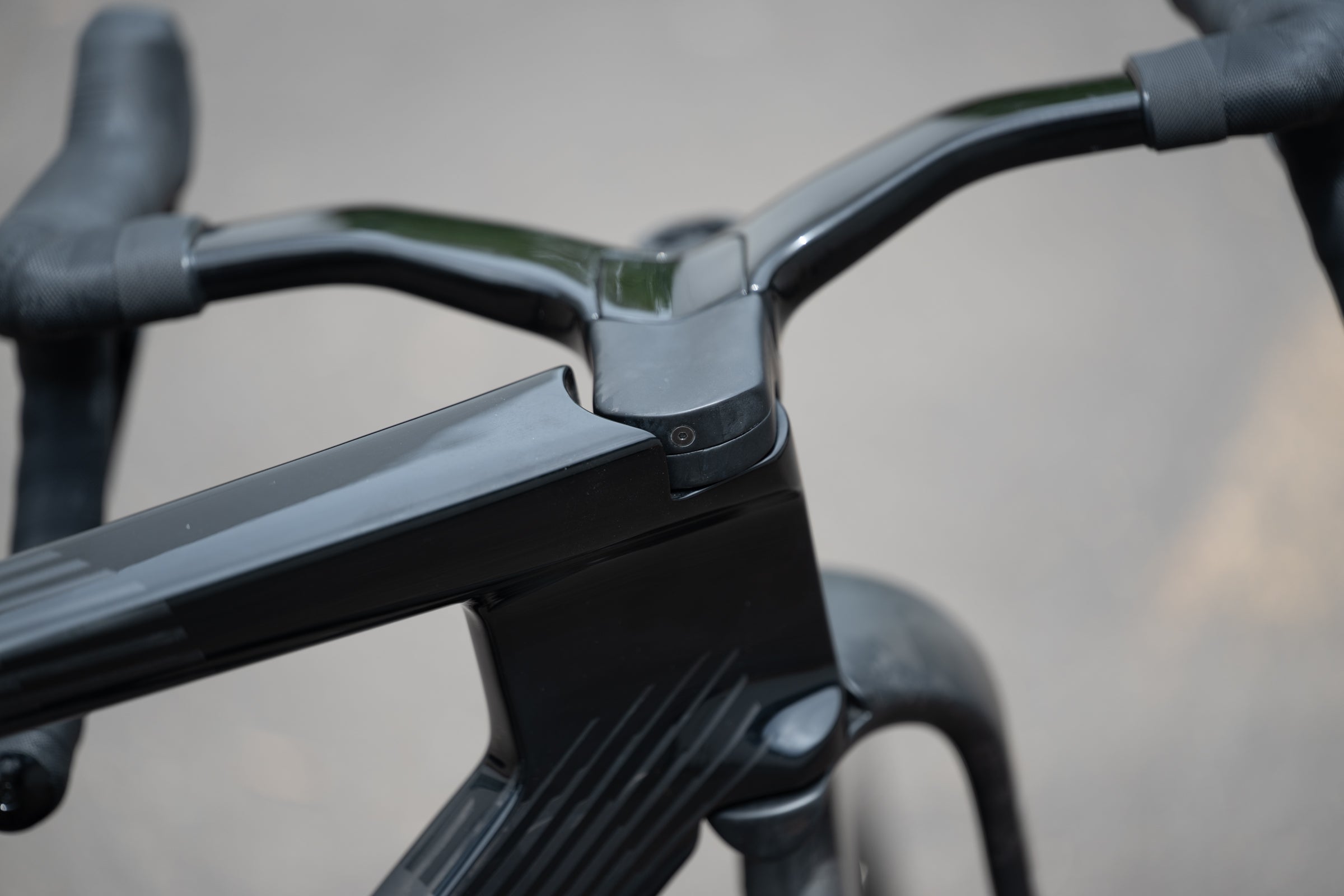
Geometry charts don’t show the cockpit, and with the Factor One, that is an important part of the full picture. What I ended up with is a bike that is about 10mm longer from the saddle to the top of the hoods, while those hoods sit just a bit higher up in space than bikes like the Enve Melee V2 or the Specialized Tarmac SL9 equipped with 110mm stems. I’m a little farther out over the front wheel, and I’m running 170mm cranks—which are just a little shorter than my normal 172.5mm—but nothing feels drastically altered. I could potentially get my head a little lower if I fully embraced the progressive fit, but this specific setup solved a completely different problem for me.
ADVERTISEMENT
The biggest challenge I tend to have with aero positions isn’t hip angle, but elbow angle. Often, I find myself a bit scrunched horizontally, which brings my elbows back beneath me. That acute bend puts more strain on my triceps and makes the aero position less sustainable over long distances. The Factor instead provides plenty of room for me to stretch my torso, meaning I am actually able to move from the tops down into the deep curve of the drops for long stretches. My forearms remain parallel to the ground, but I’m lower without being entirely reliant on my triceps to hold me there.
I love this not only for the comfort, but because it pulls my weight out over the front wheel with my head quite low—just like the designers imagined. It also enhances the signature handling characteristic of straight-line stability. The bike wants to go fast and straight, and this elongated position leans perfectly into that.
Don’t worry, it’s plenty stable, but it is stiff
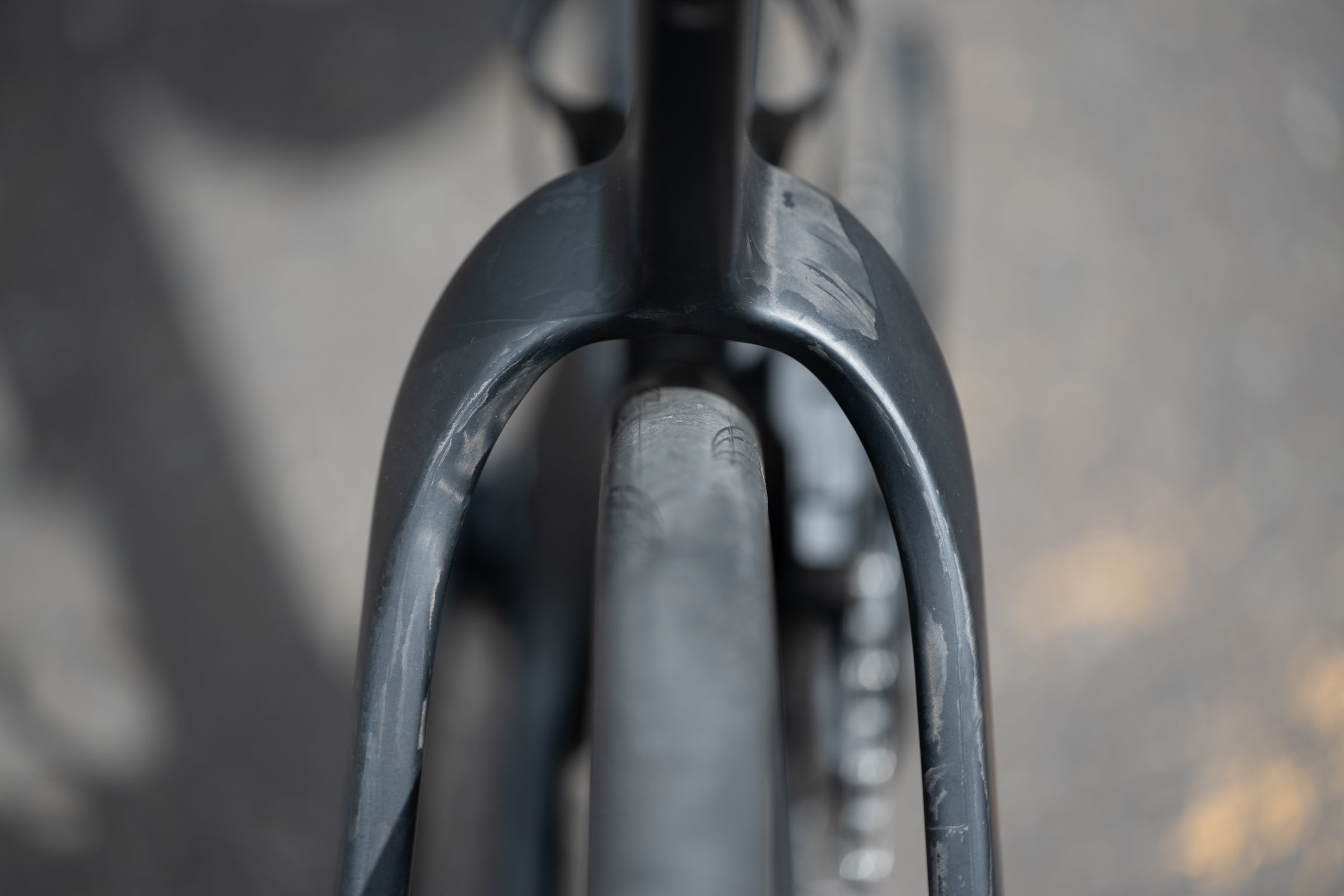
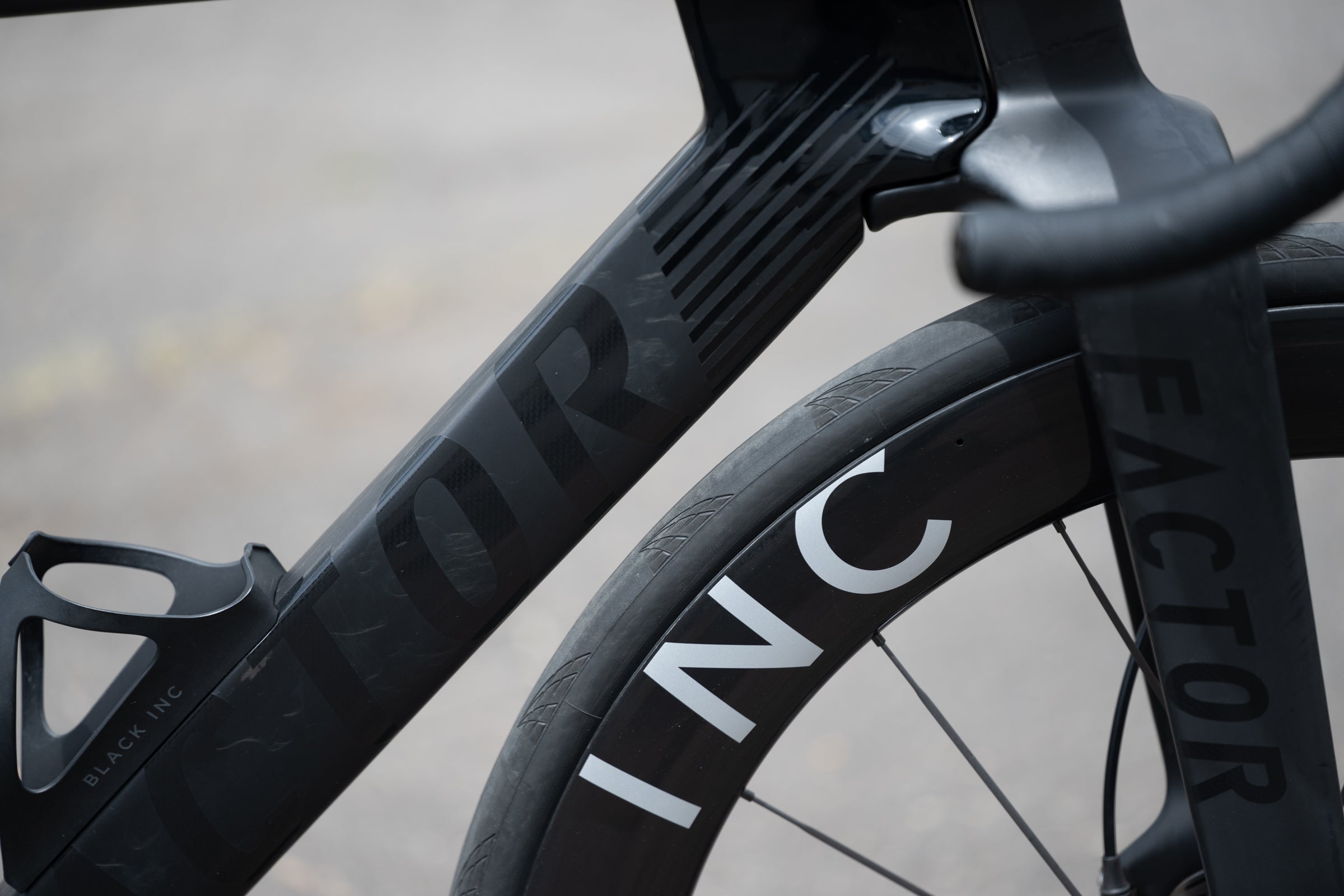
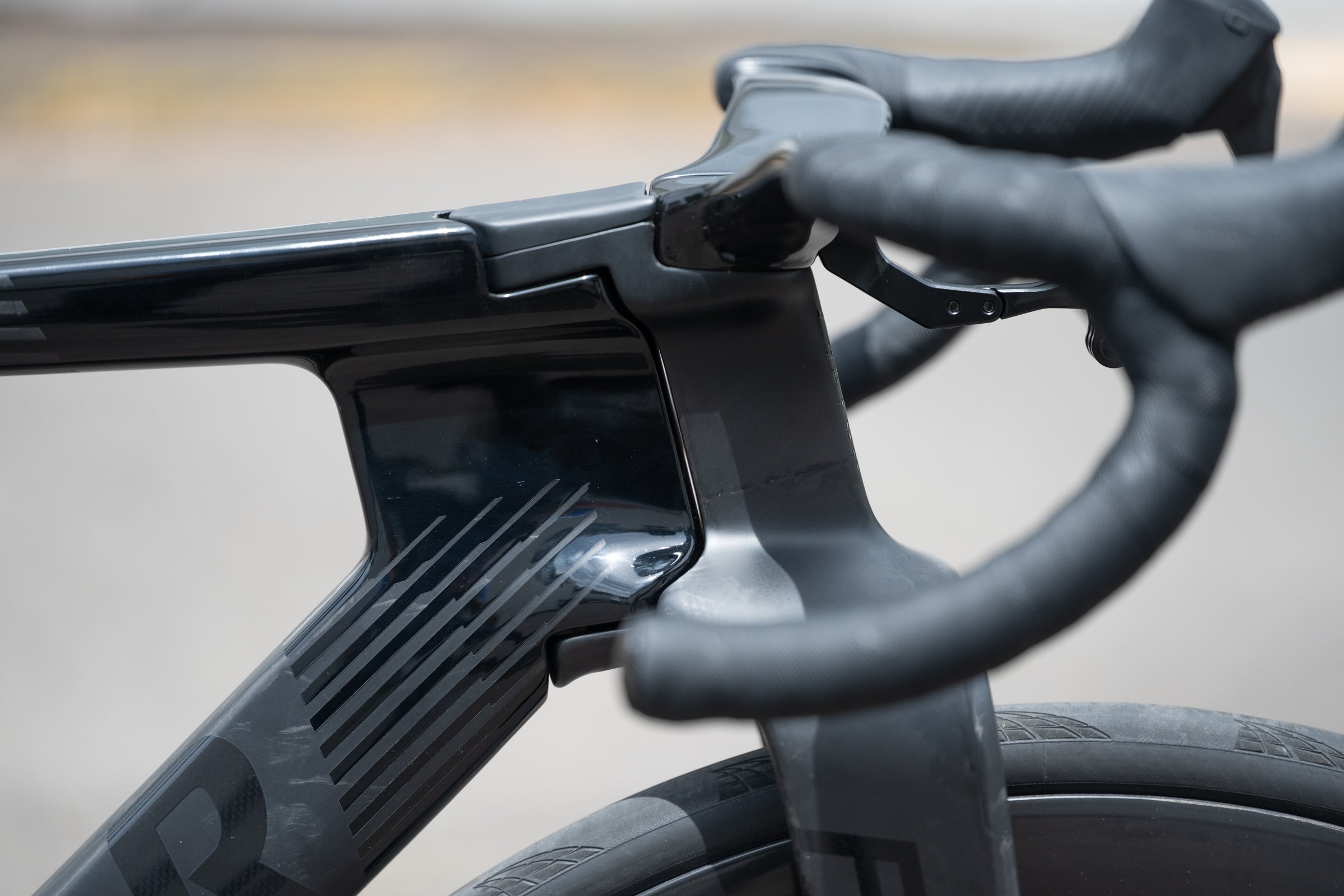
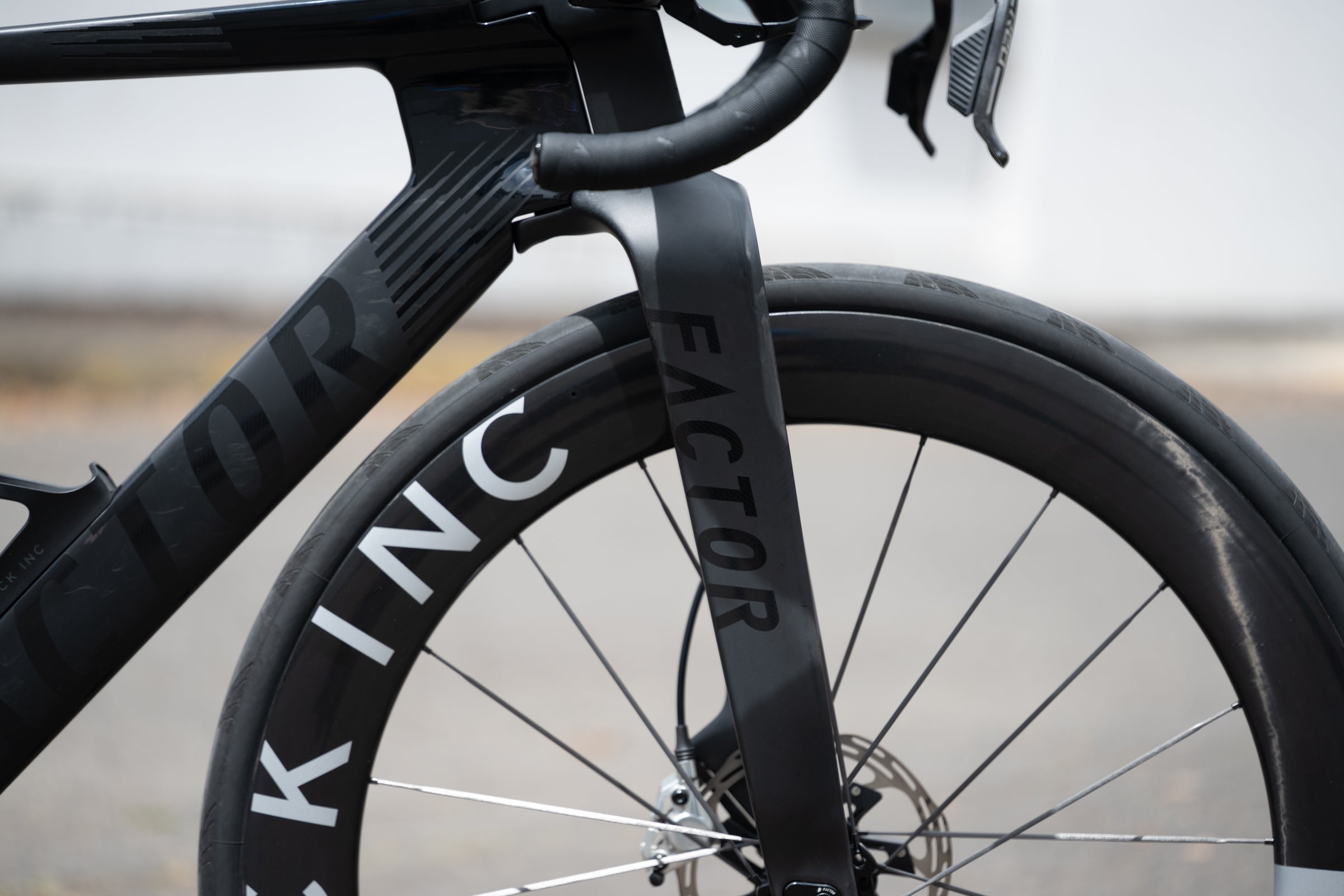
Like I said earlier, when you look at the Factor ONE, it’s not the geometry anyone thinks about. The bike is incredibly thin at the headtube, and every tube is wide but thin. The fork in particular is the most eye-catching. The legs themselves are as wide as possible when viewed from the side, but they also appear to be sitting at the “wrong” angle. It almost looks like a traditional bike and pushed the fork upright. There’s more to notice about the fork, but this pushed-back look is important.
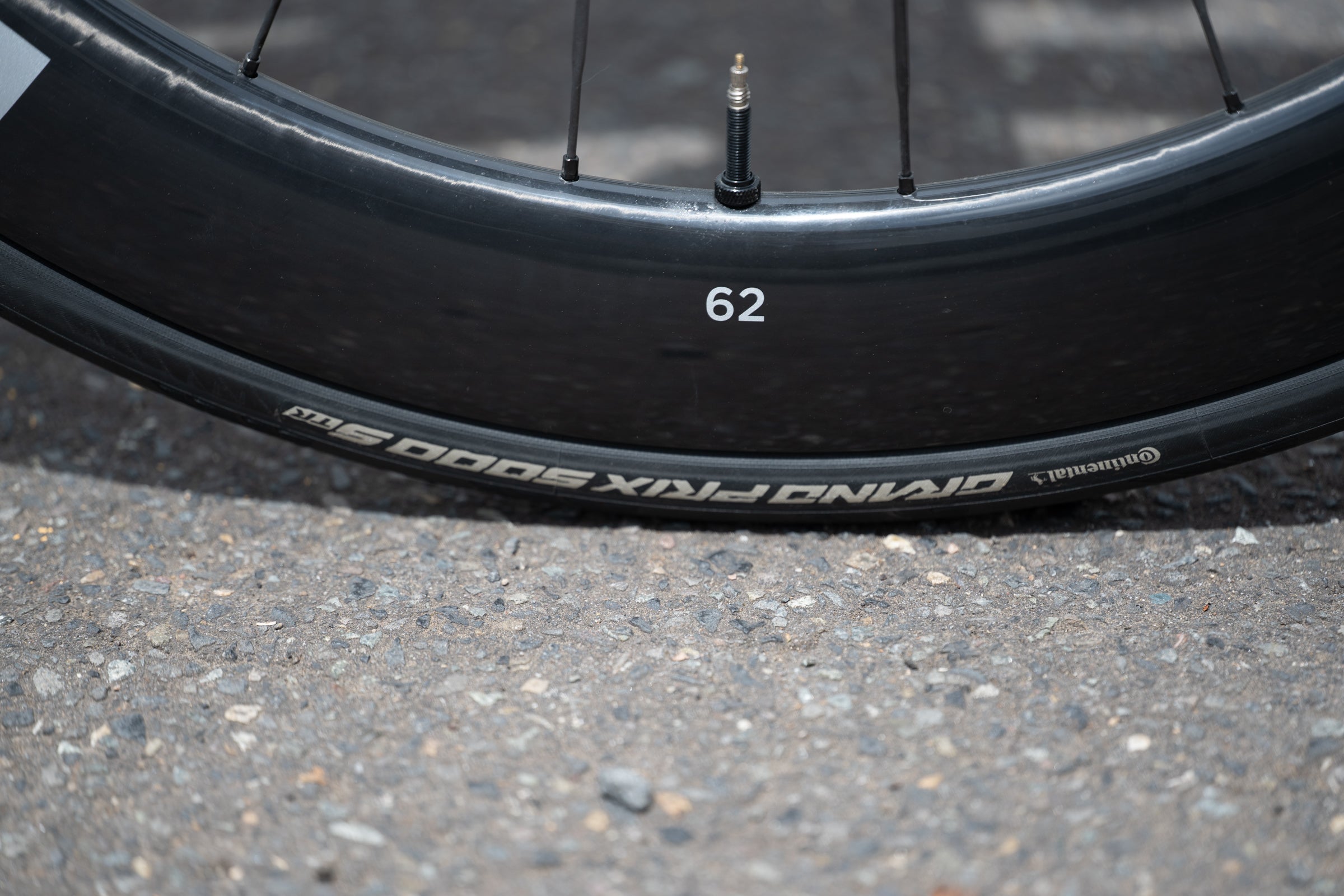
The biggest complaint you will see about the Factor ONE is that it’s not stable in crosswinds. In my own experience, that is just not a reality. I spent about 250 miles riding the Factor ONE in Taiwan, set up exactly as Factor designed it with the Black Inc 62 wheels. One of those days in Taiwan, I even headed out to the coast. Then, when I got home, one of my double centuries went out to the Oregon coast on a different wheelset. In both situations, I dealt with heavy crosswinds, and never for a moment did the bike feel nervous. During that Oregon ride, at one point you ride parallel to the coast, and late afternoon winds off the ocean require leaning into them. Later in the ride, there is a section where you can do 30 mph at around 200 watts, and as you follow the farm grid, you are sometimes turned ninety degrees to the wind. In all of these situations, I had no issue.
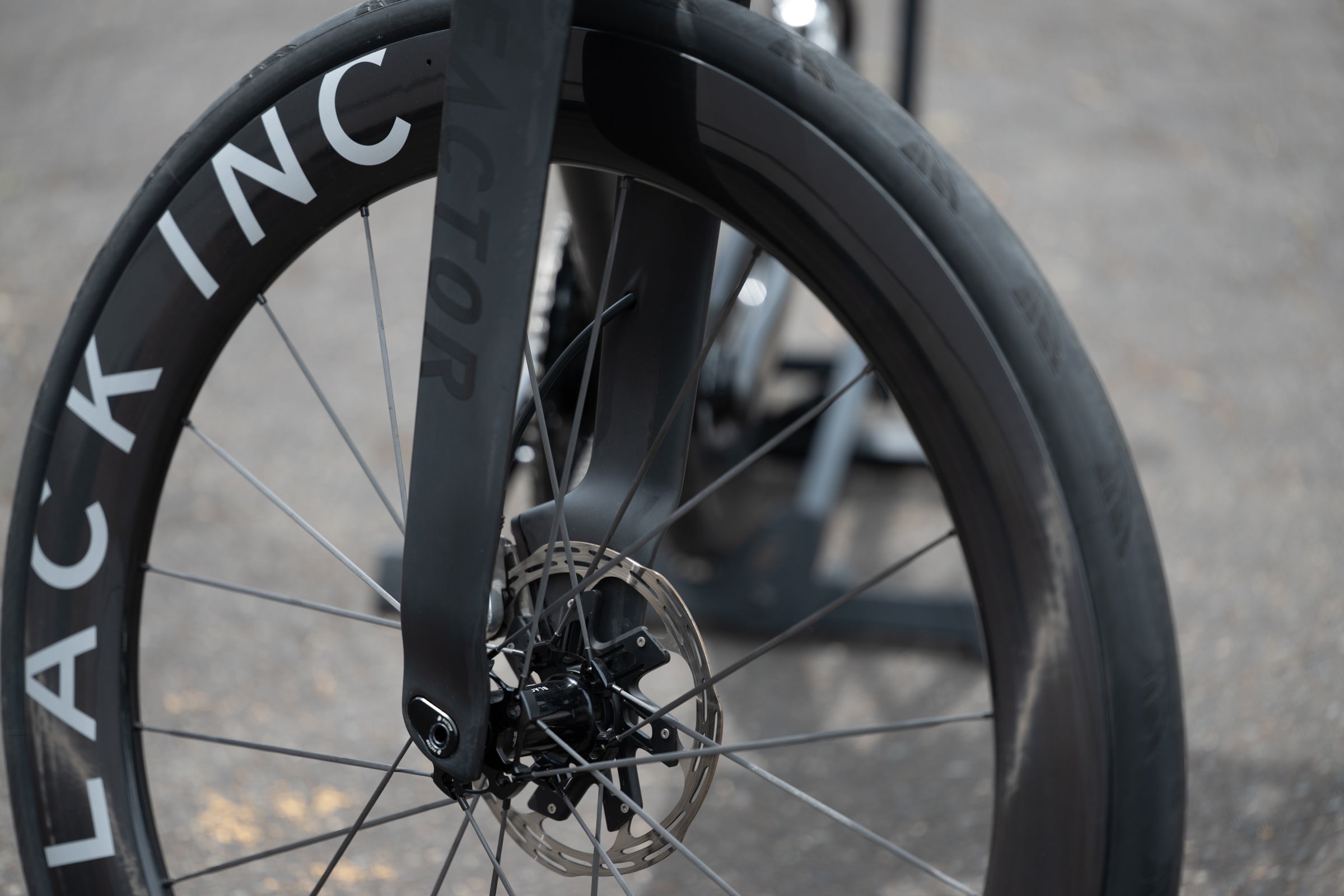
Not having issues in crosswinds actually makes sense if you consider the design of the Factor ONE. I could talk about the ability of modern wheels, like the Black Inc 62s, to manage crosswinds, but you can also just look at the fork. Remember that smashed look to it? That comes, partially, from 4mm less rake and, by extension, more trail. The Factor is meant for high-speed stability, and the front wheel doesn’t especially want to turn. Depending on your point of view, that will make the bike feel a bit sluggish to turn, but if your goal is going fast in a straight line, this bike does it like no other.
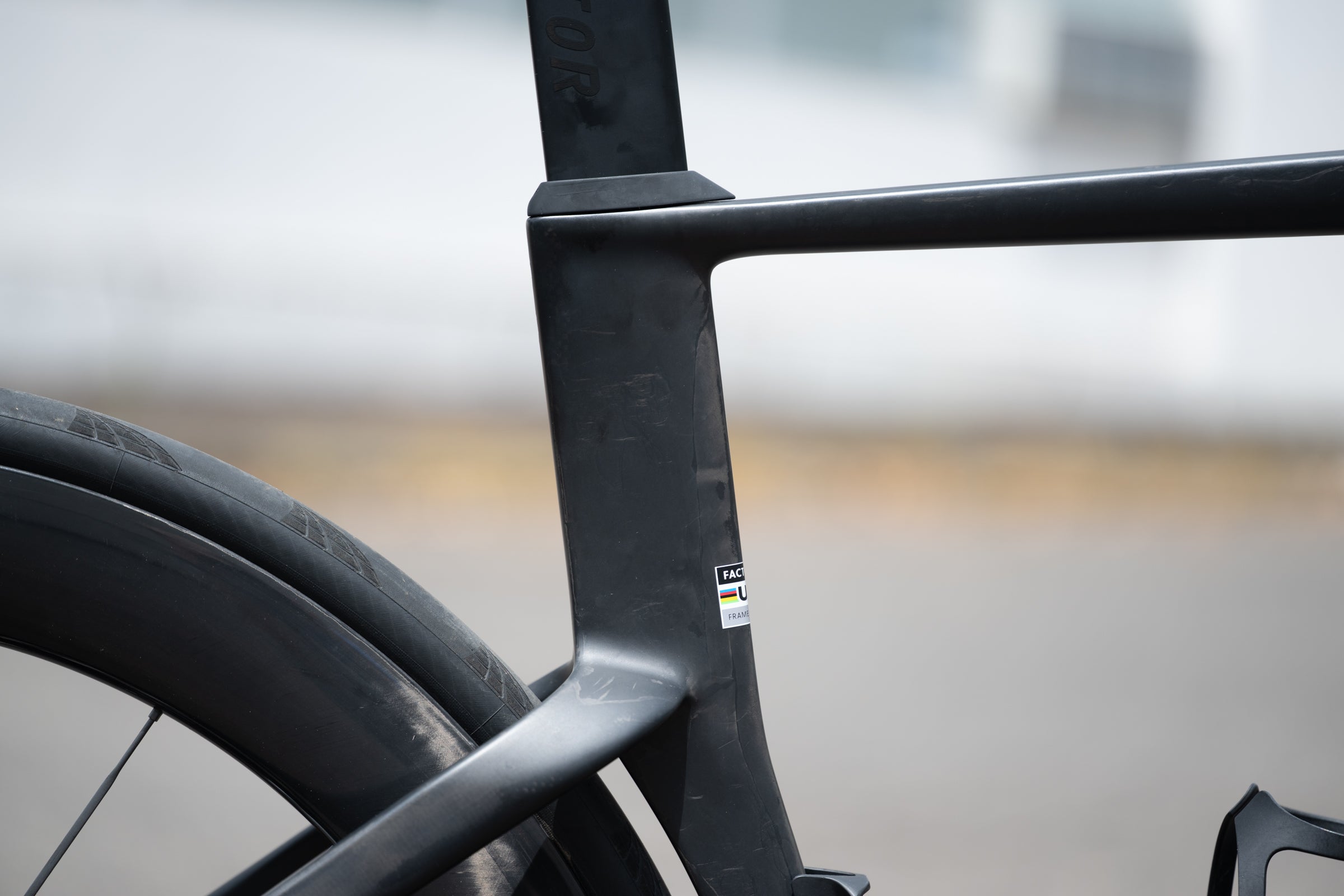
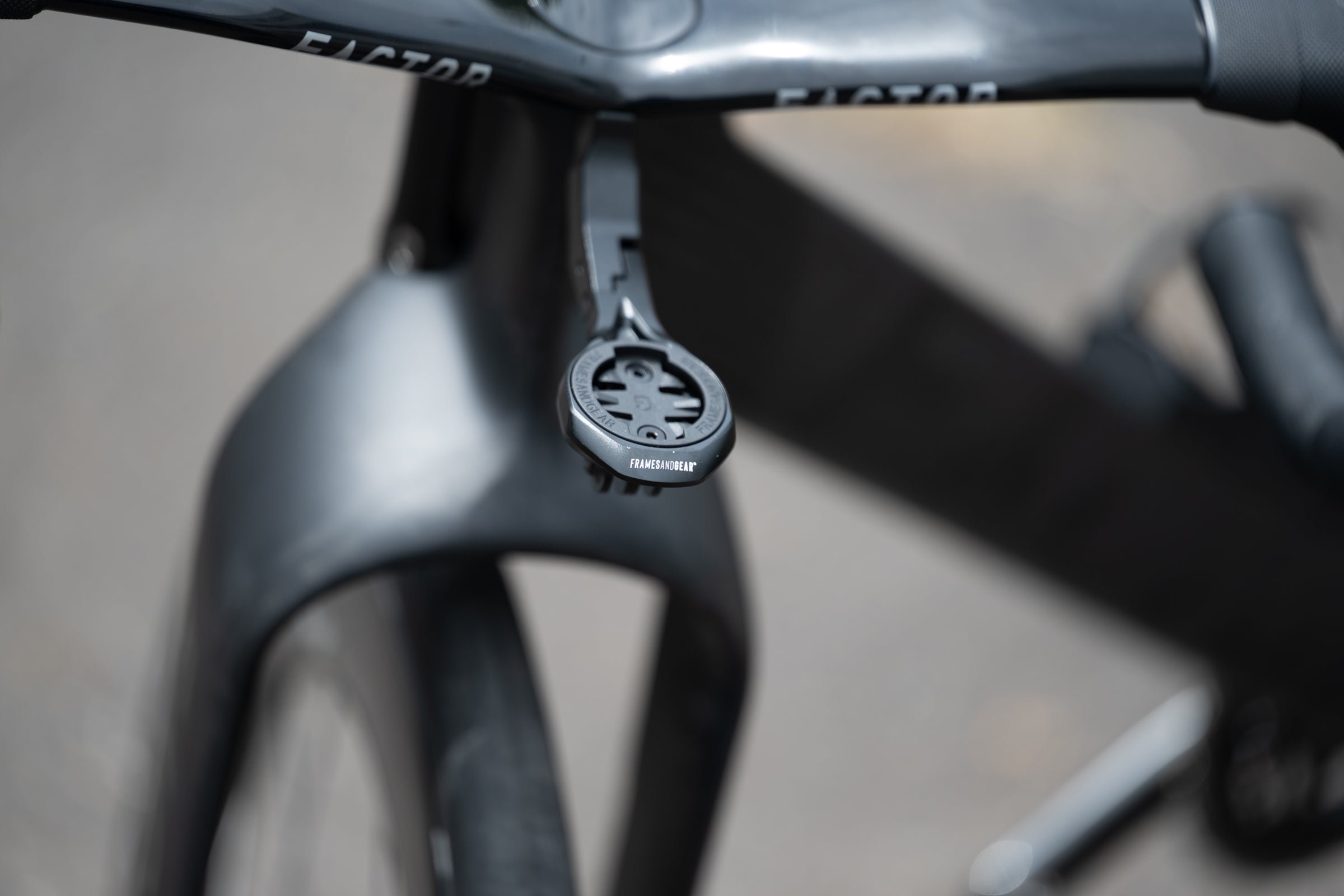
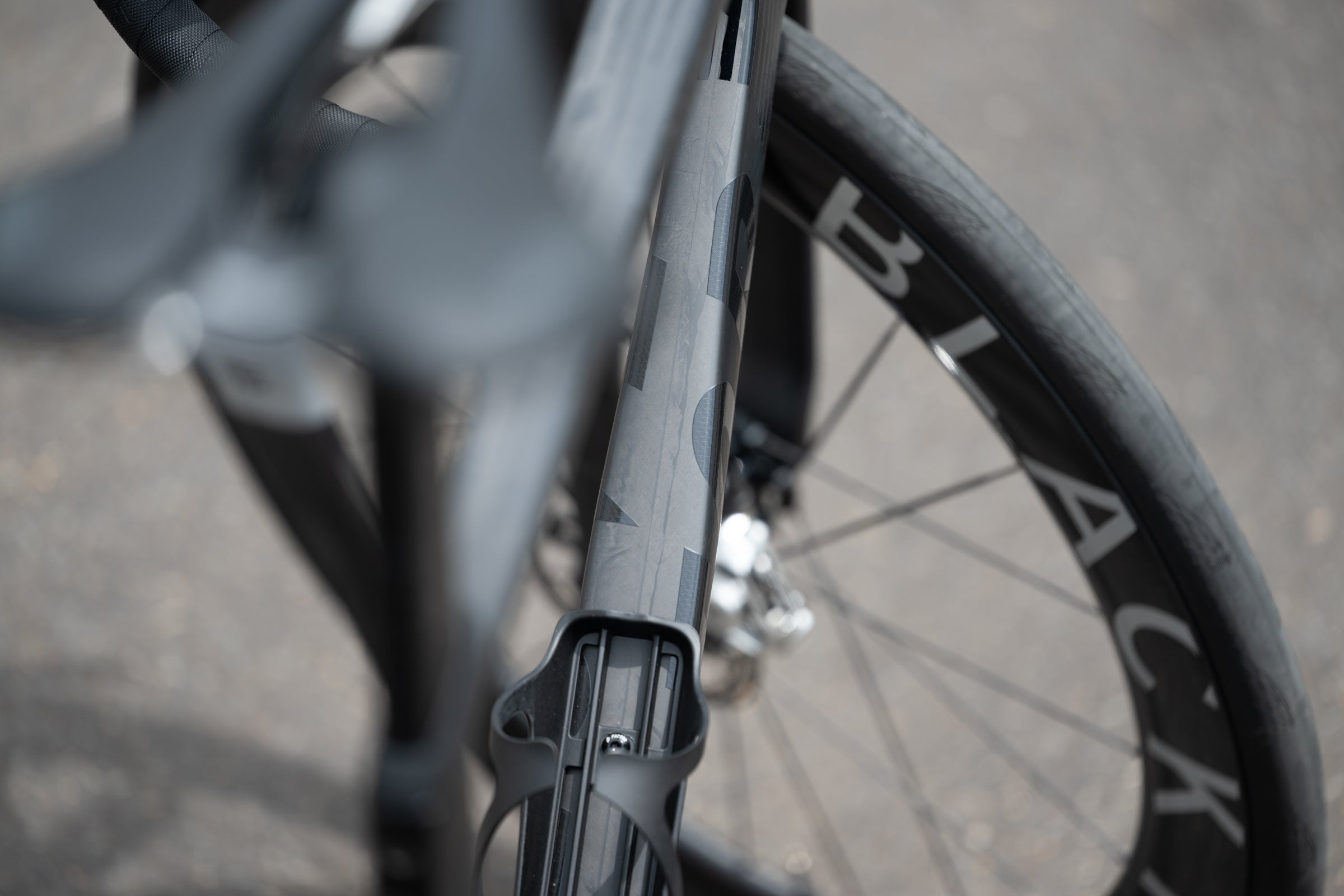
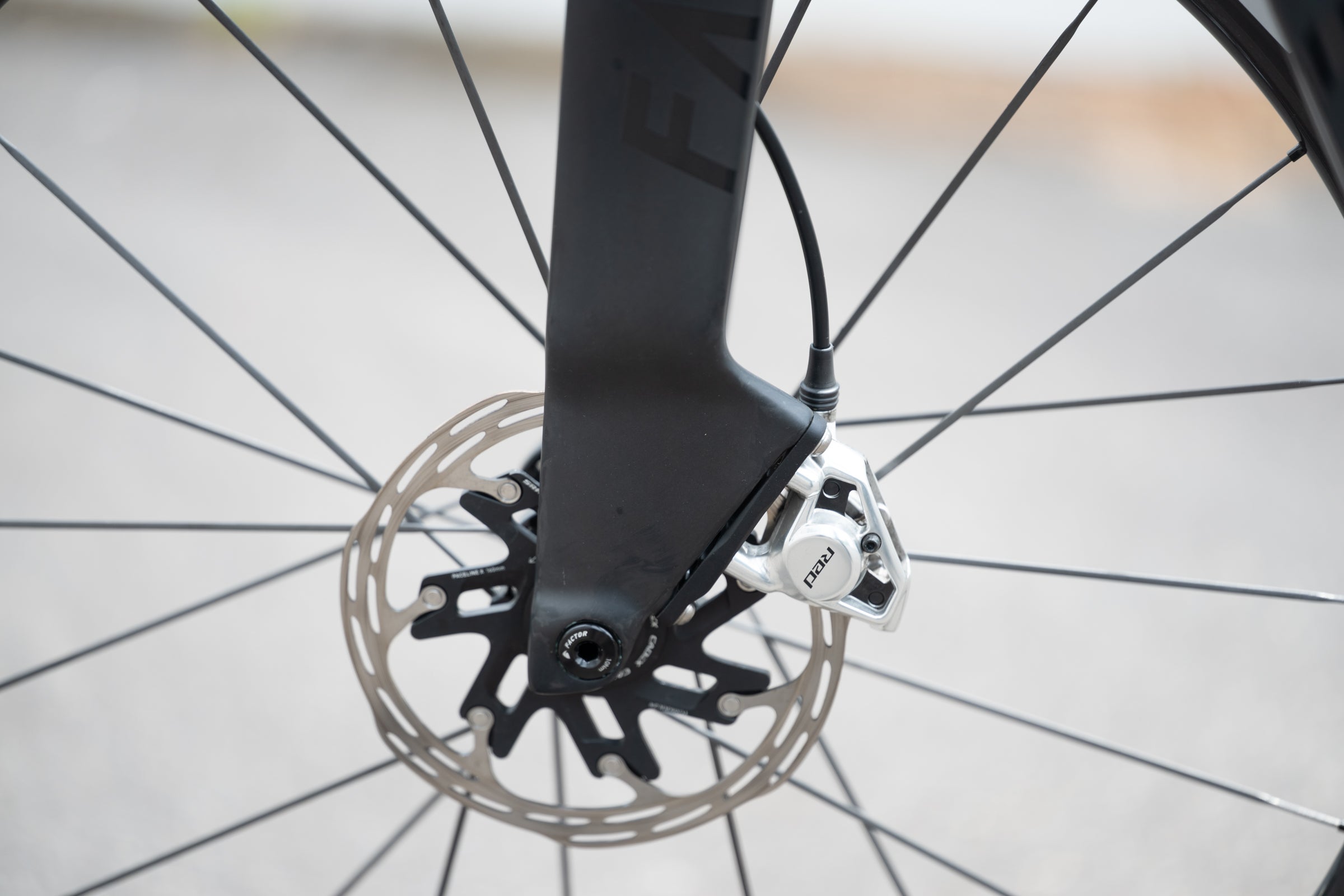
Now, the other aspect of that fork is how massive it looks from the front. The carbon flares out from the axle, and there are huge shoulders at the top before it dives back into the bayonet design that attaches the fork to the rest of the bike. The bike is already going to be stiff because there are huge slabs of vertical carbon everywhere. Nothing on this bike is providing vertical flex, and Factor tells me that the bayonet design is so stiff that it couldn’t be used on the Elara gravel bike that shares a similar fork design.
ADVERTISEMENT
When you ride the ONE, expect a stiff ride. If you ride over a crack in the pavement, you will feel it in your arms first, and then you’ll feel it in the saddle. Nothing about this bike softens the experience.
Be careful with the steering stop
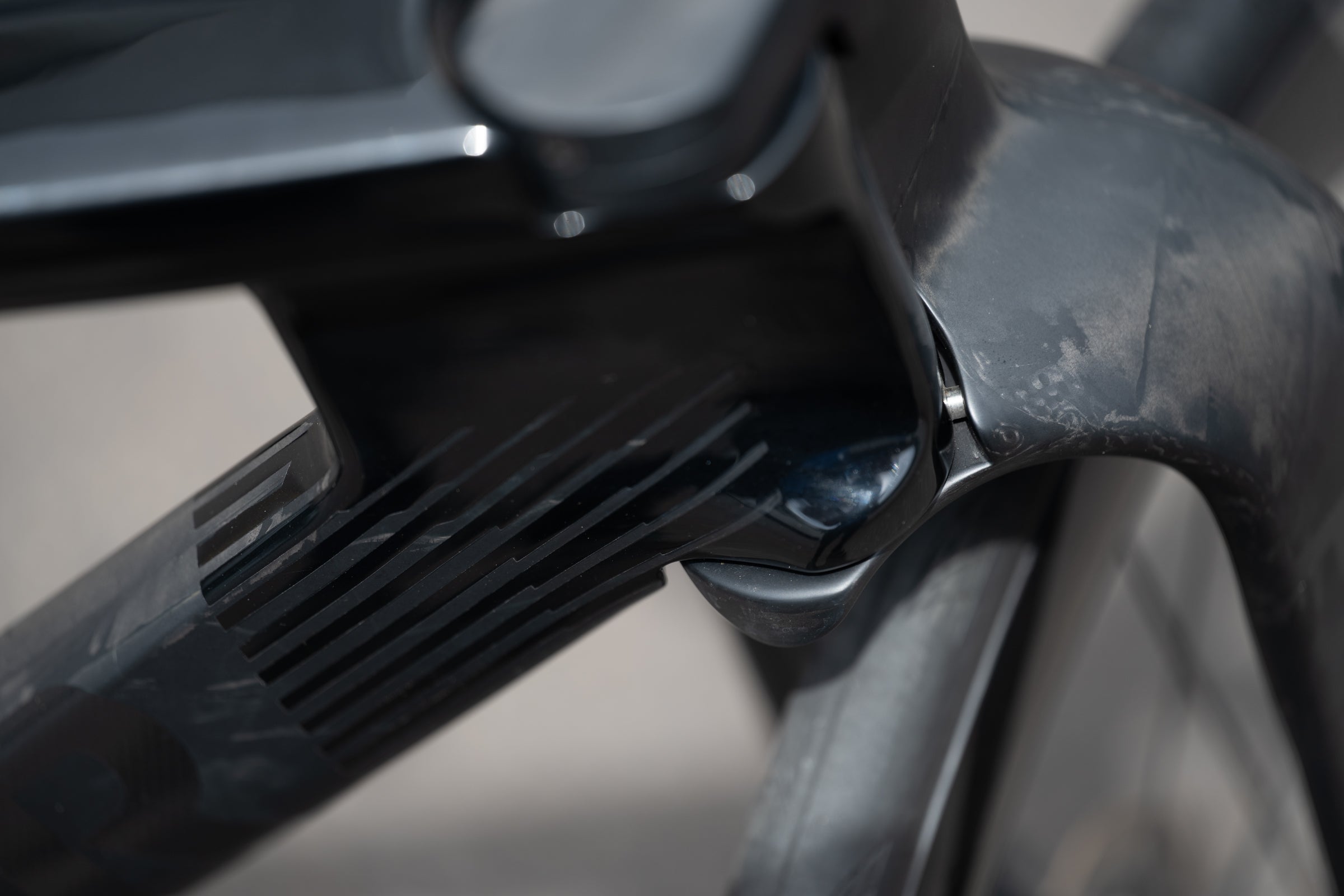
Another aspect of that integrated fork is the potential for the fork legs to contact the downtube, or for the handlebars to strike the top tube. Because the chassis overlaps so tightly, it would be easy to cause damage in a careless moment of over-rotation. To prevent this, Factor utilizes a steering stop.
That steering stop relies on metal contacting carbon, and it warrants a degree of caution. Because of the fork’s massive profile, there is a substantial amount of carbon reinforcing that area—it is certainly not fragile—but it is still possible to cause damage there, and unfortunately, I did.
ADVERTISEMENT
I have no definitive explanation for how it happened, but I found a crack in the carbon just above the steering stop on the shoulder of the fork. I was traveling with the bike, subjecting it to the unpredictable forces of transit, and with a sample size of one, I have no way of knowing if this is a common occurrence. It could have simply been a localized manufacturing flaw on this specific frame. Still, it is a design feature that requires you to be mindful when handling or packing the bike.
In fact, if you are traveling with this bike, you might want to carefully consider how you pack it. I had originally planned to bring it back from Taiwan in a bag that protects the handlebar using a rigid crossbar that spans the drops in front of the headtube. That setup simply would not work because the ONE’s headtube and bayonet fork protrude too far forward. In general, the bike is uniquely shaped enough that you may run into similar compatibility issues with standard travel gear. If you are flying with it, I would point you toward a hard case like the Buxumbox or the Shokbox instead, as both will fully protect the bike.
How I turned the Factor One into the fastest version of itself
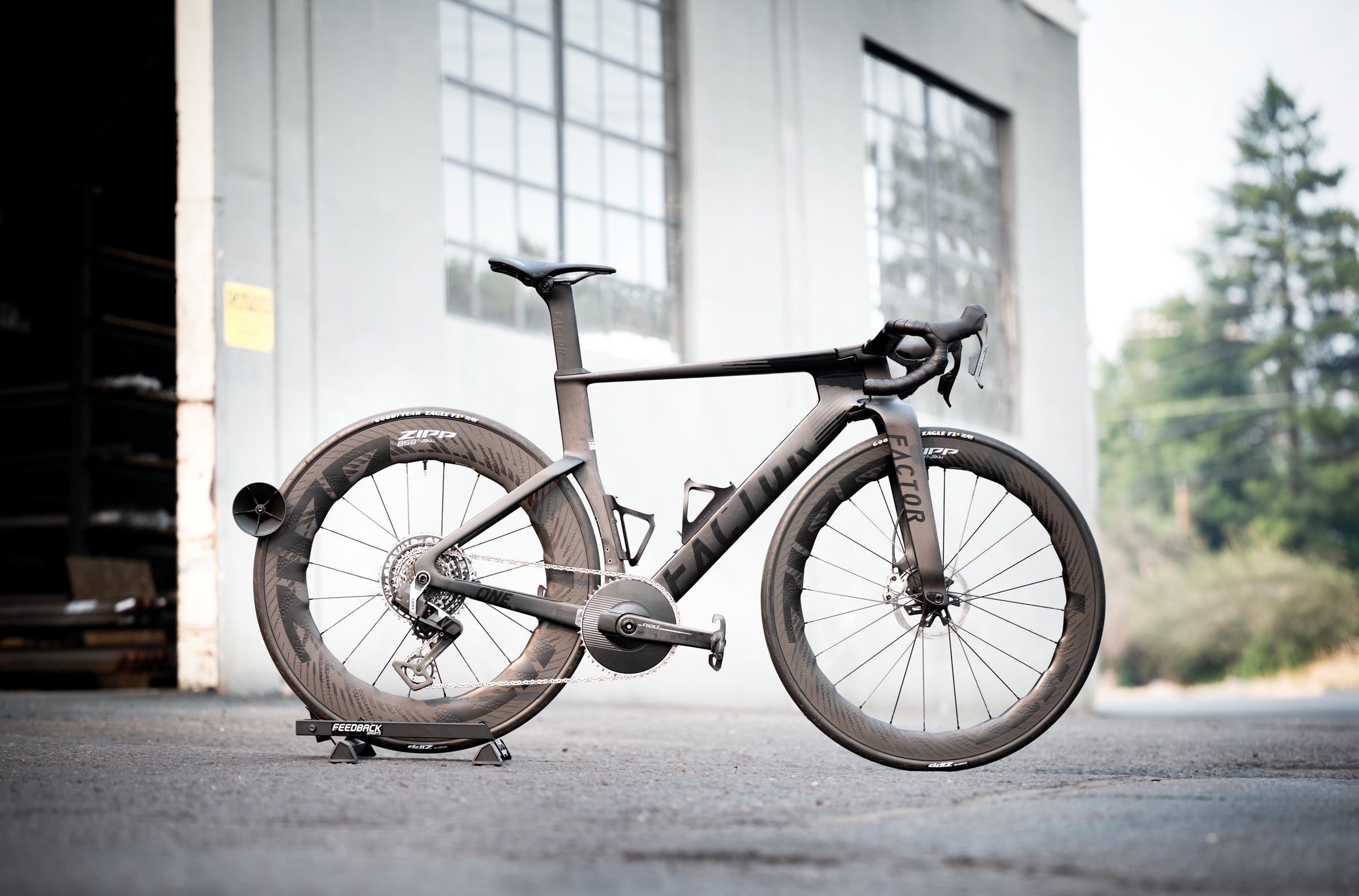
One of the things I love about the Factor ONE is how ostentatious it is. No one buys this bike and thinks, “Hey, I hope no one notices I’m riding one of the world’s fastest road bikes.” This bike is meant for riders who are fine with not settling for a compromise between aero and weight. The stock bike with the SRAM RED groupset and Black Inc 62 wheels weighs in at 7.57 kg (16.7 lbs), and while it climbs well enough given how stiff it is, this is not a lightweight climber. It also doesn’t feel nimble.
This is a bike that feels the most alive when you are riding on the flats in an aero position and you are ready to clock in for work. I like to put on headphones and push until I can’t. That means, to me, the Factor ONE invites the question: How fast can I make it? I decided to find out, while also keeping an eye on building a bike for my particular flavor of ultra-endurance riding.
ADVERTISEMENT
The bike is already one of the fastest in the world. Independent testing from two other sources put the Factor ONE and the Cervelo S5 at the top, and one of those sources tested the ONE as even faster with some modifications. Clearly, there was some speed to be found in this frame.
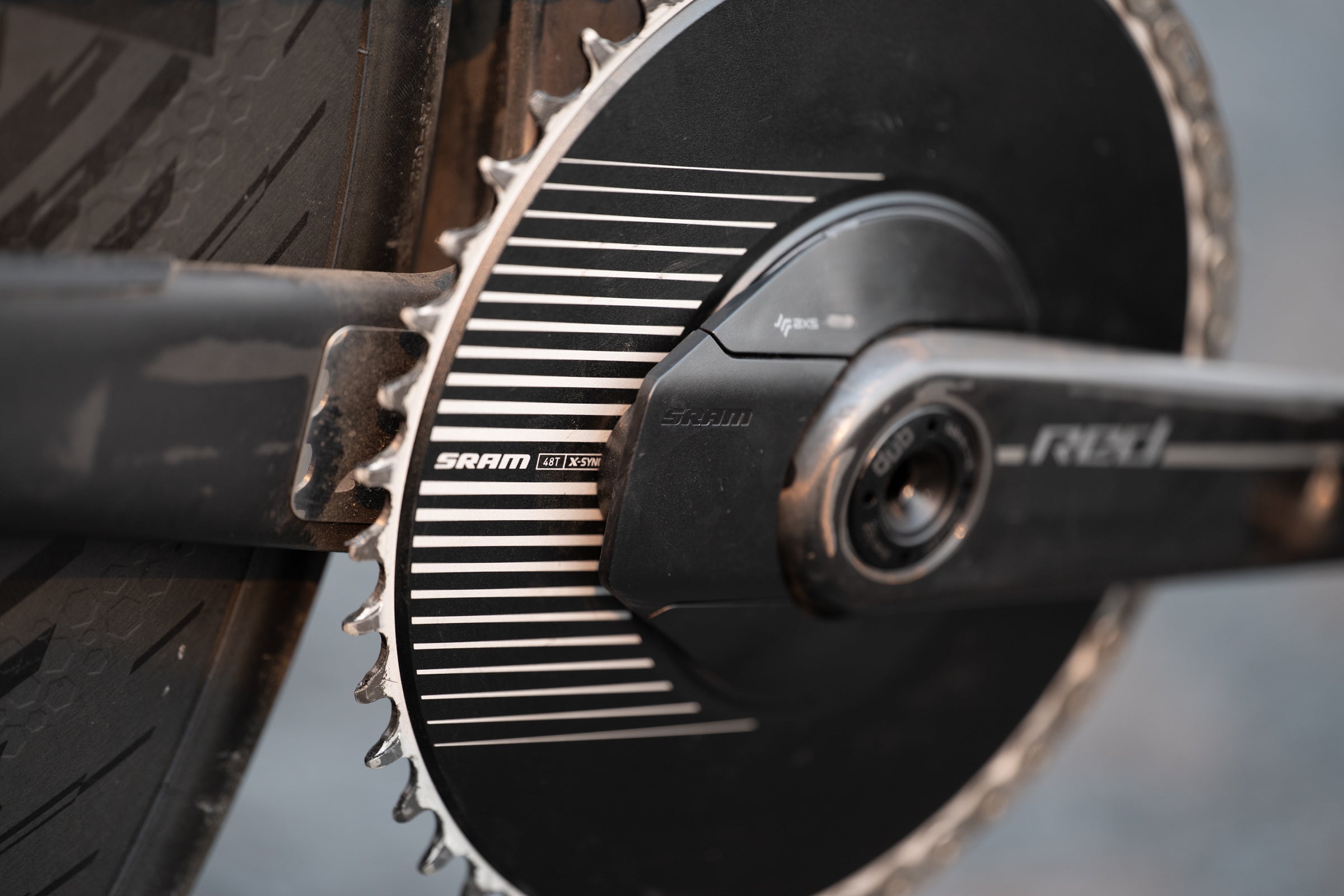
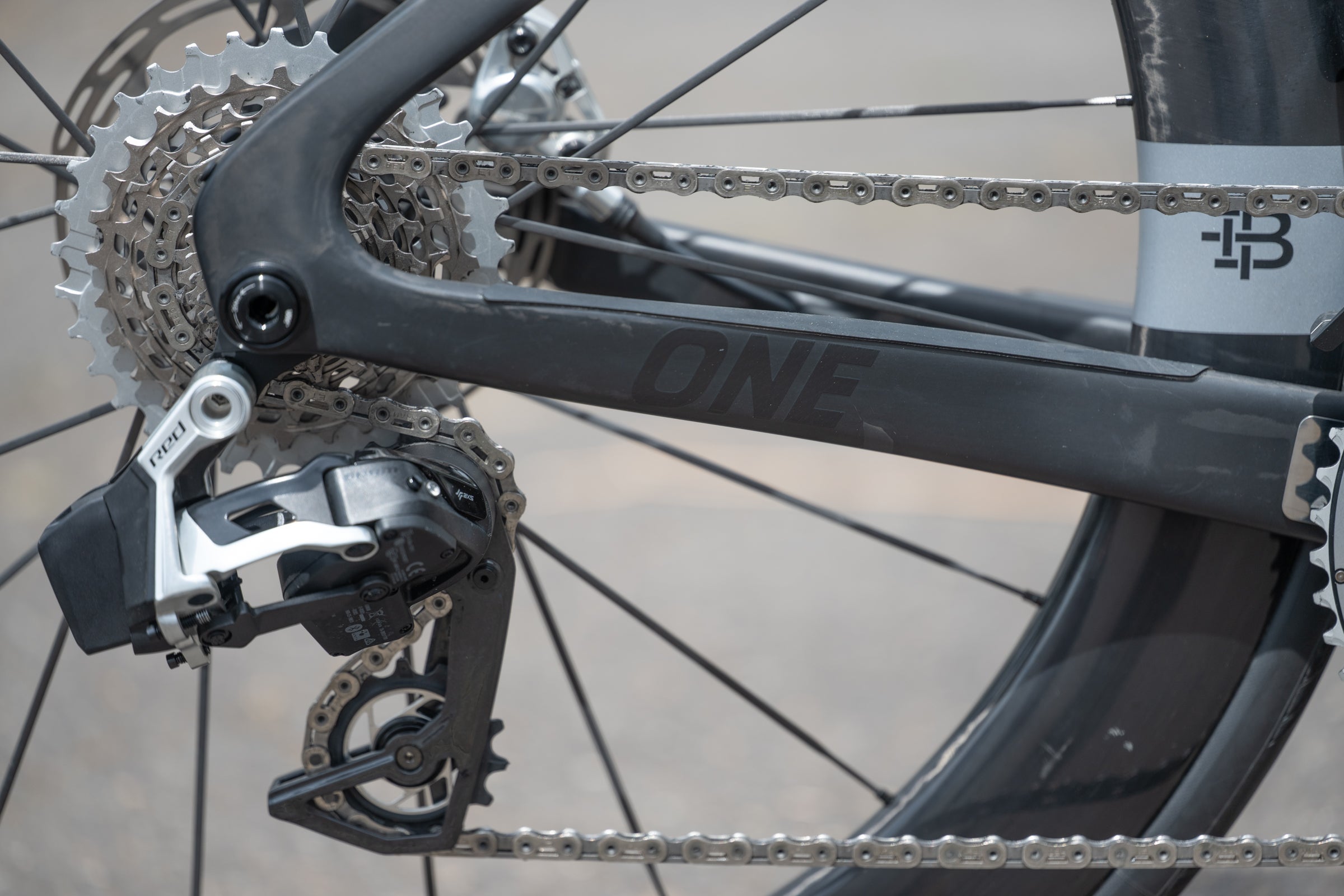
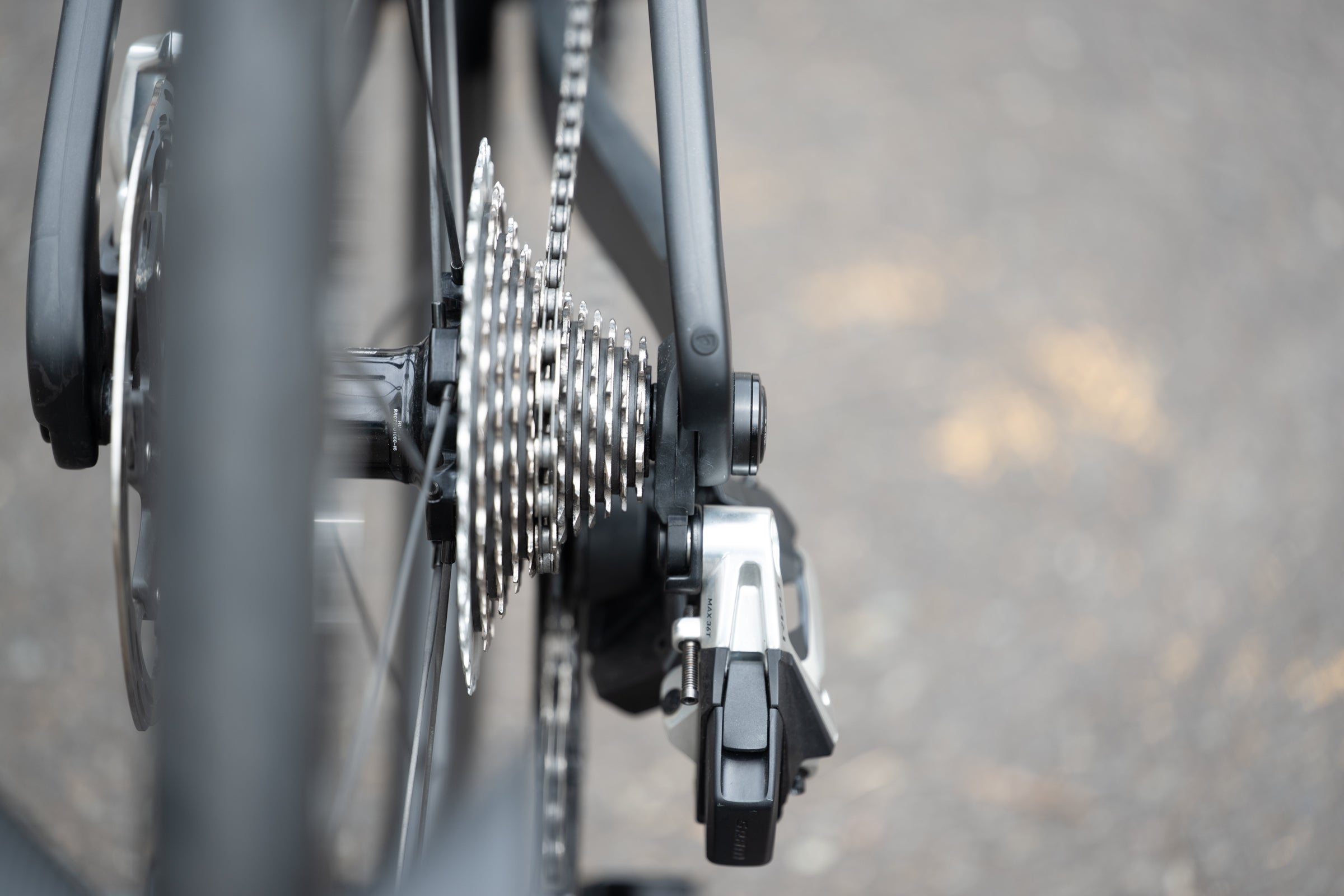
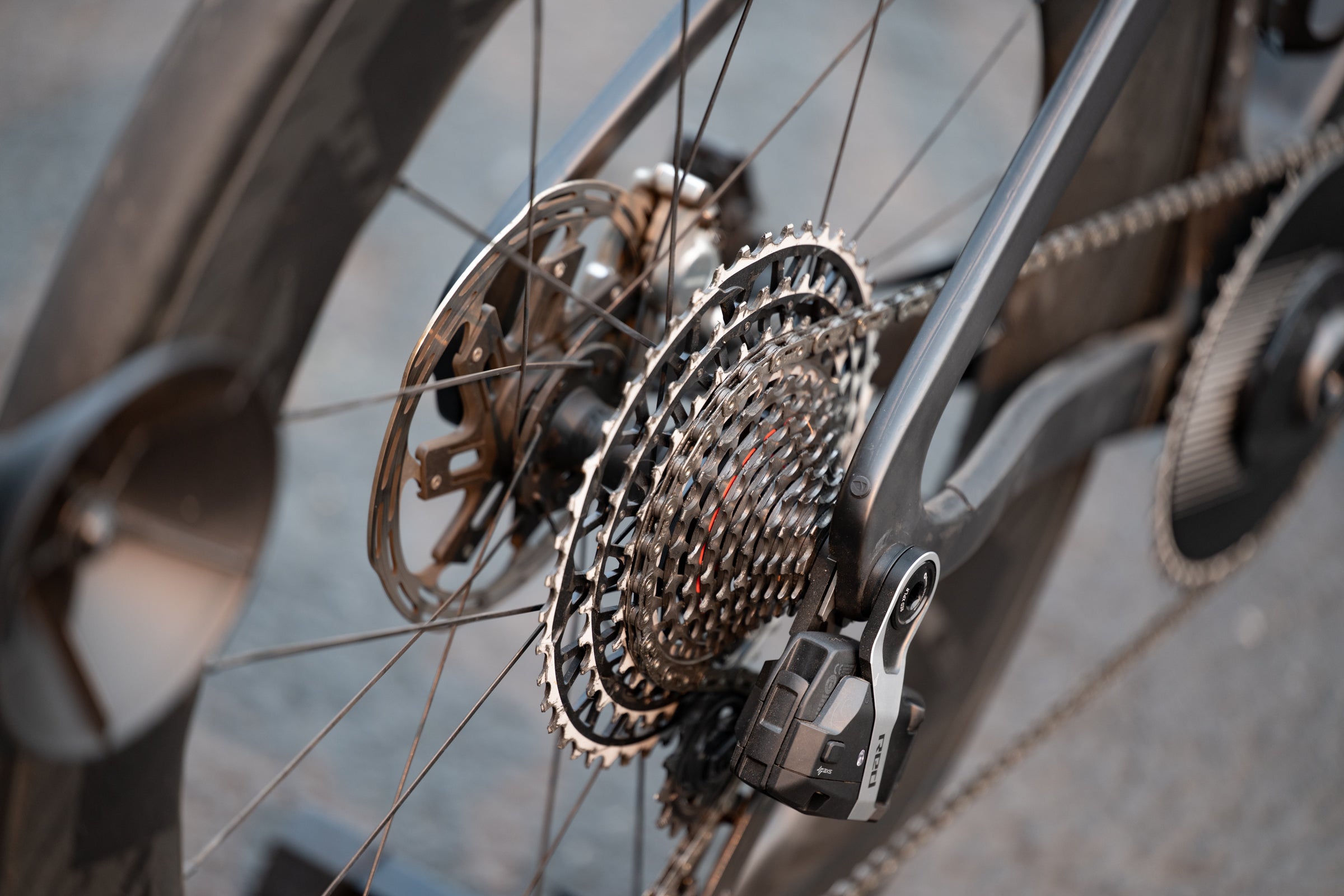
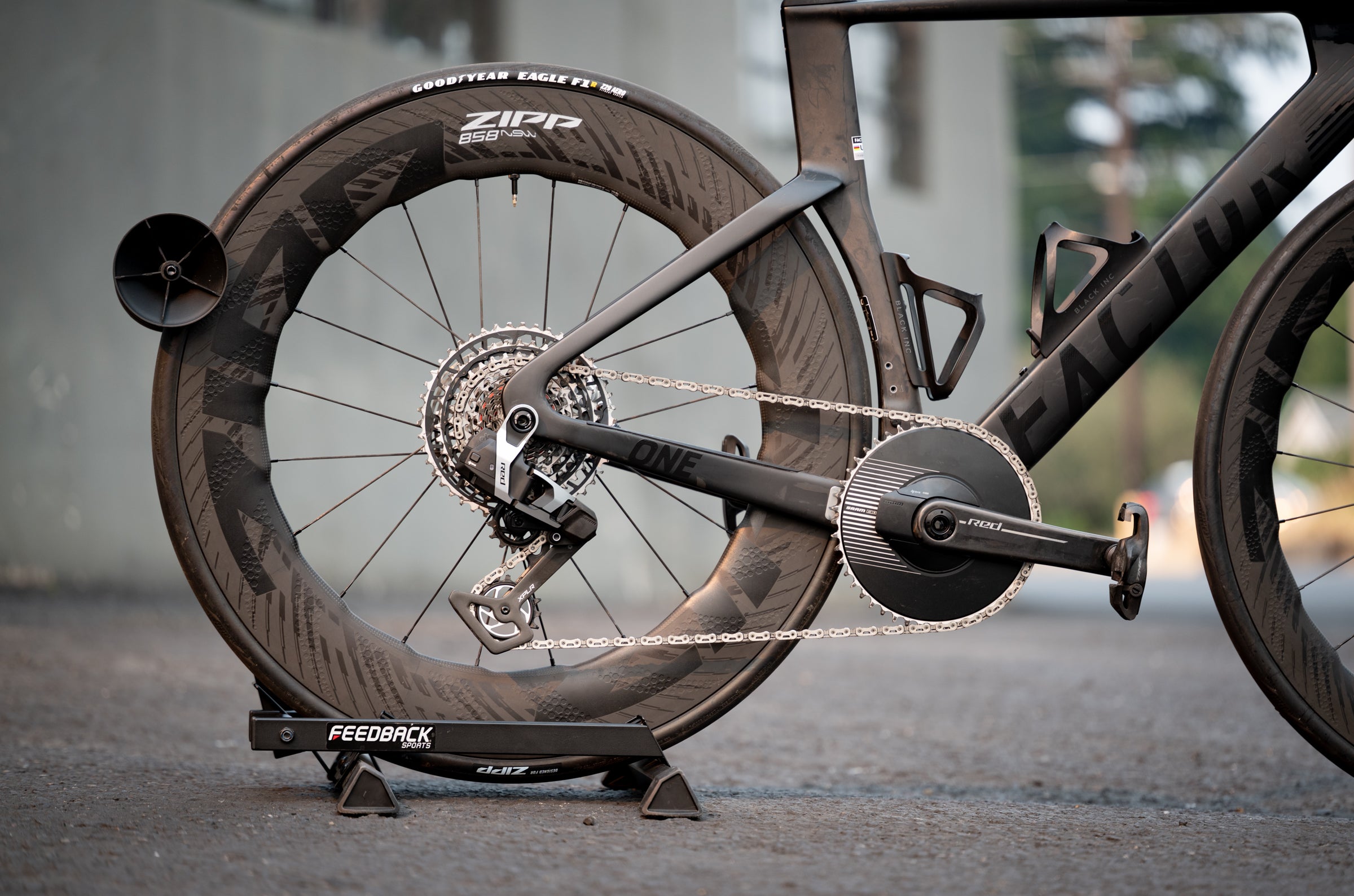
The first thing I changed was the groupset. Tour magazine found 1.4 watts by changing the groupset to 1x, so I did the same and switched from the original SRAM RED 2x to a 1x SRAM RED XPLR setup. My choice of gearing was a 48T aero chainring paired with the 10-46 XPLR cassette. You can read more about why I think 1x for road is the future in a separate article, but I’ll just say here that I’ve tested this on both of the double centuries I rode—with the second featuring significant climbing. The range is essentially the same as a 52/36 with an 11-34 in Shimano language, and I can’t imagine wanting to go back to 2x.
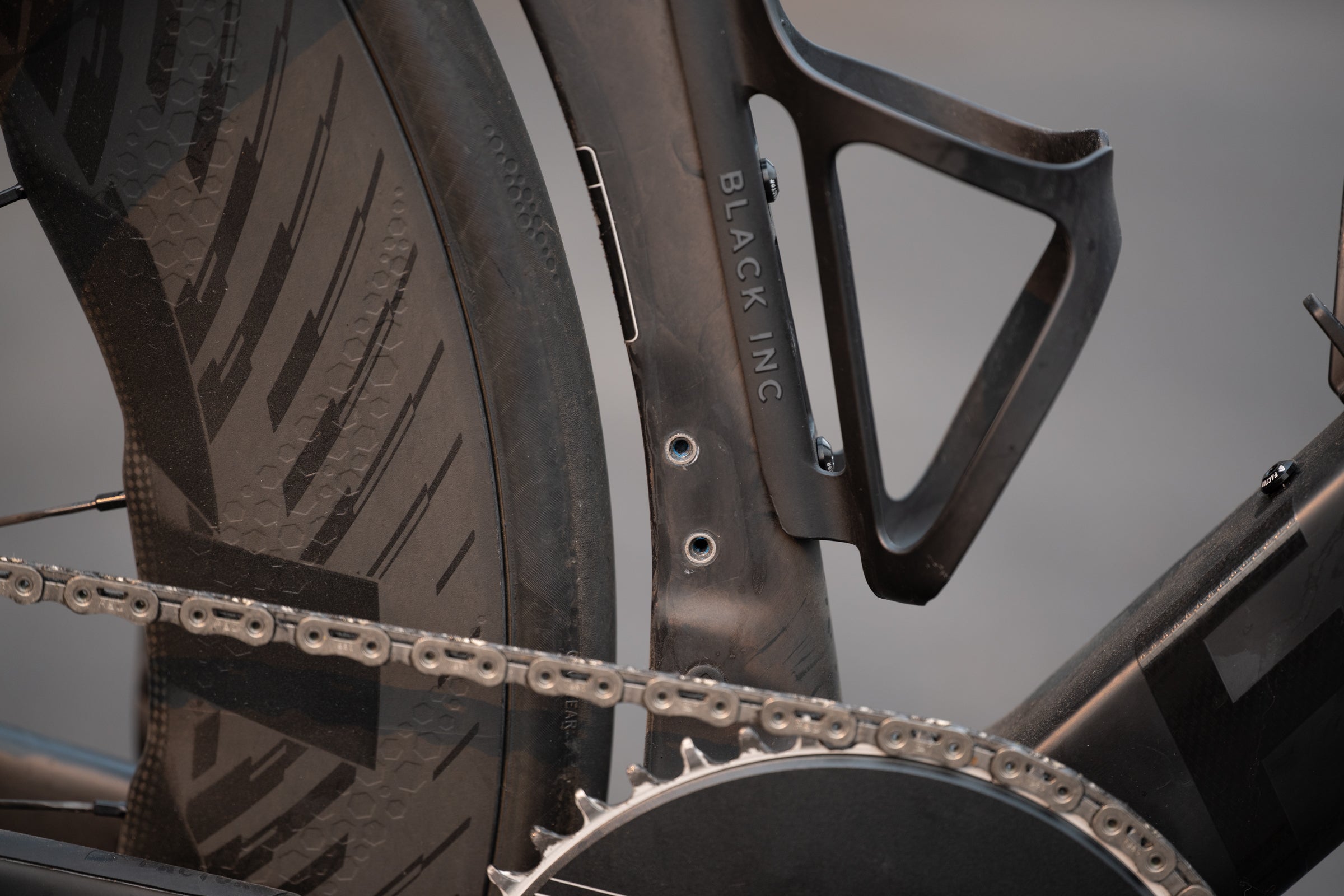
Still, 1.4 watts isn’t anything too massive, and I wanted to see where I could take this. To that end, I swapped to the UCI-illegal Zipp 858 NSW in the rear and the Zipp 454 NSW in the front. If I had to do it all over again, I’d actually opt for two 858 NSW wheels, but at the time, I was worried about weight and crosswind stability. Don’t be. The 858 NSW is incredibly stable in crosswinds, and the bike is already relatively heavy—just go all in. I paired the Zipp wheels with the Goodyear (Zipp) Eagle F1 R Z29 Aero tires.
The result of this experiment was an increase in weight. The new setup hits the scales at 7.72 kg (17 lbs), but that was expected given how big the rear wheel is. The real gains were in aerodynamics. I used the GiBLI aero sensor paired with a Hammerhead Karoo bike computer to measure the change.
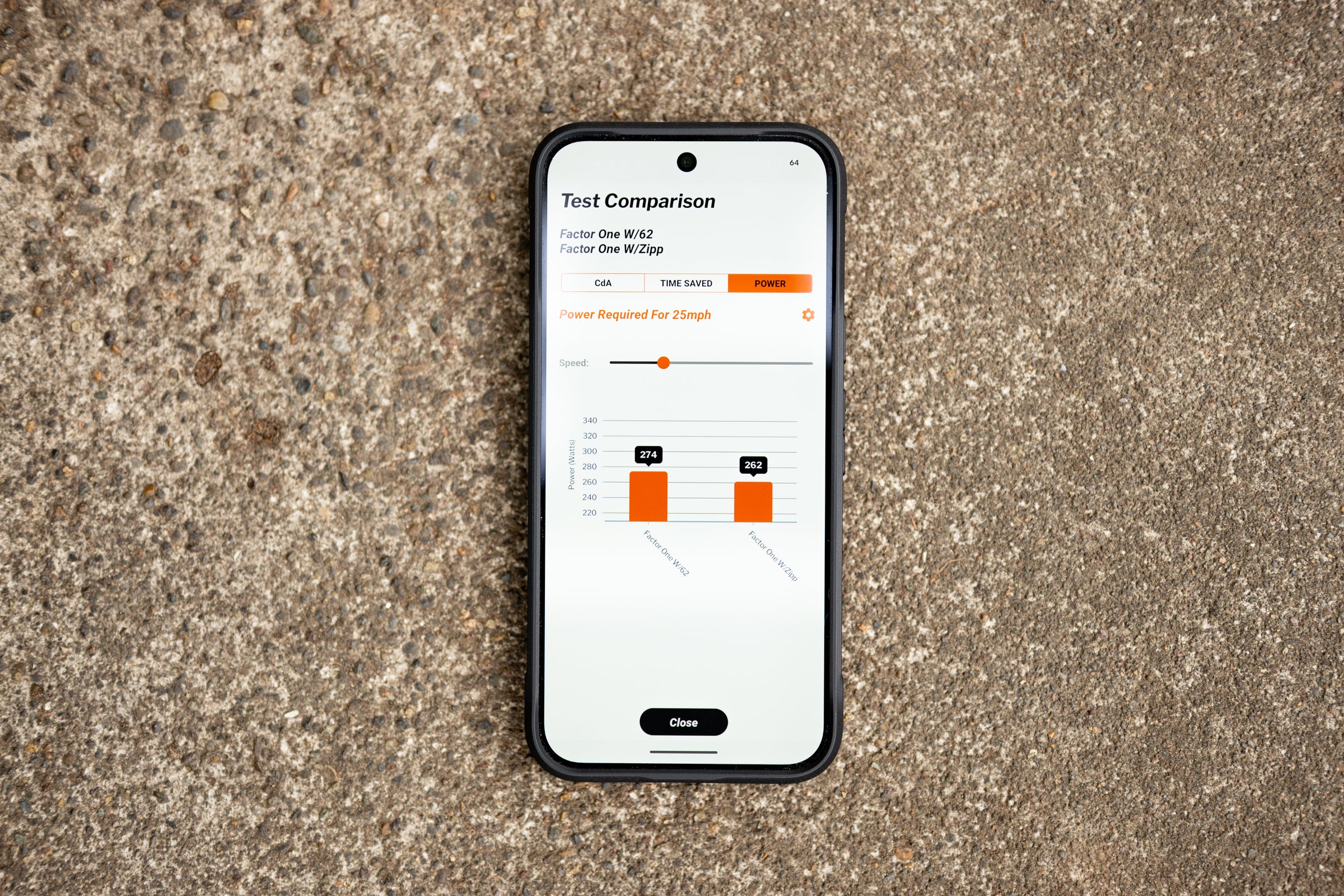
Unfortunately, I was not able to get testing done before changing the groupset, but we already have an idea of the gains available from other wind tunnel testing. That means what I tested was the Black Inc 62 wheels with 28mm Continental GP5000 tires against a front Zipp 454 NSW and rear Zipp 858 NSW wheelset with the Zipp aero tires at 29mm. All the clothing I wore was the same, and the test was completed in the same location, on the same day, back-to-back with only the time it took to change wheels inbetween. Keep in mind this is not strictly aero gains since the tires changed too. Instead, this is total system drag, with the Zipp setup being faster and a difference of 12 watts at 25 mph (262 watts vs. 274 watts).
ADVERTISEMENT
For those who want to further scrutinize those numbers, feel free to drop questions in the comments, but I was wearing Castelli aero socks, Castelli aero gloves, Specialized Remco shoes, a Specialized Evade 4 helmet, POC Propel sunglasses, an Ornot Park Jersey, and The One Off Xenon bib shorts. My position consisted of hands on the hoods with my forearms parallel to the ground, my head as low as I could get it while still seeing ahead of me, and my arms tucked as tight to my knees as I could manage while pedaling. For what it is worth, holding the same position was relatively easy since I could not physically go any lower or tighter. I can also tell you that at 45 kph (28 mph), the numbers are 372 watts for the Black Inc wheels/GP5000 and 355 watts for the Zipp setup. That’s a 17-watt difference.
Also of interest—not a scientific test, but I think it’s an interesting anecdote—is my unplanned head-to-head against the Enve Melee V2. It happened because I was testing that bike and feeling good, so I attacked a segment I always attack. It is a 0.56-mile stretch with a 1.4% uphill gradient, and the Melee was running the older Enve SES 4.5 wheels and Pirelli P ZERO Race TLR SL-R (aero) tires. I covered the segment in the same 1:19 time on both setups with similar wind and the same temperature, but it took an extra 10 watts on the Melee, despite that bike weighing 6.8 kg. Those runs are my fastest ever.
ADVERTISEMENT
That short uphill sprint isn’t what this bike is about, though. By pairing the Zipp wheels with a 1x drivetrain, I built my ultimate ultra-endurance machine. I don’t care about sprinting, and I won’t be carrying anything that doesn’t fit in my jersey pockets. I just want aerodynamic efficiency and stability for hours of pedaling, and that’s what I built. The wheels are big, but the ONE has kept its original personality. It climbs as well as it ever did, and when a crosswind catches the rear wheel, the bike never gets nervous because the force isn’t acting on the steering axis. Instead, it just feels like the hand of God has moved the bike slightly to the side.
More than that, the feeling of free speed during coasting is addictive. When I ride with people on round-tube bikes with front bar bags (the aero doesn’t matter crowd), I can tuck on descents and drop them while they pedal. If I’m in a paceline and I need to slow, there’s no point in popping into the wind and sitting up; it won’t be enough. I have to use the brakes.
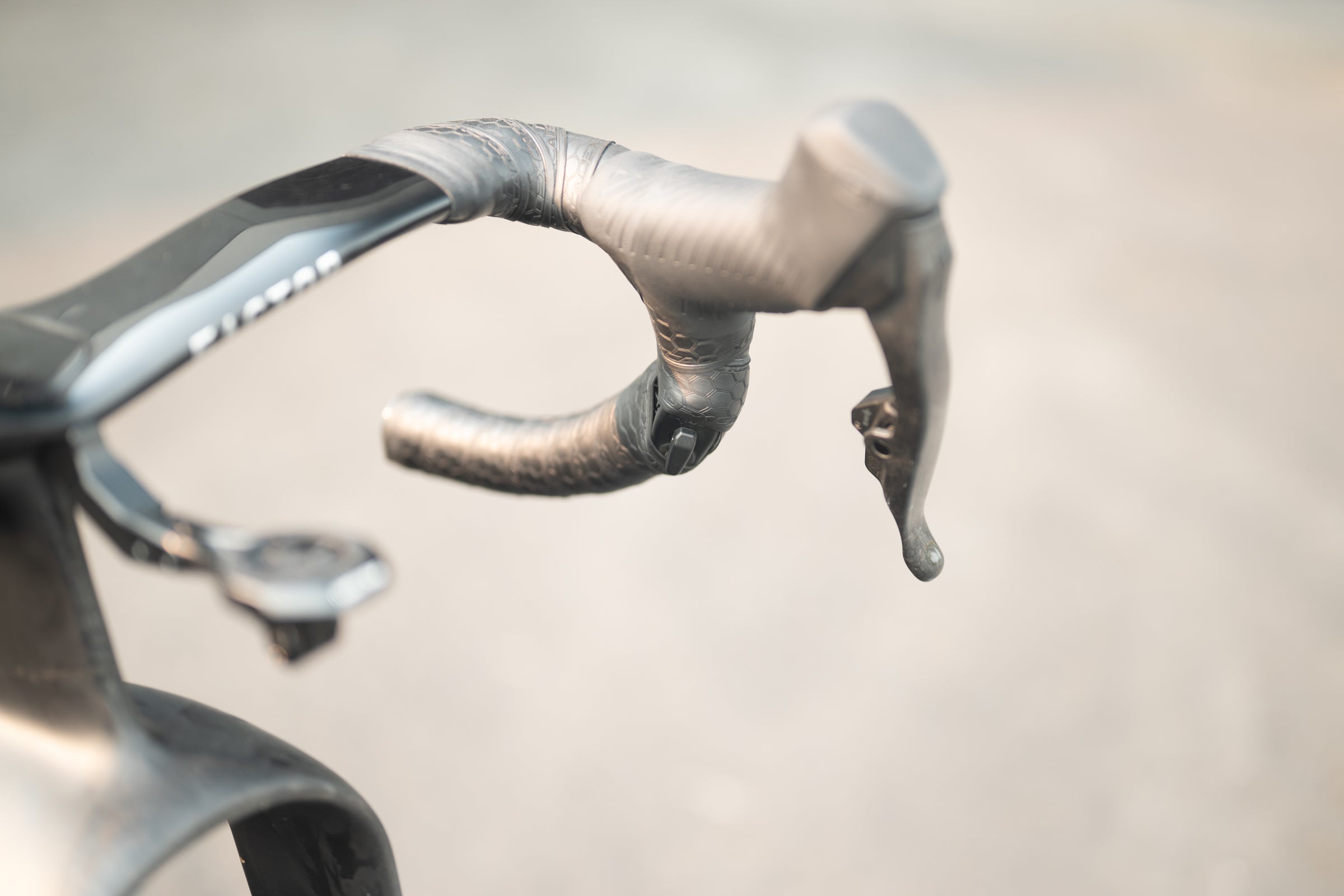
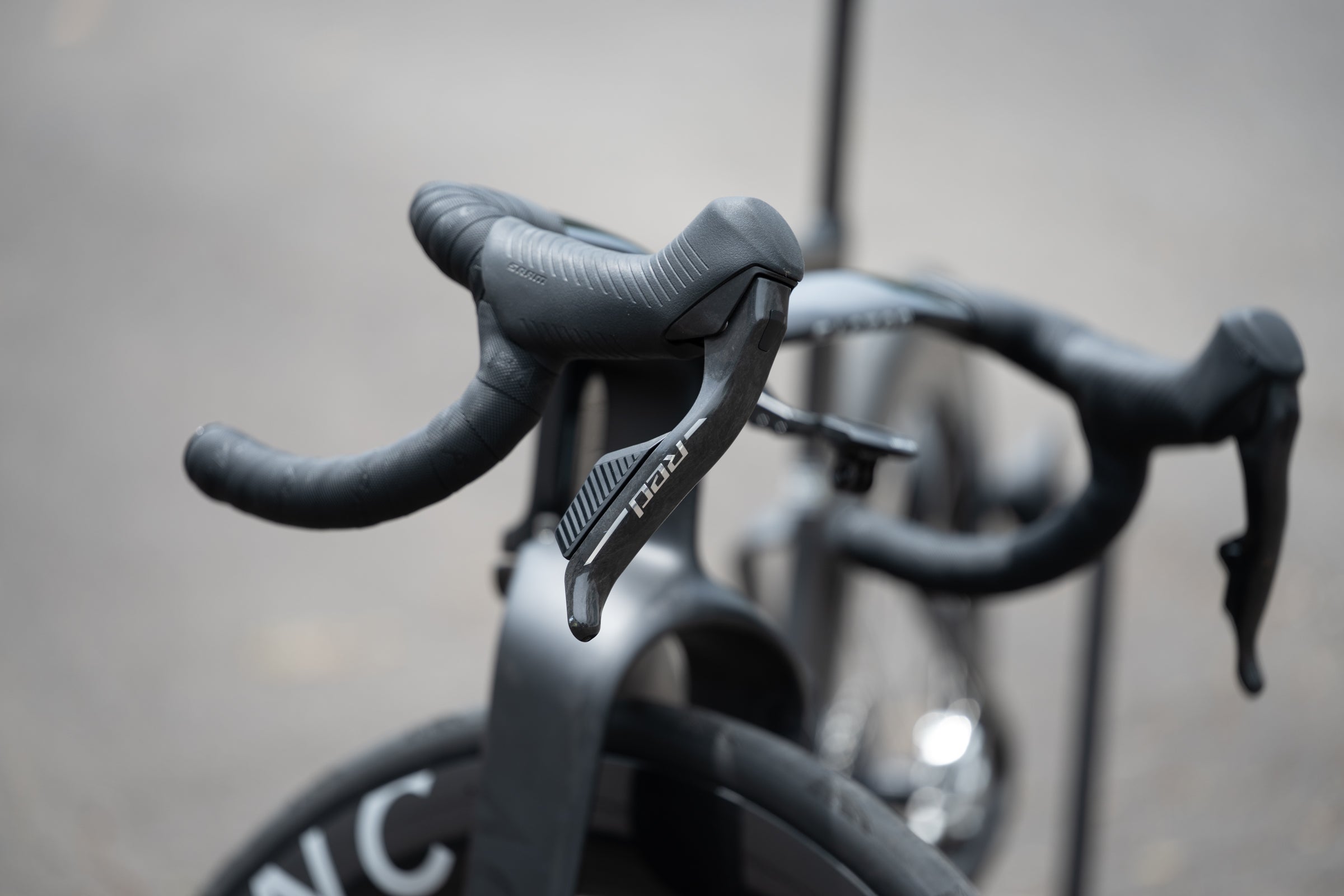
Of course, you could swap these Zipp wheels onto almost any modern race bike and go fast. The difference here is knowing the frame matches the wheels, and more importantly, it matches my fit. Because the geometry actually gives me the room to stretch out, I can comfortably live in the drops. I added SRAM blips right into the curve of the bar, and now I can sit there for long distances without moving anything but my fingers to shift. The Factor ONE is a great bike direct from Factor, but as I have it set up, it’s one of my all-time favorites.