Updated July 15, 2026 10:48AM
Fabian Cancellara on Tudor's Tour Goals: 'If You Don't Have Ambition, Stay Home'
The cycling legend details his hands-on role with the team, their hunt for a Tour de France stage win, and why true ambition means prioritizing the road over the gravel trend.
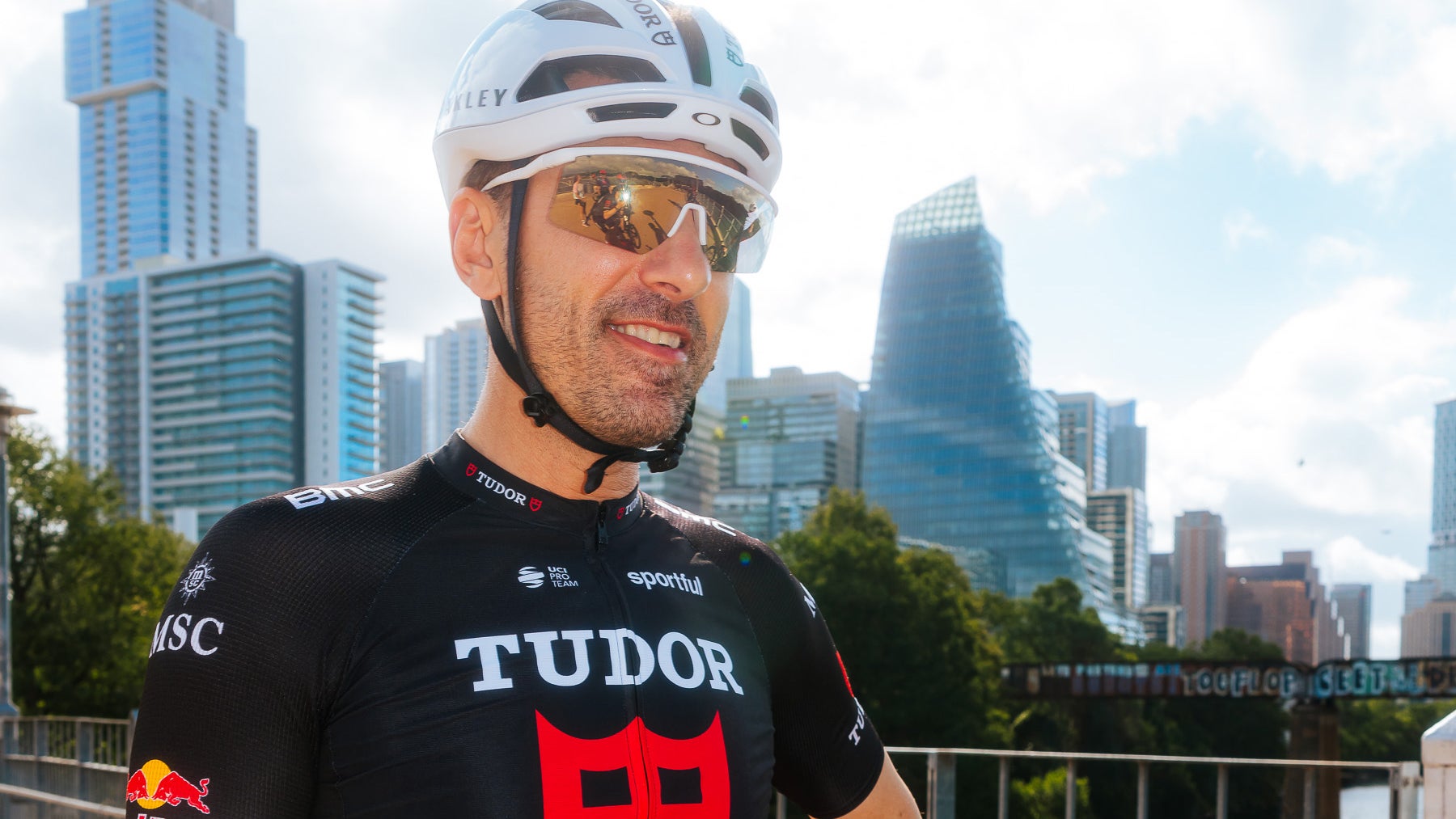
(Photo: Tudor Cycling)
I recently had a chance to sit down with Fabian Cancellara and discuss Tudor Pro Cycling. Even before we got started, sitting in a high-end jewelry store, I found myself wondering how involved Cancellara actually is. Is he just there for the watches and something to do? If you’ve been paying attention to this squad since he took over the Swiss Racing Academy in 2022, it’s obvious that isn’t the dynamic here.
Cancellara didn’t just rent out his name to a watchmaker. His work is what brought this all together. He built an organization that united Swiss brands—including BMC, Tudor, and his own—to challenge larger organizations in the Tour de France and beyond.
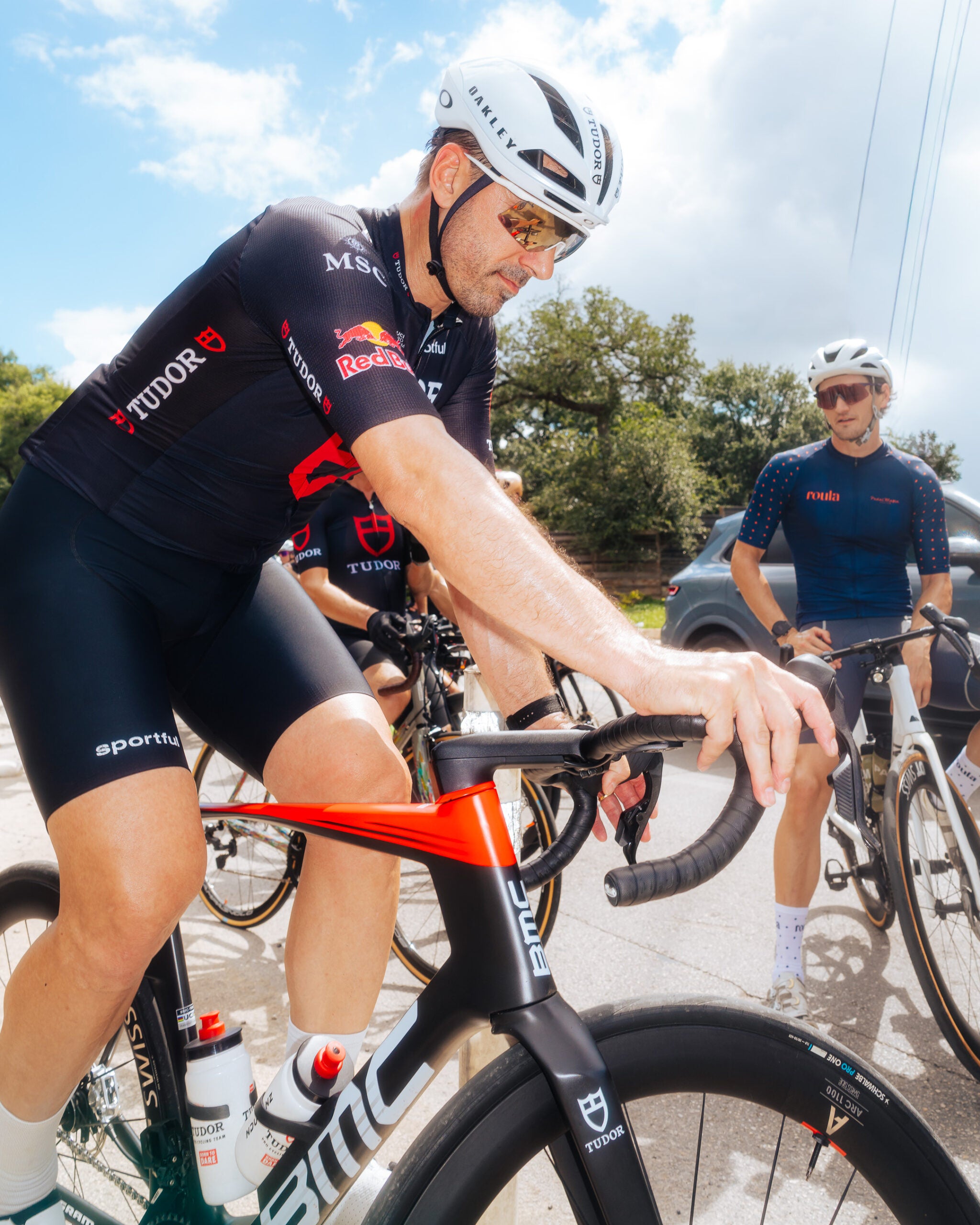
But what does that actually look like? Later, as I watched a seemingly regular guy hold a track stand in a group ride that made me a little nervous, it was hard to square that casual demeanor with his incredible racing history. Underneath it all, he’s just a guy who loves cycling. Here’s what we talked about.
Velo: You obviously know what it means to be at the front of the Tour de France, but that’s not the situation for Tudor.
Cancellara: We are at the beginning.
Velo: Right, you are at the beginning. So as we head into the Tour this year, what does success look like for the team? What are you hoping to accomplish?
Cancellara: This is the second Tour we are going to, and every Tour has its own goals. We are in a phase of growth. We’re in a phase of stabilizing, moving things forward, and fostering a born to race spirit. Some goals are more achievable than others. Lately, with all the crashes and bad luck our riders have faced, it feels like we are running somewhat behind the form and standards we are used to from the past. But it is what it is, and we live with it.
Going home with a stage win would be amazing. It would be a huge historical moment for us, but we also need to be realistic. The level of competition at the Tour is massive. There might be chances, but we will have to see where we stand when we arrive in Paris.
ADVERTISEMENT
Talking is one thing, but my main focus is being around to support the team. A bigger goal for me is to continue our overall growth. Ultimately, it’s the riders who have the ambition; my job is to foster that and ensure that drive exists throughout the entire organization. We need to have ambition.
We aren’t just here to show up, ride around France for a month in our jersey, and make some new fans. We want to market, and we aren’t hiding that. I’m not saying this to put unnecessary pressure on the team or to be arrogant, but if you don’t have that ambition, you might as well stay home.
That’s just the reality. As a rider, I always aimed for the biggest results. That doesn’t necessarily mean every rider has to have the exact same approach, but they need to want it. The riders are the ones on the bike. They need to pull everything together, aim high, and pursue their goals. We are here to support them, and that is what I am doing.
Velo: And do you feel that hunger, that ambition? Do you feel good about that going into the Tour?
Cancellara: Yes, absolutely. The Giro was definitely a clear goal for us. To see Michael Storer finish in the top seven was an amazing result, and having Mathys Rondel take 11th in his first Grand Tour was huge. That was one part of our season. Now we head to the Tour, and our aim is stage wins. That is what we are looking for, what we have prepared for, and exactly why we selected the riders we did.
Now we will see how the journey unfolds. It’s 21 days, and it is the hardest platform that cycling offers. We are part of it, and while we aren’t the only ones there, we are not going to hide. You only need to hide when you aren’t good, and looking back at the first part of the season, that isn’t us.
ADVERTISEMENT
Has the first part of the year been enough? No, but there were circumstances behind that. We’ve been missing riders, and it would be too easy to say that if things were different, we would have done better. Instead, we just face reality. We put ourselves out there and get back up, because nothing comes from just staying on the ground and crying. It is up to us, and everyone involved with the team, to get back on track and find that positive spiral. It takes a lot of passion. At the end of the day, it’s not just about data—it’s about professional people. It comes down to the humans involved, and we are working to be the best we can be.
Velo: Now I am going to step back a little bit because we are here in America and I want to ask about Unbound. Actually, not so much Unbound specifically, but—
Cancellara: Gravel.
Velo: Yes, gravel. I am curious about the strategy.
Cancellara: From us specifically, or generally?
Velo: From you and from the team. Is that going to continue to be an important part of what Tudor does, and is that part of the future of Tudor racing?
Cancellara: The future is road. This is clear. We are a professional cycling team, and while we have two riders who are involved in gravel, this is not a retirement platform for them. This is an ambition platform. We have seen the market grow, and the market has requested gravel racing through its own interest, but there is not always space for everyone to do everything.
There are two ways that I see professional gravel racing. There is this Unbound world and there is the UCI world, and they are two different worlds. We see that there is high interest, especially in the United States, but it is growing in Europe as well. Look at a race like The Traka in Europe and how massive that has become.
ADVERTISEMENT
I also understand that when I come to the States and talk to people, they talk about gravel. They mention how huge the country is and how the U.S. has more gravel roads than paved roads, and they tell me I need to go ride them. I have done some cyclocross and some adventure bikepacking myself, and I have watched this discipline become a mix of things that is now purely performance-driven. You can look at the latest Unbound—it’s not just an event or a ride anymore. This is a flat-out race.
Velo: That’s the question here, though. For Tudor, are you going to develop this double path? Road racing on one side and non-UCI gravel racing on the other?
Cancellara: No. For us, the main driver is the road. We are currently building a new headquarters in Switzerland, and gravel is a side project. We have to be careful not to… “dilute” isn’t the right word—
Velo: I think you are saying you want to focus?
Cancellara: Yes, we focus on the road. We started this gravel project, but it also costs a lot of money; it’s not cheap. There must be additional funding. There must be additional support.
It’s the exact same logic with a women’s team. We want to do things right, and that means we have to focus and build. We have to start with our main discipline and anchor it before we expand in too many different directions.
ADVERTISEMENT
Professional road racing means watching every single detail. If you start doing a little bit of this, a little bit of that, and jumping on every trend, you miss out on your core goals. We learn this directly from Tudor and the way they run their business. Focus is the word.
Velo: The last thing I want to ask you about is the bikes. Tudor is racing on BMC bikes, and I am curious how that came to be. Was that because BMC is a Swiss brand, or was it purely performance-driven?
Cancellara: It was absolutely performance first, but there is more to it than that. We are a Swiss team, and I was already working with BMC; they helped out even before we had Tudor Pro Cycling. That is all true. You go along and you start to build things, but they are high-performance bikes, and it works because those two things align. We have the same ambition in terms of getting the best out of it.
There is also a lot that works because of the collaboration. There’s a constant drive for the fastest bike, and while we believe we have that, there’s more. We believe we also have a great partner, and we can share and collaborate. We are only 45 minutes apart, and the collaboration between the two organizations means we can do even more. We understand that what we have done today is old tomorrow, and that is just the reality. We are building up together, and it’s not just a bike. We push together.
ADVERTISEMENT
Also, it makes sense. When it comes to marketing and storytelling, everything fits perfectly, and the story we tell is genuine. At the same time, we understand that constant changes are hard for the team. It all comes together, and we see BMC as a long-term partner. As good as the product is today, it’s that collaboration that really makes everything work.
And that was the end of our conversation. I was able to spend some time looking at Tudor watches and experience riding in a Tudor kit, but just like the team is staying focused, so was Cancellara. We will have to watch the Tour play out to see if the team has the ambition and the luck to pull off a stage win, but you can also hear that there’s more to ambition for Cancellara than a single Tour.