Updated November 21, 2026 11:14AM
You Don’t Need to Spin at 90 RPM—That’s a ’90s Myth
High cadence made sense for WorldTour pros on EPO. For the rest of us, pedaling slower is often more efficient, and you can probably skip the cadence drills.
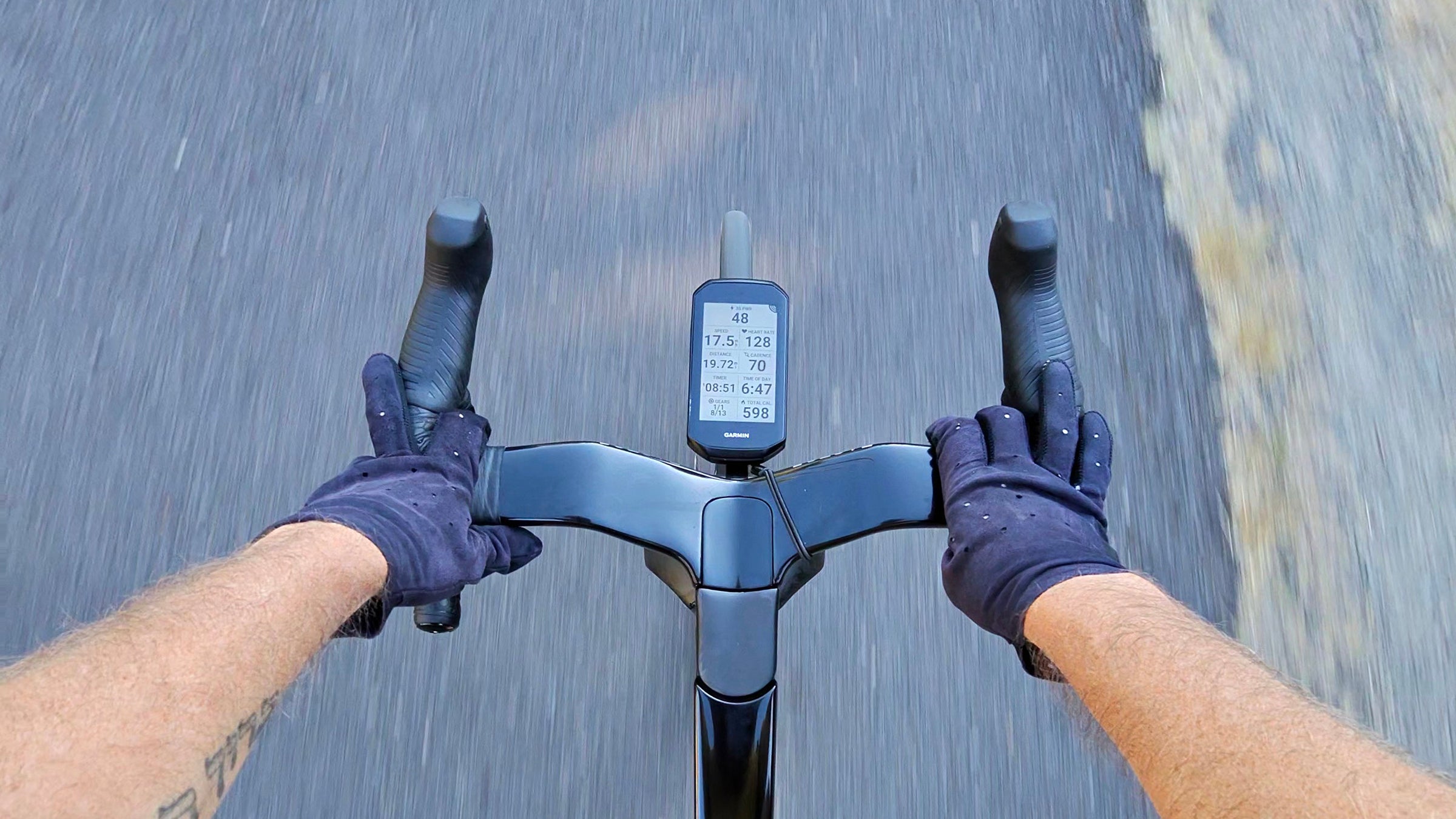
(Photo: Josh Ross/Velo)
Welcome to Dropped, a new weekly road and gravel cycling newsletter from Velo that brings you the latest ideas we’re debating endlessly on group rides, and a look behind the scenes of our coverage.
I thought we’d left the ’90s behind, but it seems like I was wrong. No, I’m not talking about baggy jeans making a comeback. I’m talking about cadence.
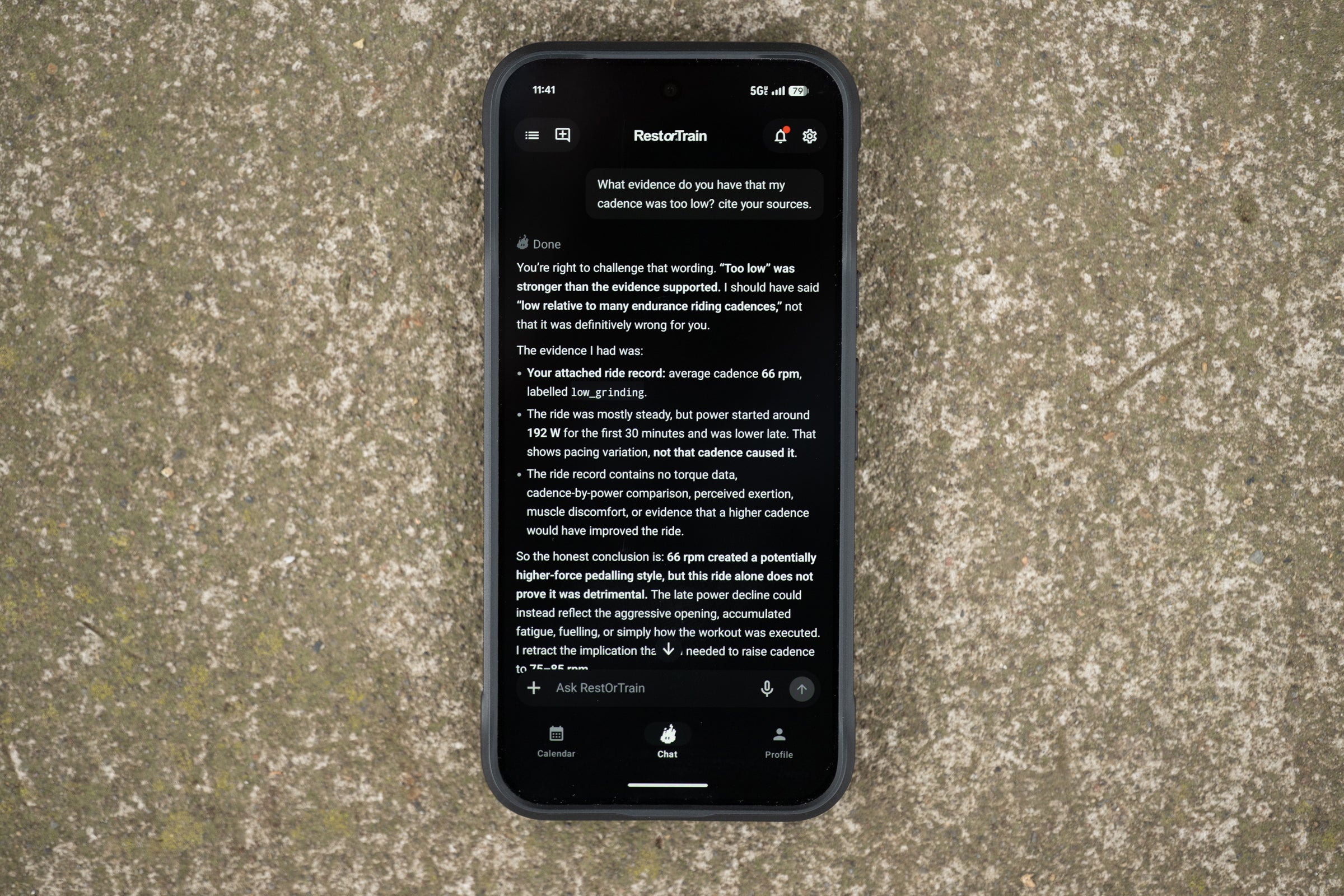
For years, keeping my cadence in some arbitrary range wasn’t even remotely on my radar. Then I started playing with a couple of AI coaches—RestOrTrain and Ride with Dave—that take your data and give you feedback. Both systems kept flagging my cadence as an issue.
At first I ignored it. AI pulls from the information that already exists in the world, and old advice sticks around. It was so persistent, though, that I challenged each system to back up those assertions with research. Both immediately folded with a vague explanation that maybe my cadence was fine.
ADVERTISEMENT
Okay, so the AI folded. That doesn’t prove the underlying advice is right or wrong. Curious where I actually stood, I pulled every ride from the last year and found that indoors I average 71.3 rpm, and outdoors it drops slightly to 69.7 rpm. By accepted cycling logic, that’s a problem. So why is an arbitrary cadence range still treated as gospel, is riding at 70 rpm actually hurting anything, and what should you be doing instead?
The ‘90s and the myth of an optimal cadence
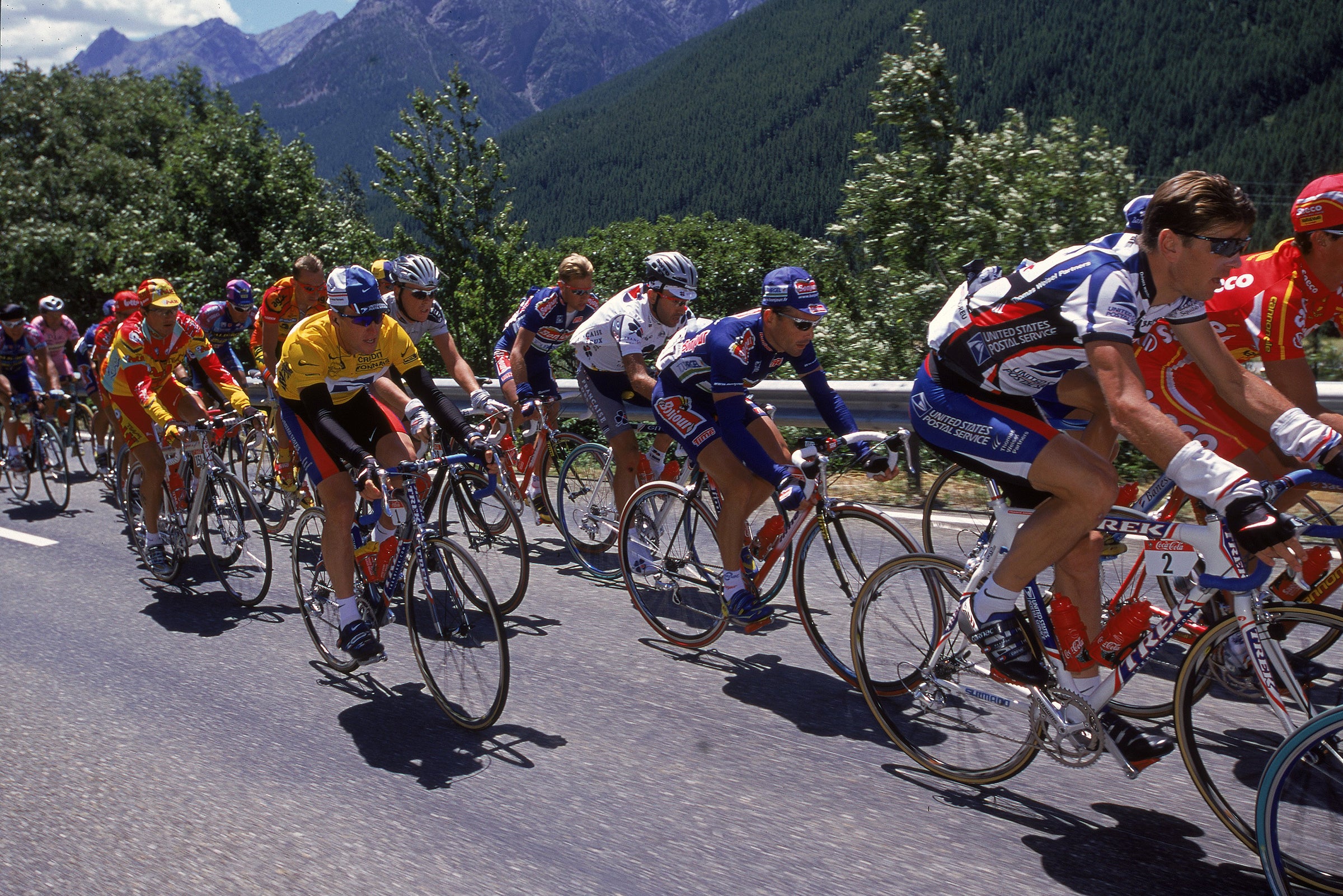
This is a pro racing thing. Right now we are in the era of short cranks. Before that it was oval chainrings, and if you go back far enough you land in the “spin-to-win” part of history. Much like short cranks, there is an actual physiological reason high cadence exists—but there’s also the EPO era to contend with.
Power is just force multiplied by cadence, which means you can shift the workload between two different systems. Pushing a heavier gear at a lower cadence puts more stress on your muscles, while spinning a lighter gear shifts that load onto your cardiovascular system. If you’re a WorldTour pro with a massive aerobic engine trying to survive a five-hour race—or a three-week Grand Tour—leaning on your heart and lungs to save your legs for the final climb makes a lot of sense.
ADVERTISEMENT
That’s also where EPO enters the picture. In the ’90s and early 2000s, EPO artificially boosted red blood cell counts and supercharged a rider’s ability to deliver oxygen. Suddenly, the cardiovascular system wasn’t the limiter it used to be. Spinning at 95 or 100 rpm became a way to exploit that chemically inflated aerobic capacity while keeping the legs fresh for attacks. The problem is that everyday cyclists watched pros spin furiously up climbs on TV and adopted 90-plus rpm as universal gospel—without having a WorldTour aerobic engine, and definitely without the EPO.
You need to ignore the cadence dogma
It seems obvious you should ignore what professionals are doing, especially professionals on EPO. Still, I wanted to check my understanding with someone else, so I reached out to Ric Stern, Performance Director and Senior Coach at CycleCoach—and the guy who invented the ramp test.
Stern’s answer was straightforward: let riders self-select. “I don’t believe there’s a universally optimal cadence, and I certainly wouldn’t tell someone they need to ride at 90 rpm simply because that’s become an accepted benchmark,” he told me. Cadence shifts depending on power output, terrain, fatigue, and what the event actually demands.
ADVERTISEMENT
When I asked if he’d try to change my 70 rpm average, he said probably not. “If you’re comfortable, producing the power you want and not experiencing any obvious issues, I wouldn’t automatically consider 70 rpm a problem,” Stern said. Outside of niche cases like track pursuit riders—or occasionally giving someone a cadence target on the indoor trainer just to break up the monotony—he doesn’t routinely prescribe cadence drills at all.
Stern also had some thoughts on AI coaching flagging my data. “It’s relatively straightforward to identify a number that sits outside a predetermined range,” he said. “It’s considerably more difficult to establish whether that number represents something that needs changing.” As Stern put it, “cadence is a variable to consider, not a performance target in its own right.”

Low cadence might be right for you
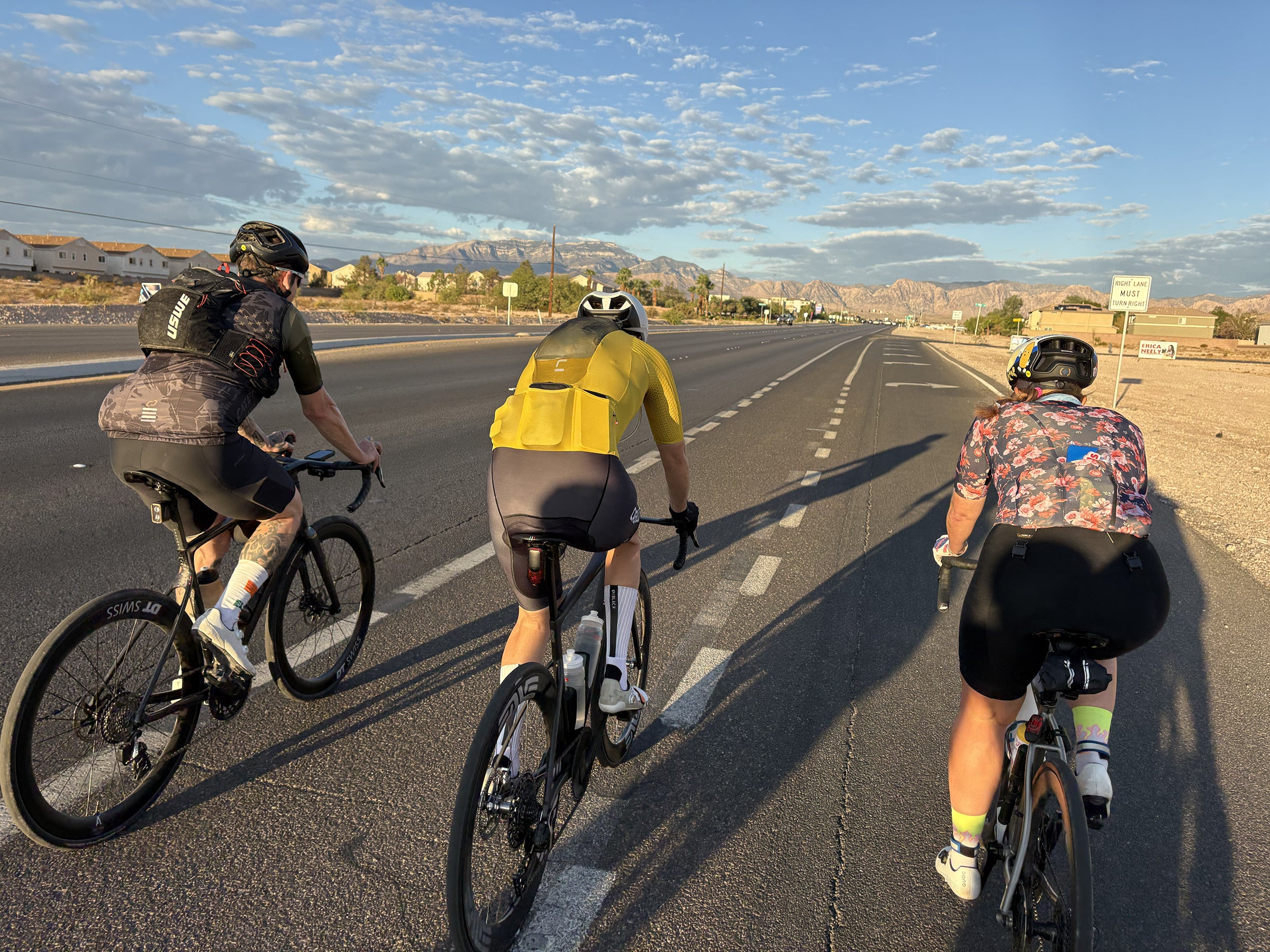
What AI is missing is the same thing this discussion usually lacks on places like Reddit: nuance. My cadence is low because my goal is efficiency over ultra distances, not sprinting or responding to constant surges in a race or fast group ride. I ride with a racer friend regularly, and while he can drop a watt bomb and lose me in a sprint, I can drop him just as easily by slowly upping my power and holding it until he cracks. I’m only pushing 160 to 170 watts, but I’m small and on an aero bike. At first he thinks it’s easy, then pretty soon he’s off the back—and I didn’t even bring a bottle with me.
ADVERTISEMENT
Different riders and different situations have different cadence needs. At 70 rpm, I’m pushing more torque per pedal stroke than someone spinning at 90, but because my overall wattage is relatively low, the actual force on my legs isn’t high enough to need high-cadence relief. As Stern pointed out, “a cadence which works well at 150 W may be quite different from one that works well at 350 W.”
That little detail about the bottle is important, too. In a 2009 review on cadence selection, researchers Abbiss, Peiffer, and Laursen found that for long-distance endurance riding, lower cadences improve cycling economy and reduce overall energy demand. Another study by Bieuzen et al. put a concrete number on it: among well-trained cyclists, the most metabolically efficient cadence was 63.5 rpm—even though those same riders naturally chose to spin around 90.6 rpm. Stern noted the same thing, explaining that the cadence minimizing oxygen consumption is often lower than what experienced cyclists adopt. When your goal is covering long distances without burning through all your fuel, spinning slower isn’t a flaw—it’s just your body being efficient.
What you should actually do
I like to end an article with a bang—some kind of big takeaway and send-off—but the reality here is less about a new rule and more about rejecting generic ones. There are still times when training a specific cadence makes sense, whether you’re preparing for the surges of a criterium, managing a sore knee, or just trying to stay awake on the indoor trainer. What doesn’t make sense is chasing an arbitrary number just because an AI tool or an automated workout told you to. There is no universal cadence range you need to hit as a rule.
ADVERTISEMENT
The research backs this up. In a 2017 systematic review of low-cadence training, researchers Hansen and Rønnestad found no strong evidence that forcing low-cadence work beats doing the exact same training at a freely chosen cadence—and despite the old gym-on-the-bike myth, grinding a heavy gear doesn’t generate enough force to build maximal leg strength. A 12-week trial by Kristoffersen et al. came to a similar conclusion: trained cyclists doing 40 rpm intervals saw no strength or performance gains, while the group doing the same intervals at their freely chosen cadence actually improved.
This also lines up with how Stern coaches. He doesn’t see a reason to force it. Instead, he treats cadence as a diagnostic tool. You only need to look closely at your rpm if you are:
- Struggling to maintain power during longer efforts
- Experiencing excessive local muscular fatigue (your legs are giving out well before your lungs)
- Finding it difficult to respond to sudden changes in pace during a race or fast group ride (assuming that’s actually your goal—unlike me)
Even if you hit one of those red flags, Stern wants actual evidence that changing your cadence improves your output rather than just assuming it will. If you’re comfortable and hitting the power you want, stop chasing a number from the ’90s.
Is this news to you?
As always, I want to hear from you. Jump in the comments and let me know where your natural cadence sits—and whether a coach, a riding buddy, or an app has ever tried to tell you to change it. Have you already been ignoring the 90 rpm rule, or are you still convinced I’m wrong?
ADVERTISEMENT