Updated February 26, 2026 03:59PM
Is Isaac Del Toro as Strong as a Young Tadej Pogačar?
The 22-year-old’s palmarès already arguably stacks up better head to head with Pogačar at the same age.
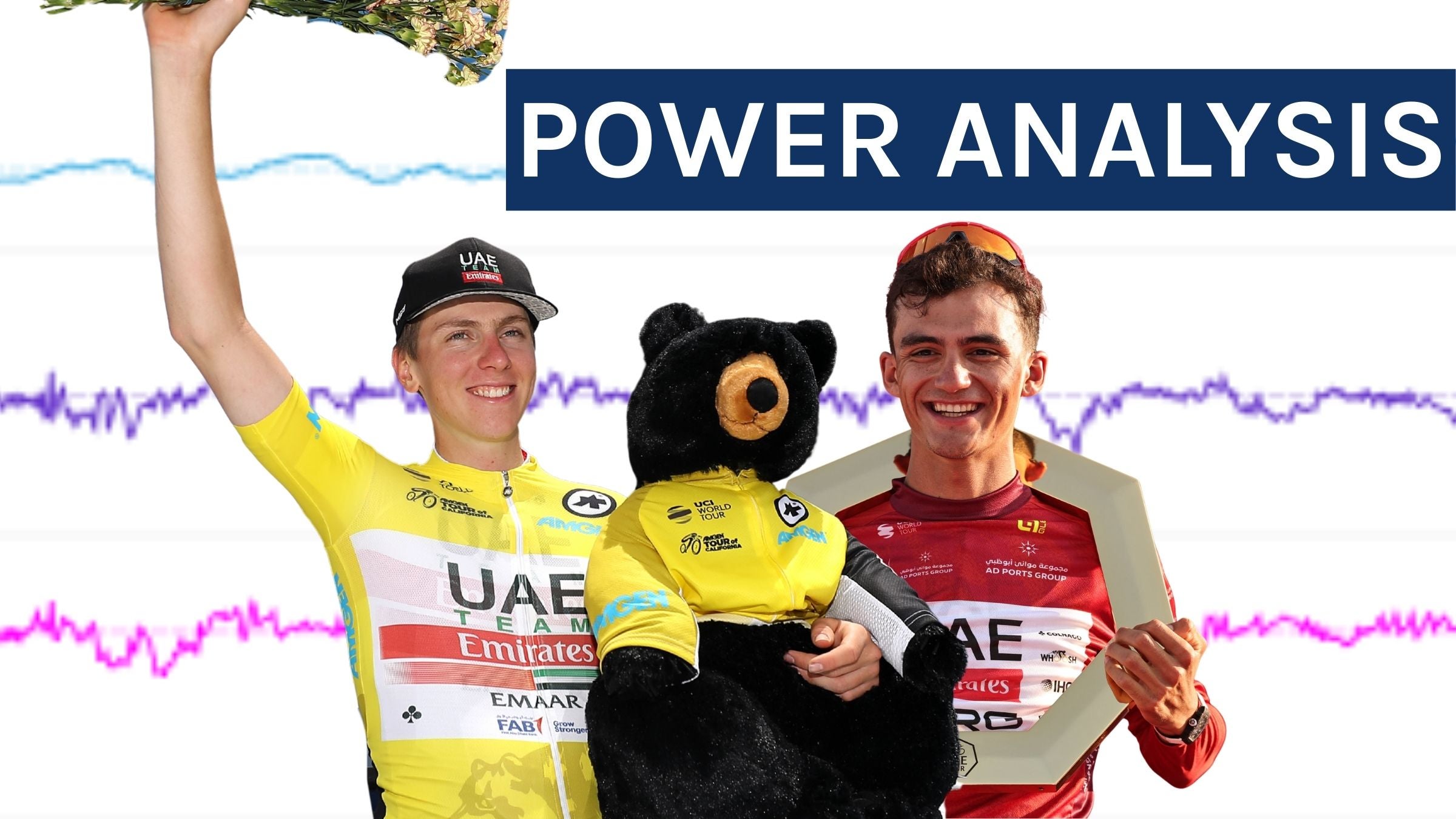
(Photo: Pogacar: Sean M. Haffey/Getty Images; Del Toro: Fadel SENNA / AFP via Getty Images)
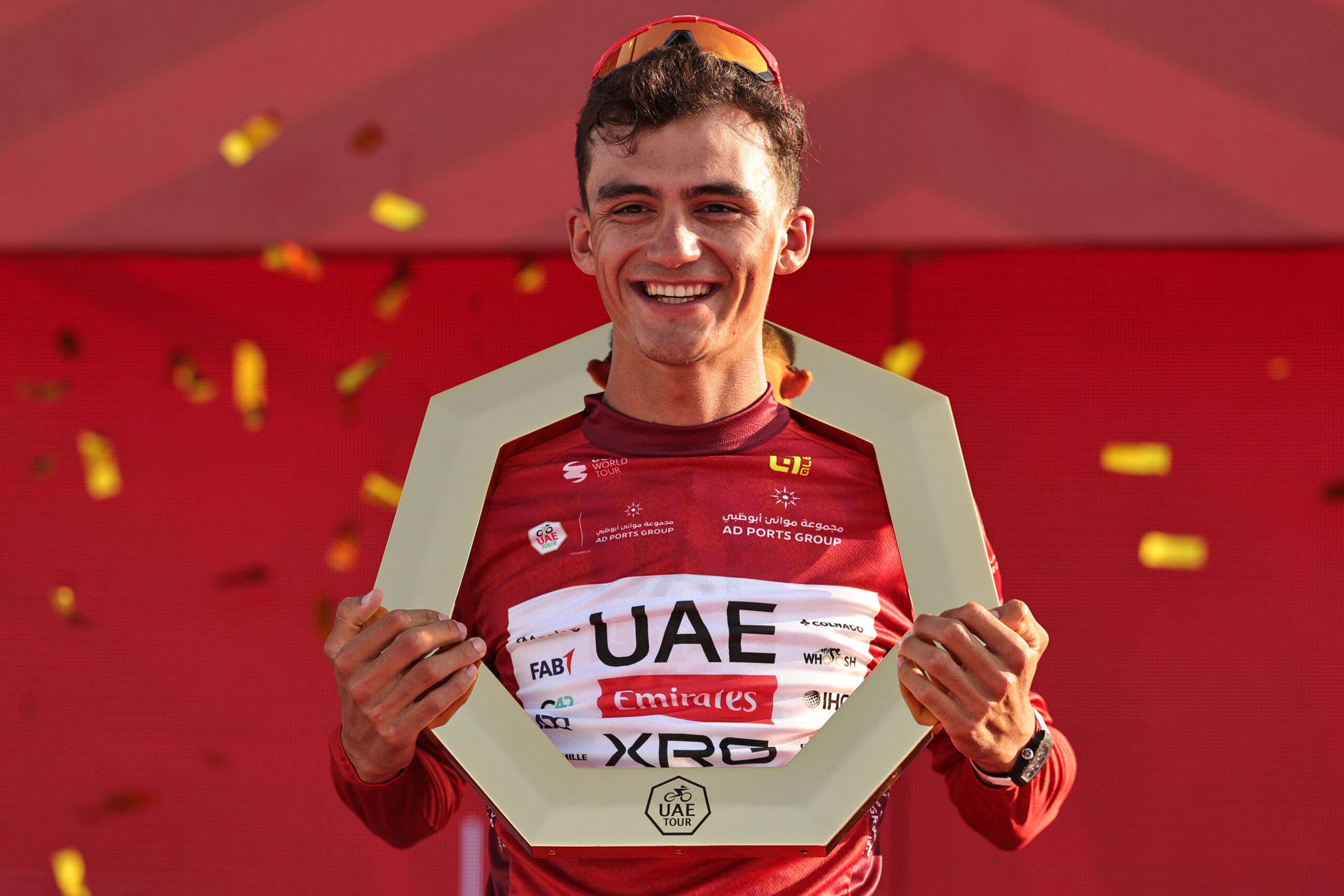
When Isaac del Toro crossed the line with his arms aloft, it wasn’t too much of a surprise that had won the UAE Tour. The shocking part was how he did it.
The 22-year-old won the first stage with an audacious attack, launching with over 300 meters to go and surprising the sprinters to win at Liwa Palace. It was the same move that Tadej Pogačar tried in 2025. However, in a rare moment of weakness, Pogačar wasn’t strong enough to take the win that day, ultimately finishing 10th.
Comparisons had already started to flow, but then things took a turn on stage 2 when Del Toro finished 25th in the individual time trial. He was 41 seconds slower than the stage winner and double Olympic Champion, Remco Evenepoel. But more importantly, Del Toro had lost time to GC rivals such as Antonio Tiberi, Derek Gee-West, and Luke Plapp.
ADVERTISEMENT
However, the wind had played a major role in Del Toro’s underwhelming performance. You see, at the UAE Tour, the race leader must be the final rider to start in the time trial. Every other rider can choose their time slot, which meant that most GC riders opted for earlier time slots with calm winds. By the time Del Toro went down the start ramp, the wind had picked up so much that he lost nearly 30 seconds in the first 6km. While the Mexican wasn’t going to beat Evenepoel anyway, the wind conditions certainly slowed him down, especially with the form that he was about to show in the rest of the race.
The third stage of the UAE Tour turned the race on its head. With a new finish on Jebel Mobrah (6.8km at 11.8%), massive GC gaps were expected. After an early attack by Felix Gall, Evenepoel threw in his own acceleration after seeing that Del Toro was being dropped. This would prove to be a grave mistake by Evenepoel.
With Gall accelerating away, Del Toro began to claw his way back through groups of dropped riders. The 22-year-old was pacing himself, calculated and brilliant, especially on such a steep climb. As more and more riders exploded on the slopes, Del Toro made his way back into the top 10, and then into the top 5. In the final kilometers, he attacked and dropped his rivals, soloing to the line atop Jebel Mobrah.
But the biggest surprise of the day was that Del Toro finished second. A hundred meters up the road had been Antonio Tiberi, who put in the performance of his life to win stage 3. Both the Italian and Del Toro had done one of the best climbing performances of their careers. For Tiberi, it was confirmation that he is a grand tour podium contender. As for Del Toro…it restarted the murmurings about the next Tadej Pogačar.
ADVERTISEMENT
Below, we have Derek Gee-West’s power file from Strava, as well as calculations for Del Toro and Tiberi. By all accounts, these were climbing performances worthy of grand tour contenders.
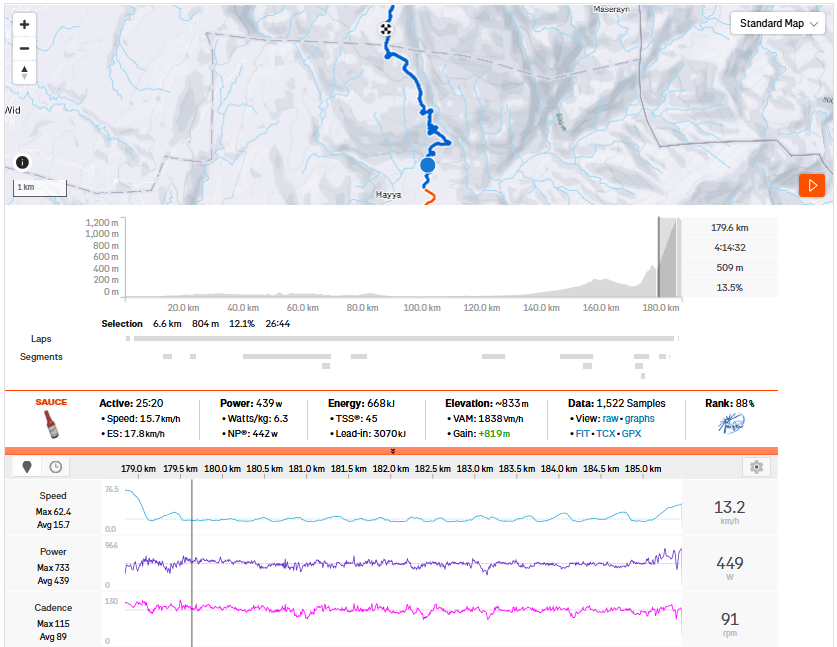
Del Toro – Jebel Mobrah
- Time: 25:52
- Estimated Average Power: ~425w (6.6w/kg)
- VAM: ~1,950 Vm/h
- Tiberi: 25:37 at ~6.7w/kg
- Gee-West: 26:44 at 439w (6.3w/kg)
Stages 4 and 5 were won by Jonathan Milan in bunch sprints – hitting a peak power of 1970w – and then it was time for the most famous climb in the UAE Tour. Jebel Hafeet (10.6km at 6.9%) has been the GC decider in almost every previous edition of the UAE Tour. It is an extremely hard climb that finishes on a fast plateau. That makes it difficult for the pure climbers to win, but easy enough for the punchy climbers to survive.
Tiberi had the GC lead, but Del Toro was breathing down his neck. If the Italian could repeat his performance from Jebel Mobrah, he would be almost impossible to beat. But if there is anything he’s learned from this UAE Tour, it’s that you must never doubt Isaac Del Toro.
ADVERTISEMENT
UAE Team Emirates-XRG began the leadout with a few kilometers to go. Del Toro was poised to attack, and that’s exactly what he did. Instead of riding a steady pace like he did on Jebel Mobrah, Del Toro attacked in 60-90 second bursts. The first was enough to distance most of his rivals. The second made Tiberi wince. And with one final acceleration, Del Toro distanced Tiberi with 2.5km to go.
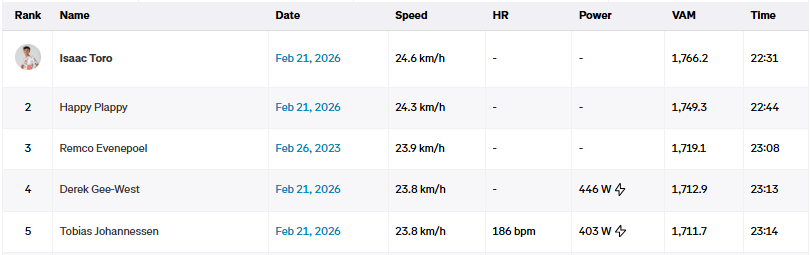
Del Toro – Jebel Hafeet
- Time: 22:31
- Estimated Average Power: ~430w (6.6w/kg)
- VAM: ~1,809 Vm/h
- Del Toro’s final attack: 69 seconds at ~630w (9.6w/kg)
- Tiberi: 23:08 at ~6.5w/kg
- Gee-West: 23:13 at 446w (6.4w/kg)
Del Toro’s accelerations had not only caused Tiberi’s engine to sputter, they had caused it to explode. The Italian limped into the finish 31 seconds after Del Toro, having been caught and dropped by Plapp and Gall. Del Toro won on Jebel Hafeet, sealing the overall victory with just a sprint stage to come. As if we needed confirmation of Del Toro’s brilliance, this was it. Here come the comparisons.
At 22 years old, Tadej Pogačar had only won a single WorldTour stage race in the Tour of California. He had just finished third in the Vuelta a España, and he would go on to win his first Tour de France in 2020. You already know what came next: three more Tours, 10 monuments, two world titles, and 108 total wins.
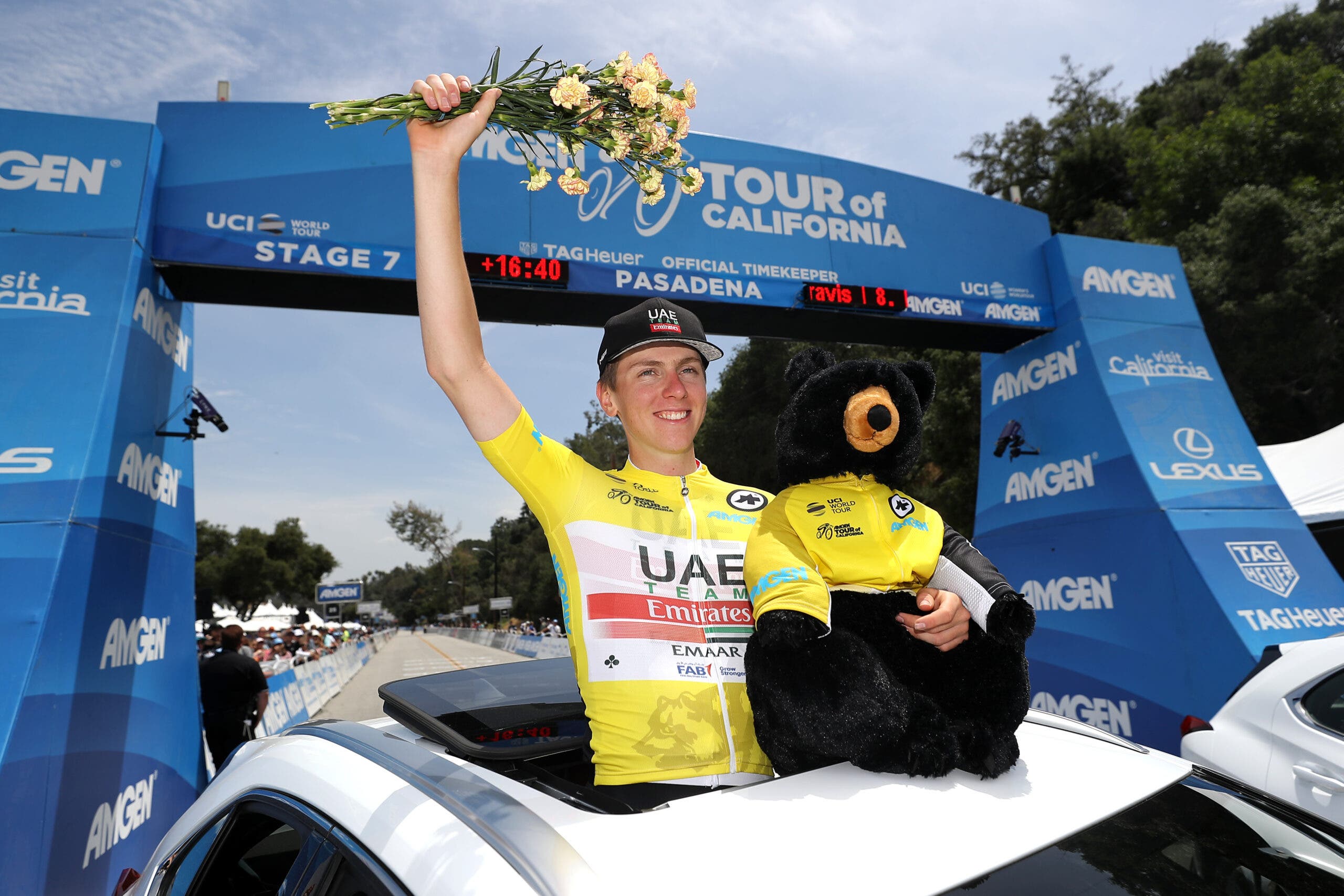
Del Toro has 24 wins to his name, plus a second place finish at last year’s Giro d’Italia. He was arguably the strongest rider in the race, but a moment of weakness on the Colle delle Finestre cost him the maglia rosa. That didn’t stop him from winning nine races in September and October, and it’s clear that he has only gotten stronger.
ADVERTISEMENT
Del Toro’s performances on Jebel Mobrah and Jebel Hafeet were two of the best of his career. What’s even more impressive is that they were very different efforts. Mobrah required a steady pacing strategy, almost like a 25-minute power test with a negative split. Del Toro started the climb by getting dropped, and ended it by dropping all but one of his rivals.
On Hafeet, it was almost like Del Toro was riding over/unders. One minute he was attacking, the next he was riding tempo. Repeat until Tiberi is gone. Del Toro’s accelerations were violent, as we can see in the power data. It was a punchy performance that showed Del Toro is more than just a pacing machine. We already knew that, but now he’s added another weapon to his arsenal.
Lest we not forget about his win on stage 1. Is there anything that Del Toro cannot do? Time will tell, but we can already see the comparisons to Pogačar. The pair are lining up together multiple times this season – Strade Bianche, Milano-Sanremo, and the Tour de France – so we will see their dueling abilities in action.
ADVERTISEMENT
Perhaps we’ll see a repeat of last year’s world championships where Del Toro and Pogačar broke away together. It was the Slovenian who came out on top on that occasion. But maybe we’ll see the roles reversed in the future. One day, the student could become the teacher.
Power Analysis data courtesy of Strava
Strava sauce extension
Riders: