Updated October 14, 2026 05:08AM
Anti-Doping Agency Defends Testing Cyclist Same Day Her Mom Died
The ITA says testers were unaware of Cavallar’s mother's death before arriving for anti-doping control and confirms it apologized.
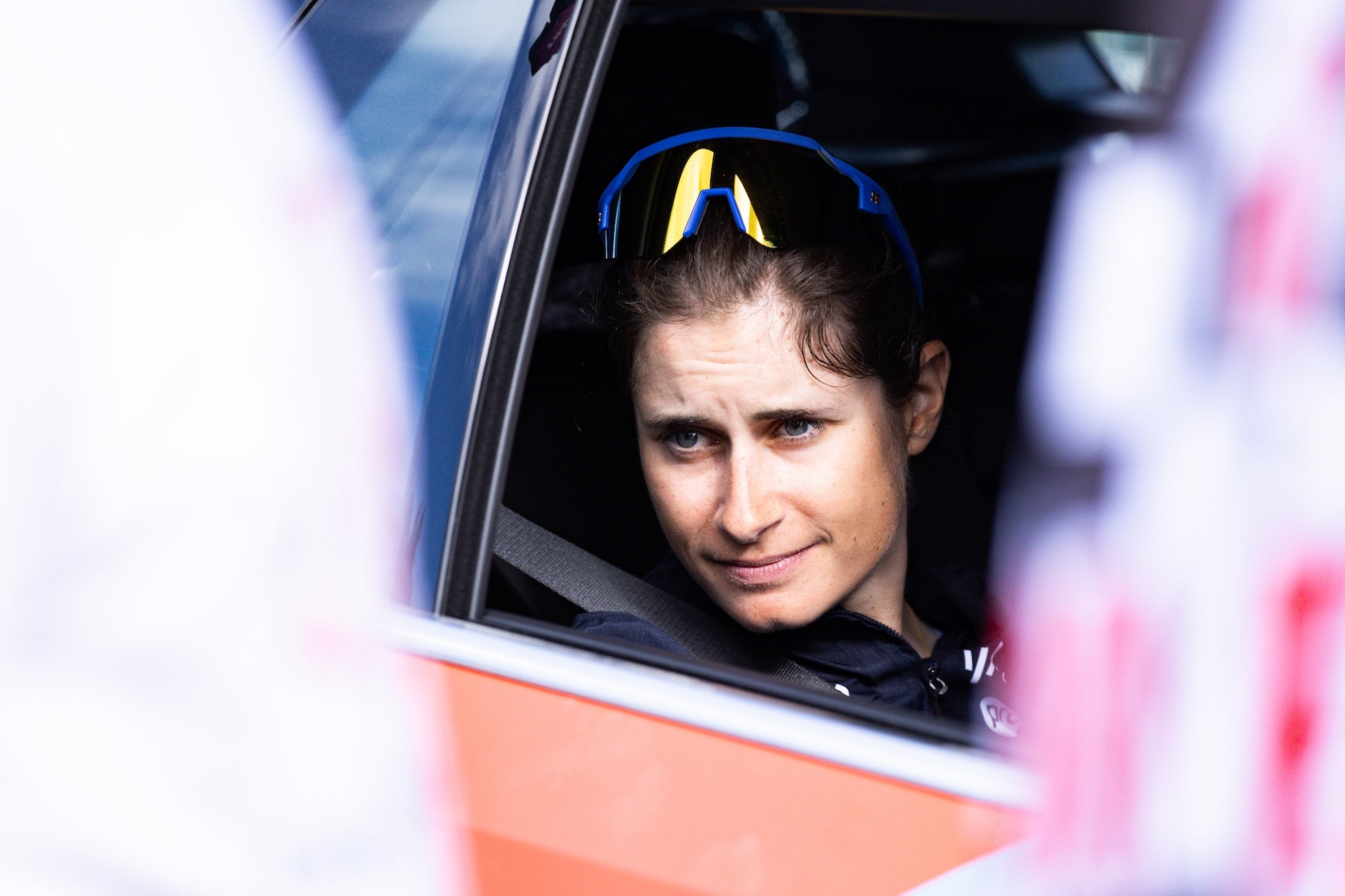
The ITA said it reached out to Valentina Cavallar following an anti-doping control on the same day her mother died. (Photo: Tommaso Berardi/NurPhoto)
The International Testing Agency defended its decision to complete a doping control at Valentina Cavallar’s home shortly after her mother died, but added that it had apologized to the Austrian rider.
Responding to questions from Velo, the ITA said neither the agency nor the doping control officer knew about the death before the officer arrived for an out-of-competition control on September 5.
According to the ITA, the officer learned of her mother’s passing only upon arriving at the door. Cavallar and her family cooperated with the procedure and did not ask for it to be postponed or stopped.
“Faced with an exceptionally sensitive situation, the DCO, with the rider and her family’s support, endeavoured to pursue the procedure as discreetly, respectfully and swiftly as possible,” the ITA said.
The response follows Cavallar’s emotional account of undergoing the surprise doping control in a room next to where her mother’s body lay.
The 25-year-old SD Worx-Protime climber revealed the incident on a post on Instagram and also explained why she ended her season early after the Tour de France Femmes.
“What made this experience even harder was that just a few hours after my mum had passed away, I had to undergo a doping control at home, in the room next to where she lay,” Cavallar wrote.
ADVERTISEMENT
The ITA reaches out after case went public
Cavallar’s incident appears to be an extraordinary coincidence.
Riders must report their whereabouts and designate a daily 60-minute window when they are available for controls, though testers can also arrive unannounced at any time.
In an earlier story by Velo’s Andy McGrath, riders recalled getting caught out by wedding plans, broken-down cars, and an all-night bender that left one rider away from home when testers arrived at 6 a.m.
Cavallar said she understood her obligations as a professional athlete, but questioned having to do the test in the middle of a family crisis.
“But in that moment, I was clearly not thinking about cycling, competition or my responsibilities as an athlete. I was a daughter who had just lost her mum,” she wrote.
The ITA — which runs cycling’s anti-doping program — said it investigated the circumstances after learning of her post and contacted her directly.
ADVERTISEMENT
“We fully recognize that undergoing a doping control in these circumstances has added to her distress experienced at an extraordinarily painful time. We have been in touch with the rider directly and apologized,” ITA said.
The agency also encouraged athletes to raise concerns during or after controls so it could balance anti-doping requirements with their privacy and wellbeing.
Full ITA statement
The International Testing Agency (ITA) extends its sincere condolences to Valentina Cavallar and her family following the loss of her mother.
Since learning about the circumstances of the sample collection which took place on 5 September 2026 on Valentina Cavallar, the ITA looked into the context of the test.
Neither the ITA nor the Doping Control Officer (DCO) were aware of the rider’s personal situation prior to arriving at her home. The DCO was informed of her mother’s passing upon arrival. According to the information gathered by the ITA since the rider’s Instagram post [Monday], Ms Cavallar and her family cooperated fully with the procedure, and no concerns or requests to postpone or discontinue the control were raised at the time or afterwards.
Faced with an exceptionally sensitive situation, the DCO, with the rider and her family’s support, endeavoured to pursue the procedure as discreetly, respectfully and swiftly as possible.
We fully recognise that undergoing a doping control in these circumstances has added to her distress experienced at an extraordinarily painful time. We have been in touch with the rider directly and apologised.
The ITA remains committed to ensuring that the protection of clean sport goes hand in hand with respect, compassion and care for athletes.
We will also continue to always encourage athletes to report any concerns either during or after a doping control, so the ITA can take the appropriate measures to ensure a proportionate balance between the fight against doping and every athlete’s right to privacy and wellbeing.