Published August 22, 2026 10:32AM
Mike Woods Did Leadville and Got Flashbacks to One of the Craziest Races on the Road Calendar
Former WorldTour pro Woods debuted on a 32-inch MTB, dug deep, and raves about his Leadville experience
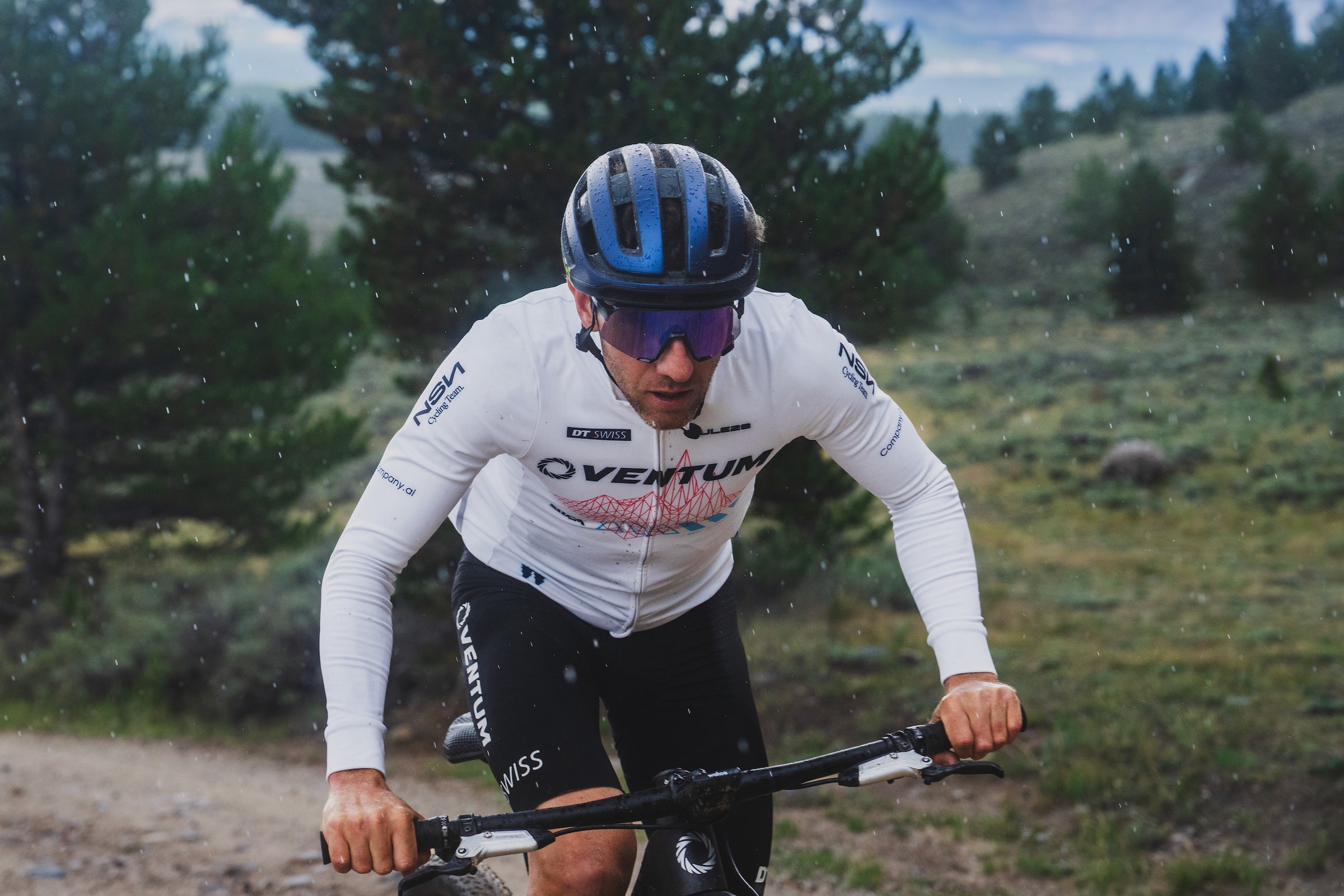
Mike Woods in action in the Leadville 100 (Photo: Ventum/Justin Diamond) (Photo: Justin Diamond)
In 2014 I raced in the infamous Tour of Qinghai Lake on a US Continental team called 5hour Energy. From what I understand, the race’s degree of difficulty, and scale, has been dampened. However those pros that did it in the late aughts and early 2010s have an unspoken kinship. Those that did it, just know. In an age where this word is far overused, this earlier version of the race truly deserved to be called epic.
It was 13 stages, 6 of which over 200km, and most of it above 3000m of altitude. The race started in the city of Xining, elevation 2000m above sea level, and sped around streets lined with, in some instances, over half a million spectators. On the third stage we left the warmth of Xining and tackled a 230km stage where the first 100km we ascended to the Tibetan plateau at 3400m of altitude.
At this level the true race began. Crosswinds, rain, freezing temperatures and hard core bike racing on barren windswept lands was done by desperate continental and pro continental (two tiers and one tier below World Tour) riders hoping to attract the attention of World Tour Teams, with only the odd shepherd watching curiously from the side of the road.
ADVERTISEMENT
Qinghai wasn’t just epic for its difficulty but also for its wild stories and wild racing conditions. Dopers, a shanking and street fights all featured in my only outing. I’ll forever remember seeing at the front of the peloton, as we sped towards the finish line at 50km/h, a rider from the now defunct American team United Health Care (UHC) make a fist and slam it against the left shifter of a Chinese rider. The assailed rider’s handlebars and wheels immediately flipped sideways and he was sent hurtling over his bike. This poor rider became a hand
grenade in the peloton, and I can’t unsee the carnage that followed.
Bikes, wheels and riders went flying everywhere. Once the remaining racers sprinted, and those that had not been collected by ambulances went to their team tents, we watched as the entire team of the rider who had been blatantly assaulted marched over to the UHC tent and began a full-on brawl.
Fistfights and doping scandals in China
At one point in the melee a mechanic pulled out a screw driver and stabbed a UHC staff member (the screw driver didn’t penetrate, however the victim would have a massive bruise on his right side for the remainder of the race) and said to him, “Today I don’t kill you, but tomorrow I kill you.”
ADVERTISEMENT
The race also bore witness to some of the best climbing performances I have ever seen (and I have raced against Tadej Pogacar). Tabriz Petrochemical Team (TPT) was an Iranian team funded by an Iranian oil company. During this period, this team normally raced inside Iran, but would also make appearances in many second tier UCI races where doping control was known to be less present. Qinghai was their cash cow, as at the end of the race, your team director would walk into a room where crisp $100 American bills totaling hundreds of thousands of dollars sat in a box, and the organizers would hand the directors whatever prize money they had made. There was no waiting period for doping tests to be validated, just cash on the spot.
Ilya Davidenok, the winner of the edition that I raced in, made, with the help of his team—team Astana Continental—over $100,000. A few months later anabolic steroids would be found in a sample that he produced at this race (he would come back after serving his ban only to test positive for EPO in 2019). Two other riders on his team at that race, would also test positive, and their positives along with positive tests from the Iglinsky brothers on Astana’s World Tour Team almost resulted in the team having its license suspended.
TPT put three riders inside the top 5 in the KOM classification at this race, making roughly $60,000. In the one KOM sprint I attempted to contest (a competition I have never been so humbled in) I watched as a TPT rider celebrated as he crossed the line first. This is unheard of in cycling—a rider celebrating a KOM—and when I asked my teammate, Bruno Langlois, why the hell would the guy put his hands up for this, he replied; “there is doping control for stage wins and the general classification, but not for the KOM.” Even TPT’s sprinter, a rider
that weighed at least 15kg more than me, would drop me on most climbs.
It was a battle to get through this race against riders that were certainly using performance enhancing drugs, but what compounded its degree of difficulty was its altitude. Some stages peaked at 4000m of altitude and rarely dipped below 3000m.
Leadville: The most iconic race
At 3000m the air is far less dense, and your absorption of oxygen molecules at this altitude is 30% less than at sea level.—at 4000m it is roughly 40% less,. Anybody who has done any activity at these altitudes knows how much more difficult it is to breathe. However there are few high level endurance competitions where people actually compete against each other at this height (I don’t include most forms of alpinism in this, as those athletes are only competing against themselves, they are not literally competing against others in that moment).
ADVERTISEMENT
Having proper battles while taking in 30-40% less oxygen per breath than at sea level is boxing in the 12th round. Elegance is gone, critical thinking disappears and apathy becomes as much your opponent as the rider in front of you. I’m not great at it, but racing against others at this altitude is something I love. It is so much more mental than when you are bathing in the dense air of sea level.
Although I was trounced at this race, it presented a degree of difficulty that a glutton for punishment like me still looks back upon with rose tinted glasses. For the following 12 years I never encountered that type of suffering in another race. Don’t get me wrong, I suffered a ton in my career, but this race was a different degree of spice. We are talking about ghost pepper spec. It scares you, you regret it the minute you try it, but, once you’ve gotten through it, everything else feels a little more mild.
This is why I have always been attracted to what is arguably the world’s most iconic mountain bike race, Leadville 100. Taking place in the highest town in North America, Leadville, Colorado, the 100mile mountain bike race goes no lower than 3000m above sea level and forces some of the best endurance mountain bikers, and gravel specialists, to compete at altitudes as high as 3800m. Leadville has been a bucket list race for me for a host of reasons. I love Colorado, and have had some of my best training camps in the mountains above Boulder and Colorado Springs. The race has had iconic participants, including Tour de France winners (and dopers), Floyd Landis and Lance Armstrong.
ADVERTISEMENT
A major hate for Floyd plus an insatiable want to assert his superiority is said to be the reason why Lance went to the race in 2008 and 2009.
An old hideout for famous outlaws
The race also isn’t just a mountain bike event. The Leadville 100 was first an ultra-marathon started in an attempt to generate some form of income for a mining town that just witnessed the closing of its main source of industry, the Climax mine. The event became famous in running circles for its level of difficulty, and in 1994 on the wings of the running race’s success it added a mountain bike race.
It is now widely accepted as one of the premier mountain bike races in the world. Those that finish the course in under 12 hours receive a belt buckle, and under 9 get a “giant” belt buckle. Participants often return year in and year out, sharing their experiences like old boys at the legion.
ADVERTISEMENT
Leadville is one of the last few towns in Colorado where you can still feel the wild frontier era and the pursuit that spurred the idea of the American dream. Big dreamers came here, despite the inhospitable conditions, in an attempt to literally strike gold. Due to its location, the town has also been a hideout for some of America’s most famous outlaws, and to this day, like most mountain towns pre private jets and ski resorts, it is a place where you can tell people come in order to get away from something.
One of the first buildings that greets you as you enter the city limits, after a Safeway, is an abandoned motel whose structure isn’t much more stable than an old garden shed. In front of it an aging and rusting sign that reads “Monthly Studios.”
Having arrived in Colorado, from Europe, on Monday, five days before the race in a half-assed attempt to get acclimatized to the extreme altitude, I decided to spend Tuesday in Breckenridge–a popular ski town halfway between Denver and Leadville. The contrast between the two towns could not be greater. Breckenridge was filled with 5 star hotels, gondolas, beautifully groomed mountain bike trails, and a main street with real estate shops and boutique clothing stores. Mansions and ranches, with incredible vistas of the surrounding mountain ranges encircled the town, and I had a blast ripping on the flowy trails that circumnavigated the ski village.
ADVERTISEMENT
The next day I made my way up to Leadville, and as I crested Fremont pass, and saw half the mountain that the Climax mine had torn down, I realized this was a far different version of Colorado than what most people see in the ski magazines.
Getting familiar with a 32” bike
This is also what I love about Colorado. The state, for its entire history, has juxtaposed incredible wealth against free spirits, misfits and those who could not want to go further from the confines of the material world.
Leadville plays host to a lot of the latter. There are few sprawling ranches in its surrounding hills, and its main street has far more consignment stores than anything resembling a place that would sell Louis Vuitton. Most houses in the town seem like a strong wind can blow them over, and everywhere you look, even at the peak of summer, you can see the scars of harsh, cold and seemingly endless winters.
ADVERTISEMENT
One of the reasons why I decided to ride with Ventum this year was because they mentioned, in our early discussions, that they would be coming out with a 32” mountain bike with the aim to launch the prototype for Leadville. I love riding mountain bikes. I have since I was a kid. If I could have been a pro-roadie but only ridden my mountain bike for training, I probably would still be racing the WorldTour this season. Despite this love for the sport, I have never raced on an MTB, and in many ways Leadville presented the perfect intro to the
discipline.
I have ridden gravel races more technical than Leadville’s route. With forest fires having ravaged the area for much of the summer, organizers were forced to take out one of the race’s most important features, the Powerline climb. After having pre-ridden the course with Zach Colton, a fellow Ventum rider and three time top-tenner, I turned to him and said, “the best bike for this race is actually my GS1 [Ventum’s gravel frame].” However, in a move that I support, the race has banned drop-bars making a mountain bike the only suitable bike for
the event.
Special course, special bike
Leadville’s style of course demands a bike that is what I want most from a mountain bike. I love ripping down a single track, occasionally scaring myself with a drop, jump or sketchy rooted descent. I want a bike that can handle these features, but I hate when that bike is a pain to get me to those features. As fun as riding downhill and enduro bikes are, they require chair lifts, or boat loads of time to climb up to do the one descent you will do in the day. To me, a proper mountain bike should still be able to take you places.
ADVERTISEMENT
Leadville demands a bike that is a Swiss Army knife. Fast enough to cover long flat stretches of gravel, road, grass, and dirt and light enough to climb up a steep 11 km climb to 3800m. Then it also needs to be robust enough, and have enough traction to handle rocky descents, and not lose grip when ripping around blind corners with riders riding, in the opposite direction, three abreast.
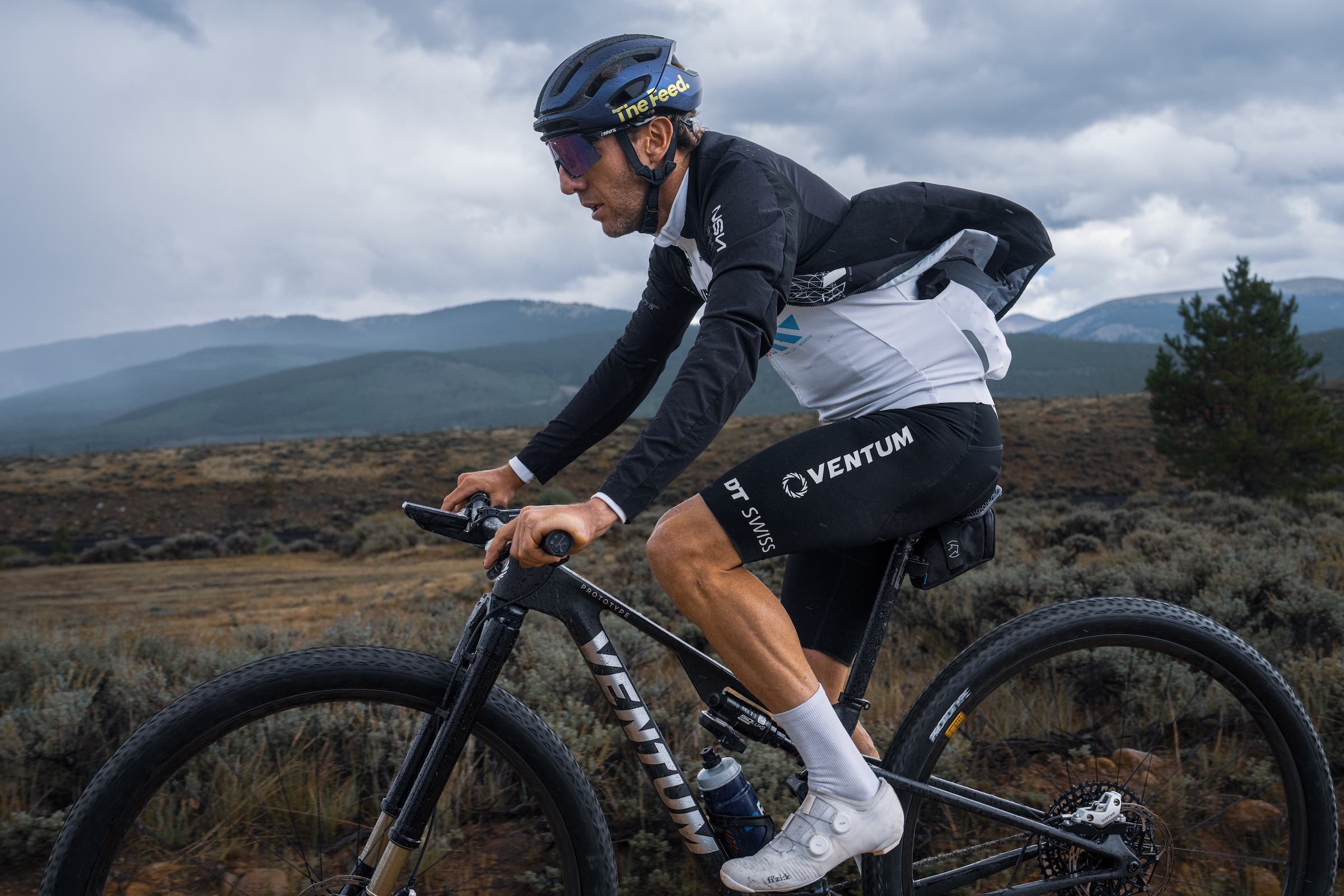
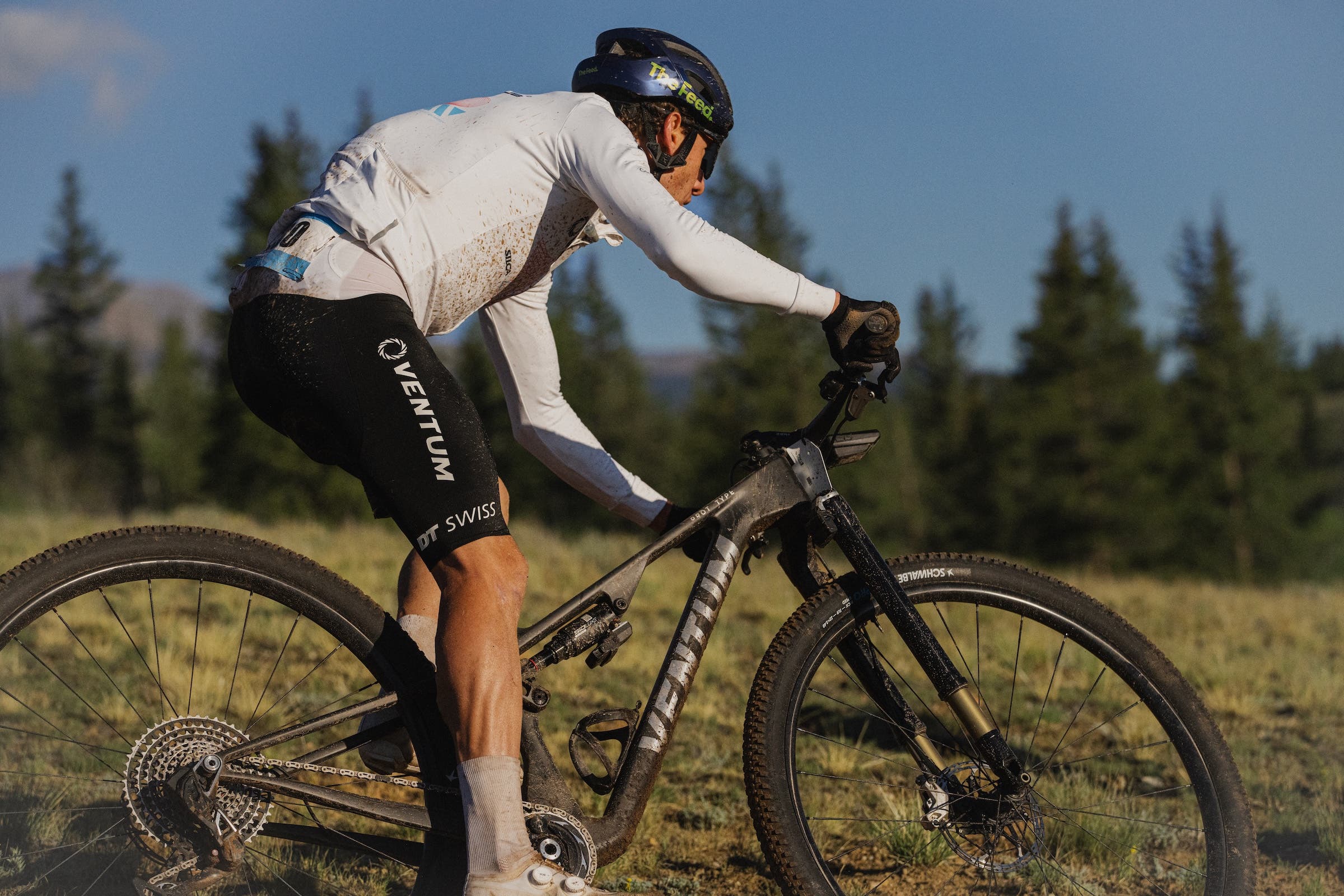
Enter the 32”er. Three weeks ago I received a prototype 32” wheel bike from Ventum. The bike arrived in Canada on a Friday, and since I was flying back to Andorra on Sunday, I left it in its massive box, and flew across the Atlantic with my new whip. Leaving the bike box at the airport because I didn’t have an inch of extra space in the taxi that was taking my wife, my kids, and myself, up to Andorra, the first time I looked at the thing was with jet lagged and bleary eyes. I was excited to get on it, but also skeptical.
A bike that says prototype on it is something that I am always hesitant to try, especially one that has thrown out conventional wisdom and sports almost comically large wheels. In fact the wheels were so big that I had to use two bike bags in order to fly to Colorado. I had a suspicion that this thing was going to be gimmicky.
ADVERTISEMENT
However, on my first outing, I was pleasantly surprised. Everything seemed to work fine. The bike fit well, the geometry made sense. On my second outing I had one of the best MTB rides that I have had in Andorra, and by my third ride I was convinced that this bike was sweet.
With its wider wheel base, co-pilot rock shox, and surprising lightness, I was flying uphill and having a blast on the new bike park trails that have been built in the Grandvallira ski resort above my house. I was cramming before the exam, but this bike gave me a lot more confidence about finishing, and maybe even being competitive at, my first ever MTB race.
Not wild west racing
Although this was my first foray into the discipline, Leadville–an event which is owned by the same company that puts on the two other gravel races that I have done in the USA this year–does not stray from the Life Time Grand Prix (LTGP) script. LTGP is a well-oiled machine. They know how to put on an event, and everything from event check–in, the race expo, and the vibe at the start/finish is well curated and well organized. One would expect this though when the elite entry fee for the one day event is well north of $500 USD.
ADVERTISEMENT
Having done two other LTGP races this season, there was a strong sense of similarity between the events, and I can see why it has become such a valuable company. Both Unbound and Leadville particularly have all the amenities of an Ironman or major marathon, but present a one day challenge that is just barely attainable for a high level amateur. You know it is going to be hard, you know there is a chance that you might not finish, but LTGP isn’t going to put you in the same position as the Traka or some crazy adventure race.
Which is why, when I rode the 4 mile ride from the Ventum Airbnb to the start line, on race day, in the pitch black at 5:00 AM, I knew this race was going to be hard, but even with its altitude, it wasn’t going to be like Qinghai.
I was right. This wasn’t wild west racing. LTGP has made sure of that. However, I think that is a good thing. From its beginning I was bashing bars, and running things loose. At one point, due to the extra length of my bike, I crossed wheels with a rider in front of me (I had only been riding alone with a 32” and had not adjusted to racing in a group with a bike whose wheel base is far longer) and went rolling down into a ravine. Aside from my aggressive riding, the race did not feel dissimilar to any other LTGP that I had done this year, until we hit
Columbine.
A close call on the descent
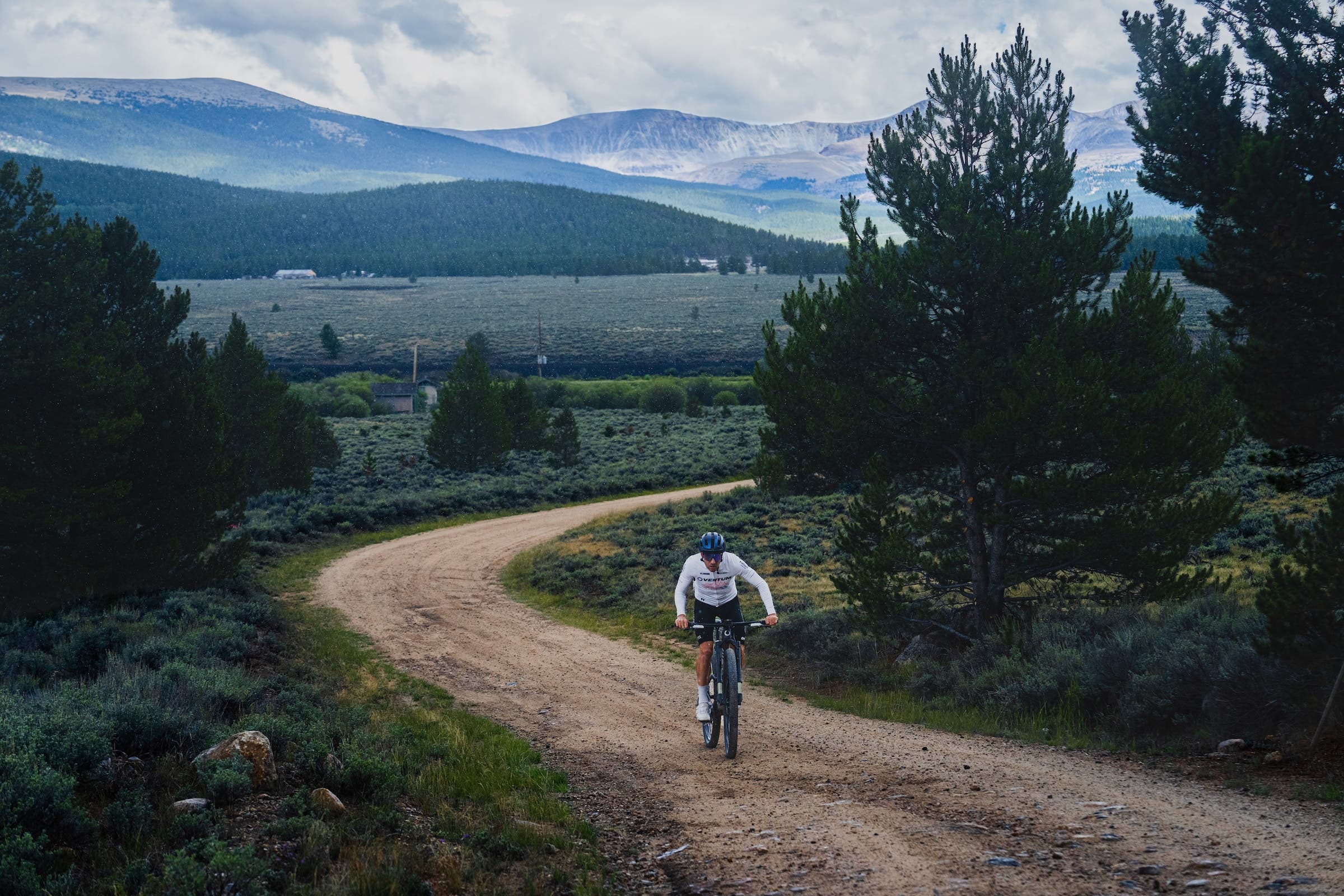
Columbine is an 11km climb that peaks at 3800m. Its final 4km has pitches well above 20%, and much of it is sandy and rocky. I felt good on its lower slopes, but once I got above the treeline, I began to have flashes of racing against TPT on the Tibetan plateau. I was gasping for air, and for every meter I went further, I seemed to have another demon in my head telling me to stop. It was impossible to find a rhythm as just to get over one steep pitch you would have to go so far over your limit, that anything under 7% gradient was used to recover.
ADVERTISEMENT
Totally gassed, I crested the climb well down on the front riders. I took the descent relatively slowly, as this was certainly the most dangerous part of the race. Hundreds of riders from the non-elite categories, sometimes three abreast, were riding up in the opposite direction. At one point I overcooked a corner and locked eyes with a rider
coming up in the opposite direction, my rear wheel skidded and I narrowly squeaked around him, as he put his foot down cringing in anticipation of a collision. I couldn’t imagine riding up knowing full well that elite racers were bombing through blind corners in your direction.
This race, at least in this year’s format, is a tale of two parts, and Columbine was the defining feature between the two. The first half was as explosive, and fast, as any race at sea level, but after Columbine, it was shocking how much the intensity dropped off. Everyone was riding way slower.
I was caught shortly after the descent from Columbine by seasoned gravel pro Alexy Vermeulen. When he caught me, he said; “This is where the race really begins.” He was right. We both swapped off pulls and caught a group of four riders a few miles later. In that group, you could feel the apathy radiating off of everyone. Yes guys still wanted to race, but not like they had in the opening kilometers.
Pushing harder as the finish nears
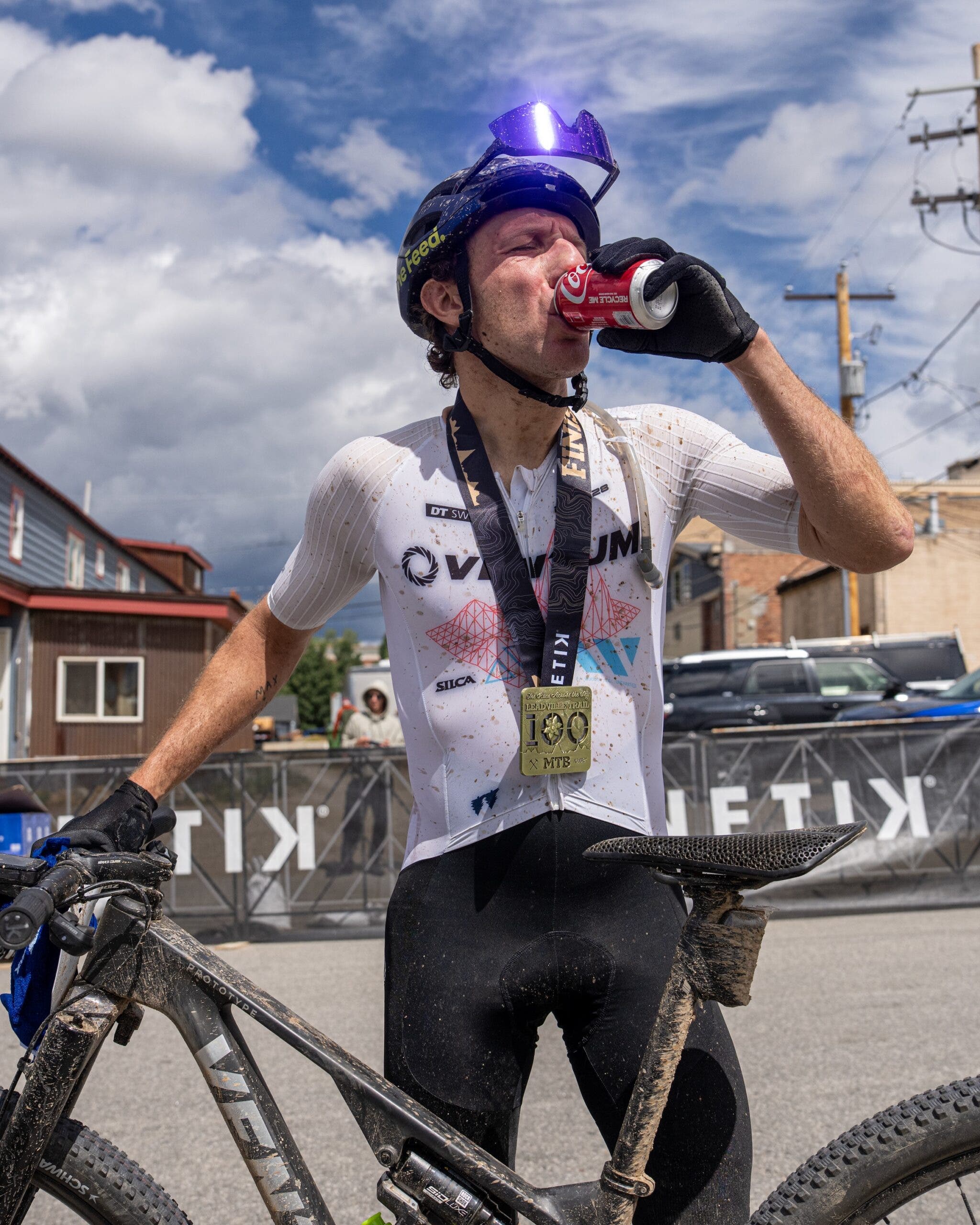
It took me a while to not feel like I was dying after the day’s big climb, but this is where I found the 32” bike came alive. As we neared the finale, I felt like my legs were getting better, and when I started pulling harder on the final climb of the day, only two riders were able to hold my wheel. The three of us had a nice little battle all the way to the finish. Cobe Freeburn, one of the young revelations of the 2026 gravel calendar, was able to follow all of my attacks, and when we came to the final sprint, having dropped the last rider from our group, he said “I don’t care who wins now.” I thought; “I do.”
ADVERTISEMENT
So I laid off of him, and then hit him with speed from behind, but Freeburn easily managed to catch me and outsprint me to the line. My sprint is not what is was 10 years ago, and I finished 14th overall on the day.
Although racing at Leadville will never come close to the sheer epicness of the high altitude racing I did 12 years ago in China, it still provided some of the funnest racing I have done since that time. The race provided a bit of everything, and the otherworldly setting of scrambling up a 20% grade at 3700m above sea level will be something I won’t forget for a long time. When I crossed the line, receiving my “big belt buckle” I felt fully spent, fully satisfied, and grateful to still be racing my bike in places I would have no business being in
otherwise.
Up next, Grand Prix Quebec, Montreal and Worlds!