Updated November 17, 2026 09:47PM
Who Owns GRVL? The Story Behind the SBT Trademark Fight
A post about SBT GRVL’s email to Rez Gravel regarding the GRVL trademark protection has gone viral

(Photo: SBT GRVL)
SBT GRVL has been embroiled in online controversy after an uproar over the brand’s enforcement of a trademark around the term GRVL.
It all started with an Instagram post. @rezgravel on Instagram, the page representing an Indigenous-led community gravel event in Sacaton, Arizona, posted an email they received from SBT GRVL requesting that Rez Gravel stop using the term GRVL in marketing materials around the event.
The Rez Gravel post was a protest of that email. The post comment highlighted the lack of infrastructure around the Rez Gravel event, how the email from SBT would force them to spend money they don’t have on new posters and a logo redesign, and criticism of the lack of care and consideration SBT GRVL showed in denying their request for comped entry into SBT GRVL for native riders in the past.
ADVERTISEMENT
That post generated over a thousand likes and hundreds of comments, with many people criticizing SBT GRVL, bringing into question the viability of a trademark of the term GRVL, and supporting the Indigenous-led event and organization.
The post that started the debate
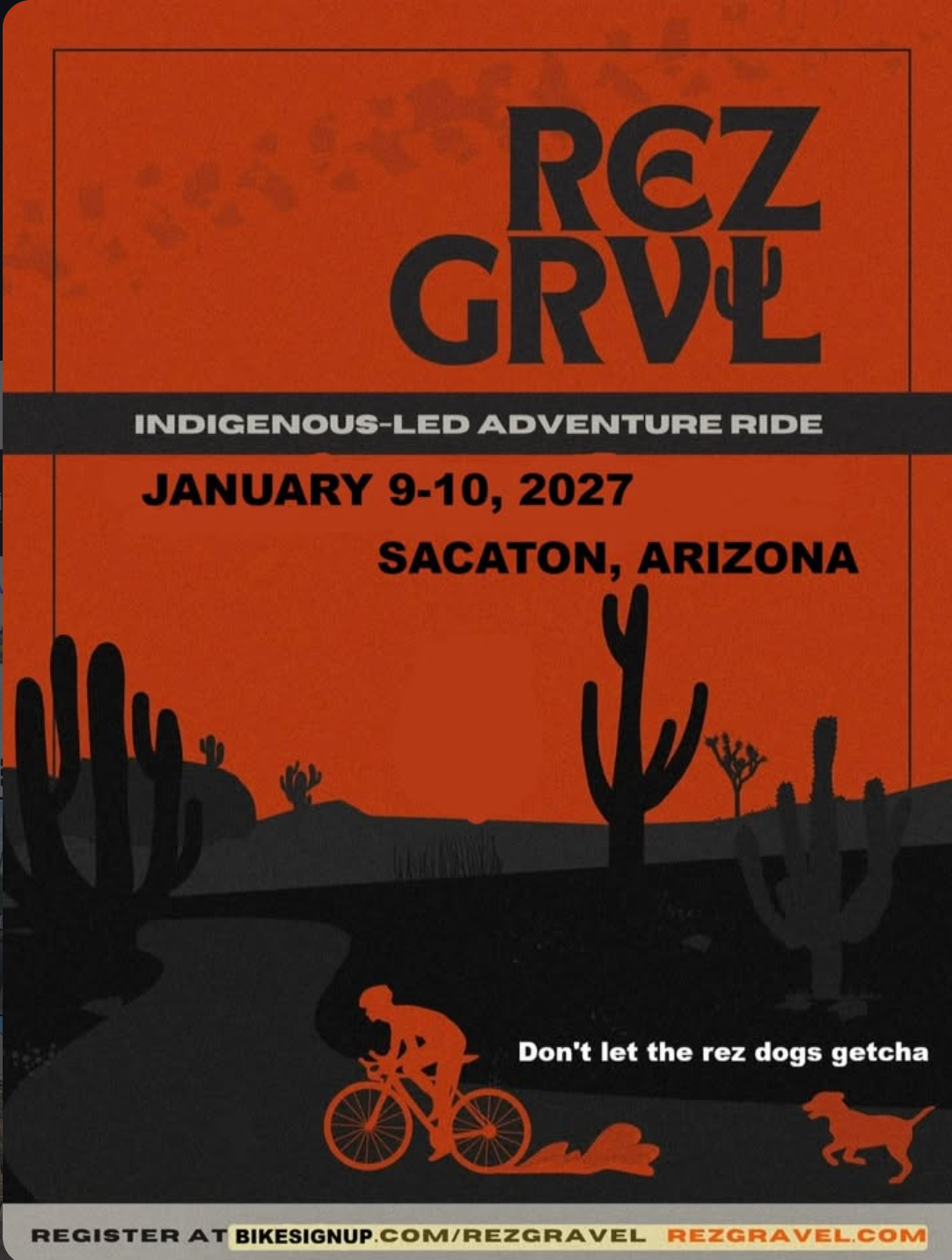
On Sunday, November 15th, Rez Gravel posted a screenshot of an email the race received from SBT GRVL around the use of the GRVL term on previous marketing material for their January 9th and 10th community bike rides.
“So I guess @sbtgrvl owns ‘GRVL’ and we’ll have to stop using GRVL,” the caption under Rez Gravel’s post read. “SBT GRVL introduced me to gravel cycling when I was an @rideforracialjustice RFRJ athlete in 2022. In the past, I have been one of SBT GRVL’s biggest supporters. I returned to SBT GRVL in 2023, 2024 and in 2023 even went halfway around the world to support their race @fnldgrvl FNLD GRVL in Finland.
“I tried to bring a Native Gravel team to SBT GRVL in 2024. I tried to ask Amy, Ryan, and Greer for free or even discounted entry as a way to honor the First Nations people, including my cousin from the Ute Indian Tribe- Uintah and Ouray Reservation, whose people were removed from the land in the area now known as Steamboat Springs. Amy and her team refused to honor native people with even a reduced-fee entry for my cousin in 2024.”
ADVERTISEMENT
And then came the crux of their argument.
“Rez Gravel does not use the GRVL in our LLC, DBA, or website names. Rez Gravel does not sell any merchandise that uses the GRVL name or logo. Rez Gravel is owned by a Gila River Indian Community tribal member and solely operates on the Gila River Indian Community a Sovereign Nation.
“Rez Gravel only has an annual revenue of around $4,000, and after expenses only about 2,000-3,000 keeps our community bike shop going for the year. The posters are printed for 2027 and out of money until some more funds come in from 2027 Registration.”
ADVERTISEMENT
A second post from the Rez Gravel organization a day later added to that online discourse, with the organization posting details of the federally registered trademarks that SBT GRVL invoked in their emails and a caption that articulated how the Rez Gravel organization was not infringing upon the two separate trademarks that SBT GRVL has around the term GRVL.
What trademarks does SBT GRVL have?

In total, SBT GRVL has trademarks on the terms SBT GRVL, FNLD GRVL, RADL GRVL, and two specific trademarks around the term GRVL. One of those terms covers cycling events, while the other protects the use of GRVL for merchandise.
In the case of Rez Gravel, SBT GRVL didn’t specify which trademark they were invoking—they did not have to since the email was a courtesy note and not a formal cease—but it is likely the trademark around the event.
In an exclusive interview with Velo, the SBT GRVL organizers explained the reason behind the email and their trademarks.
“It was back a few years ago that we decided that we needed to trademark the event,” Amy Charity, the SBT GRVL race director, told Velo.
“We had established a brand, and we knew that SBT GRVL stood for something that we were really proud of. We were a safe event, an event that was inclusive, an event that was credible and professional.
ADVERTISEMENT
“At the time, we were also considering expanding our brand by putting on events such as FNLND GRVL or RADL GRVL. In doing so, we wanted to ensure that the riders, the participants, and the sponsors would know what they were getting—when you hear GRVL, when you see GRVL, there’s a standard that you associate with what we will uphold and what we’ll honor.”
Like all trademark processes, that trademark process took many months to complete with the United States Patent and Trademark Office (USPTO). In that process, to get the trademarks for the term GRVL, SBT GRVL had to both prove distinctiveness and prove they were using the trademark to identify their brand to consumers.
Additionally, as with all trademark or copyright instances, SBT GRVL had to demonstrate they were actively using the trademark for commercial use, and that they are actively enforcing their intellectual property if they deem that trademark has been violated.
That has meant that each time an event has used the GRVL distinction since, they have been required by law to notify the brand that is using their trademarked term.
ADVERTISEMENT
“The very first time it happened, it was because there was confusion in the marketplace,” Ryan Steers, SBT GRVL’s Marketing Director, told Velo. “We had a sponsor approach us and say, we didn’t know that you were putting on an event in a different country, and asked why we didn’t tell them we were doing it and why they weren’t the first that you approached.
“It was confusing, especially in our market, particularly because it was a US-based company putting on an international event with GRVL in the title. So we reached out to that event business and said, ‘Hey, we wanted to give you a heads-up, we own the trademark for GRVL as it relates to events.’
“That’s what we do when we see an event out there related to gravel cycling that has been using GRVL. There have been around three events that we’ve reached out to.”
What conversations have taken place behind the scenes

After looking at documents associated with the email posted to the Rez Gravel account and the email exchange between SBT and the Arizona Gravel Series a few years ago when the issue came up, the response in both cases references the trademark. Yet, neither message was in the form of a formal cease and desist letter
ADVERTISEMENT
In the case of the Arizona Gravel Series, the letter did originate from an attorney, but it also offered different courses of action the series could take to either license the name or build in a time period for a rebrand.
In the case of Rez Gravel, the letter even came from the race organizers personally, with Steer’s personal phone number posted on the public Instagram post of the email. It also suggested that there could be a course for collaboration to work through the perceived trademark infringement.
In the documents from the conversations between the Arizona Gravel Series and SBT, both rebranding and a licensing agreement were proposed as options by SBT GRVL to the series.
Beyond the public messaging from Rez Gravel, there has been a limited response to the original email from SBT GRVL.
The race did get a response from the Rez Gravel organization, but it was essentially the same as the public caption on Instagram. Rez Gravel has not responded to follow-up messages, according to SBT GRVL.
ADVERTISEMENT
“We’ve sent an email, a very brief email saying we’d really like to talk and make sure it was understood that we certainly don’t want to do anything that causes their event any harm. We want to lift their event up and simultaneously we must protect our trademark.
“Our idea is that we can protect our trademark, and we can also support this event—we certainly don’t want them to change anything that they’ve done to date; we don’t want them to reprint anything; we don’t want them to incur any costs for this. We want to support them as an event, and we aren’t setting any sort of standards.”
To corroborate this account, Velo reached out to Rez Gravel for comment. After initially agreeing, the organization declined to comment on advice from its attorney.