Updated June 1, 2026 03:05AM
With One Wheel Change, the Paradigm of Gravel Racing Has Changed Forever
Team tactics defined Unbound Gravel 2026, marking a watershed moment for a sport up until now defined by the lone privateer.
(Photo: Dan Hughes )
Welcome to Velo’s Unbound Gravel coverage, where we share news from the world’s biggest gravel race. If we think it’s noteworthy, you’ll see it. See the rest of our Unbound Gravel coverage.
With 80 miles left of Unbound Gravel in 2026, gravel cycling changed. For the first time, a team’s victory at the biggest race mattered more than anything else.
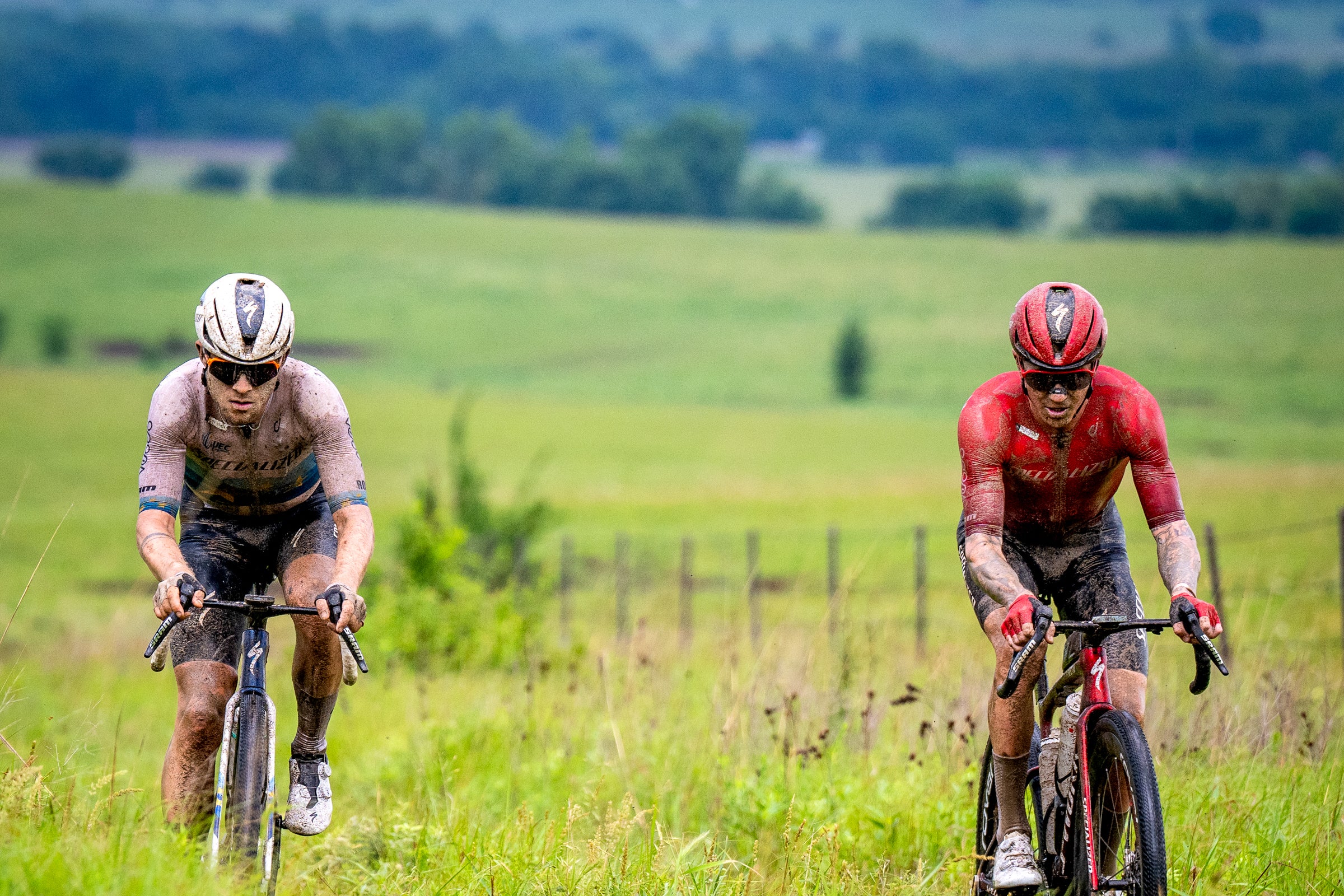
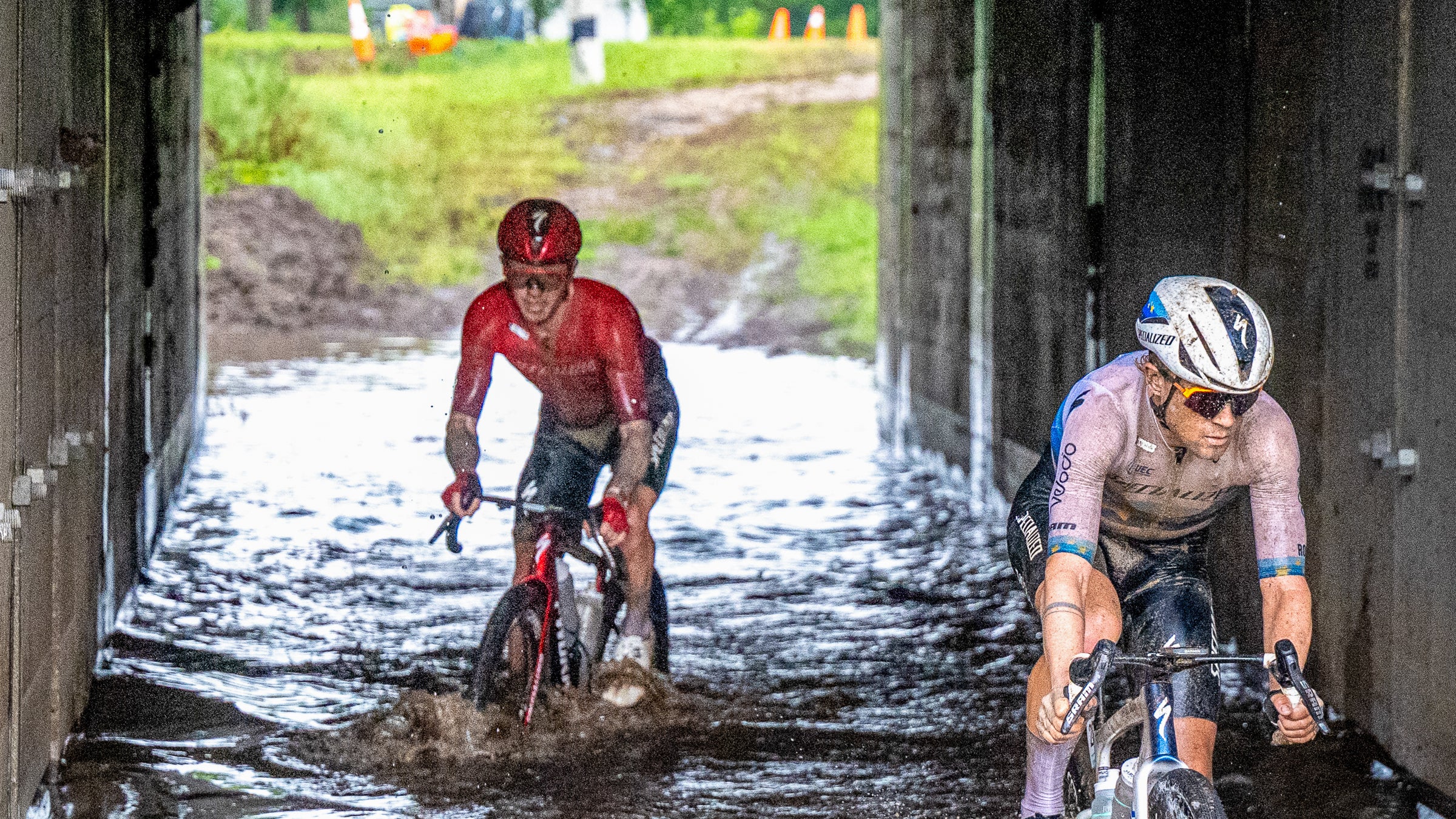
Keegan Swenson, an Unbound winner and a true titanic figure in the establishment of gravel racing as a pro discipline, was off the front with Mads Wurtz Schmidt, his Specialized teammate. They had nearly a dozen minute lead and had clobbered the race from the first hour, ending any inkling of suspense with a third of the distance left to cover. That situation alone was unthinkable a mere four years ago.
Yet, what happened next seems hard to imagine even happening last year.
ADVERTISEMENT
First, Schmidt flatted, a painfully normal scenario at Unbound, even in the innocuous moments with the best equipment. When he flatted, Swenson stopped to help him with his flat. Less normal, but based on the scenario, it made sense. Then, Swenson gave him a wheel and sent him up the road alone. Not normal.
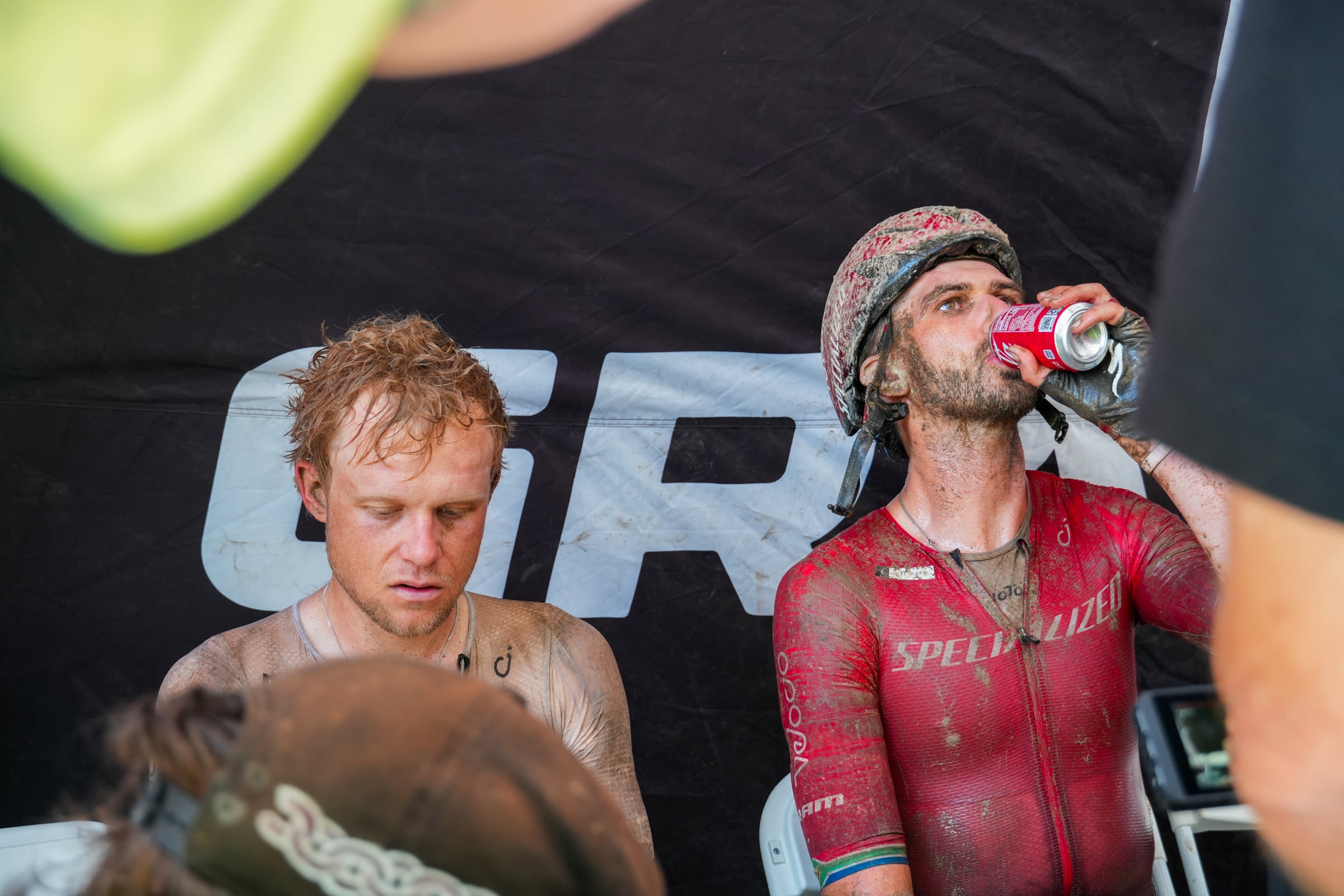
“I couldn’t have done it without Keegan [Swenson], he’s a champion,” Mads Wurtz Schmidt said after the race. “I think we got up to eight plugs, and it still wouldn’t hold. Keegan was quick to say, ‘You need my wheel,’ because it was clear that I was the strongest, and the chance for the win between us was mine. So he sacrificed his race, and his Grand Prix, and everything for me.”
For the first time in modern Unbound history, a rider in a potentially winning position sacrificed his race for a teammate. Times are a-changing.
Rider-to-rider support is not new, although it is different
Specialized has employed the wheel swap tactics before. In 2023, the previous mud year, both Howard Grotts and Russell Finsterwald made it through the mud in the leading group of around nine. Then, as the pair had opted for narrower tires to help clear the mud, Finsterwald suffered a massive flat.
ADVERTISEMENT
At Unbound, outside support is not permitted away from aid stations, but rider-to-rider support is allowed. Grotts, the rider who was less-suited to the course and renowned around the gravel scene for his kindness, was quick to hop off his bike and give his wheel. This gave Finsterwald the chance to chase back on and ultimately finish with the leaders back in Emporia, 160 miles later.
The Specialized team remembered that tactic, even if most of the riders are new.
That being said, that scenario was quite a bit different from having two of the strongest riders in the race up the road on their own, especially when Swenson would have plenty of motivation to maximize his place for the season-long Life Time Grand Prix. Even if he was not as strong as Schmidt, riding on could still have resulted in a Specialized win from Keegan or Matt Beers, who was monitoring the chase behind before he ultimately finished second.
Instead, the decision was made by the simple and cold hard calculus of team racing: do what you can to put the strongest rider in the best scenario to win. Swenson, ultimately, made that choice.
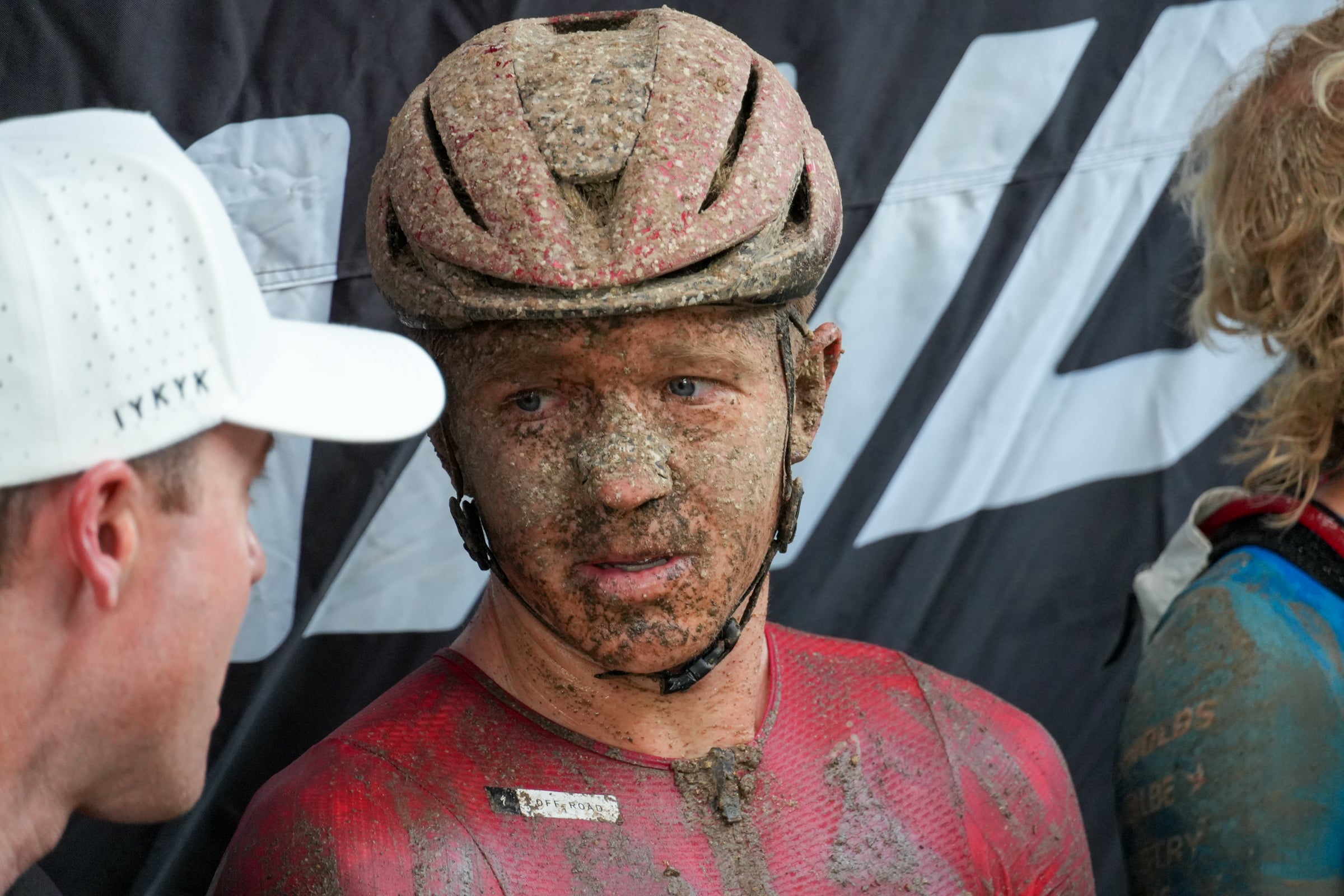
“[The decision] was kind of on the fly,” Swenson said after the race. “Mads was riding really well, and I didn’t think I could make it. I was pretty buckled. I kept having to tell him to slow down, so I was pretty confident that if I gave him my wheel, I was 100% confident he would make it.
ADVERTISEMENT
It was not all for loss as Swenson was able to find his way back to fifth after a string of mechanical issues. After Wurtz Schmidt headed off, Swenson used his deep experience in off-road racing to get the tire booted, tubed, and reassemble the freehub of his wheel after it fell off during the swap.
“You know if you keep trucking out there, sometimes you can pick off bodies.”
What does this mean for gravel moving forward?
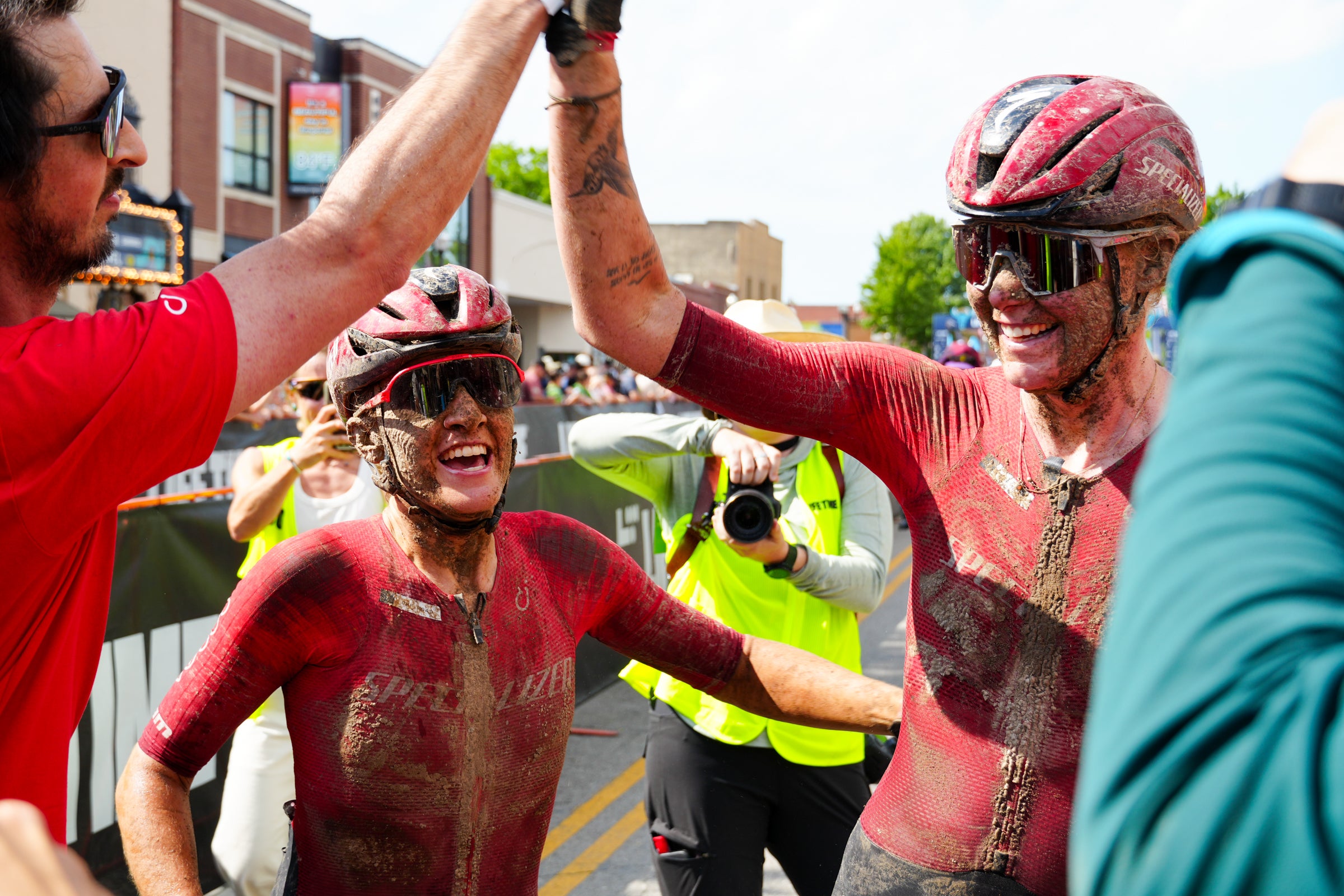
Specialized dominance at Unbound, and the cold-blooded analytical way they did it, is a turning point in the history of gravel racing. It is unavoidable that now, as three of the top gravel athletes in the world are willing to be true team chess pieces, individual athletes will have the cards stacked against them. Specialized has too much talent, too much support, and too much alignment to fight other ways.
ADVERTISEMENT
In fact, the Specialized off-road team was buoyed by the support of Emil Herzog, a 22-year-old on Red Bull-Bora-Hansgrohe. The young German was not only there in the end to give Swenson help in his comeback, but he also finished in the top 10, the best result for an active WorldTour men’s rider at Unbound since Lachlan Morton and Alex Howes began their gravel careers with EF in 2019.
Compared to Specialized, other bike brands like Canyon have started to follow with its Canyon X DT Swiss All Terrain team. PAS Normal has a coalition of riders as well that uses collectivity to tactical ends. But these are groups that have tedious connections.
The task of cracking Unbound gravel in the future — when one team can go one, two, and five with a catastrophic mechanical in the men’s race and dominate a small group attack in the women’s race — will require a strategy that demands road-like attention, sacrifice, and talent. That, or we could see other brands like Scott, Factor, Trek, Cannondale, or Giant call in some gravel-curious WorldTour riders to assist with the cause in Kansas.
ADVERTISEMENT
The big question that comes from that is: what does that look like in practice, and can gravel sustain the very real financial costs that come with such a dramatic shift?