Published October 30, 2026 09:01AM
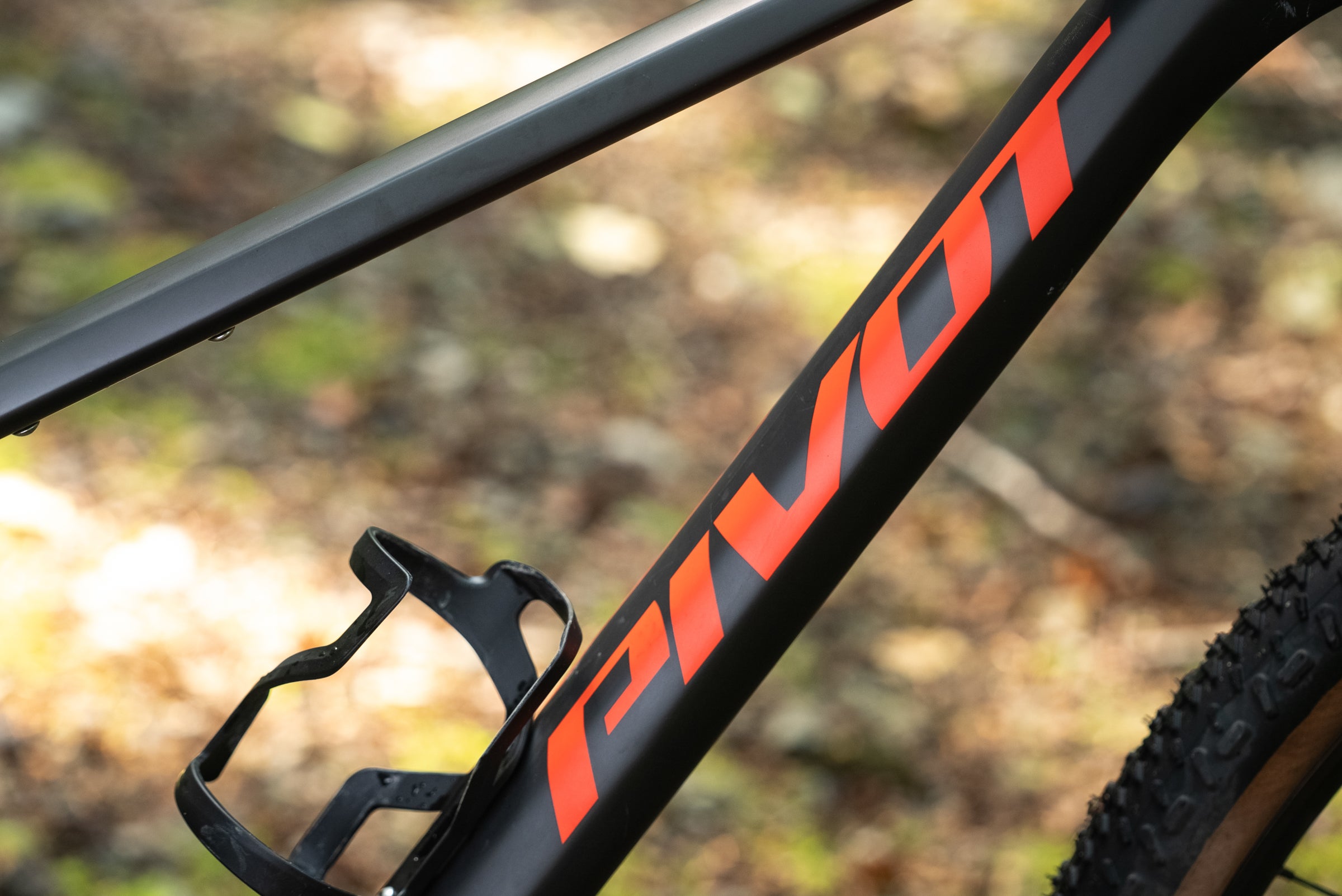
Pivot LES SL Drop Bar Review: Taking Gravel to the Extreme
Slapping drop bars onto a carbon hardtail might look like a parts-bin compromise, but for ultra-endurance routes and steep singletrack, 100mm of travel makes perfect sense.
Pros
100mm travel fork
Not as heavy as you’d think
2.4” tire clearance
Dropper post compatible
Cons
Low saddle to bar drop
Heavy
Fork bobs and requires more technique than is typical for drop bar
Lacks top tube mounts
Boost spacing limit wheel and crank choices
Max 38t chainring
Pivot Les SL Drop Bar specs
| Specification | Details |
| Frameset | LES SL Frame / Fox Performance Stepcast 32 29″ Fork (100mm) |
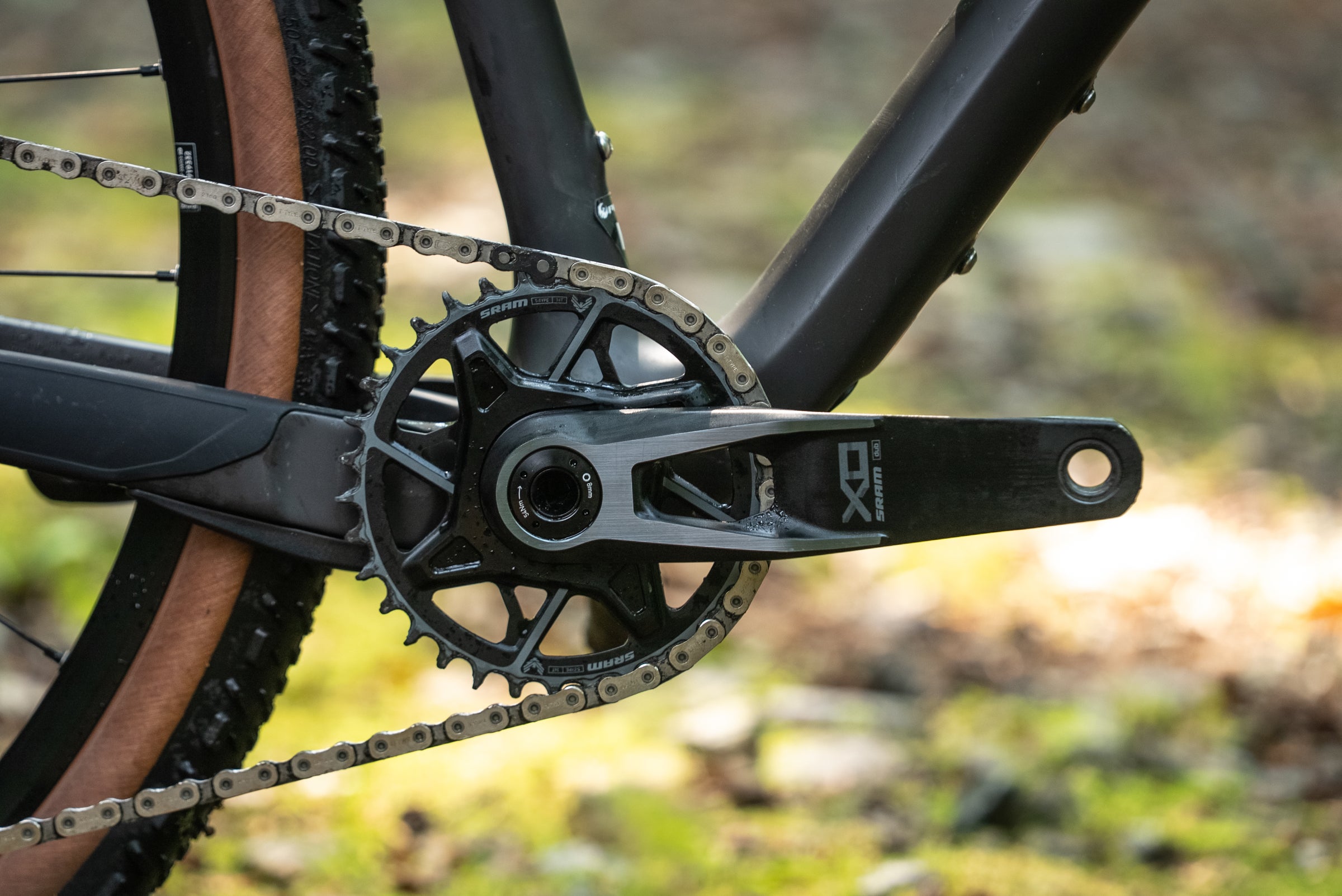
| Drivetrain | SRAM GX Eagle Transmission 12-Speed |
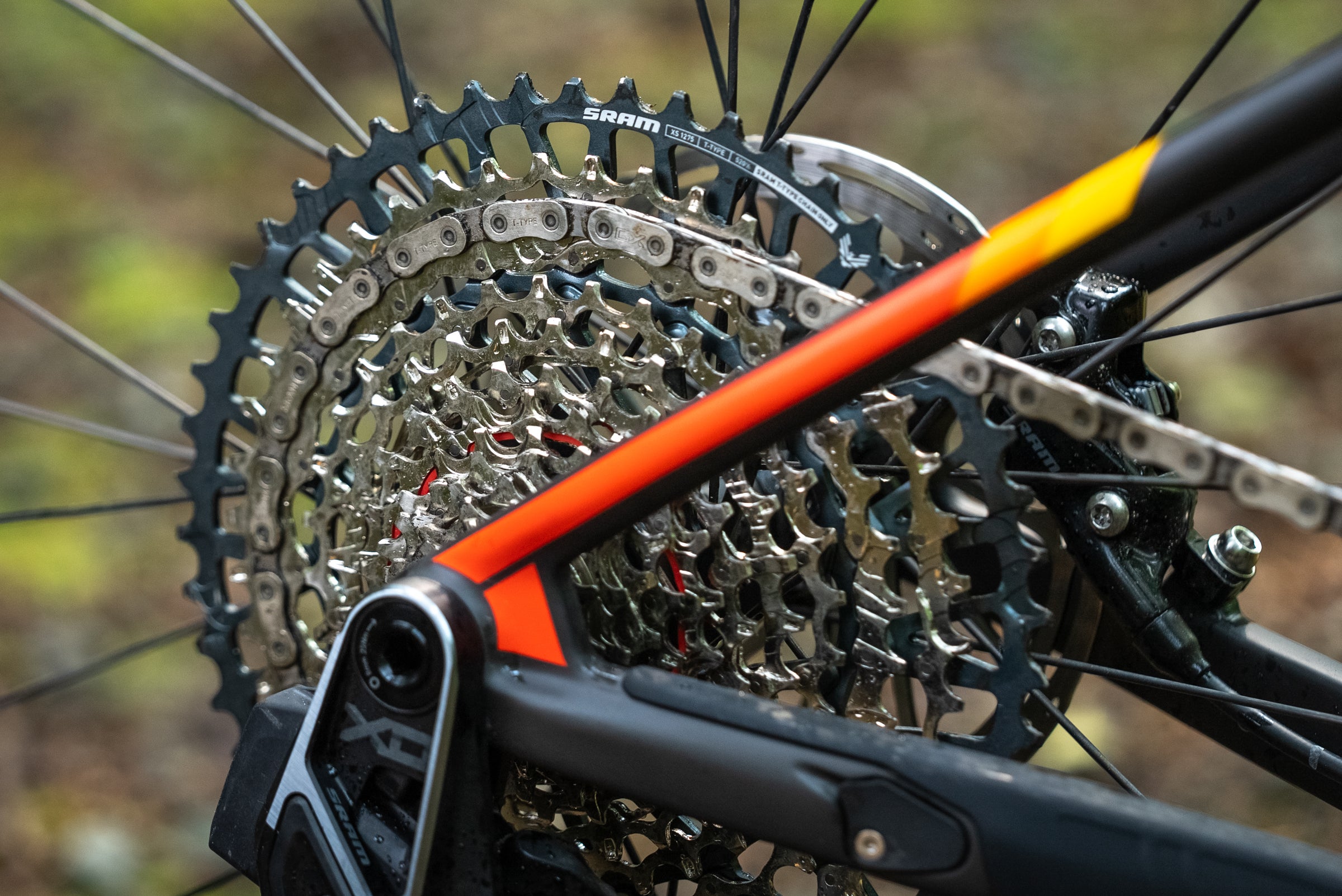
| Gearing | 32t Chainring x 10-52t Cassette |
| Handlebar/Stem | Phoenix Ride Gravel Aluminum Handlebar / Phoenix Gravel Stem (31.8mm – 60mm) |
| Wheels | DT Swiss X1900 w/ DT Swiss 370 hub (25mm – 29″) |
| Tires | Schwalbe G-ONE RX 50 (control) |
| Price | $6,399 |
| Weight | 9.78kg |
| More info | Pivot Website |
This bike was featured in the Velo Future of Gravel Field Test. Watch all 3 episodes, streaming now!
- Episode 1: First impressions
- Episode 2: Head to head challenges
- Episode 3: The big ride
In the search for what the future of gravel bikes will look like, one obvious direction is to take the concept all the way to mountain bikes. Half the comments already claim that modern gravel bikes are just mountain bikes anyway, so why not embrace the concept? The Pivot LES SL Drop Bar belongs to exactly this class of bike. The bike is a hardtail mountain bike with drop bars.
ADVERTISEMENT
Pivot is not unique in offering something like this, and in the past, I’ve been somewhat of a critic of the idea. It’s easy to say this kind of bike is just a parts-bin grab. A brand has a bunch of unsold mountain bike frames, so what if someone looking at the numbers just sources a cockpit that will work? Now you’ve got a whole new category of riders to potentially sell a bike to, and investment is minimal.
If you follow that line of thinking, then you also realize the result will be a compromise. The Pivot LES SL is a lightweight carbon hardtail, and it wasn’t designed for drop-bar duties. The rear end uses boost spacing, so cranks and wheels designed for gravel bikes don’t fit. Good luck finding aero-focused wheels, and the bars that are specced are massively wide compared to shoulder sizes. Now that I’ve spent time with the bike, though, is that fair? Let’s get into my revised way of looking at a bike like this.
What I like about the Pivot Les SL Drop Bar bike
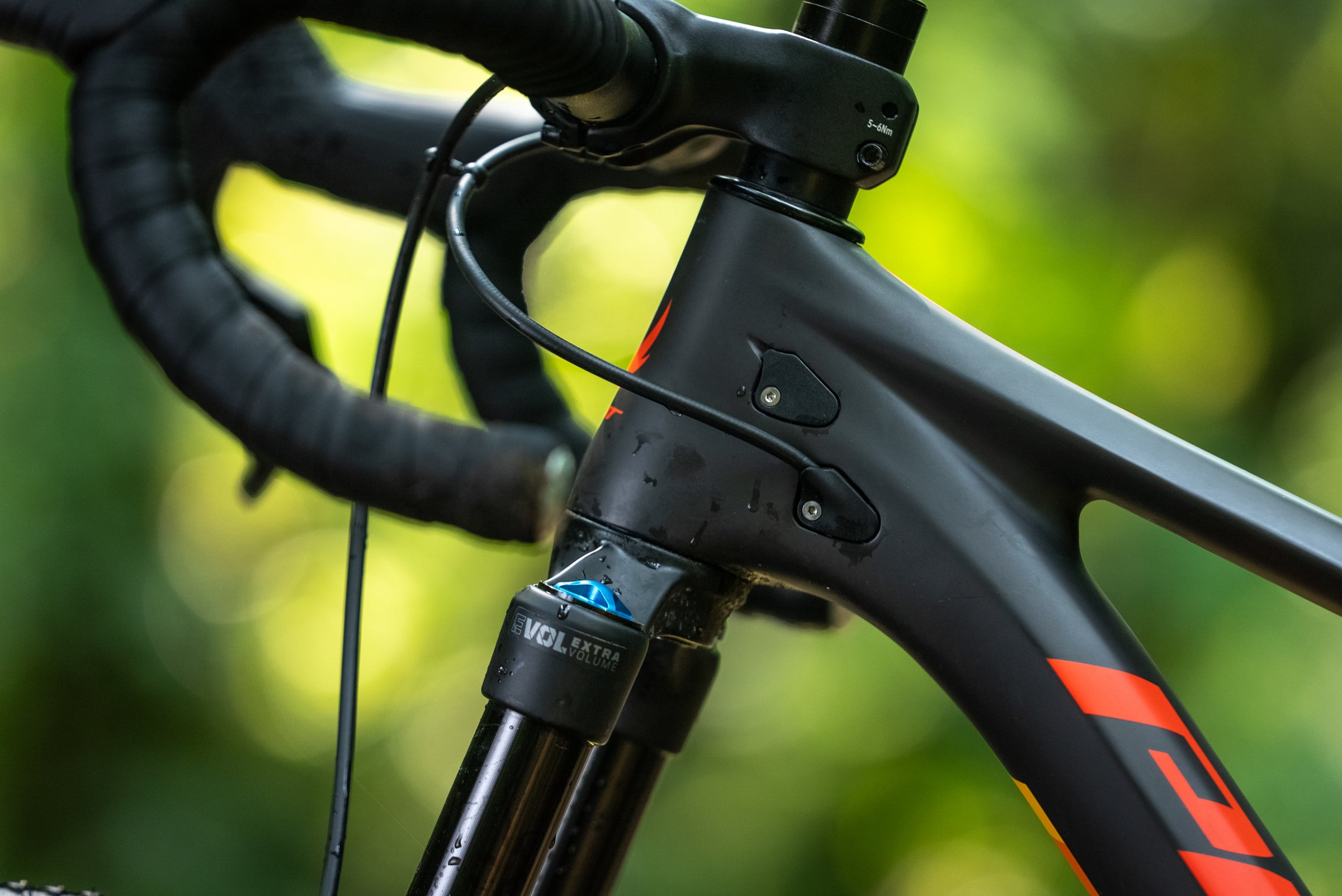
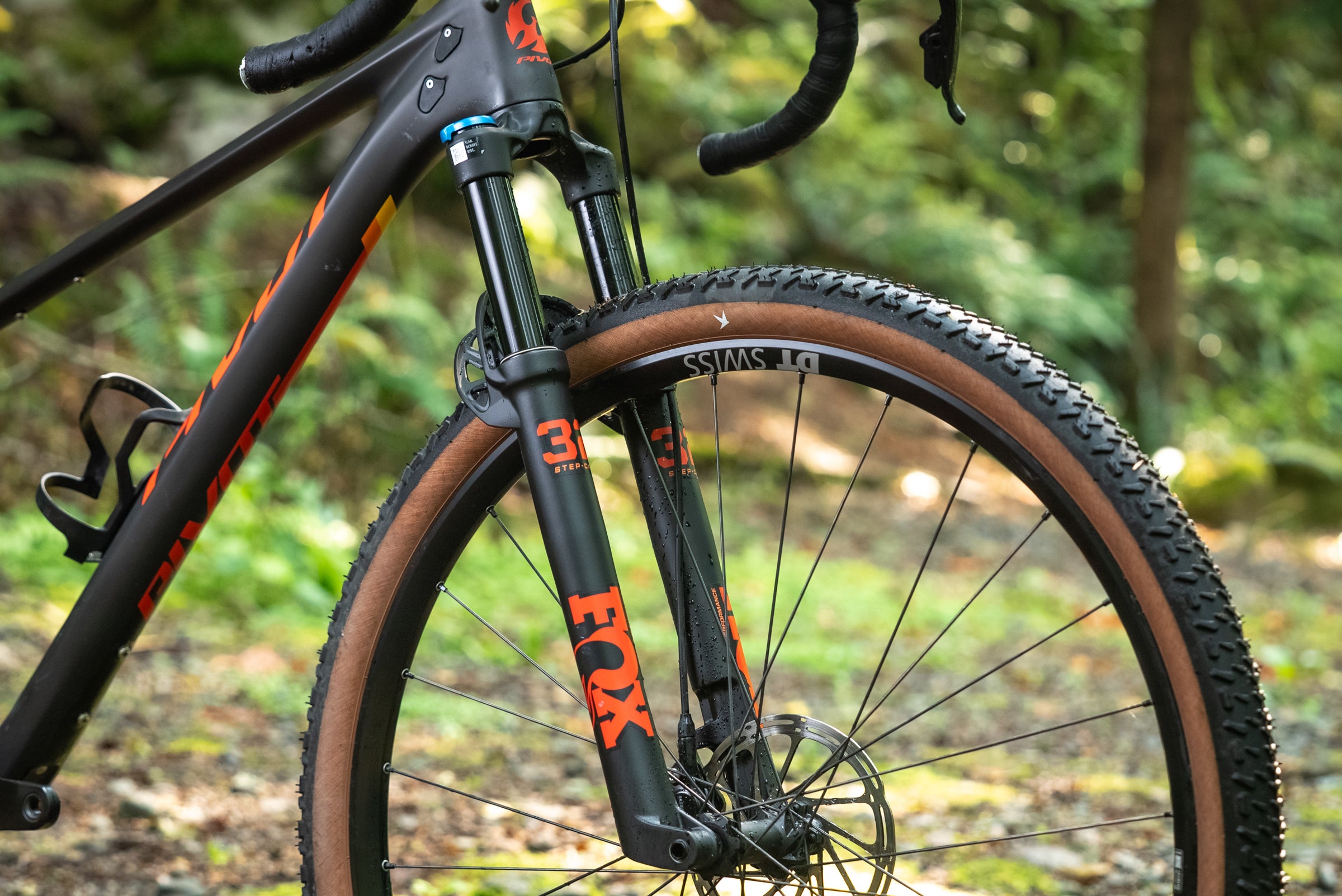
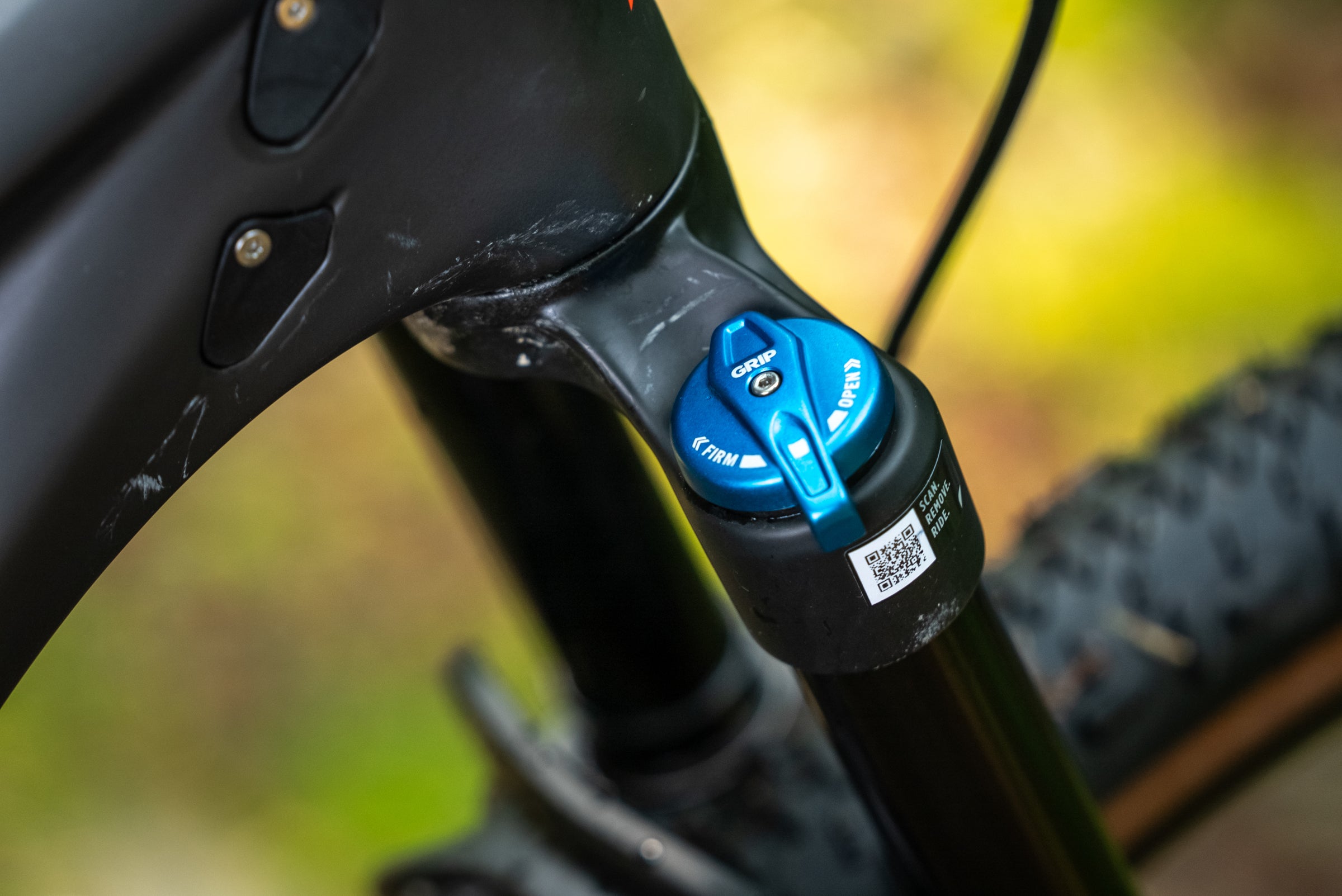
The best thing, and the worst thing, about this bike is the 100mm front suspension. In a way, I hate it, because unlike gravel suspension that often works as a set-and-forget kind of thing, the 100mm Fox front fork requires some recalibration. If you are used to something like the RockShox Rudy front suspension, this fork might bug you because it moves a lot. If you stand to sprint, good luck. It becomes a bobbing energy suck, and you are going to want to make liberal use of the lockout and adjustment knob. You will probably also want to adopt a much more mountain-bike-style riding stance, where standing to pedal is rare and you keep your weight back.
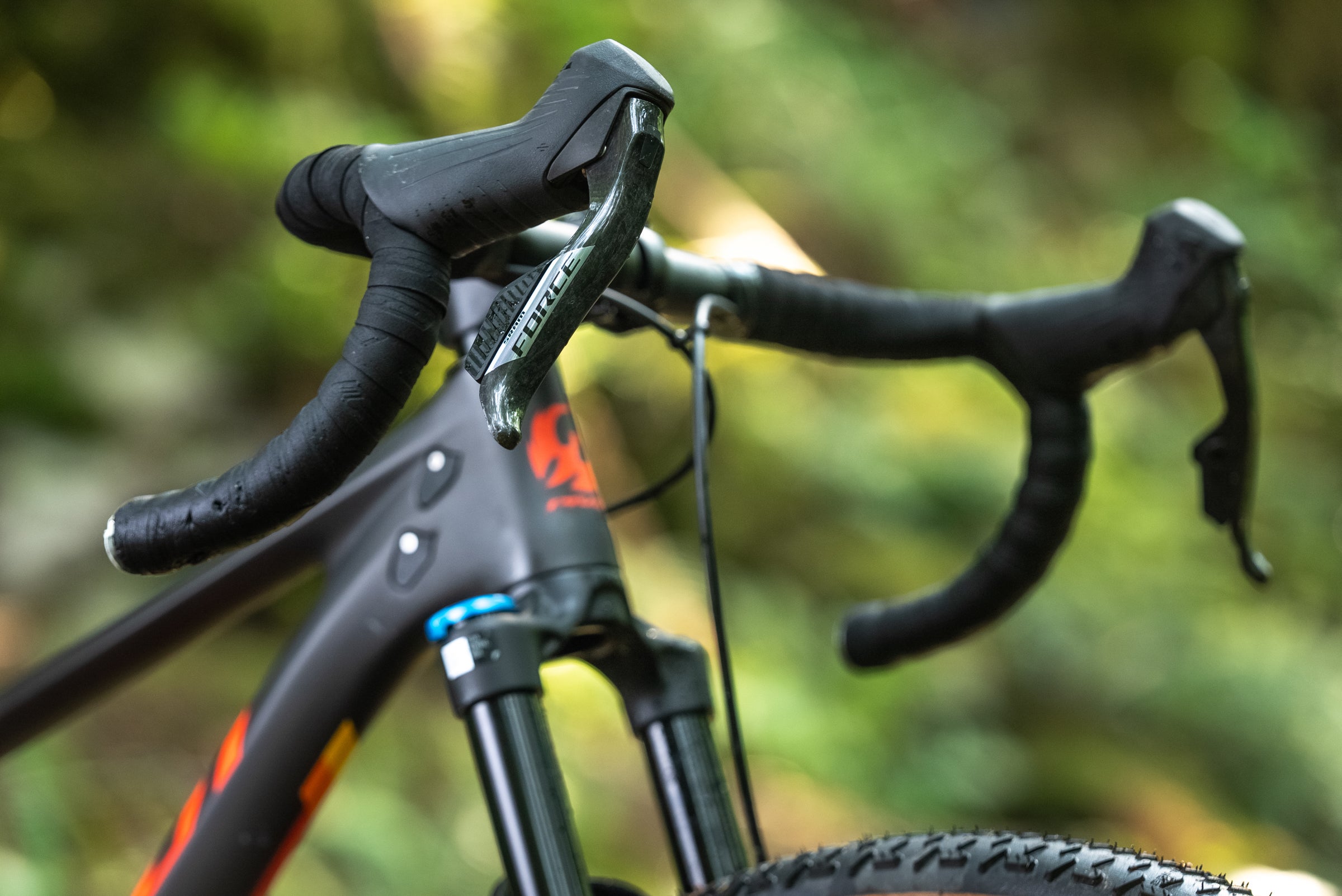
Despite all of that, this feature is what I like about the bike because it is, in large part, the entire point. If you prefer the feel and capabilities of a 30mm or 40mm front suspension fork, then this isn’t the bike for you. If you instead need the capabilities of an actual mountain bike, then you want that full 100mm of suspension goodness, and that’s worth putting up with the compromises. It feels like you can roll over anything that comes ahead of you, and this much suspension means better traction when you do it.
This fork is also what you want if you plan to spend days or weeks traveling across seriously rough terrain. Not the kind of terrain that a short-travel gravel fork can handle, but rough, rooted, and rocky singletrack across a country. You are going to be seated while pedaling, and as you roll over things, your hands and arms don’t have to be in a constant state of tension.
ADVERTISEMENT
Now that I, as the resident roadie in our gravel bike Field Test, got to spend time with a bike in this category, I could also make the argument that this is what you want as a road-leaning rider. If you feel unsure of yourself when things get truly rough, then big suspension (for a drop-bar bike) is what will make the difference between always feeling unsure and really starting to feel capable. Just make sure you don’t expect to do too much mixed-surface riding, because that is not the happy place for this suspension or bike.
What I don’t like about the Pivot Les SL Drop Bar bike
Although I mentioned some of the drawbacks of the 100mm suspension, I don’t really think that stuff is a big deal. You want that suspension because you want the traction. What actually does bother me is the lack of saddle-to-bar drop. It’s inherent to any 100mm suspension and fixing it is tricky, but if I could wave my wand and fix something, it would be this.
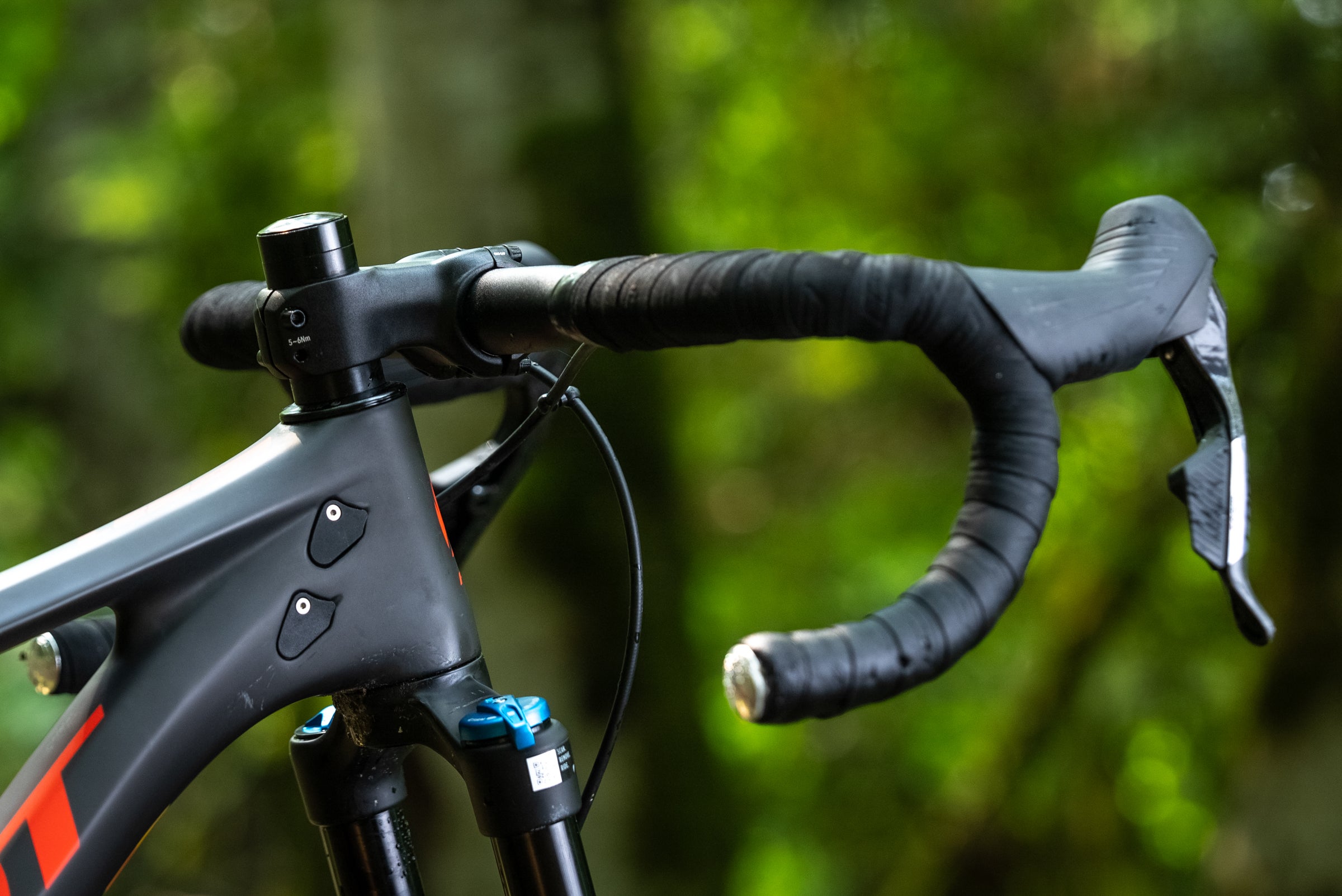
The reason it bugs me is that I want a bike that feels fast. When I really want to push hard, I am used to tucking in, getting aero, and just pedaling. In the case of the Pivot Les SL, it feels impossible to match that feeling because it’s so upright and the bars are super wide. Sure, I could swap the bars, but getting that long and low feeling is a bit more tricky.
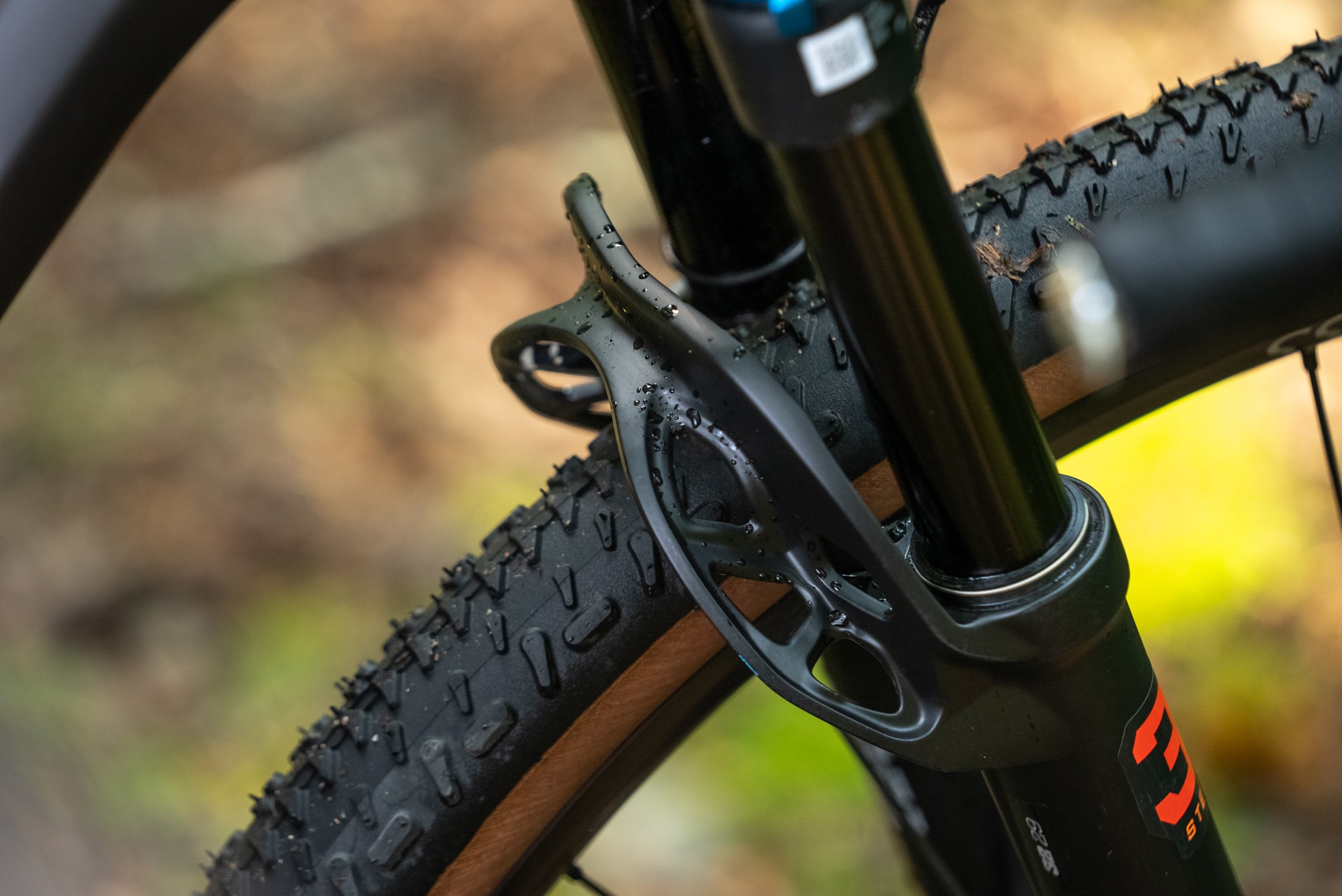
The reason the problem exists is that 100mm of travel requires more space. The axle-to-crown length on a fork with this much travel pushes the front end up higher than a standard rigid gravel bike. While Pivot keeps the head tube as short as possible to compensate, you are still left with very little saddle-to-bar drop. Unless you are willing to swap in a radically negative-angled stem to slam the bars, you are going to be sitting relatively upright. It is a necessary compromise to fit that much suspension on a frame, but the result is a bike that feels incredibly capable in the rough, but somewhat sluggish and blocky when you are just trying to put your head down and crush a smooth fire road. This detail is why you sometimes see drop-bar conversions with bonkers-looking negative stems.
ADVERTISEMENT
Unlike the 100mm suspension fork, I don’t believe this upright posture is really the point of the bike. While it is true that an upright position adds stability, if the bar and stem managed to get the racy position I like and I could combine that with the 100mm of travel, this bike would feel a whole lot different. It would shift the use case a little more toward gravel roads, but I would personally have a lot more fun riding it.
Livability
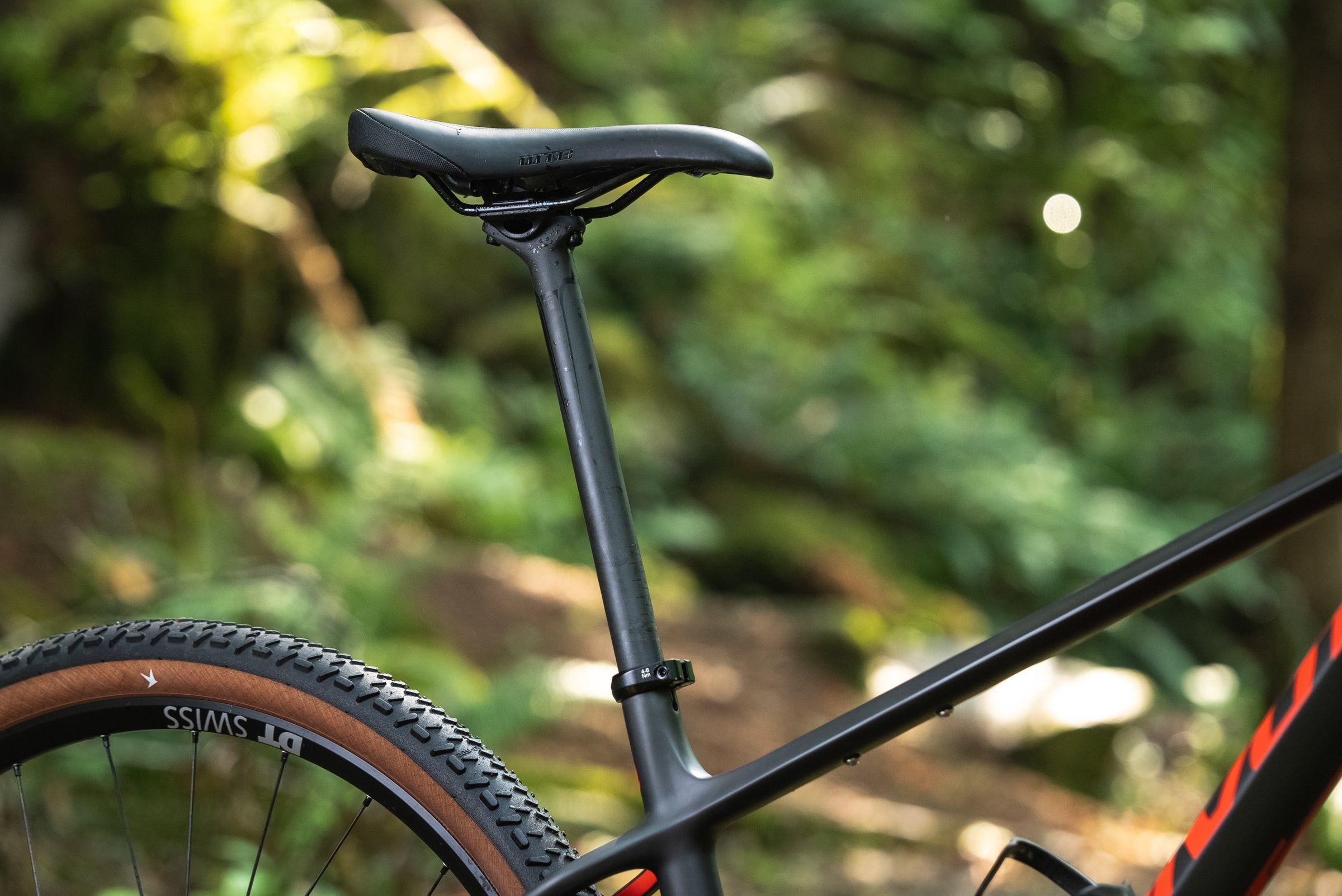
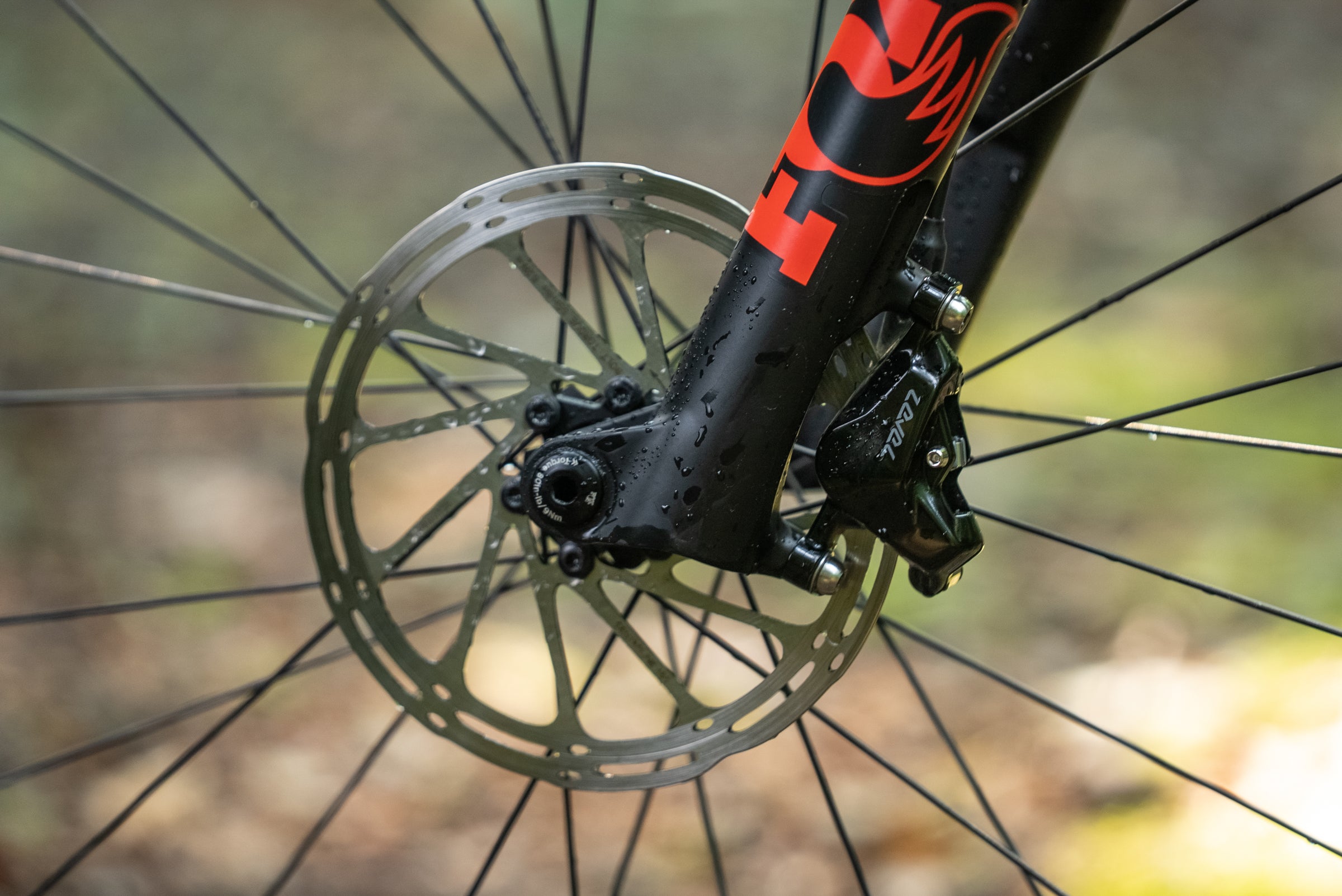
On the upside, it is possible to make that change, as the handlebar on this bike is easy to swap out. Things do get a bit less livable after that, though. The bottom bracket is a PF92, and you have to deal with Boost spacing plus a crank designed for it. You could argue Boost spacing is a benefit, but your wheel choices suddenly become very mountain-bike-esque. There is UDH, but there are no mounting points on the top tube, no in-frame storage, and the max chainring is only 38t. It’s a mountain bike, so the things you might look for in a gravel bike just aren’t there.
Who is the Pivot Les SL Drop Bar bike for?
Inherently when you push a bike design to the extreme, it becomes a speciality product. The vast majority of gravel bike buyers spend some time on the paved and gravel surface roads. This bike isn’t a great choice in those situations. Instead it is absolutely ideal for someone who lives in a place similar to Squamish, B.C. where we tested this plus wants to do a particular type of riding.
Much of the riding we did was right on the edge of what you would consider taking any gravel bike on. Most of the rides in the area are actually mountain bike trails. That should be your starting place because that’s what this bike is good at.
ADVERTISEMENT
Then you have to decide that you don’t actually want to just buy a mountain bike. You want to be able to tackle extremely steep and technical riding but you also want to be able to cover big distances and put yourself in positions where drop bars make sense. This would also be an excellent bike for something like the Tour Divide.