Updated April 15, 2026 07:29AM
If you buy through our links, we may earn an affiliate commission. This supports our mission to get more people active and outside.Learn about Outside Online's affiliate link policy
Buying a Gravel Bike? These Are Our Expert Picks
The gravel market is saturated with endless options, tire clearances, and geometry tweaks. We cut through the noise to crown the absolute best bikes of the year across every category and budget.
(Photo: Velo)
Table of Contents
If you already have an idea of bikes and just want to know what I think is the best, it’s the Enve MOG. The perfect geometry and tons of tire clearance is tough to beat.
Best gravel bike quicklinks
- Best Overall Gravel Bike → Enve MOG
- Best Budget Gravel Bike → Specialized Crux DSW
- Best Value Gravel Bike → Pivot Vault
- Best Gravel Race Bike → 3T Racemax² Italia
- Best aero gravel bike → Cervelo Áspero 5
- Best Adventure Gravel Bike → Obed GVR
- Best Gravel Bikepacking Bike → Trek Checkout
- Best All-road Gravel Bike → BMC Roadmachine
There are so many different directions we could go with our gravel bikes buyers’ guide in the year 2026. To put it plainly, gravel riders are spoiled. We have a huge spectrum of bikes and characteristics to choose from.
Nevertheless, in an effort to rein it in and keep things simple I am capping this guide at eight bikes for eight different use cases. Whatever your need, I’ve got something that will be the best choice for you. What’s more, I am always testing new bikes, and when something jumps out, it will show up here.
If you need help understanding more about how to buy the best gravel bike jump down to the bottom where I’ve got a handy guide on that.
This is a buyer’s guide with affiliate links, and we’ve got a whole section of Velo Buyer’s Guides to explore.
Prices updated April 2026.
Best overall gravel bike: Enve MOG
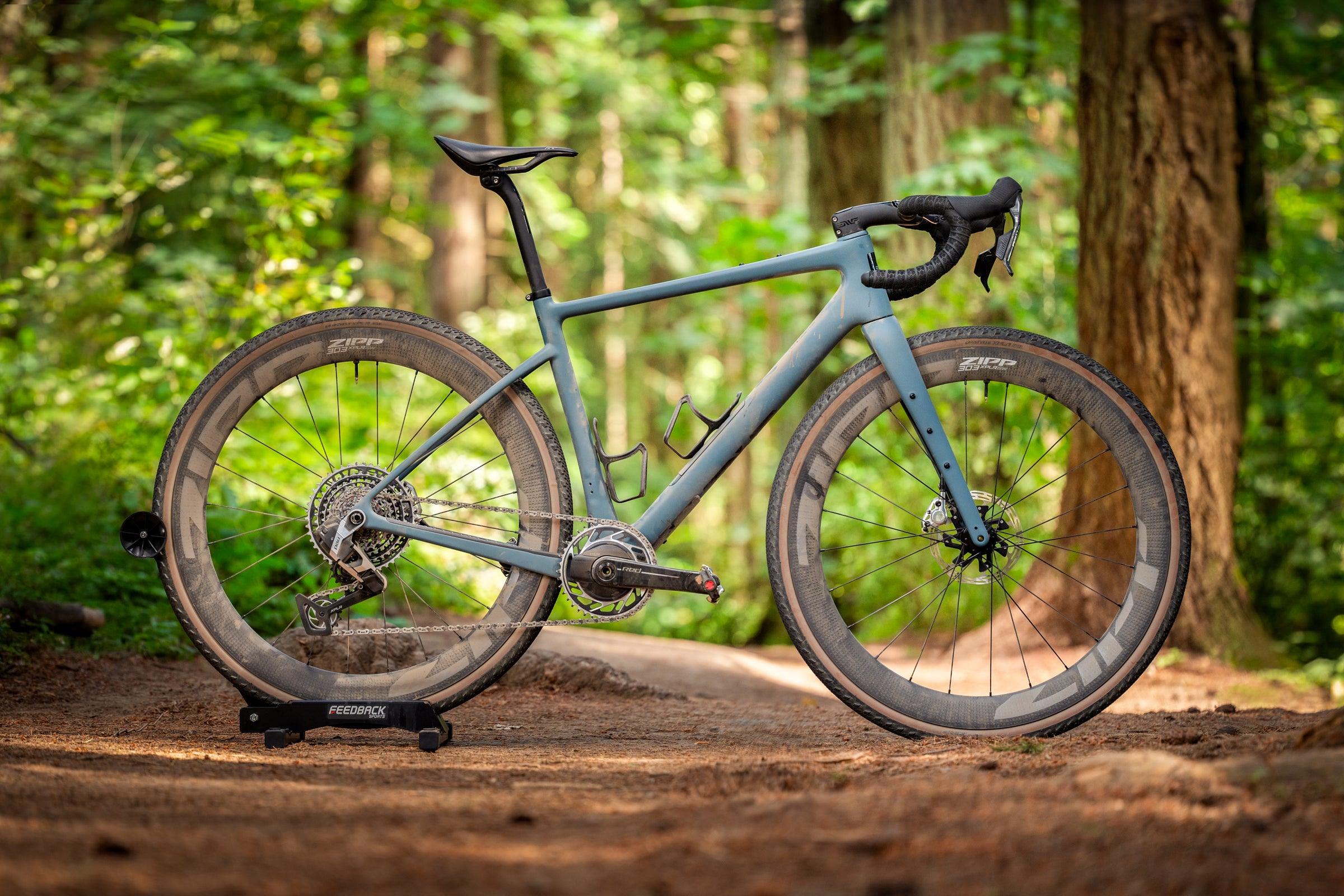
| Specs: | 50mm max tire clearance 950g claimed frame weight Internal routing only 1x or 2x, and electronic or mechanical drivetrains are compatible Has UDH Available as a frameset and a complete build |
| Highs: | Comfortable and versatile geometry. Flexibility with build configurations and compatibility. 50mm of tire clearance. |
| Lows: | Due for an update |
The Enve MOG is not brand new, but as the years go on, the first gravel offering from the Utah-based company seems to be more and more impressive. Enve simply delivered a bike that checks so many boxes it’s proved to be extremely future-proof.
The MOG debuted in 2023 in a gravel world where the pivot to extra-large gravel tires was still coming. Nevertheless, the MOG was intentionally built with 50 mm of clearance on both the front and the rear and has been spotted with up to 2.2-inch tires when you push the limits.
Conversely, Enve kept the geometry in check with tight chainstay lengths and neutral angles on both the headtube and seat tube. The bike is nimble on the road without trading that for off-road compromise. It is touching the fine line between aggressive racing geometry and tire capacity, a balance that took many other companies a few more years to find.
ADVERTISEMENT
Functionally, I have found the MOG is best with a set of Enve’s Hex tires in 48mm, and a big 48t front chainring. It is a bike that lives for a challenge, stands its ground against any gravel race bike, and can fake its way through a road ride. Some might balk at the release date, which is long ago, but I think this is actually a testament to how good it is. Even three years after release, the MOG feels fresh. That is why it sits here, still at the top of the pecking order in 2026.
For more information, check out our Enve MOG review.
Best budget gravel bike: Specialized Crux DSW
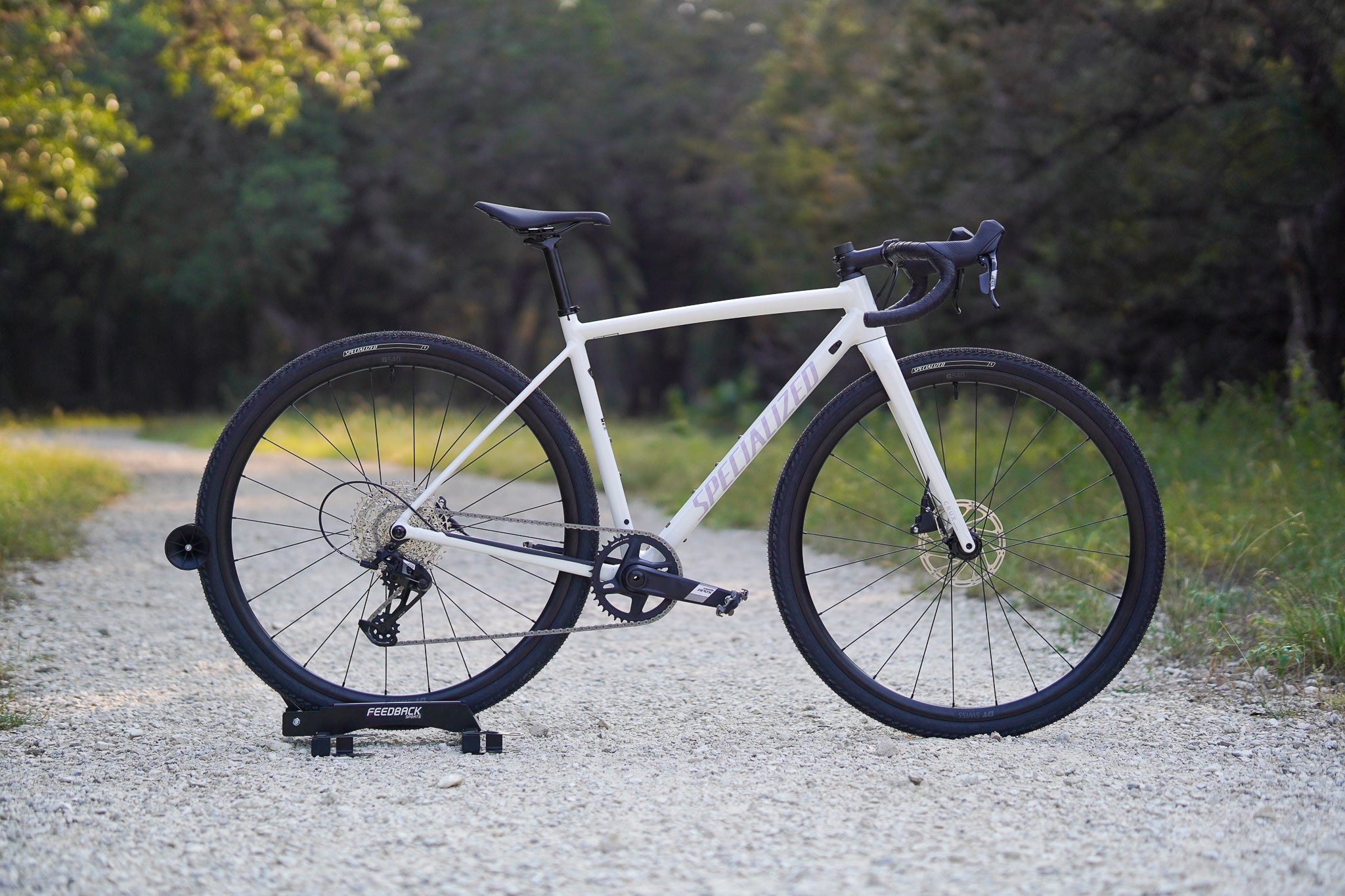
| Specs: | 47 mm max tire clearance 1,399g for a size 54 cm frame External routing 1x or 2x, and both electronic or mechanical drivetrains are compatible Aluminum frame Has UDH Available as a frameset and a complete build |
| Highs: | Shares the same geometry and tire clearances as the carbon Crux Available in both frameset and complete bike options |
| Lows: | Price bumps up against entry-level carbon bikes Stock build could use some comfort upgrades |
The Specialized Crux DSW is a bike that doesn’t compromise. It’s not here because it’s cheap, it’s here because it’s good, and the price is part of that. It’s certainly heavier than the carbon version of the bike, but it carries the same compelling all-around usability story. It doesn’t matter if you are looking for an all-road, cyclocross, or gravel racing rig; the Specialized Crux DSW will get the job done.
What is different about this bike compared to the carbon Crux is that it is, obviously, using aluminum. This isn’t new for the brand. Specialized has been a top aluminum option for years, with the road-focused Alleze Sprint being one of the best-known aluminum bikes on the market.
While the Crux DSW hasn’t occupied the same space in the gravel world, it does use the same DSW manufacturing process. DSW — short for D’Aluisio Smartweld — means that the bike uses hydroformed aluminum tubes without the traditional mitering process, which is part of why aluminum bikes are heavier. DSW frames, like the Allez before and now the Crux and Diverge, drop a ton of weight by cutting the maximum amount of material away from the key weld points.
The result is a 1,399-gram 56 cm frame, just around a pound off of a general carbon gravel frame.
ADVERTISEMENT
The bike isn’t perfect, no budget bike is, and many of the components don’t quite put the frame’s best foot forward. The aluminum wheels are heavy and reduce the nimble feeling of the frame’s cyclocross DNA, while the 38mm tires are a relic of a bygone era at this point. Additionally, the $2,600 MSRP is going to start to bump up against entry-level carbon bikes.
There’s a difference here though. A carbon bike at this price point is likely a compromise with a poor spec list. Instead the Crux DSW is a great bike at a great price.
For more information, check out our Specialized Crux DSW review.
Best value gravel bike: Pivot Vault

| Specs: | 50mm tire clearance 995g is the claimed frame weight Internal and external routing options Suspension corrected geometry 1x and 2x compatible, electronic only UDH Available as both a fameset or a full build |
| Highs: | Stable, comfortable ride Broad compatibility with component configurations In-frame storage and plenty of fender, accessory mounts Competitive pricing |
| Lows: | Mis-matched sizing Unimpressive wheel/tire package |
Pivot is, by admission, a mountain bike company. Yet, with a long history of tinkering with design and with drop bars, the brand has tried many unique approaches to the gravel discipline. Designs that play with many of the things learned from the mountain bike side of the spectrum.
Interestingly, the Vault is not too far out there on paper, yet ultimately that is a feature and not a bug, as the Vault delivers a really great gravel bike at a great price.
What makes the Vault a great value is its versatility. Across the board, the bike provides a pretty broad canvas to deliver the right bike to the right person. This includes: ample tire clearance that runs all the way up to 50mm; a suspension-corrected front end; options for 1x and 2x electronic and mechanical drivetrains; integrated and semi-integrated cockpits; and a generous internal storage hatch. In almost all of the ways a bike can be restrained by these baseline features, the Pivot Vault keeps a ton of flexibility in the hands of the consumer.
ADVERTISEMENT
The bike has its flaws, as Josh Ross got into with his in-depth review, but those do not offset the upside from the customizable frame, neutral geometry that offers a mix of nimble handling and stability, and an affordable price point. In fact, opposed to most new bikes that get more expensive with each iteration, the new Vault got cheaper. The new Pivot Vault simplifies things and has built options from $3,999 to $6,149.
For more information, check out our Pivot Vault review.
Best gravel race bike: 3T Racemax² Italia
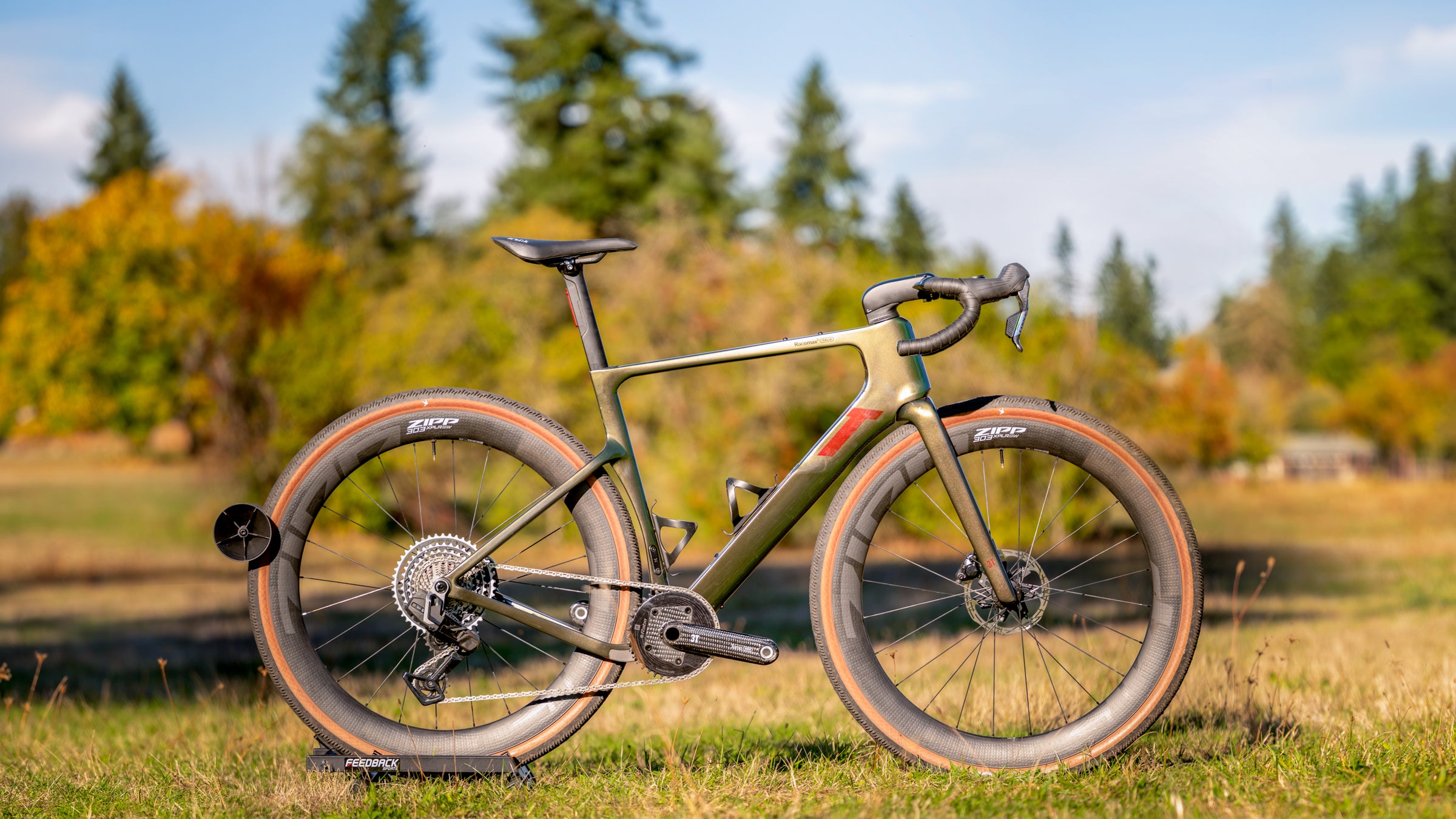
| Specs: | 51mm tire clearance Claimed frame weight of 990g Integrated cable routing 1x and 2x compatible UDH Full build only |
| Highs: | Gorgeous, unique crank option Surprisingly comfortable geometry Mounting points that make sense for this bike |
| Lows: | Difficult to access stem bolts In-frame storage door design could be better The integrated rear light makes no sense on this bike |
A gravel race bike is a moving target. From season to season — and occasionally race to race — the meaning of what a race bike is changes. Sometimes it is about aerodynamics and 45mm makes sense. Other times, it is about compliance and optimizing around a 2.2-inch mountain bike tire. Both characteristics can be true, and both can be missing the mark. Yet, these two divergent characteristics are valid ways to describe the 3T Racemax² Italia.
The original gravel offering from 3T was the highly influential Exploro, the first ever aerodynamic gravel bike that was pitched to a broad audience. In the ten years since, the demands of gravel have transformed, and 3T has adjusted. The new Racemax Italia keeps the aero, racing upside front and center, with 3T claiming the new version of the Racemax is 1.5% faster aerodynamically than its predecessor. 3T does all of this while packing in true front and rear clearance of 50mm, making this a dream top-of-the-line modern gravel race bike.
ADVERTISEMENT
Yet, the upside of the frame is not limited to the broad aero frame built around the wide 50mm tires. The bike is full of bespoke features and components that add to the aerodynamic elixir that makes the bike a cohesive aerodynamic system. Those little flourishes, paired with a frame built with a refined lay-up process in Italy, set up the 3T Racemax² Italia as one of the editor’s best bikes of the year in 2025.
To learn more, check the 3T Racemax² Italia review.
Best aero gravel bike: Cervelo Áspero 5

| Specs: | 45mm of listed tire clearance 990g is the claimed frame weight Internal routing, electric groupsets only 1x and 2x compatible UDH Full build and frameset options |
| Highs: | An extremely aerodynamic bike build Well-considered compromises for all-out speed Handles light gravel well and overperforms on the road |
| Lows: | Very specific use-case |
The Áspero 5 from Cervelo is about as far down the aero rabbit hole as a gravel bike can be. Even compared to bikes like the aforementioned 3T Racemax² Italia, the Aspero 5 makes every choice it can to be as streamlined and quick, on paper, as possible. The result is a claimed 34 watts improvement over the next fastest gravel bikes Cervelo tested.
To do this, Cervelo had to make some concessions. For one, in a gravel bike landscape where clearances more often than not go up to 50mm, the Aspero-5 maxes out at 45mm. It is noticeably unique in the gravel landscape, with many of its design elements more in line with the Cervelo S5 aero road bike than more conventional road bikes. In line with the road theme, the bike debuted with entirely new Vittoria 42 mm Corsa Pro Control tires.
ADVERTISEMENT
For many gravel riders, all of this will go too far. The bike is not one for the rough jeep trails or rocky gravel roads. It might not be the fastest for most American gravel races, but for hard-pack gravel and rides or races that are mostly pavement with light gravel mixed in, the bike is undoubtedly fast. While it is unclear how much of the 34 watts is just due to the extra-large road tires, what is clear is that the Cervelo Aspero-5 is defined by a precise aerodynamic construction that makes it the best aero gravel bike on the market.
For more information, check out the full Cervelo Áspero 5 bike review.
Best adventure gravel bike: Obed GVR
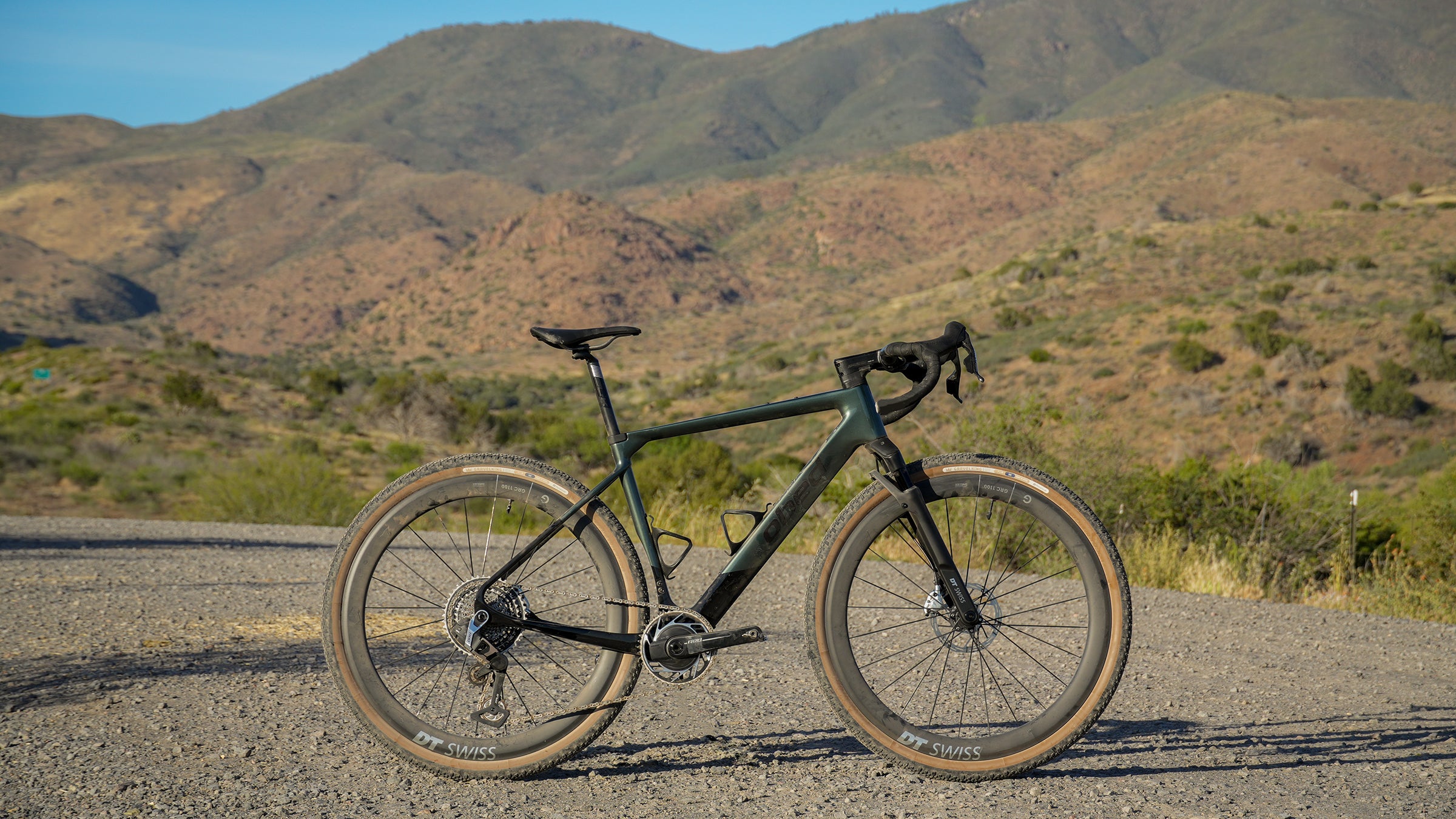
| Specs: | Clearance up to 56mm 886g for a medium frame Semi-internal cable routing Available with DT Swiss UDH and 2x Di2 compatible Full build and frameset options |
| Highs: | Progressive geometry to accommodate a long, rowdy day on the bike Suspension corrected front end Designed for easy maintenance and component compatibility |
| Lows: | No rack/fender mounts, or internal frame storage Not as dynamic as other similar gravel bikes on the road |
Put aside the racing, throw in some trail, add a small bag or two, and do a ‘big dumb ride’ in the name of adventure. For many, that is the essence of gravel, and many of the race or all-road gravel bikes won’t match those demands. The Obed GVR, however, will meet those demands. That amount of flexibility from the bike, from top to bottom, makes it an easy choice for the adventure-minded rider, even though Obed has marketed it as a gravel race bike.
In my review, everything pointed to the bike as built for rough-off road riding rather than compromising for ease on the road. In a world of compromises, the bike’s long, slack platform makes a huge difference in its ability to handle the unpredictable terrain that comes with the adventurous territory.
Of course, the GVR is more than capable as a race bike. Obed has found ways to combine clearance for 2.2 tires with aerodynamic tubes and a lightweight 880 grams frame. What Obed might lack in name recognition, it makes up for in the thoughtfulness and capacity of the bike.
ADVERTISEMENT
Some might find the bike lacking a few key elements that most out-and-out adventure bikes, like rack mounts and internal frame storage. Yet those are counteracted by a plethora of bottle mounts, the great DT Swiss F 132 One suspension fork, and a build that can deal with whatever terrain you might throw at it — a key feature of any real adventure ride.
To learn more, check out my Obed GVR review.
Best gravel bike for bikepacking: Trek CheckOUT
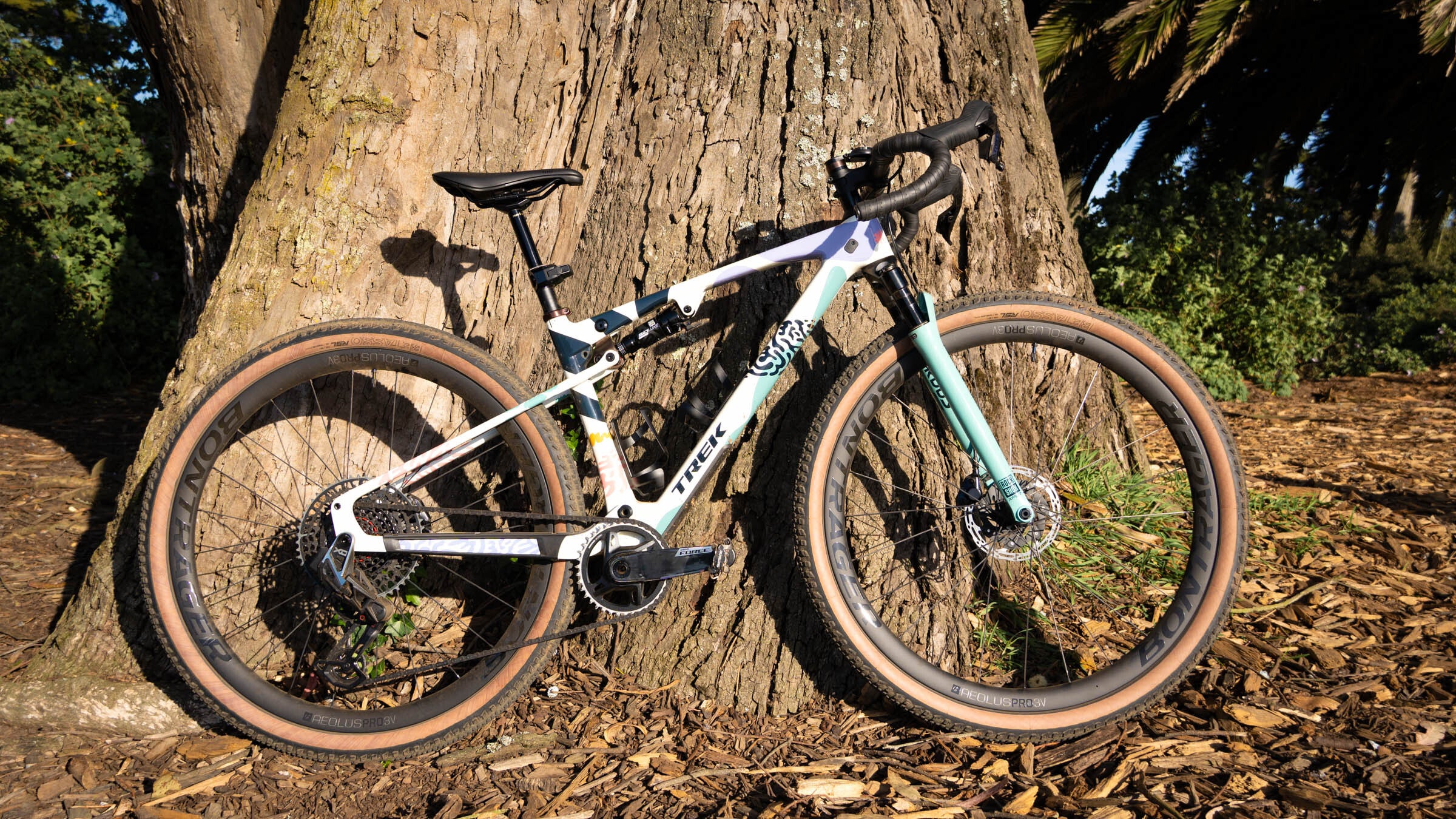
| Specs: | Clearance up to 2.2-inch tires 2.4kg for an ML frameset External cables routing and a conventional two-piece cockpit 60/50mm of travel front and rear UDH compatible Available in both a frameset (without fork) or a complete build |
| Highs: | The most compliant gravel bike on the market Very intuitive geometry and well-thought-out add-on elements 18 attachment points for bags and accessories |
| Lows: | Very specific use-case Heavy |
If all road is one end of the spectrum, bikepacking is all the way on the other end. Even in bikepacking racing, which is growing rapidly through the popularity around ultra events like Unbound XL, the Tour Divide, and Badlands, the demands of a bikepacking bike skew very far towards compliance and capacity.
Ultimately, those demands have shaped bikes in some pretty peculiar ways, most infamously with the Trek Checkout, a true full-suspension gravel bike built to be the ultimate all-terrain bicycle.
The bike was much-maligned when it came into the world. Much of the discourse centered around the bike as a step too far — rear suspension is the domain of mountain bikes. But that is an oversimplified way of looking at the bike and how it was positioned. The bike is not a gravel racing machine or something that is built to be used in lieu of a road bike. This bike is built to feather the line between mountain biking and gravel and offer a very specific use case. It is a niche-within-a-niche that won’t appeal to everyone but will be perfect for some.
ADVERTISEMENT
The one downside to this bike is weight. A rack that can carry a lot, full suspension, and a beefy frame all add up to numbers that are somewhat unheard of in performance drop bar circles. Just remember this is a specialty bike, and if you need to carry all your gear across a continent, 24.78 lbs (ready to ride without pedals or rear rack) isn’t going to bother you.
Best all-road gravel bike: BMC Roadmachine
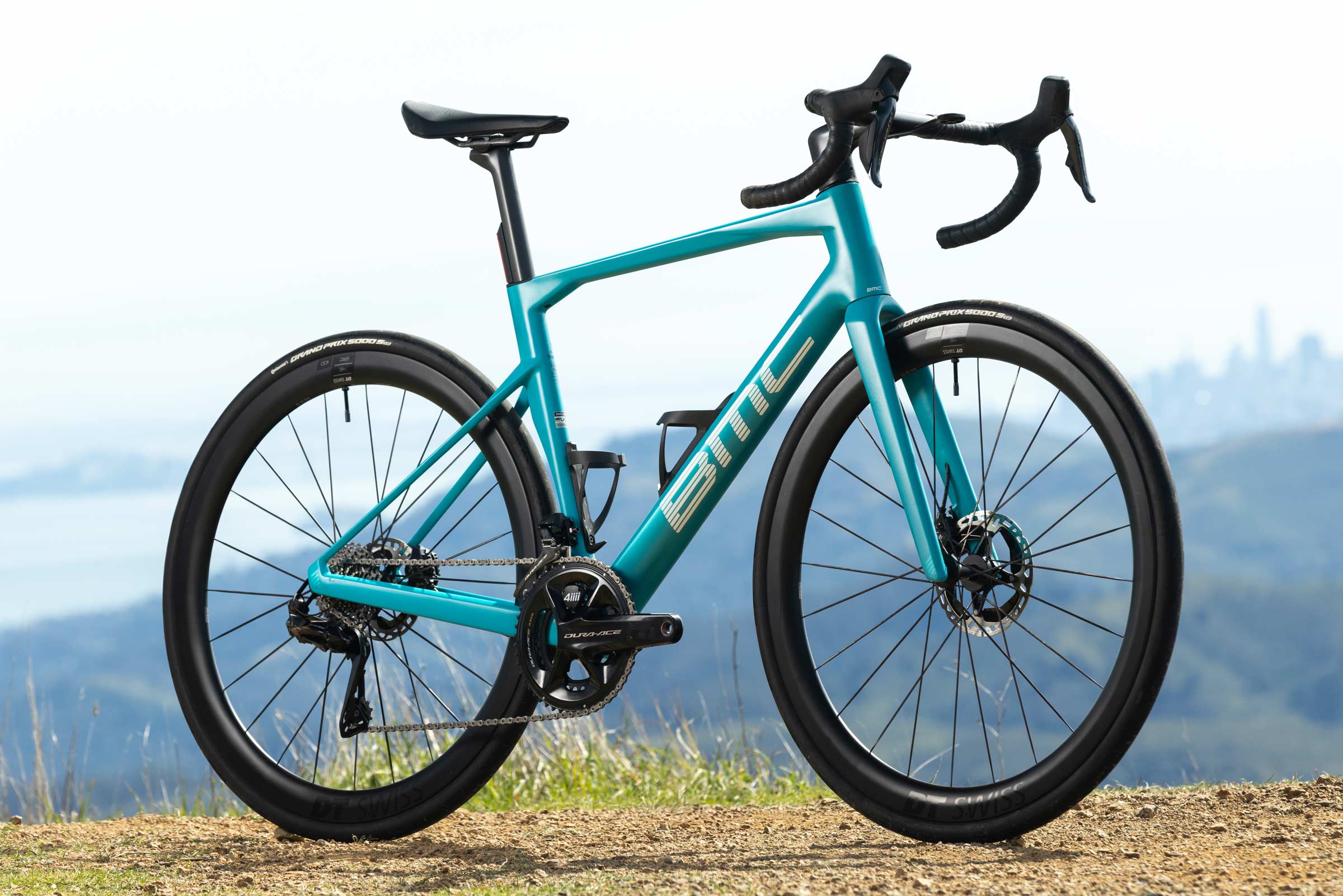
| Specs: | 34mm of tire clearance (more if swapping to a 1x configuration) 963g in a size 54cm frame Fully internal routing One-piece cockpit UDH compatible Only available as a complete build |
| Highs: | Downtube storage Bento box mount Includes rear light and bottle cages Highly capable on the road |
| Lows: | Single bar width no matter the frame size Lacks a frameset only option or a 1x build |
All-road bikes mean a lot of different things to different people, and that makes this the most difficult choice here on this buyer’s guide.
Nevertheless, when it comes to the spectrum of all-road bikes, the BMC Roadmachine is one of the great bikes in the category. As its name suggests, the Roadmachine shades more to the tarmac side of the divide rather than the gravel side. The 34mm tires that the bike specs — and that is the stated max clearance due to the front derailleur — demonstrate some of the bike’s off-road limitations. But that should still be considered all-road, especially since the bike could easily be converted to a 1x set-up and the clearance bumps up closer to 40mm than 34.
ADVERTISEMENT
That being said, the bike does have steeper angles than most true gravel bikes, both with the headtube and seatube, and it has a lower bottom bracket. All of this doubles down on the endurance road bike tendency of the build. For those who are looking for their all-road bike to be a functional gravel bike tackling the gnarlier side of gravel, this isn’t for them. But for most all-road demands, whether you are looking for a road bike with more stack, or a bike to tackle some light gravel from time to time, the Roadmachine is one of our favorites.
To learn more, check our BMC Roadmachine review.
How to choose the right gravel bike
When looking for the right gravel bike to buy, the best advice I can give is to start broadly. Ask yourself this question: What is the roughest riding you want to be doing?
Gravel bikes can always be made quicker. Even a very slack, adventure-oriented gravel bike, there are many ways to speed the bike up with tires, wheels, and components. What is harder is to make bikes more capable. Tire clearance and attachment points are things you cannot add that are vital for gravel bikes to be at their most capable, whether that is for a big all-day adventure ride, rough race course, or a bikepacking trip through unknown terrain.
ADVERTISEMENT
That being said, if your idea of a good time on gravel does not take you on rough double-track terrain or light singletrack, you can be more aggressive with your bike choice. If you are instead looking for a snappier bike that can fake it on a road ride, you might be ok with a bike that caps out with a 45mm of tire clearance and emphasis on aerodynamic tube shaping.
That split between having an adventure orientation versus an aggressive orientation also extends to groupsets and wheels. But those aspects of a bike build are more important for the other major element that goes into gravel bike purchasing choices: cost.
Regardless of which end of the spectrum you are looking at, there are great bikes. It is easier to get an adventure-oriented bike at lower specs, but with the right drivetrain and wheel package, an aggressive gravel race bike is achievable even at a value or budget price point.
Nevertheless, the more you invest, the better the package will be. And, in many cases, you can make an aggressive bike more capable and an adventure bike more racey. The Enve MOG, our top bike on this list, is a great example of this.
ADVERTISEMENT
We understand it is a process that can be daunting because there are so many variables to consider. To help you out, here are some more specifics around some of the questions you might have:
What type of gravel riding are you doing?
Gravel is intentionally a vague term. It means something different to almost everyone, as what your “gravel” might be, anything from hard pack dirt to singletrack trail. Knowing what gravel means to you will be crucial to knowing what bike will work best for your needs in the area where you live and ride.
If your gravel needs are riding long distances on roads of crushed rock and dirt, that is considered light or moderate gravel. We will get into what that means for some tech choices in the next section, but your overarching goal should be to find a bike that has moderate clearance and the right amount of mounts and storage solutions to cover a decent distance without resupplies.
ADVERTISEMENT
Alternatively, if you consider gravel to be a mixed bag of pavement, gravel, and some trails or unmaintained Jeep roads, you will need a bike with bigger tire clearances. You also should consider a suspension fork if the terrain is rough and rocky.
Lastly, if your idea of a gravel ride is mostly on paved roads and might dip onto a smooth gravel road or path, your optimal gravel bike could be an all-road bike. These options are as close to a road bike as gravel bikes get — they are the blurred line between the two — but have become remarkably capable at tackling light gravel as tire technology has allowed wider slick road tires to be both better at managing off-road bumps and hits, and speed on tarmac.
What tire size do I need?
Oh, if only there was a simple answer! Generally, I’ll frame it this way:
- If you are riding 10-30% on smooth gravel roads: 32-40mm is great
- If you are riding 30-60% on smooth or moderate gravel roads: 40-45mm is great
- If you are riding 60-80% on smooth, moderate, or tough dirt riding: 46-50mm is great
- If you are riding 80%+ on dirt of any kind: 50-56mm is where you should be looking
This is only a starting guide, there is so much to tire choice that we could get into, but it is broadly how I would advise a rider to make their tire choices.
ADVERTISEMENT
Do I need suspension for gravel?
Suspension on gravel bikes has been a new trend that has picked up steam over the last few years as riders look for more solutions to smooth out rough gravel riding and boost speed across variable gravel terrain. Whether or not you need suspension, however, is all about what you might value in your day-to-day riding.
ADVERTISEMENT
If you are consistently riding off-road on your gravel bike and you find yourself tackling terrain that pushes the limits of your tire clearance, adding a suspension fork might be a great solution to make your bike more capable.
Conversely, if you want your bike to be more of an all around bike that can seamlessly go back and forth between gravel and road terrain, a suspension fork will detract from a gravel bike’s ability to be a passible road bike. If that is the case, there are other suspension options that are less significant than a full suspension fork, but still provide relief for the vibrations and bumps of gravel riding.
If you are looking for more, I went in depth in gravel suspension testing, putting three of the top options on the market to the test over hundreds of miles of every kind of gravel riding imaginable. You can read my full gravel suspension fork review to get a better picture.
ADVERTISEMENT
What gearing do I need?
Gravel gearing is split into two categories: 1x and 2x. 1x (pronounced one-by) borrows from mountain bike technology and the groupset only has one chainring. 2x (pronounced two-by) is the more traditional configuration where there is two chainrings and a front derailleur.
ADVERTISEMENT
Increasingly, gravel technology is quickly moving towards consolidating around 1x groupsets. SRAM is entirely 1x based with its new gravel technology, and while Shimano still has 2x GRX groupsets available, it has also pivoted to more 1x centric groupsets with the new GRX and XTR Di2 releases.
Likewise, gravel bikes have also been moving towards 1x drivetrains. A few bikes on this buyers guide are no longer compatible with 2x setups, and some of those that are may not be able to use Shimano’s 2x system that still requires wires running from the front and rear derailleurs into the frame for battery access.
The other major split in drivetrain technology is between electronic and mechanical shifting. Electronic shifting uses a combination of batteries, miniature motors, and wireless connectivity to shift gears on the bike’s drivetrain. Mechanical shifting uses levers, cables, and springs to shift.
ADVERTISEMENT
Like the shift towards 1x, electronic groupsets are quickly growing in prominence in the market. Most top of the line gravel bikes will have electronic shifting, with some of the high end bikes on this list are not compatible with mechanical groupsets, but mechanical shifting has not gone away just yet. Mechanical shifting, whether that is Shimano’s GRX or SRAM’s Apex groupsets, allows for bikes to be priced lower and some riders will prefer the simplicity and functionality of mechanical shifting.
For most riders, a 1x mechanical or electronic groupset will be the best bet for gravel gearing. There is some nuance between different 1x gear arrangements. With 1x grouspets it is always a balance between a groupset that covers a broad range of gears and one that manages the gaps between the cogs of the cassette.
I go into the details in how to setup your gravel bike if you are new to the sport, so check that out if you need more information, but generally speaking most of the builds that you will find on this list will suit intro riders very well.
There is still room for 2x groupsets, especially for riders looking for all-road, or for a do-it-all bike that will spend plenty of time on pavement. When the speed is high, 1x groupsets do have limitations. In these higher speed scenarios, the bigger gear jumps of a 1x cassette is more notable and will frustrate some riders who are looking to ride the roads with pace. It is possible, it just might be better to shade towards the roadside with a 2x groupset.
ADVERTISEMENT
What size of gravel bike do I need?
Each company does sizing slightly differently, so it is crucial to check each bike’s sizing guides before making any purchasing choices. Most gravel bikes will be sized by the bike’s effective top tube length. Most of the time the sizing will be 49, 52, 54, 56, 58, and 61cm, or as XS, S, M, L, and XL if the bike’s measurements don’t quite line up with the traditional top tube measurements.
ADVERTISEMENT
Like choosing the right tire size, it is hard to paint with a broad brush here. Nevertheless, this is generally how I recommend starting the search based on your height:
- 49 cm: 5’0”-5’4”
- 52 cm: 5’4”-5’6”
- 54 cm: 5’6”-5’9”
- 56 cm: 5’9-6’0”
- 58 cm: 6’0”-6’2”
- 61 cm: 6’2-6’4”
There is plenty of overlap between the sizing and if your height is on the threshold of two sizes, both could work. In those scenarios, the right size will boil down to how the other elements of the bike fit mesh with your body and riding style. If you are flexible, have shorter arms, or prefer a bike with faster steering, sizing down might be the best bet. Conversely, if you have long legs, long arms, less flexibility, or prefer a more relaxed ride, sizing up could be better.
How does Velo test and review the best gravel bikes?
Each of these bikes on this list has been reviewed by us here at Velo. We take our reviews seriously, through research, interviews, and, most importantly, our own riding. With each of these bikes, we spend hours riding them on all the types of terrain where they were intended to be ridden.
This kind of work can only be found through intentional testing and thoughtful consideration, and that is incredibly important for our process to say what each one of these bikes does well and where they might struggle. That is the story behind each of these bikes, which you can dig into in all of the reviews, and is told through the lens of hundreds of miles of riding. At all times, each one of our tech editors will have multiple test bikes in our stables as we ride them
ADVERTISEMENT
It is also worth noting that this is a list that is built to be constantly updated. We are always testing new bikes and digging into new tech. If a bike stands out, don’t be surprised if this list changes.